
Fructus Fidei
Fructus Fidei—the fruit of faith—is the visible sign of a life truly transformed by grace, manifest in good works, holy desires, and persevering virtue. It is the proof that faith is not merely believed, but lived. 🔝
Carissimi, Beloved in Christ,
Amid the gathering clouds of confusion and compromise that encircle both Church and society, we address you with a word of encouragement and exhortation, taking as our motto and meditation the ancient truth: Fructus Fidei—the fruit of faith.
This phrase, brief though it is, cuts through the arid superficiality of contemporary religion and recalls us to the living sap of our Christian calling. Faith, we are reminded, is no mere assent to a proposition nor a passive reception of inherited culture. True faith is living, active, transformative—a divine seed which, when nurtured by grace, bears fruit in the soul, in the Church, and in the world. “By their fruits you shall know them” (Matt. 7:16). In this short motto lies a whole theology of renewal.
I. The Crisis of Fruitless Faith
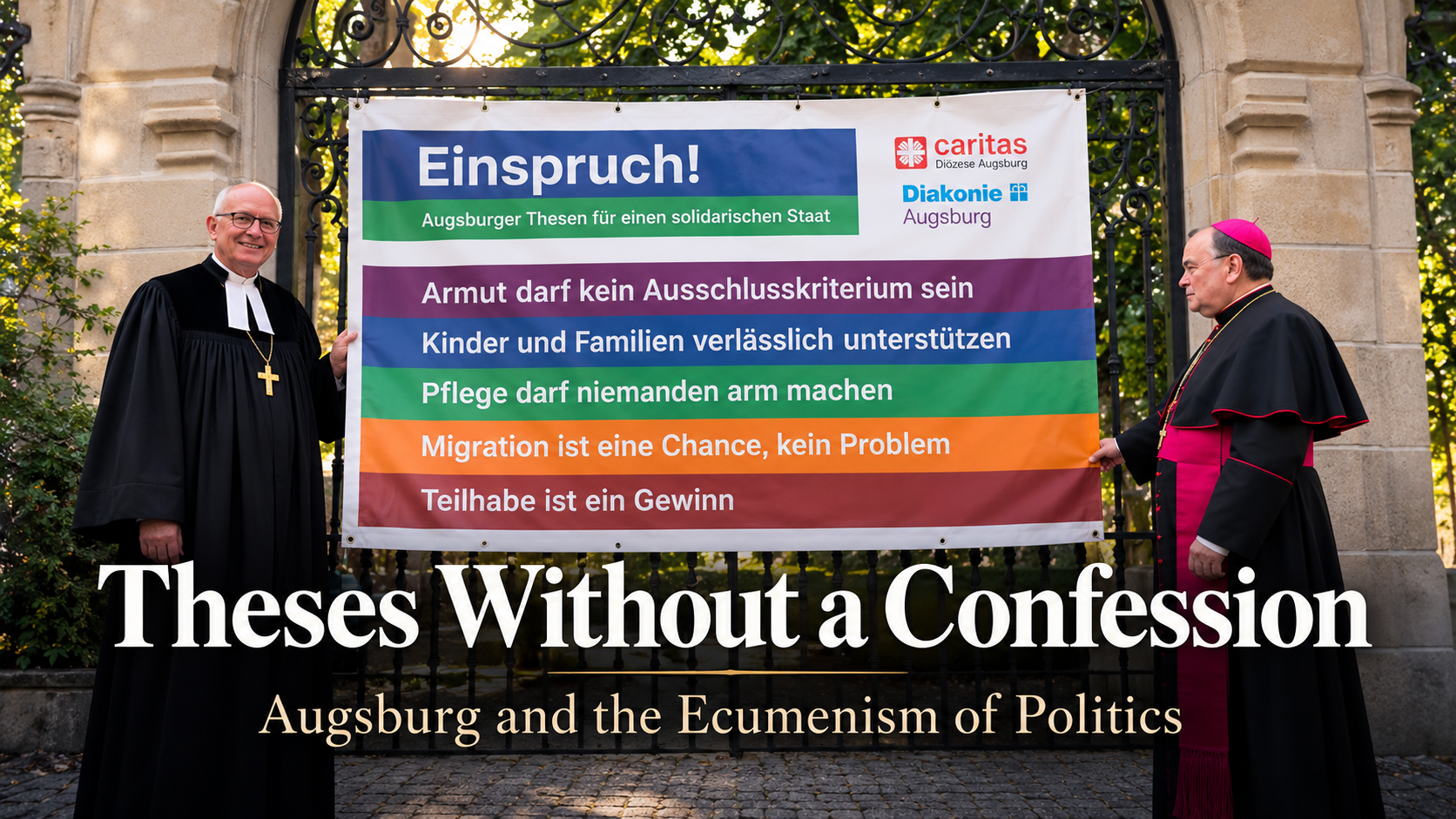
In recent weeks, we have observed with sorrow the spectacle of churches—Catholic and Protestant alike—publicly affirming doctrines contrary to Christ, desecrating the sacraments with sacrilegious Communions, and blessing sin under the guise of compassion. Meanwhile, governments pass laws that strip the unborn of their final legal protections and pave the way for the state-sanctioned destruction of the sick and elderly. The language of rights has been severed from the foundation of dignitas humana, and words like “love” and “justice” are wielded not in the service of truth, but in defence of self-will and ideological tyranny.
These are not isolated errors but the bitter harvest of a faith long unrooted from tradition, untended by penance, and choked by the weeds of relativism. As St. James writes, “Faith without works is dead” (James 2:26). And what is the ultimate fruit of a dead faith? Apostasy.
II. Faith Must Bear Fruit in Holiness
Yet the Christian is not called to despair, but to vigilance and fidelity. The Fructus Fidei we speak of is no abstract ideal. It is the fruit borne by martyrs, by saints, by every faithful soul who surrenders in humility and perseveres in hope. It is the transformation of the heart, the ordering of the passions, the embrace of suffering, the rejection of sin, the charity that seeks not its own. It is the quiet heroism of the father who provides and prays, the mother who raises her children in the fear of the Lord, the young man or woman who resists the culture of death and commits to purity of life.
This fruit does not flourish in the barren soil of compromise. It demands the cultivation of the traditional disciplines of the Christian life: frequent confession, daily prayer, spiritual reading, and above all, attendance at the Holy Sacrifice of the Mass—especially in its venerable Roman Rite, which nourished centuries of saints and which we, by divine Providence, are privileged to preserve and propagate.
III. Apostolic Work and Missionary Charity
We give thanks, too, for the visible fruits of faith being borne by our missions. From the favelas of Davao to the chapels of North America and the apostolic embers in Europe, the witness of Traditional Catholic life is again kindling light in places darkened by confusion. Our collaboration with like-minded clergy of sound doctrine and sacramental fidelity shows the spiritual fecundity of tradition when unchained from ecclesiastical fear or political paralysis.
Yet let us be clear: this growth is not ours. “I planted, Apollos watered, but God gave the increase” (1 Cor. 3:6). And God gives the increase where He finds fides formata caritate—faith formed by charity, rooted in humility, purified by sacrifice.
IV. The False Fruits of the World
Too many today seek to redefine fruitfulness in the image of worldly success: numbers, influence, applause. But Our Lord did not promise us popularity; He promised us a Cross. The devil can mimic growth—indeed, he delights in offering synthetic consolations and counterfeit consolations. But he cannot produce sanctity. Any work, no matter how “inclusive,” “compassionate,” or “progressive” it may seem, that denies the truth of sin and the necessity of repentance, bears no fruit unto eternal life.
Let us therefore be on our guard. As Our Lord warns: “Every tree that does not bear good fruit will be cut down and thrown into the fire” (Matt. 7:19). And let us not confuse leaves for fruit—noise for holiness, sentiment for virtue, visibility for grace.
V. A Call to the Laity
We exhort you, beloved faithful, not merely to admire tradition, but to live it. The time of spectatorship is over. The season demands warriors, witnesses, and saints. Begin where you are: catechise your children, sanctify your home, learn the Catechism, dress modestly, speak the truth in love, and withdraw your support—financial or moral—from institutions that promote evil or error. Refuse to be co-opted by popular causes which, however noble their slogans, bear no resemblance to Christ crucified.
And above all, pray: pray with your lips, your hearts, and your hands. Pray the Rosary daily. Offer penance. Fast for the conversion of souls. This is how the vineyard is tilled. This is how faith bears fruit.
VI. The Harvest to Come
We do not know the hour of reckoning, but we know it will come. In a time of shaking, only that which is rooted will remain. “The harvest is plentiful, but the labourers are few” (Matt. 9:37). Let it not be said that in our time, faith withered on the vine because we would not suffer for the Truth.
May the Blessed Virgin Mary, whose faith bore the Fruit of salvation, intercede for us. May the holy martyrs inspire us. And may the Holy Ghost find in us fertile soil, that we may bring forth fruit a hundredfold.
With my Apostolic blessing, and in the Sacred Heart of Jesus, 🔝

HE ✠Jerome OSJV, Titular Archbishop of Selsey

Leave a Reply