
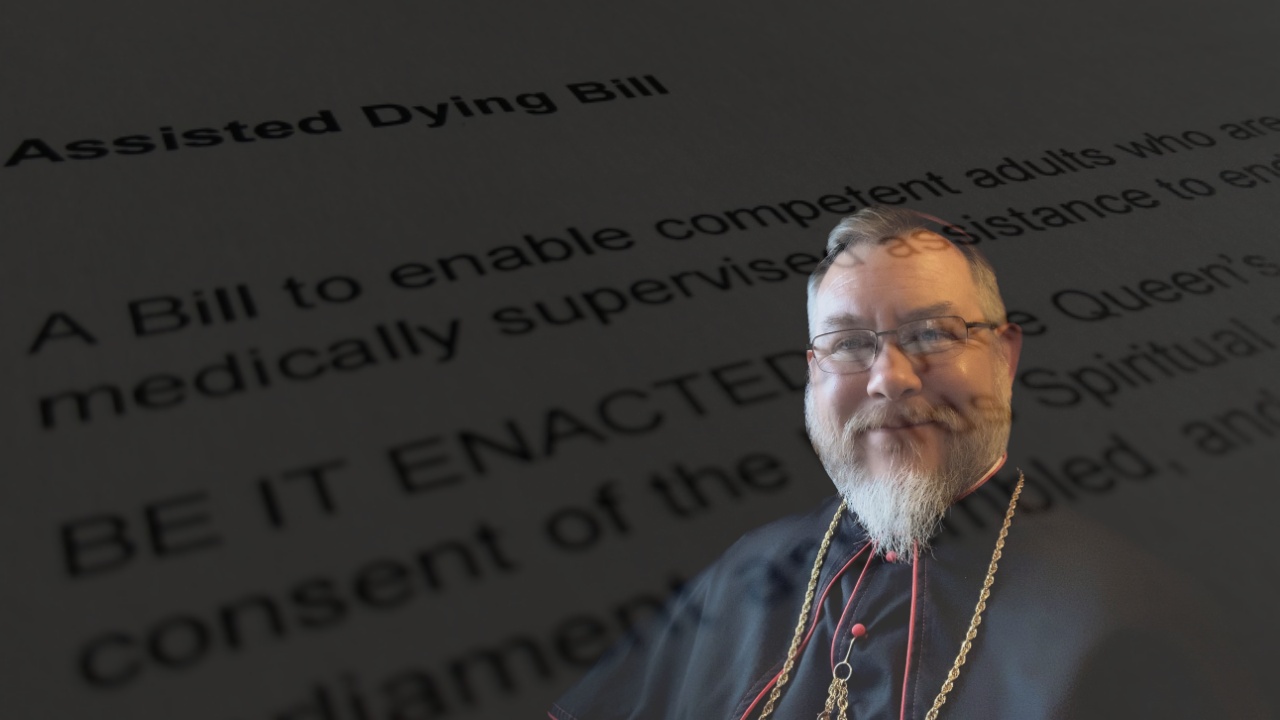
Brighton, 19 June 2025 – On the eve of tomorrow’s decisive vote on the Terminally Ill Adults (End of Life) Bill, the Most Reverend Dr Jerome Lloyd, Titular Archbishop of Selsey, has directly appealed to all Sussex Members of Parliament. His letter urges them to oppose the Bill, highlighting profound moral, medical, and legal concerns.
A Broader Moral Crisis
Archbishop Lloyd warns that this vote follows closely on the heels of Parliament’s decision to decriminalise abortion up to birth. He states, “The pattern is unmistakable: when the law ceases to defend the beginning and end of life, its commitment to human dignity is not merely weakened—it is shattered.”
In a memorable reference, he cites anthropologist Margaret Mead’s insight that the earliest sign of human civilisation was not a tool but a healed femur, evidence of compassion and communal care—a stark contrast to laws permitting legalised death.
Safeguards That Fail
Despite amendments for panel reviews and conscience protections (notably Clause 25), the Archbishop contends these are insufficient and may create pressure on healthcare providers and religious institutions. He cautions that Catholic hospitals, hospices, and charities may be forced to comply or risk losing funding—echoing concerns raised by Cardinal Vincent Nichols in describing Parliament’s approach as a “deeply irresponsible shambles” and accusing legislators of spending more time debating foxhunting than this life-and-death measure.
Medical Opposition Unanimous
Leading professional bodies including the BMA, Royal Colleges of Physicians, Psychiatrists, Pathologists, Disability Rights UK, and the Coalition of Frontline Care have united in opposition. They have criticised the Bill’s prognostic unreliability, inadequate capacity assessments, and the removal of coroner oversight—all of which threaten patient safety and ethical standards in medicine.
Slippery Slope to Compassion or Convenience?
Archbishop Lloyd emphasises the risks evidenced in countries like Canada, Belgium, and Oregon—where assisted-dying regimes have expanded beyond intended limits. He echoes Cardinal Nichols’ warning that what begins as a “right to die” quickly morphs into a “duty to die” under social and economic pressures.
A Defining Moment
In his powerful conclusion, the Archbishop frames the vote as an existential choice for the nation:
“Do we walk with the suffering, or do we wash our hands, legalise their death, and call it compassion?”
“True civilisation is measured by how we treat the most vulnerable… The right to die soon becomes a duty to die.”
He urges all Sussex MPs to vote ‘No’, protecting not just individual lives, but the ethical integrity of society itself.



Leave a Reply