

Invention of the Holy Cross/Fourth Sunday after Easter
by the Revd Dr Robert Wilson PhD (Cantab), Old Roman Apostolate UK
Today we celebrate the great feast of the Invention of the Holy Cross, as well as commemorating the Fourth Sunday after Easter. The relic of the cross was discovered in Jerusalem by Helena, the mother of the Emperor Constantine, who had gone there to search for it. The Church of the Holy Sepulchre was built on the site where the relic was discovered. The punishment of crucifixion was abolished by the Emperor Constantine, and the faith that was in the first centuries a scandal to the Romans was finally tolerated (when Constantine ended the persecution) and subsequently became the official religion of the Empire.
But why was the message of the Cross initially such a scandal to the Romans? Punishment by crucifixion, perhaps the cruellest form of torture ever devised, was reserved for slaves and political rebels. In other words for those who were guilty of treason against the state, which was worshipped in the person of the Emperor. It was as one who was guilty of treason against the state that Jesus was crucified. The titulus on the cross bore the words in Hebrew, Greek and Latin, “Jesus of Nazareth, King of the Jews”. Pilate realised that Jesus was not a political revolutionary in the conventional sense of the term (if he had genuinely believed that he would have executed Jesus’ followers as well). However, Jesus in not disowning messiahship had made a technically treasonable claim, which is why Pilate agreed to the request of the Jewish authorities that he crucify Jesus. “If thou lettest this man go thou art not Caesar’s friend, whosoever maketh himself a king betrayeth Caesar.”
The message of the crucified Saviour scandalised the ancient world. As St. Paul put it to the Corinthians, it was foolishness to those who were perishing but to those who are being saved, it is Christ the wisdom and power of God. It was foolishness to the Greeks, who sought for wisdom from philosophy, not from a crucified Saviour. It was a stumbling block to the Jews, who did not acknowledge the first coming of the Messiah as a suffering servant before his second coming in glorious majesty at the end of the age. Yet what the message of the cross shows, St. Paul says, is that the foolishness of God is wiser than man’s wisdom and the weakness of God is stronger than man’s strength.
Perhaps St. Paul’s most powerful exposition of the message of the Cross is found in what is often thought to be an early Christian hymn, included in the letter to the Philippians, which we heard in today’s epistle. Philippi was a Roman colony and yet Paul proclaimed that it was Jesus, not Caesar, who was the true Lord. Though in the form of God he thought it not robbery to be equal with God, but made himself of no reputation, taking the form of a servant. He humbled himself, even to death on the cross. Wherefore God has highly exalted him and given him the name that is above every name, so that at the name of Jesus every knee should bow, in heaven and on earth and under the earth, and every tongue confess that Jesus Christ is Lord to the glory of God the Father.
The Greek word for Lord, Kyrios, was the word used in the Septuagint (the Greek translation of the Bible for Greek speaking Jews that became the Bible of the early Church) for God and the passage Paul is referring to is from Isaiah, by me every tongue confess and every knee bow. This passage is one of the clearest statements of the exclusive claims of the God of Israel over the false gods of the heathen in the Bible. Yet St. Paul ascribes to Jesus what Isaiah claims for God. For it is Jesus, in his life of self sacrifice and above all in his death, who reveals the true nature of God.
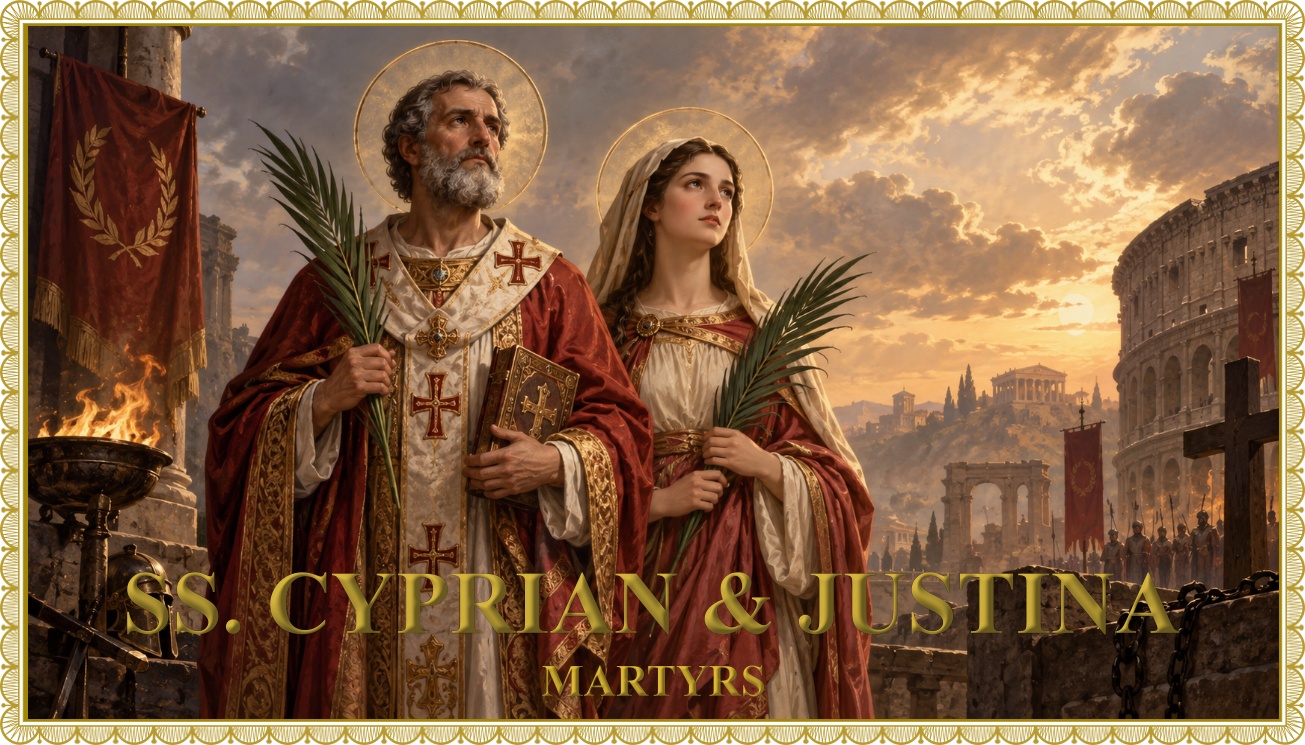
St. Paul and the first Christians lived in a world in which the cult of the Emperor was the fastest growing religion. Kyrios Kaiser, Caesar is Lord, was the message of the Roman Empire. By contrast, Christians proclaimed, Kyrios Christos, Jesus is Lord. For the Romans this amounted to treason against the State and it seemed that Christianity was turning the world upside down, for they proclaimed that there was another king, one called Jesus. That is why so many of the early Christians became martyrs, because they refused to accept the cult of the Emperor and were therefore deemed guilty of treason against the State.
The message of the Cross was a sign of power made perfect in weakness, of suffering and self sacrifice as a path to exaltation. Indeed, St. John’s Gospel in the passage we heard today goes even further than St. Paul in saying that not only is the cross the path to glorification, it is itself the supreme moment of glorification, the lifting up of the Son of Man.
Fulfilled in all that David told
In true prophetic song of old
How God the heathen’s king should be
Hath reigned and triumphed from the tree.
Since Jesus Christ is the same yesterday, today and forever, the truth of the Gospel is unchanging. The message that it is Jesus and not Caesar who is Lord is still the same today. This is especially important at the present time when governments all over the world are trying to use this crisis as a way to increase their power and control over people. But we know that the powers that be in this world are not our ultimate authority. If Jesus Christ is Lord, then the Chinese Government is not, Vladimir Putin is not, the President of the European Commission is not, Keir Starmer is not, Donald Trump is not. All these people and other similar ruthless seekers of power and success in this world may seem all powerful and may be very successfully manipulating the present crisis as a way of amassing more power for themselves and their governments, but they are not (whatever delusions of grandeur they may have about themselves) the ultimate authority.
God in Christ has triumphed by the cross over the principalities and powers, the dark forces in rebellion against God that seem to rule this world. We now live in the time between his victory over the forces of evil by the cross and the final victory when God will be all in all. For, as St. Paul wrote to the Philippians, our true commonwealth is in heaven, from where we await the final coming of Christ to transform our mortal bodies into the likeness of his glorious body, by the power whereby he is able to subdue all things to himself.
The royal banners forward go
The Cross shines forth in mystic glow
Where he in flesh, our flesh who made
Our sentence bore, our ransom paid.
But it behoves us to glory in the cross of our Lord Jesus Christ, in whom is our salvation, life and resurrection, by whom we are saved and delivered.




Leave a Reply