
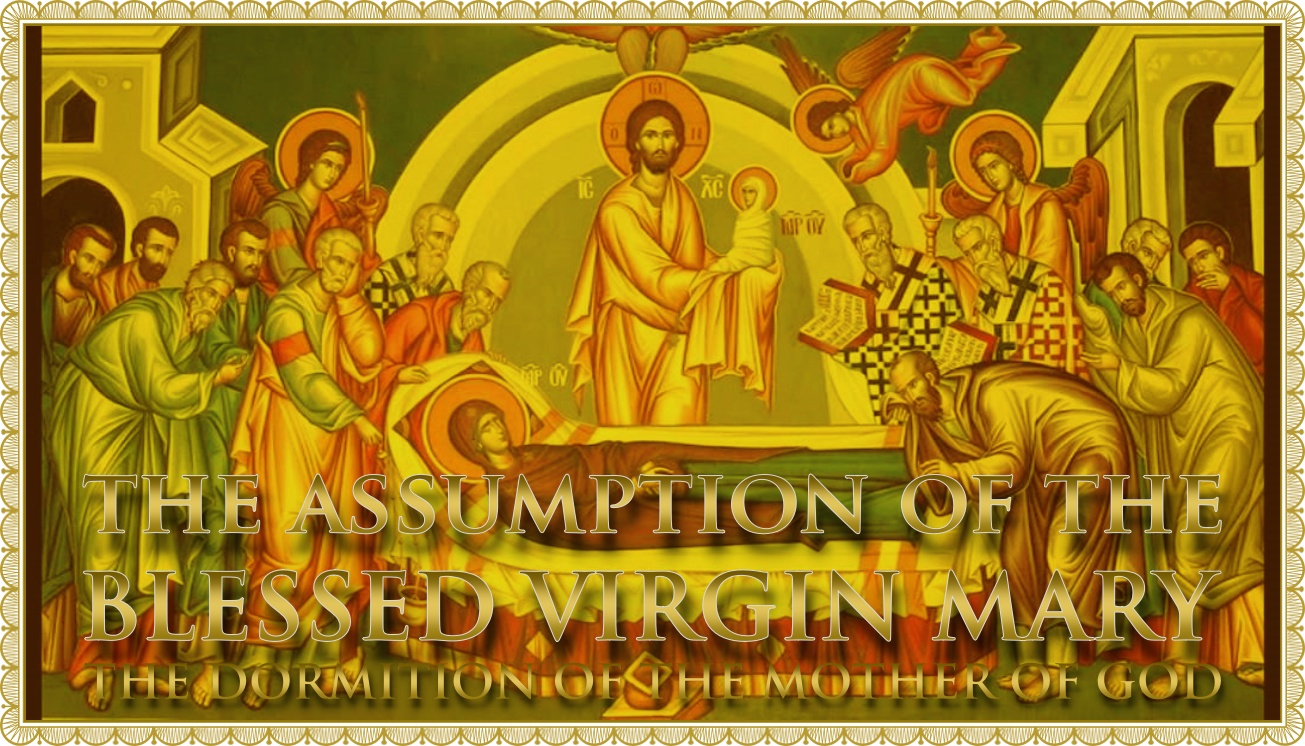
The Tridentine Liturgy of the Assumption: Missa “Gaudeamus omnes”
The feast of the Assumption of the Blessed Virgin Mary on August 15 is one of the most ancient and beloved solemnities of the Church, commemorating the bodily assumption of the Mother of God into heavenly glory. In the Tridentine Rite, prior to the reforms of Pius XII and later Paul VI, this feast was celebrated with the Missa “Gaudeamus omnes in Domino”—a Mass that exemplifies the joyful exaltation of Our Lady’s glorification and the unbroken tradition of Marian devotion in the Latin Church.
Structure and Themes of the Tridentine Mass: “Gaudeamus omnes”
The Mass begins with the Introit “Gaudeamus omnes in Domino”, borrowed from the Common of Virgins, but long associated with the Assumption. Its jubilant tone (“Let us all rejoice in the Lord”) invites the faithful to celebrate the triumph of the Blessed Virgin, who was assumed body and soul into heaven and crowned as Queen.
- Collect: The Collect prays that we may be made worthy to be partakers of the glory of Our Lady, whose Assumption we commemorate.
- Epistle: Ecclesiasticus 24:11-20 (“In all these I sought rest, and I shall abide in the inheritance of the Lord”) portrays Wisdom as dwelling in Zion—interpreted as a type of the Blessed Virgin, the Seat of Wisdom.
- Gradual: Audi filia from Psalm 44 (45), followed by the Alleluia: Assumpta est Maria in caelum—“Mary has been assumed into heaven, the Angels rejoice”—a strikingly ancient acclamation that forms the core of the feast’s theological joy.
- Gospel: Luke 10:38-42—the story of Martha and Mary. In the traditional understanding, Mary (of Bethany) is a figure of the contemplative soul, and the Church applies her virtues allegorically to the Blessed Virgin, who “has chosen the better part.”
- Offertory and Communion: The antiphons continue the theme of exaltation—Assumpta est Maria in caelum: gaudent Angeli—and the Communion verse Beatam me dicent omnes generationes reflects the prophetic Magnificat.
The Preface is of the Blessed Virgin Mary and lacks the specific mention of the Assumption that would later be inserted in the 1950s. Yet the whole liturgical context, together with the Office and traditional sermons, made clear the celebration of her bodily assumption into heaven.
Theological and Liturgical Character
This Mass is not narrowly focused on the dogmatic definition of 1950, but represents a broader and older tradition. It draws from Scripture and the liturgical poetry of the early Middle Ages to exalt the glory of Mary as the pure, incorrupt Virgin who has been exalted above the choirs of angels. It reflects the ancient sense that the Assumption is a mystery of joy, of divine favour, and of the dignity of the Mother of God as the New Eve and Queen of Heaven.
The Pian Reform: New Mass and Office under Pius XII
In 1950, Pope Pius XII defined the dogma of the Assumption in the Apostolic Constitution Munificentissimus Deus. Four years later, he imposed a new proper Mass for the feast, titled Missa “Signum magnum”, along with a new Divine Office, replacing the ancient liturgical texts that had developed organically over centuries. This change was implemented in the 1955 reforms of the Roman calendar and began a trajectory of liturgical revision that would culminate in the Novus Ordo of 1970.
The new Mass began with the Introit “Signum magnum apparuit in caelo”—from Apocalypse 12, the Woman clothed with the sun, which became the central image of the new formulary. The Collect and other propers were rewritten to reflect more directly the defined dogma of the bodily Assumption. The Gospel was changed to Luke 1:41-50, the Visitation and Magnificat, and the Epistle to Judith 13:22-25, interpreting Judith as a type of Mary.
While these are rich and scriptural choices, the effect of the change was to shift the theological emphasis toward a tightly dogmatic and typologically specific reading of the mystery. What was lost was the liturgical poetry and broader traditional Marian symbolism of the old Mass. The previous Gospel, for instance, subtly extolled Mary’s contemplative soul; the earlier Epistle linked her to divine Wisdom.
The Loss of the “Gaudeamus” Tone
The traditional Missa “Gaudeamus” exudes the calm triumph of centuries of Marian devotion, where joy, mystery, and poetic typology flow together. The newer formulary, by contrast, subordinates the liturgy to a recent doctrinal development, and despite its beauty, it exemplifies a growing tendency in mid-20th-century liturgical reform to impose top-down innovation, often at the expense of organic continuity.
Even as Traditional Catholics gratefully affirm the dogma of the Assumption, there remains a strong sense that the older Mass better preserves the lex orandi of the Church—offering a richer contemplative Marian theology, one which speaks not just to the head but to the heart and imagination of the faithful.
Conclusion
The Tridentine Mass of the Assumption, with its “Gaudeamus omnes” introit and deep poetic resonances, offers a vision of Mary as the radiant Queen of Heaven, model of contemplation, and channel of divine grace. It is a jewel of the Roman Rite, formed over a millennium of tradition. The liturgical changes under Pius XII, though well-intentioned and theologically orthodox, represent a rupture in tone and structure that many now recognise as a prelude to the more aggressive reforms that followed, and an early example of the loss of liturgical continuity so lamented in our time.
For these reasons, traditional communities like the Old Roman Apostolate continue to cherish and preserve the older Assumption Mass as a living inheritance of the Church’s Marian devotion, and as a more perfect liturgical mirror of Our Lady’s own Magnificat: “My soul doth magnify the Lord.”





Leave a Reply