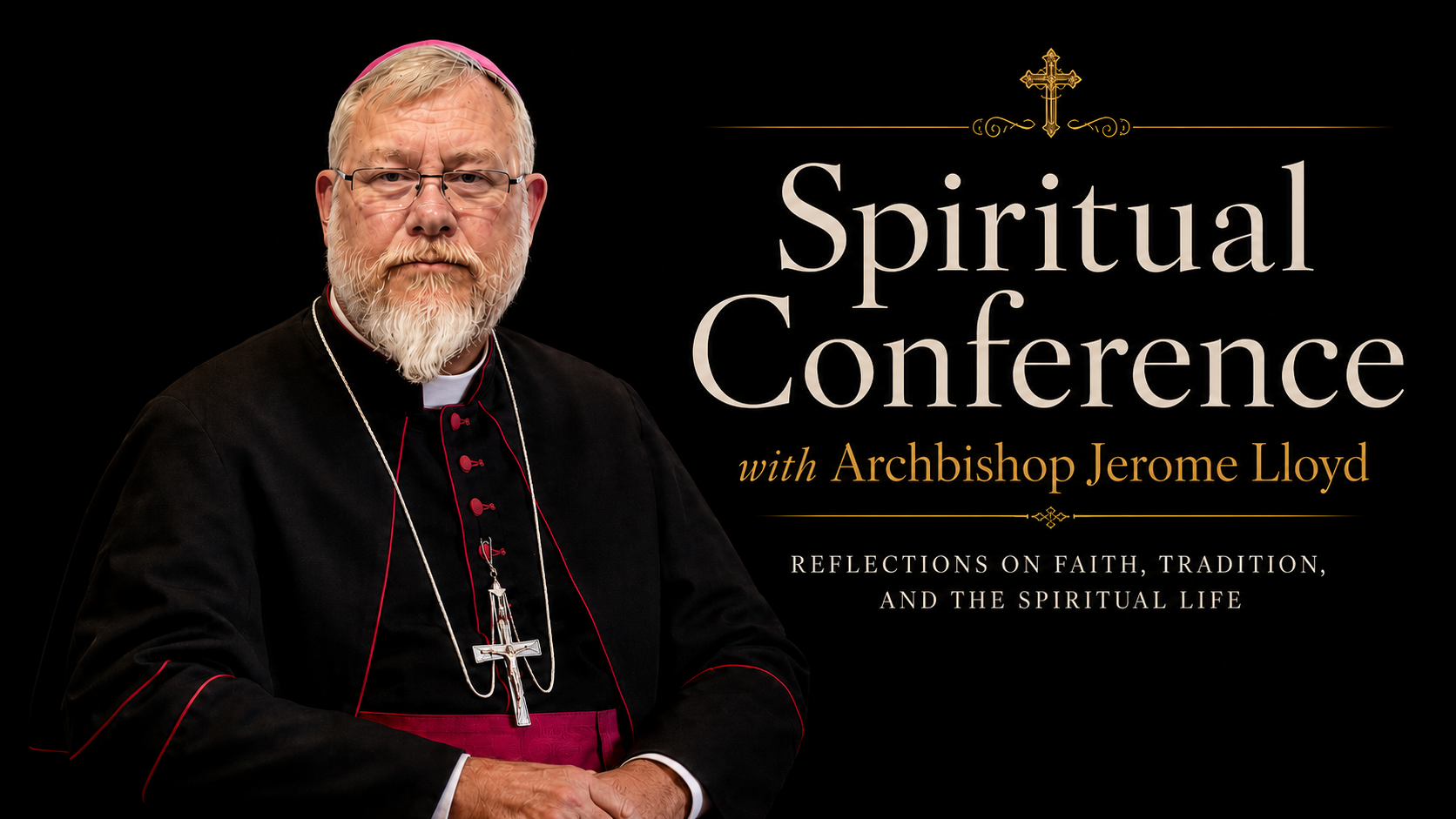
Between January 27th and February 10th 2020, as Primus of the Old Roman Apostolate, ✠Jerome visited the missionary territory of the Philippines. During his visit he consecrated the Most Revd Joash Jaime as an auxiliary bishop and visited the parishes of Bacoor, Cavite and Santa Rosa, Laguna.

Ahead of the Episcopal Consecration at Candlemas, ✠Jerome was invited to consecrate and bless new sacred vessels and church furniture gifted to the bishop-elect and the parish church.

The episcopal consecration took place at the Parish of Jesus the Divine Mercy in Bacoor, Cavite on Candlemas, February 2nd 2020. Assisted by Bishop Rommel Banag the territory bishop, ✠Jerome consecrated Bishop Joash Jaime supported by some two hundred faithful. The traditional foremas of the Purification of the Blessed Virgin Mary with blessing of candles and procession began the ceremonies, followed by the episcopal consecration.

YouTube player
YouTube player

✠Jerome’s birthday occurred during the Visitation and the local faithful joined him for an impromptu pool party and videoke session at his hotel!

On Septuagesima Sunday, ✠Jerome visited the Parish of San Isidro the Worker in Santa Rosa, Laguna Province and received the parish into communion and oversaw the canonical possession of the parish by the diocese. Striking his crozier three times upon the closed doors of the church, they were opened and the Archbishop was greeted by lay-leaders of the parish whom he then formally introduced to Bishop Banag through the shaking of hands. Mass followed.

Following the Mass, ✠Jerome was entertained by the children of the parish with song and dance. While guests enjoyed a sumptuous buffet of local dishes prepared by the faithful, ✠Jerome visited and blessed the homes of some other of the faithful accompanied by the parish priest, Fr Portez.

A full report of the Archbishop’s Visitation will be published soon in a special edition of The Old Roman.


LATEST ARTICLES


  • Today’s Mass: September 09 Day II in the Octave of The Nativity of the Blessed Virgin Mary
    The feast of Our Lady’s Nativity, of ancient Eastern origin and established at Rome by the time of Pope St Sergius I, celebrates Mary as the immaculate New Eve and the dawn of salvation, the chosen tabernacle from whom the Redeemer would take His flesh. Today the Church also commemorates St Gorgonius, an officer of the imperial household at Nicomedia who, with his companion Dorotheus, embraced the Faith and suffered martyrdom under Diocletian in A.D. 303; his relics were later translated to Rome.
  • NOMEN MANET, RES DEEST ~ The Name Remains; the Reality Is Lacking: Spiritual Conference for Nuntiatoria CXXII
    The content emphasises the disconnect between the names associated with Catholicism and the actual practices of faith. It highlights the importance of embodying belief through genuine actions, urging self-examination rather than mere external observance. Ultimately, it advocates for a restoration of sincerity in faith, calling individuals to authentically reflect their beliefs through their lives and worship.
  • Mary Is Co-Redemptrix: Cardinal Burke Reopens Rome’s Marian Controversy
    Cardinal Raymond Leo Burke has declared the Virgin Mary as “Co-Redemptrix” amidst controversy over the Vatican’s restriction on this title. The debate revolves around the appropriateness of certain theological language and whether terminology historically used can still accurately express Marian cooperation in Redemption without compromising Christ’s unique role.
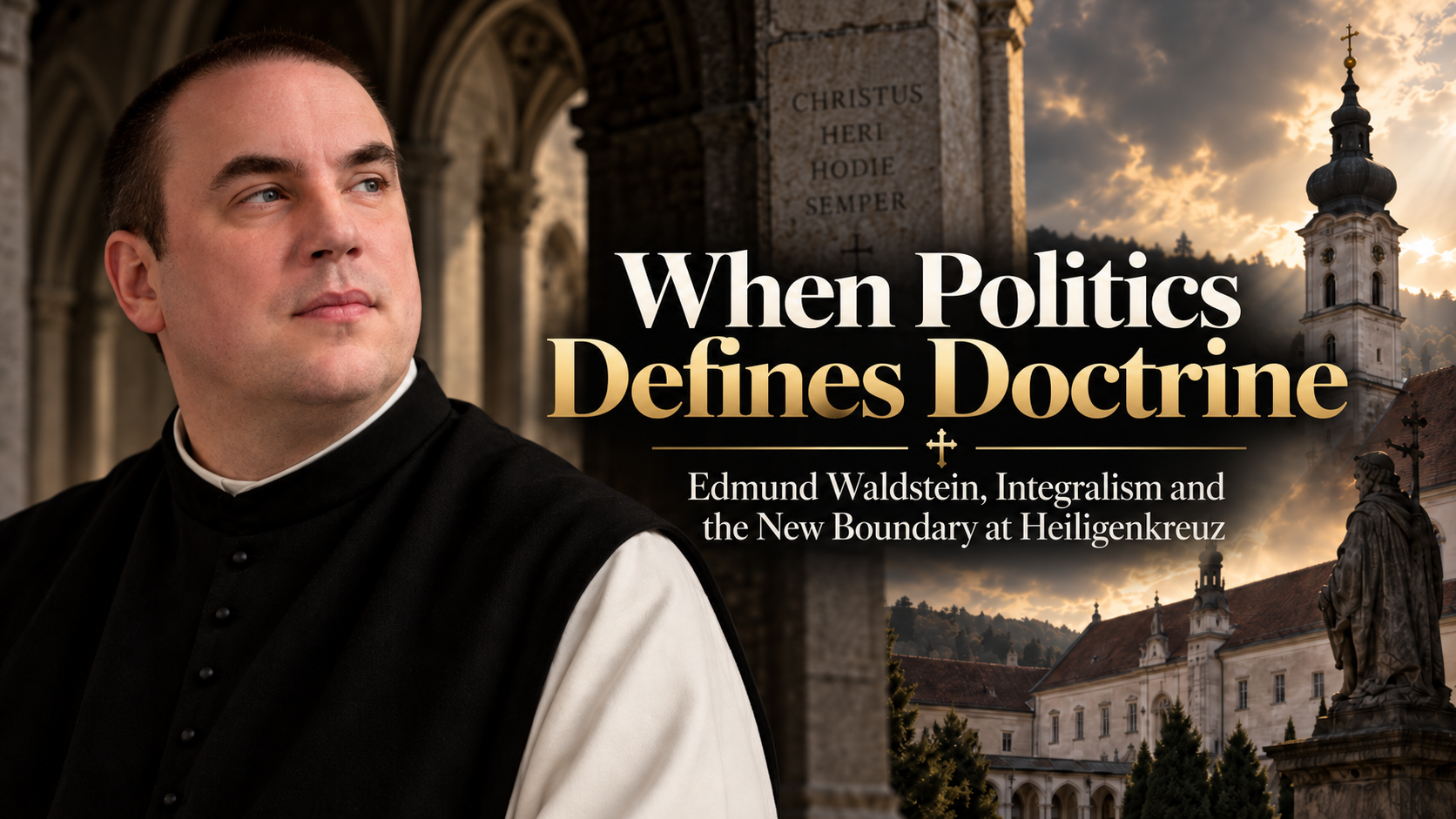
  • When Politics Defines Doctrine: Edmund Waldstein, Integralism and the New Boundary at Heiligenkreuz
    The ongoing exclusion of Father Edmund Waldstein from teaching at Heiligenkreuz has sparked debate on the limits of acceptable Catholic thought, particularly regarding integralism and its relationship to Church doctrine. Critics argue that Waldstein and similar positions challenge both Catholic teachings and democratic values, raising questions about the intersection of faith and politics.
  • Christianity Is Right ~ Not Right Wing
    The article discusses the distinction between Catholic orthodoxy and modern political ideologies, particularly the Right and Christian nationalism. It argues that Catholic beliefs about family, morality, and authority predate contemporary political classifications and should not be conflated with right-wing politics. The ordo amoris framework is presented as a guiding principle for evaluating political alliances while maintaining a focus on the common good and the Social Kingship of Christ.

LITURGY


Leave a Reply

Trending

Discover more from NUNTIATORIA

Subscribe now to keep reading and get access to the full archive.

Continue reading