
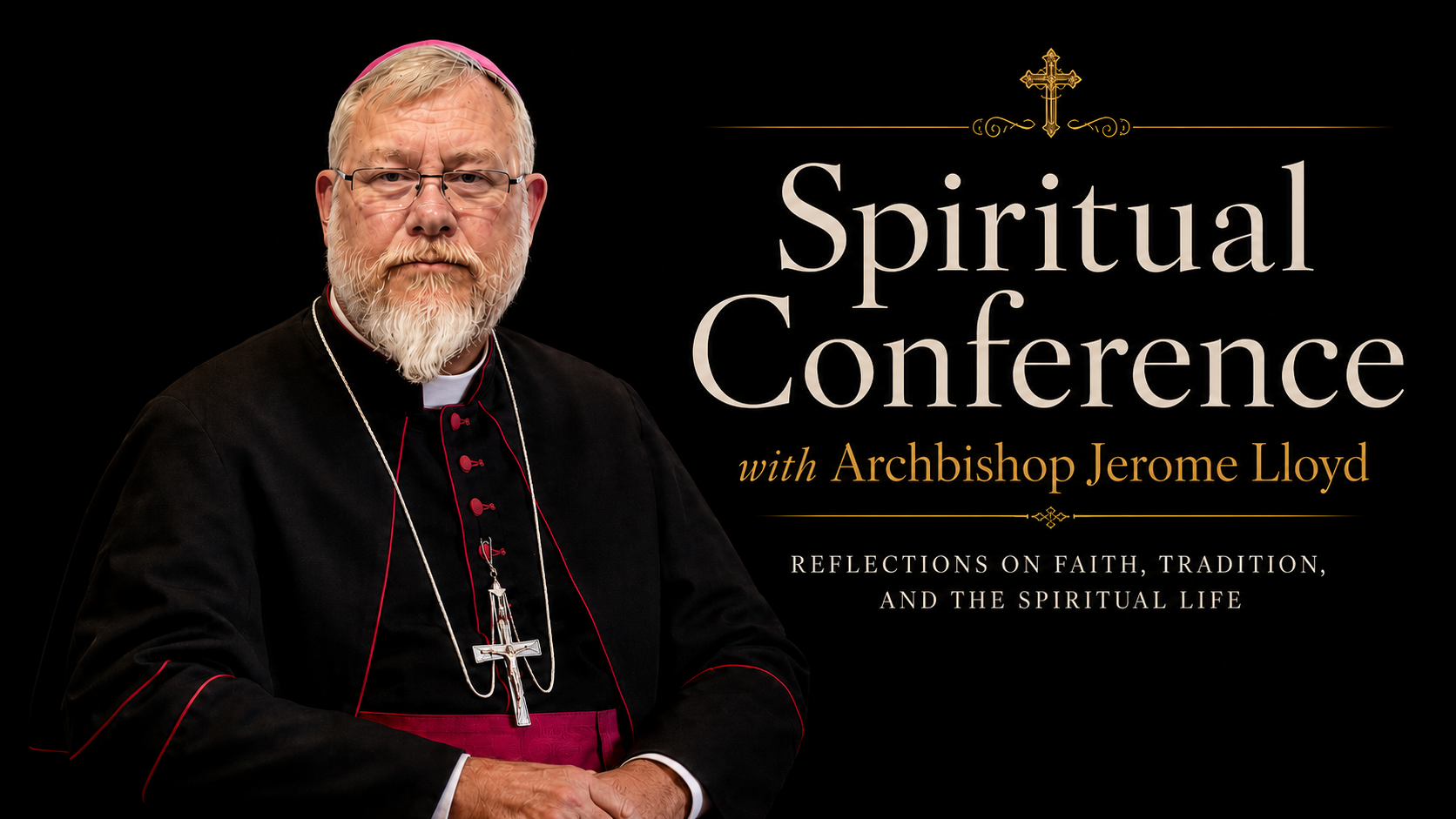
By the Archbishop of Selsey
The ordering of human love has always been decisive for the health of civilisations. At stake is not simply the happiness of individuals, but the stability of families, the nurture of children, and the vitality of culture itself. Christianity, from its beginning, proposed a vision of sexuality that was at once demanding and profoundly humane. Far from repressing joy, it elevates it—integrating passion with fidelity, openness to life, and the dignity of persons.
The Church has never been content to leave the most intimate of human acts to shifting preference. From Genesis onward, marriage is revealed as covenant: “The two shall be one flesh” (Gen. 2:24; Mt. 19:5). Christ confirmed this order, declaring: “What God hath joined together, let not man put asunder” (Mt. 19:6). Sexual intimacy belongs to marriage, marriage is permanent and faithful, chastity before marriage prepares for fidelity within it, and openness to life crowns it with fruit. Virginity and celibacy point to the higher truth that human fulfilment ultimately rests in God.
The Fathers called these principles beautiful. St. Augustine described chastity as “the beauty of the soul” which brings harmony to desire.¹ St. John Chrysostom called the Christian household “a little Church,” where fidelity mirrors the love of Christ and His Bride.² St. Jerome observed that consecrated virginity does not diminish love but ennobles it.³ Their vision was later reaffirmed by the magisterium: Pope Pius XI in Casti Connubii taught that marriage is ordered both to the procreation of children and the mutual perfection of the spouses;⁴ the Second Vatican Council in Gaudium et Spes called marriage “a covenant of irrevocable personal consent”;⁵ and St. John Paul II in Familiaris Consortio declared that “the future of humanity passes by way of the family.”⁶
What has this ethic produced in practice? The social sciences confirm what revelation declared. Decades of research show that children raised in stable, married families are healthier, better educated, and more emotionally secure. A Princeton study led by W. Bradford Wilcox concluded that intact marriages reduce child poverty, improve school performance, and lower delinquency.⁷ Anthropologists have demonstrated that monogamous marriage, historically rare, restrains elite polygamy, reduces male violence, and directs energy into family provision. Joseph Henrich called this shift “the domestication of the male,” essential for peaceful and productive societies.⁸
Where intimacy is safeguarded by fidelity, health is preserved. The Centers for Disease Control consistently note that stable, monogamous unions carry the lowest risks of disease and psychological harm.⁹ By insisting on covenantal love, Christian morality provides a natural safeguard for trust and well-being. By demanding equal fidelity from husband and wife, it elevated the dignity of women. What theology first declared, anthropology now confirms: monogamous marriage fosters greater equality between the sexes and deeper paternal investment in children.¹⁰
This vision is also life-affirming. In the ancient world, Christians distinguished themselves by refusing to expose infants, insisting that every child is a gift. Roman historians noted the peculiarity of this practice.¹¹ Today, the same openness to life challenges a culture that too often views children as burdens. In Humanae Vitae, Pope Paul VI warned prophetically that to separate love from life would lead to marital breakdown, the exploitation of women, and demographic decline.¹² His words have proven true. Nations that embraced contraception and abortion as norms now face collapsing birth rates and an uncertain future. Italy, Spain, and Japan all record fertility rates far below replacement level, leaving questions of intergenerational care and economic survival.¹³
Even psychology lends its voice. Walter Mischel’s well-known studies on delayed gratification showed that the ability to restrain desire predicted better outcomes in education, work, and health decades later.¹⁴ Christian chastity, far from being denial, is a school of virtue. It trains men and women to master desire, not be mastered by it. It is preparation for fidelity in marriage and a foundation for self-possession in all of life.
The witness of celibacy and virginity adds another dimension. St. Paul called it a gift enabling undivided devotion to God. Far from undermining society, celibate communities have enriched it: monasteries preserved learning, cultivated land, and cared for the sick; religious orders established schools and hospitals that endure to this day. As Rodney Stark has shown, the radical witness of virginity and celibacy drew many to the Church, impressed by the joy of lives wholly consecrated to Christ.¹⁵
By contrast, the world’s departure from these principles is plain. In the United States, more than 40% of children are born outside marriage.¹⁶ Researchers such as Sara McLanahan have shown that these children face higher risks of poverty and educational disadvantage.¹⁷ Across Europe, loneliness has reached record levels among young adults, often linked to unstable relationships and the decline of family bonds.¹⁸ The United Kingdom has reported the highest rates of syphilis in seventy years.¹⁹ Meanwhile, nations that suppress openness to life now face demographic winter.²⁰ And cultural observers like Mary Eberstadt have argued that the weakening of family life contributes directly to social fragmentation, as individuals seek identity in causes and ideologies when they no longer receive it from kinship and home.²¹
These are not condemnations but clarifications. They show by contrast how the Christian ethic, lived authentically, provides remedies for today’s wounds. By calling men to be faithful protectors, women to be honoured partners, and children to be cherished blessings, it nurtures harmony. By connecting intimacy with covenant, it safeguards trust. By linking love to life, it renews generations.
Christian sexual morality is not a burden but a gift—an enduring framework through which love finds its truest form. Where it is embraced, societies flourish; where it is neglected, they falter. Demanding, yes—but profoundly humane. It orders love to truth, and life to abundance. In the words of St. John Paul II: “Man cannot live without love. He remains a being that is incomprehensible to himself… if love is not revealed to him.”²²
For a more indepth presentation visit Nuntiatoria.org
¹ St. Augustine, Confessions, Book X.
² St. John Chrysostom, Homily XX on Ephesians.
³ St. Jerome, Against Jovinianus, Book I.
⁴ Pius XI, Casti Connubii (1930), §23.
⁵ Vatican II, Gaudium et Spes (1965), §48.
⁶ John Paul II, Familiaris Consortio (1981), §86.
⁷ W. Bradford Wilcox, Marriage and Child Well-Being: Research Findings (Princeton/Institute for American Values, 2011).
⁸ Joseph Henrich, Robert Boyd & Peter J. Richerson, The Puzzle of Monogamous Marriage, Philosophical Transactions of the Royal Society B (2012).
⁹ CDC, Sexually Transmitted Disease Surveillance Report (2023).
¹⁰ Joseph Henrich, The WEIRDest People in the World (Farrar, Straus and Giroux, 2020).
¹¹ Tacitus, Annals, XV, 44; cf. Athenagoras, Plea for the Christians, §35.
¹² Paul VI, Humanae Vitae (1968), §17.
¹³ UN Department of Economic and Social Affairs, World Fertility and Family Planning 2022.
¹⁴ Walter Mischel, The Marshmallow Test: Mastering Self-Control (Little, Brown, 2014).
¹⁵ Rodney Stark, The Rise of Christianity (HarperOne, 1997).
¹⁶ CDC, National Vital Statistics Reports, Vol. 72, No. 2 (2023).
¹⁷ Sara McLanahan & Isabel Sawhill, Marriage and Child Wellbeing Revisited, Future of Children 15:2 (2005).
¹⁸ European Union Agency for Fundamental Rights, Loneliness in the EU (2022).
¹⁹ UK Health Security Agency, Sexually Transmitted Infections Surveillance Data (2022).
²⁰ UN Department of Economic and Social Affairs, World Fertility and Family Planning 2022.
²¹ Mary Eberstadt, Primal Screams: How the Sexual Revolution Created Identity Politics (Templeton Press, 2019).
²² John Paul II, Redemptor Hominis (1979), §10.



Leave a Reply