
Baroness Cass has withdrawn her support for Labour’s proposed conversion practices legislation, while family-law specialists warn that its uncertain definitions could draw ordinary parental disagreements into safeguarding proceedings. Their evidence reinforces concerns already raised by Nuntiatoria and formally placed before Parliament by the Archbishop of Selsey.
Baroness Hilary Cass received the Government’s draft Conversion Practices Bill approximately an hour before ministers wanted a favourable press statement, and only fifteen minutes before she was due to address a public gathering. She had previously discussed the principles of the legislation with Olivia Bailey, then a minister, and had welcomed what she understood to be improvements over earlier proposals. She had scarcely any opportunity to examine the actual provisions before being asked to comment upon them. Appearing before Parliament’s Joint Committee on 16 November, Cass explained the circumstances of that original endorsement and delivered a considerably less encouraging assessment. Having now studied the text and consulted families and clinicians, she considered the Bill insufficiently precise to avoid serious unintended consequences. Asked directly whether she supported it as drafted, she answered that she could not.¹
For a Government seeking legislation in an exceptionally contested area of medicine, that admission ought to have been uncomfortable. The independent review bearing Cass’s name had led NHS England to reconsider its treatment of children and adolescents presenting with gender-related distress. Ministers were now proposing criminal legislation whose application might affect the very clinical approach her review had recommended. Cass remains opposed to abusive conversion practices, as she made clear to the Committee. Her objection concerns the possibility that legislation intended to prohibit abuse might expose legitimate clinical treatment and parental decisions to allegations of criminal wrongdoing. She illustrated the difficulty through the experience of a family encountered during her review.
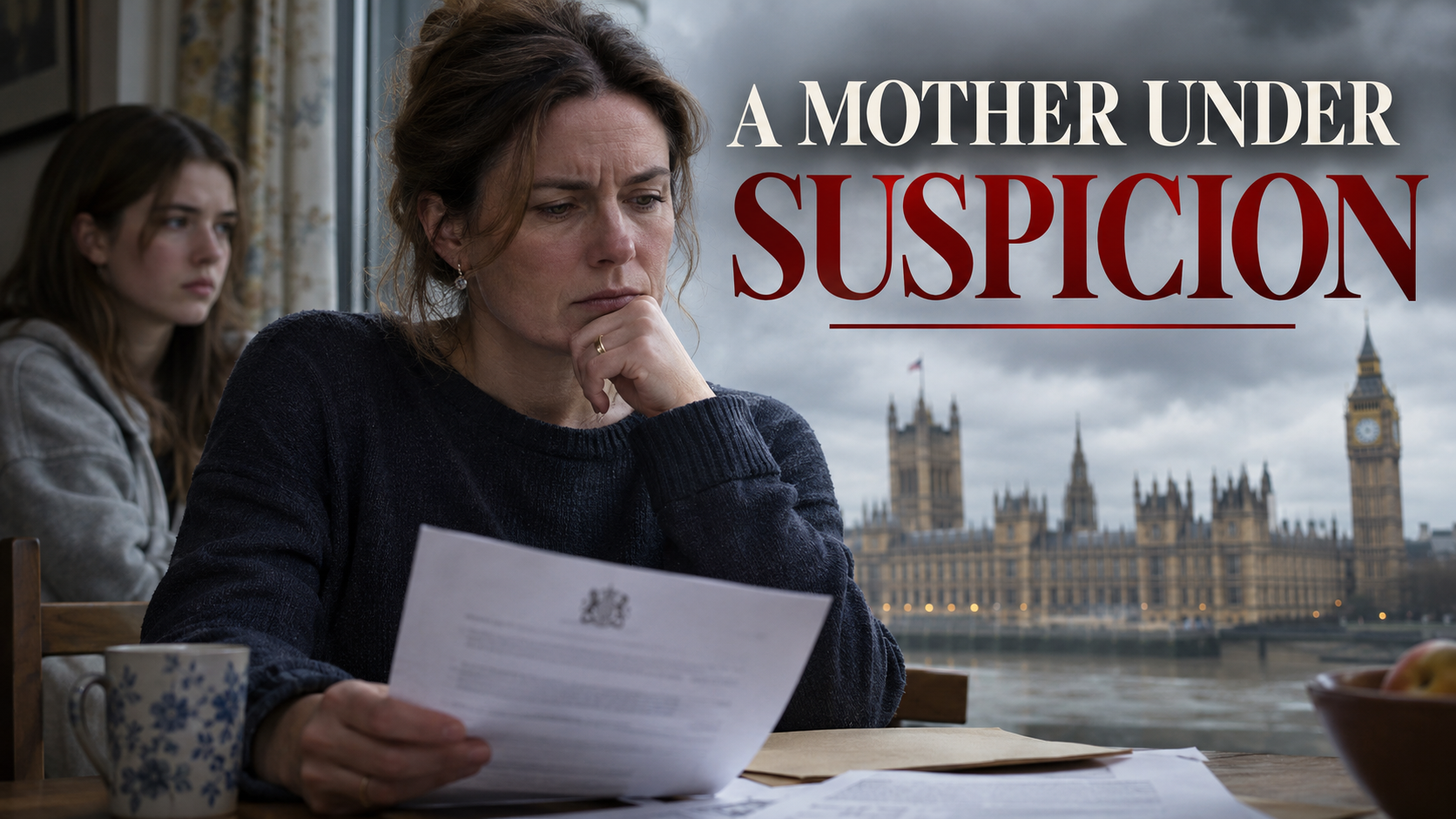
A mother had been living in an abusive marriage. Her daughter experienced anorexia and medically unexplained symptoms before beginning to identify as male. Following the parents’ separation, the father, who had initially been strongly opposed to the daughter’s transgender identification, reported his former wife to social services because she would not adopt the child’s preferred name and pronouns. When the mother spoke to Cass, the investigation had continued for eleven months. Her younger son had begun wetting the bed and was no longer attending school. Cass believed the father’s complaint had been vexatious, arising from the acrimony of the marital breakdown.¹
The account comes from Cass’s evidence; the underlying family proceedings have not been independently examined for this article. The incident also predates the proposed legislation. It cannot establish what a court would decide under the new law. Nevertheless, it describes a familiar problem in family justice. Once an accusation enters the safeguarding system, its consequences may be felt long before anyone has established whether the alleged conduct was abusive. The family must live with the investigation while the authorities endeavour to establish the facts. Writing in The Telegraph on 22 November, Zoe Strimpel placed particular emphasis upon the vulnerability of mothers. She argued that women frequently undertake the greater share of discussions and practical decisions concerning a child’s gender identity, leaving them especially exposed should parental caution become grounds for official suspicion. She also interpreted the proposals as evidence of a wider political hostility towards women who resist contemporary gender ideology.²
Strimpel’s concern about mothers is credible, although reliable evidence establishing the precise number likely to be affected is lacking. Her wider political interpretation is less readily demonstrated. The Bill contains no provision expressly directed against women. What requires examination is whether its provisions could be used against conscientious parents generally, and whether existing safeguards would prevent the misuse of those powers. A mother may be particularly exposed because she undertakes the practical responsibility of caring for a distressed child, but the legal question concerns the limits of parental authority and the circumstances in which the state may properly intervene.
Nuntiatoria has addressed these questions repeatedly since May. Our investigation of the draft legislation in June challenged the Government’s evidential assumptions. In July, examining Tavistock and Brighton’s WellBN controversy, we warned that safeguarding concerns might themselves become vulnerable to allegations of conversion practice. The investigations published on 30 October, 6 November and 13 November examined respectively the evidence presented by Galop, the legal analysis of Baroness Kishwer Falkner and Akua Reindorf KC, and Stonewall’s involvement in discussions concerning the legislation.³ Those articles established the grounds of our concern. The parliamentary hearings of 16 and 19 November have now provided testimony from medical and family-law professionals whose responsibilities would be directly affected by the proposed law.
There was also a formal intervention from the Old Roman Apostolate. On 16 November, the Most Reverend Dr Jerome Lloyd, Titular Archbishop of Selsey and Primus of the Old Roman Apostolate, submitted written evidence to the Joint Committee in his individual capacity. Parliament acknowledged receipt that afternoon under reference WTS900514. Archbishop Lloyd’s submission drew upon his pastoral ministry, civic involvement in safeguarding and religious liberty, and earlier participation in the Ministers’ Consultation Response of 2021. It did not purport to represent every Catholic jurisdiction. He asked Parliament to establish precisely which harmful practices were inadequately addressed by existing criminal law, to clarify the proposed definition of psychological and emotional pressure, and to protect legitimate parental conversations, clinical assessment and voluntary spiritual counsel. Particular attention was given to the proposed civil protection orders, whose consequences could arise before any criminal conviction.⁴
Archbishop Lloyd’s evidence also raised a difficulty insufficiently considered in public discussion: people may suffer considerable professional, familial and reputational injury through the investigation of allegations which ultimately prove unfounded. Safeguarding referrals, institutional suspensions and restrictions imposed during legal proceedings may have consequences quite independently of the eventual outcome of a prosecution. Those responsible for drafting legislation must therefore consider how accusations will be handled, as carefully as they consider the penalties to be imposed upon those eventually convicted. The subsequent testimony of Cass, Cafcass and family-law specialists lends weight to several of these concerns. Their evidence also reveals where the Government’s proposals may fulfil a legitimate protective purpose.
The draft Bill, published on 25 June, would create a criminal offence involving conduct intended to cause somebody to have, or believe that they have or do not have, a particular sexual orientation or transgender identity. It requires more than an intention to influence another person’s beliefs. The conduct must constitute an abusive conversion practice and cause serious physical or mental harm, or serious alarm or distress substantially affecting ordinary daily activities. The maximum sentence upon conviction on indictment is five years’ imprisonment.⁵ These are substantive legal conditions. It would be inaccurate to suggest that a mother automatically commits an offence by refusing to use particular pronouns, withholding money for a chest binder or questioning whether her child requires medical intervention. A prosecution would have to establish the necessary elements of the offence.
The concern lies partly in how abuse is to be determined. Clause 1 requires consideration of the circumstances of the conduct, including whether it involves controlling behaviour, economic pressure or psychological and emotional pressure. These expressions encompass circumstances which can certainly be abusive. Yet parents also exercise financial control, set boundaries and engage in difficult conversations as ordinary incidents of bringing up children. A mother might refuse to finance hormone treatment because she has received medical advice suggesting that further assessment is necessary. A father might insist that his child attend counselling before making decisions concerning social transition. Either decision could produce considerable distress. A child’s distress must be taken seriously, but its existence cannot establish, without further examination, that the parent’s conduct was abusive. The distinction between disagreement, emotional harm and coercion cannot be left to the mere assertion of whichever party first makes a complaint.
This is where the evidence of Sarah Branson becomes particularly valuable. Appearing before the Committee on 19 November, Branson explained that family lawyers already work with established concepts governing state intervention. Section 31 of the Children Act 1989 provides the familiar threshold of significant harm, or likelihood of such harm, attributable to the care given to a child. That threshold governs care and supervision orders; it is not a universal test for every order made in the family courts. Nevertheless, its interpretation is supported by decades of judicial experience. The draft Conversion Practices Bill uses different terminology. Branson could not determine whether Parliament intended a lower threshold, a higher threshold or substantially the same test expressed in unfamiliar language. Shabana Jaffar, head of legal at Cafcass, agreed that the definitions were insufficiently clear for family practitioners accustomed to established statutory thresholds.⁶
The uncertainty is particularly troubling because the proposed legislation does considerably more than introduce a criminal offence. Its Schedule would permit the family court or High Court to make conversion practice protection orders where abusive practices are likely to cause the specified serious harm or distress. Applications could come from the person requiring protection, the police or a local authority. Other individuals could apply with the court’s permission. An order might also be made during existing family proceedings without a separate application. The courts could impose prohibitions, restrictions or requirements considered appropriate for the protective purpose. Orders could be made without prior notice in specified circumstances, although the legislation also provides mechanisms for variation, discharge and appeal. Breach without reasonable excuse would itself constitute a criminal offence.⁵
A conviction for conversion practices would therefore not be necessary before restrictions were imposed. The preventive purpose is explicit, as are the statutory conditions that a court would have to consider. Whether those conditions have been defined with sufficient precision is the disputed question. This issue was addressed directly in Archbishop Lloyd’s written submission, which recommended stricter evidential and proportionality safeguards, prompt hearings and effective review, together with express protection against orders interfering with lawful, freely requested religious counsel or responsible parental conversations in the absence of a clearly established risk of serious harm.⁴
Branson’s evidence supplied an important qualification to the argument against preventive orders. She explained that family courts already employ protection orders in cases concerning forced marriage and female genital mutilation. In her professional experience, such orders can sometimes protect children while allowing them to remain with their families. Without that intermediate remedy, authorities may face the much more disruptive possibility of removing a child from parental care. That is a substantial argument in favour of appropriately constructed preventive powers. If a child faces a genuine danger of being subjected to violent, degrading or coercive treatment, a carefully limited order might protect the child without unnecessarily separating the family.
Branson’s objection concerned the drafting and operation of the proposed orders. She recommended clearer thresholds, safeguards against vexatious applications, greater judicial expertise in determining complicated cases and improved provision for appeals. She also suggested using established procedures under the Children Act to scrutinise applications arising from parental conflict.⁶ Jaffar described another practical complication. Many parents already appear in family proceedings without legal representation. They may be struggling through an acrimonious separation while attempting to understand unfamiliar legal concepts. If the language of the proposed legislation is insufficiently clear, disagreements which might otherwise be resolved within the family could become additional applications to the courts. Cafcass did not present itself as an opponent of the Bill. Jaffar expressly stated that the organisation had no settled position for or against it. Its concern was the effect of the proposed provisions upon an already pressured family justice system. She also warned of a possible increase in safeguarding referrals, although she could not quantify what that increase might be.
Nor should the evidence supporting legislation be disregarded. Des Johnson, chair of FFLAG, the organisation supporting families of LGBT people, told the Committee that abusive conversion practices remain a genuine problem. He argued that the Bill would address forms of abuse insufficiently covered by existing legislation and rejected the suggestion that ordinary, difficult parenting would satisfy its criminal thresholds. Johnson encouraged Parliament to investigate experience in other jurisdictions where similar prohibitions have been introduced. He said that he had found no evidence of a corresponding increase in vexatious complaints against parents and professionals. His organisation nevertheless proposed amendments which would extend the legislation’s reach, including the addition of suppression to the definition of conversion practices and the inclusion of conduct likely to cause serious harm.⁷
Those proposals deserve scrutiny in their own right. It would be peculiar to answer concerns about an uncertain criminal definition by extending the prohibited conduct before establishing the limits of the existing offence. The absence of documented prosecutions or vexatious complaints in another jurisdiction does not conclusively demonstrate the absence of a chilling effect. Neither, however, do anecdotal reports of professional anxiety establish that such legislation invariably suppresses legitimate practice. The Committee should require evidence of how comparable laws have operated, including complaints investigated, orders granted, proceedings dismissed and effects upon professional conduct.
The Government’s domestic evidential case has already received detailed attention from Nuntiatoria. Our investigation of Galop’s report Still Not Illegal examined its selection of 195 cases from frontline records, the limitations of a non-representative sample and numerical inconsistencies in the published material. We also questioned the Government’s extrapolation of an estimated 75,000 to 93,000 annual experiences from survey responses whose relationship to the proposed legal offence remains uncertain.⁸ None of these difficulties establishes that abuse is imaginary. It establishes the need to distinguish reported experiences, independently verified misconduct and conduct which existing law cannot adequately address. Parliament should be capable of identifying precisely what additional wrong it intends to prohibit. The existence of assault, intimidation or coercive control is already a matter for criminal law. Where existing provisions are inadequate, the deficiency should be demonstrated. A new criminal offence may be justified, but the case for it requires more than evidence that objectionable conduct occurs.
The question becomes still more complicated in healthcare. The Bill attempts to protect legitimate medical practice by excluding conduct undertaken in the provision of healthcare unless it falls far below the standards reasonably expected of the practitioner. Cass welcomed the principle but warned that professional standards in this field remain disputed. The difficulty is readily understood. A child presenting with gender-related distress may also be experiencing trauma, anxiety, an eating disorder or a neurodevelopmental condition. The clinician must be able to investigate these circumstances without presuming what the eventual outcome should be. Some conversations will inevitably be painful. A young person may experience considerable distress when medication is refused or when a clinician wishes to explore experiences which the patient would rather avoid. It would be professionally irresponsible to avoid necessary enquiry simply because the conversation might be upsetting.
Cass also raised the problem of defending professional decisions when relevant clinical information is confidential. A practitioner accused of abusive conduct might have difficulty explaining the context without disclosing sensitive material concerning the child or other members of the family.¹ These are practical questions about the administration of justice and professional regulation, far removed from the slogans which have characterised much of the public debate. They are also directly relevant to the experience of Dr Sarah Redvers.
Asked whether the proposed legislation might discourage professional whistleblowing, Cass referred to Redvers’s experience in Brighton and the concerns she had raised about prescribing practices associated with Dr Sam Hall at the WellBN surgery. The Committee chairman interrupted the account because Redvers’s employment tribunal proceedings remained unresolved.¹ The independent NHS investigation into WellBN had already established serious deficiencies in the treatment of 78 children and young people receiving gender-related medication. It concluded that the prescribing and associated clinical care fell far below acceptable standards and that the patients within the investigation’s scope had experienced potential harm. The findings concerned deficiencies in care and the risk arising from them; they did not establish that every patient had suffered a particular physical injury.⁹
Redvers’s separate allegations about the treatment she received after raising safeguarding concerns remain matters for the employment tribunal. They must not be conflated with the NHS investigation’s established findings. Nuntiatoria’s earlier coverage examined both matters and the broader implications for professional accountability. Cass’s decision to raise the case before Parliament adds another dimension: the possibility that a legislative framework designed to protect vulnerable children might also discourage those responsible for their care from questioning prevailing clinical assumptions. A safeguarding system which investigates parents and clinicians must itself remain open to scrutiny when its decisions prove mistaken. Those undertaking legitimate assessment should not require exceptional courage simply to discharge their responsibilities.
The same principle applies to religious practice. Archbishop Lloyd’s submission drew attention to the distinction between a person’s sexual attractions, moral conduct and freely chosen religious obligations. Catholic teaching concerning marriage and chastity does not depend upon compelling somebody to deny the existence of an attraction. A person may acknowledge his circumstances while voluntarily accepting a moral obligation to live chastely. Sacramental confession presents an especially instructive example. A penitent approaches the priest voluntarily, seeks forgiveness and receives counsel concerning amendment of life. The confessor may be required to address conduct which the penitent finds difficult to discuss. His responsibility is governed by Catholic sacramental theology and discipline, including the proper assessment of contrition and purpose of amendment.
The discomfort which may accompany repentance does not establish that abuse has occurred. Equally, the religious character of a conversation provides no justification for threats, humiliation or coercive treatment. The Archbishop’s submission therefore recommended that Parliament expressly protect non-abusive religious teaching, freely requested prayer, confession, spiritual direction and voluntary celibacy or chastity. It also questioned clause 5, under which specified officers of corporate and unincorporated bodies may incur liability where an offence is committed by the organisation and they authorise, permit, participate in or fail to take all reasonable steps to prevent it. The implications for churches, schools and charities require careful definition.⁴
The Catholic Bishops’ Conference of England and Wales has taken a firmer position. In a statement issued on 10 November, the Most Reverend John Sherrington, Archbishop of Liverpool, expressed concern that existing legislation already addressed abusive conduct and that the proposed Bill threatened legitimate pastoral activity, parental guidance and freedom of conscience. Archbishop Sherrington called upon politicians to abandon the Bill and concentrate upon enforcing existing protections.¹⁰ This position rests upon principles which precede the contemporary controversy. Catholic teaching recognises the family as a natural society possessing rights and obligations which the state must respect. Pius XI’s Divini Illius Magistri explains the priority of parental responsibility in education, while acknowledging the legitimate duties of civil authority towards the common good. The state’s responsibility to protect children from genuine harm remains essential; parental authority is neither unlimited nor an excuse for mistreatment.¹¹
Yet civil authority cannot properly assume that its preferred interpretation of a child’s identity determines the legitimacy of parental judgement. Nor should the lawful teaching of religious doctrine become dependent upon the approval of officials whose own convictions may differ radically from those of the faithful. Archbishop Lloyd’s submission accordingly requested a legislative analysis of the rights protected by Articles 8, 9 and 10 of the European Convention on Human Rights: private and family life, freedom of thought, conscience and religion, and freedom of expression. These rights admit lawful limitations, but restrictions must satisfy the applicable requirements of necessity and proportionality. A ministerial assurance that ordinary religious practice or parenting is not intended to be criminalised cannot replace clear statutory language.⁴
Returning to Strimpel’s concern, it is worth recognising the ordinary circumstances in which the law might operate. A mother whose daughter is distressed about her sex may already be dealing with school difficulties, conflicting medical advice, questions about treatment and disagreements with her husband or former husband. She must make decisions while attempting to preserve a relationship with a child who may regard caution as hostility. Her judgement may sometimes be mistaken. Parents are human, and parental love does not confer infallibility. But the responsibility of deciding how best to protect a child cannot be exercised intelligently if disagreement itself becomes a reason to fear investigation. The distinction between a parent who abuses a child and one who refuses a requested course of treatment is fundamental. It should be readily intelligible to families without their first having to instruct a barrister.
There is also a wider consequence which the Government has yet to explain satisfactorily. If clinicians are expected to investigate the causes of gender-related distress without assuming a predetermined outcome, parents must retain reasonable freedom to seek that assessment and to act upon responsible medical advice. The state should not create a contradiction between the clinical caution required by the NHS and the conduct which parents believe they are permitted to undertake. The Joint Committee is required to report by 22 January 2027.¹² It has already received evidence identifying areas where the Bill’s drafting requires attention: the definition of abuse, the distinction between legitimate exploration and prohibited attempts at conversion, the relationship with established family-law thresholds, and the operation of civil protection orders.
Those questions admit practical legislative answers. The Committee can require clear examples of conduct beyond the reach of existing law, examine experience in comparable jurisdictions, recommend express protection for lawful parental and religious activity, and propose effective safeguards governing applications and appeals. It can also consider the resources necessary to prevent further burdens being imposed upon family courts already struggling with delay. Whether ministers accept those recommendations will reveal considerably more about their intentions than repeated assurances that ordinary parenting has nothing to fear.
Nuntiatoria has examined the legislation since its earliest proposals. The Archbishop of Selsey has now placed specific recommendations before Parliament, and medical and legal witnesses have independently identified several of the same difficulties. Their evidence does not establish that every feared consequence will occur. It does establish that the defects are sufficiently serious to require correction before the Bill is introduced. The Government has chosen to legislate in an area where family relationships, medical judgement and deeply held religious convictions intersect. It must now demonstrate that its proposed powers are necessary, proportionate and defined with sufficient certainty for those expected to obey them.
The mother described by Baroness Cass had already endured eleven months of official investigation when her experience came to the review’s attention. Parliament cannot undo what happened to that family. It can, however, avoid creating further uncertainty about when conscientious parental responsibility becomes grounds for suspicion.
FOOTNOTES
¹ UK Parliament, Joint Committee on the Draft Conversion Practices Bill: Oral Evidence, 16 November 2026, questions 128–155; uncorrected transcript.
² Zoe Strimpel, Mothers Will Suffer Most Under Labour’s Trans ‘Conversion’ Ban, The Telegraph, 22 November 2026, syndicated by AOL.
³ Nuntiatoria, Before the Evidence Settles, 26 June 2026; When Safeguarding Becomes “Conversion”, 10 July 2026; The Evidence Parliament Must Not Take on Trust, 30 October 2026; Conversion Practices: The Law That Reaches into the Family, 6 November 2026; Stonewall at Number Ten: Who Is Writing the Law?, 13 November 2026.
⁴ Most Reverend Dr Jerome Lloyd DD OSJV, Written Evidence: Draft Conversion Practices Bill, submitted in an individual capacity on 16 November 2026, parliamentary acknowledgement reference WTS900514; author’s documentary record. Publication by the Committee has not been confirmed.
⁵ Office for Equality and Opportunity, Conversion Practices Draft Bill, 25 June 2026, clauses 1–5 and Schedule; Explanatory Notes.
⁶ UK Parliament, Joint Committee on the Draft Conversion Practices Bill: Oral Evidence, 19 November 2026, questions 189–246; uncorrected transcript.
⁷ UK Parliament, Joint Committee: Oral Evidence, 19 November 2026, evidence of Des Johnson, chair of FFLAG, especially questions 189–190 and 214–227.
⁸ Nuntiatoria, The Evidence Parliament Must Not Take on Trust, 30 October 2026; Office for Equality and Opportunity, Draft Final Stage Impact Assessment, 25 June 2026.
⁹ NHS Surrey and Sussex Integrated Care Board, Independent Patient Safety Investigation into Prescribing Practices at WellBN GP Practice, June 2026; Nuntiatoria, ‘Dwarfs Tavistock’: Baroness Cass Demands Inquiry into Brighton NHS Scandal, 26 October 2026.
¹⁰ Catholic Bishops’ Conference of England and Wales, Archbishop’s Statement on the Draft Conversion Practices Bill, Archbishop John Sherrington, 10 November 2026.
¹¹ Pius XI, Divini Illius Magistri, 31 December 1929, on the family’s educational rights and the responsibilities of civil society.
¹² UK Parliament, Joint Committee on Draft Conversion Practices Bill Appointed, 18 September 2026, reporting deadline 22 January 2027.





Leave a Reply