

The Song of the Bride
MASS Loquebar de testimoniis
EPISTLE Ecclesiasticus 51:1–8, 12
GOSPEL St Matthew 25:1–13
PROPER LAST GOSPEL St Matthew 24:15–35
HOMILIST Mt Revd Jerome Lloyd OSJV

In the Name of the Father, and of the Son, and of the Holy Ghost. Amen.
Carissimi, beloved in Christ
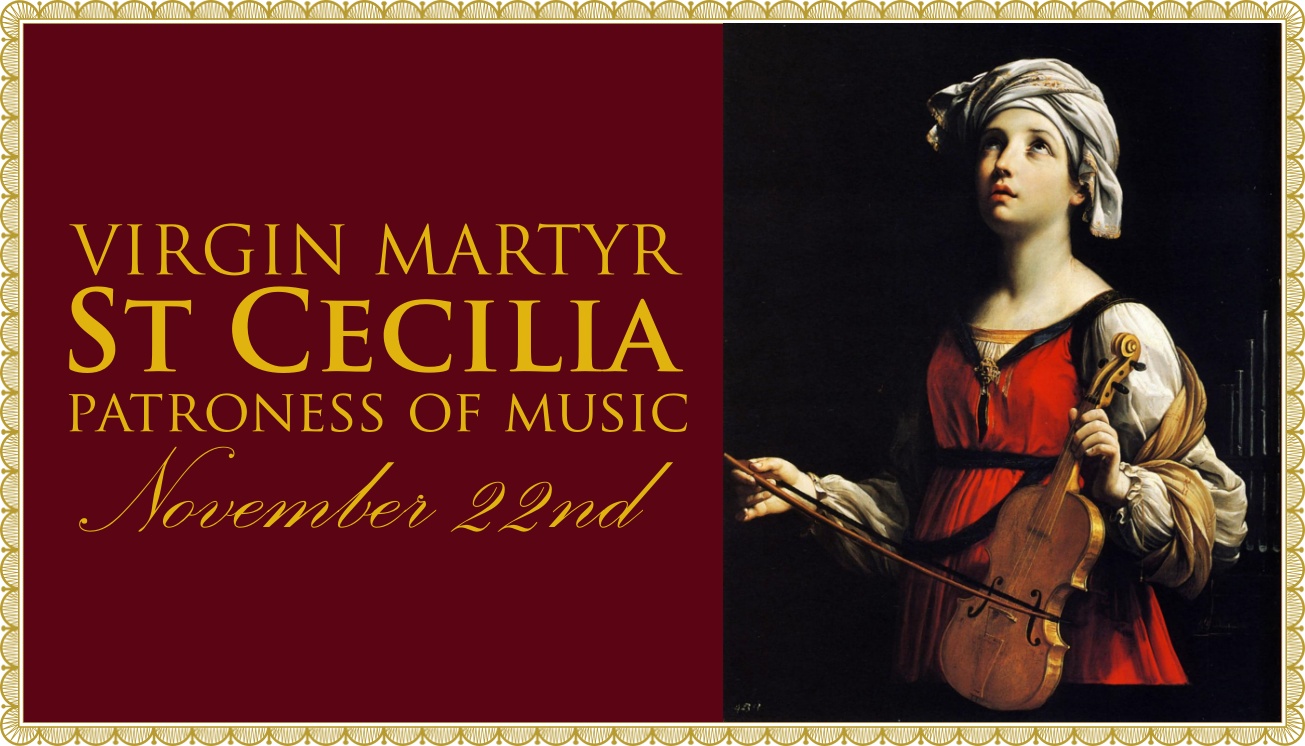
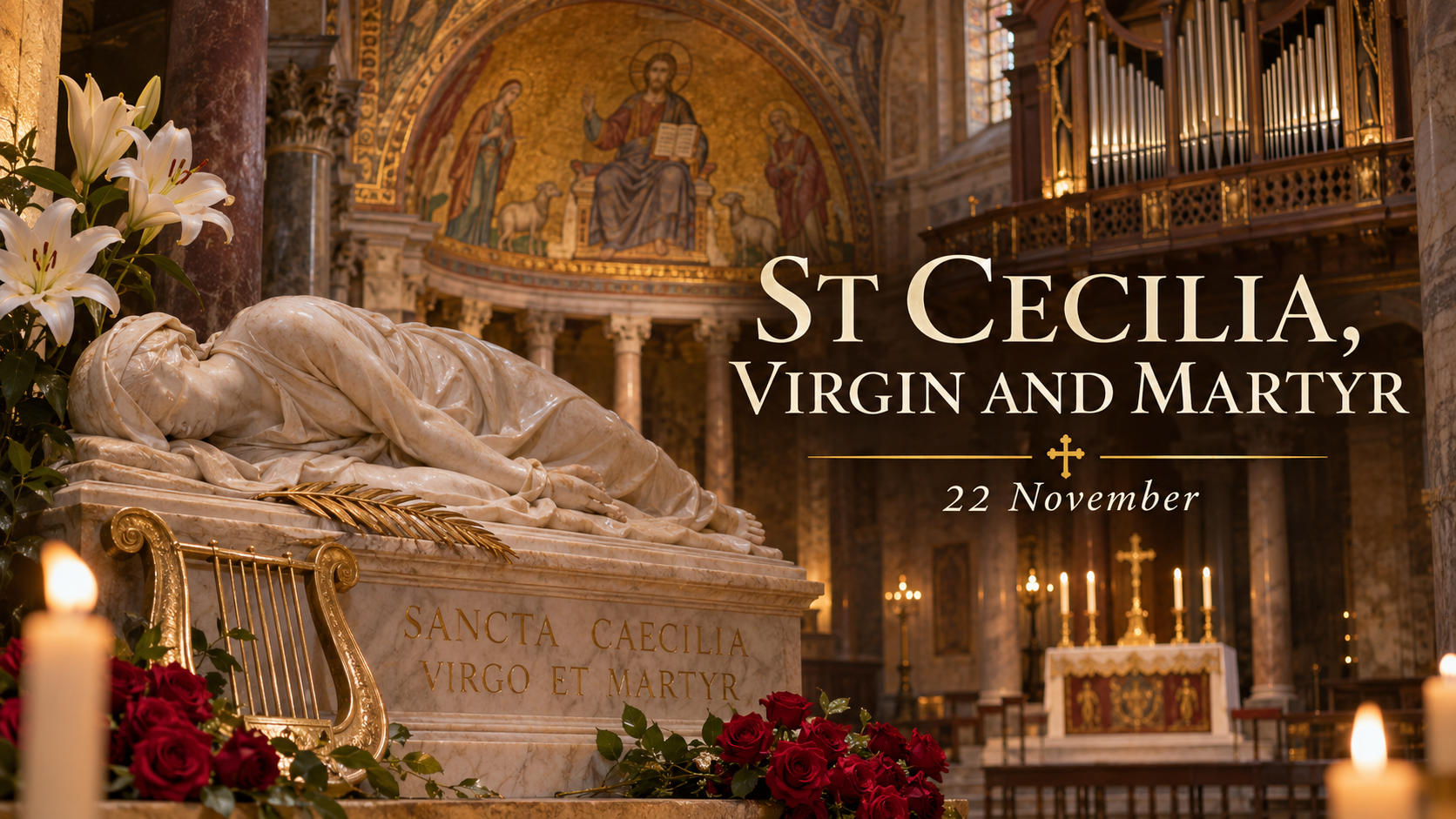
There is a remarkable harmony between the feast we celebrate today and the Gospel appointed for it. The Church honours St Cecilia, virgin and martyr, and places before us ten virgins awaiting the arrival of a bridegroom. Five are ready when he comes; five have allowed their lamps to go out. And, because this is also the last Sunday after Pentecost, we shall hear at the end of Mass Our Lord’s solemn warning about the passing of this world. It is a considerable amount of eternity to contemplate before breakfast.
Yet the connection is wonderfully exact. Cecilia’s story begins, in the ancient account handed down to us, with the music of a wedding, and ends beneath the sword of an executioner. Between those two moments runs one song, addressed to one Bridegroom. The Gospel tells us what that song means, and why every Christian must learn to sing it.
We should remember that Cecilia’s veneration in Rome is ancient, while many familiar details of her life come from a later Passion. Its account of her marriage to Valerian, his conversion and her death belongs to the Church’s received hagiographical tradition; we cannot pretend that every incident is established by contemporary records. But the tradition offers a profoundly Christian meditation upon fidelity, and it has shaped the prayers and antiphons of her feast.
At her wedding, while instruments sounded around her, Cecilia sang in her heart to God alone: ‘Let my heart and my body be undefiled, that I may not be confounded.’ It is worth noticing that the singing was inward. The wedding guests heard the musicians. God heard Cecilia. Amid the customary celebrations, she remembered the consecration of her heart to Christ. Her earthly marriage, according to the Passion, would become the occasion of Valerian’s conversion and of their shared fidelity to the Lord.
Then the scene changes. The same tradition tells us that Cecilia was condemned to death and that an executioner struck her neck three times without severing her head. She survived for three days before dying. Later Christian devotion has imagined her song continuing beneath the descending sword. We need not mistake that beautiful image for an eyewitness report to recognise its meaning. The song which began in her heart at the wedding had never ceased. What she professed in private she now sealed with her blood.
And now listen to the cry in today’s Gospel: ‘Behold the bridegroom cometh, go ye forth to meet him.’ Cecilia had kept her lamp burning. The world saw a young woman facing death; faith sees a soul going to meet the Bridegroom whom she had loved throughout her life. The music of her earthly wedding had ended long before. The wedding feast for which she had truly prepared was about to begin.
Consecrated virginity has this particular meaning in the life of the Church. It witnesses to the soul’s undivided dedication to Christ and anticipates the life of heaven, where, as Our Lord teaches, they neither marry nor are given in marriage. This does not diminish Christian marriage, which is itself a sacrament and a genuine path to holiness. Cecilia’s witness reminds married and unmarried alike that every vocation must finally be ordered towards union with God.
The Gospel’s ten virgins all appear to be waiting for the same bridegroom. All possess lamps, and all become drowsy during the delay. The difference becomes evident only when he arrives. Five have brought sufficient oil; five discover too late that their lamps are failing. The foolish virgins ask to borrow what they lack, but there are things which another person cannot supply for us at the moment of judgement.
St Augustine understood the oil as charity and the inward intention of a heart seeking God rather than human applause. The lamp is visible; the oil is hidden. We may possess every outward mark of religious observance and yet neglect the love of God and neighbour which ought to animate it. We can know the ceremonies of the Mass perfectly while remaining unwilling to forgive an injury. Our reverence at the altar should teach us to recognise Christ’s claims upon us outside the church doors.
The wise virgins are not being commended for selfishness. Their refusal to share teaches that spiritual readiness cannot simply be transferred from one person to another. Parents may teach their children, priests may administer the sacraments, and friends may intercede for those they love. These are precious helps. But nobody can repent in another person’s place, or make his final act of faith for him. The time to cultivate charity is while time remains. This is especially worth remembering when we pray for those who have wandered from the Faith. We cannot compel their return, but we can continue to love them, speak truthfully when the occasion is right, and commend them to the mercy of God. Prayer is never wasted simply because its fruit is hidden from us.
That is why the delay matters. We make plans for next week, next year, perhaps even the next decade, and there is nothing wrong with sensible provision for the future. Yet how carefully do we provide for the one meeting which is certain? We cannot know when death will come, nor should we presume that an opportunity for repentance will always be available tomorrow. Cecilia was ready when the sword descended because she had already given herself to Christ in the ordinary course of life.
The Sunday Gospel, read as the proper Last Gospel today, carries this warning beyond the individual soul. Our Lord speaks of Jerusalem’s desolation and of the tribulations which foreshadow the final consummation. He does not invite us to construct ingenious timetables from current affairs. He commands us to remain faithful when the things upon which men rely prove fragile. ‘Heaven and earth shall pass away, but my words shall not pass away.’
We stand upon the threshold of Advent. Soon we shall prepare to welcome the Child of Bethlehem, but that Child is also the Judge of the living and the dead. He has given us the means of salvation: Baptism, the truth taught by His Church, the sacrifice of the Mass and the sacrament of Penance. His mercy is offered to us now. We would be foolish to neglect it while assuming that there will always be another occasion.
A good confession would be an excellent preparation for Advent. We know the sins we excuse, the resentments we nurse and the occasions of sin we ought to avoid. Let us bring them honestly before God. If we are in the state of grace, let us receive Holy Communion worthily and pray for an increase of charity. If mortal sin has separated us from Him, let us seek sacramental absolution before approaching the altar. The oil of the lamp cannot be replaced by a respectable appearance.
Cecilia’s song gives us one last thought. Sacred music has dignity because it serves the worship of God, but its beauty should lead us to the prayer of the heart. The Lord hears more than the notes sung aloud. He knows whether our lives are becoming an offering of love. The song which Cecilia began in secret was proved genuine when fidelity became costly.
May she obtain for us that same constancy. Let us begin now, in prayer, charity, repentance and the faithful fulfilment of our duties, to prepare for the Bridegroom. Then, whenever He calls us, may He find our lamps burning and admit us to the wedding feast which has no end.
In the Name of the Father, and of the Son, and of the Holy Ghost. Amen.




Leave a Reply