

The Bones of the Saints: What God Has Promised to Raise
MASS Multae tribulationes
EPISTLE Ecclesiasticus 44:10-15
GOSPEL St Luke. 6. 17-23
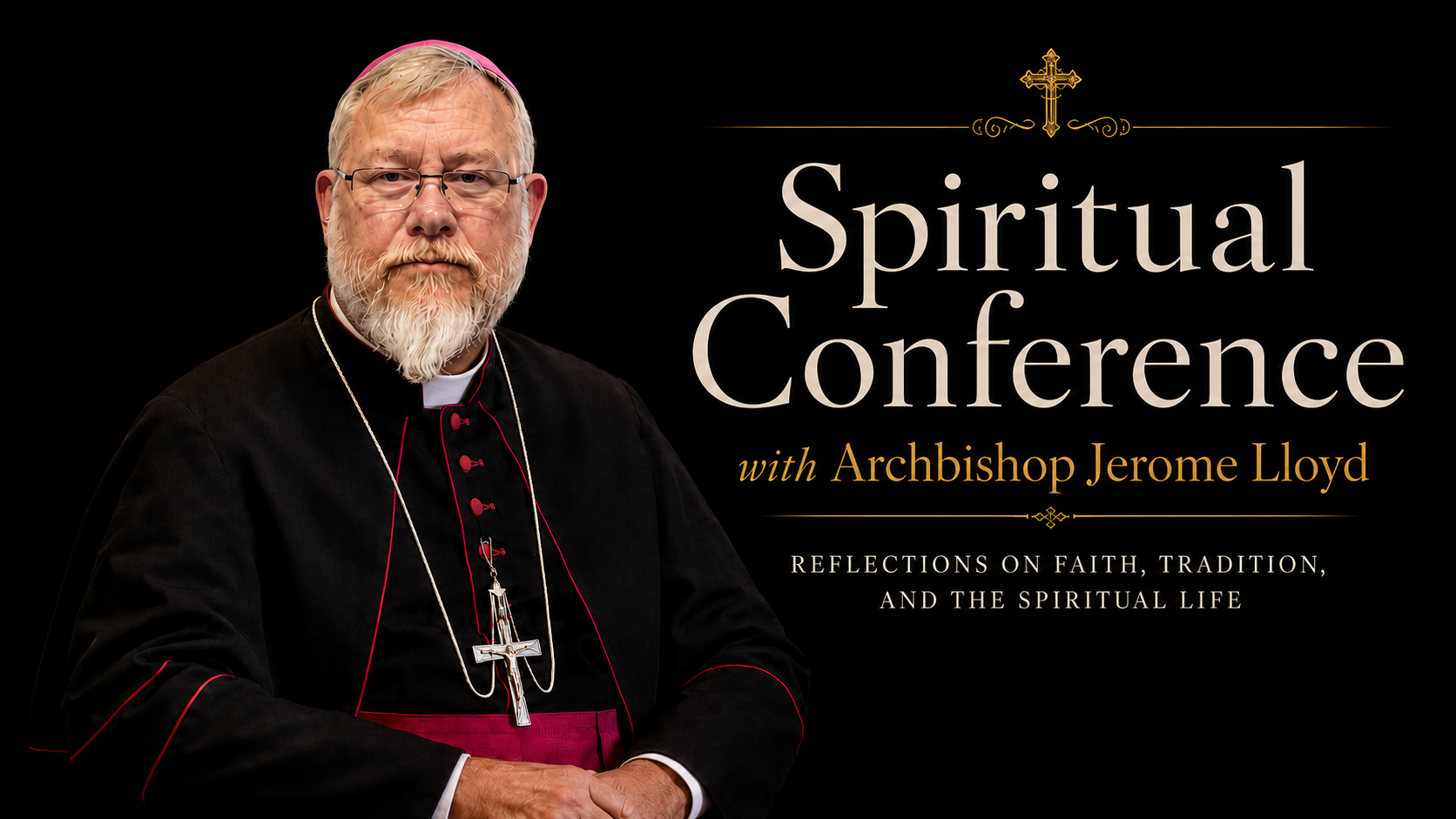
HOMILIST Mt Revd Jerome Lloyd OSJV

In the Name of the Father, and of the Son, and of the Holy Ghost. Amen.
The Church has a curious way of reminding us of what matters. She places a fragment of bone in a reliquary of gold, sets it before the faithful, and invites us to kneel. The bone is worth almost nothing; the vessel may be worth a fortune. Yet the Church would surrender the gold before she surrendered the relic. She knows to Whom that person belongs.
The Introit supplies the reason, though it does so in words which ought to make us think. “Many are the afflictions of the just, and out of these the Lord hath delivered them. The Lord keepeth all their bones; not one of them shall be broken.” How can that be said of martyrs? Some were torn by beasts, others burned, others so cruelly treated that scarcely anything remained to bury. History seems to contradict the Psalm.
St John tells us that the soldiers did not break Our Lord’s legs upon the Cross, and sees in this the fulfilment of Scripture. His sacred Body was nevertheless wounded, pierced, and given over to death. That same Body rose from the tomb. The words of the Psalm find their centre in Christ. A martyr’s bones may be scattered beyond recovery by human hands. They are not beyond the reach of their Creator.
Christianity does not teach that the soul escapes an inconvenient body. The eternal Son took His flesh from the Blessed Virgin Mary. He walked our roads, suffered our weariness, and died our death. After His Resurrection the Apostles found the tomb empty; St Thomas was invited to touch His wounds. That humanity has entered heaven. What God has assumed and redeemed He has not thrown away. We profess the resurrection of the body because the whole man is called to share in Christ’s triumph.
The Church honours relics in the light of this promise. We do not adore the remains of the saints, for adoration belongs to God alone. Nor do bones possess some secret power independent of Him. We honour the bodies in which grace bore fruit: hands that served, lips that prayed, and sometimes blood shed rather than deny the Faith. Their souls already see God; their bodies await the last day. Their remains speak of what is to come.
Holy Scripture tells us of a dead man restored to life when his body touched the bones of the prophet Eliseus. The Acts of the Apostles records cures associated with cloths carried from St Paul. God employs matter as an instrument of mercy. The Gospel today brings us to the source of all such blessings. The multitude sought to touch Our Lord, “for virtue went out from Him and healed all.” The Word made flesh met them in the flesh.
We recognise the same divine condescension whenever we approach the sacraments. Water is poured upon the head of a child, oil anoints the sick, and under the appearances of bread and wine Our Lord gives us His Body and Blood. Relics are not sacraments, but their veneration belongs to a faith in which creation serves divine grace.
When St Polycarp, Bishop of Smyrna, was martyred in the second century, his fellow Christians gathered his bones and treasured them more highly than precious stones. They had learned the Faith close to the Apostles. They were not confused about whom they worshipped. They cherished the remains of a father in Christ who had finished his course faithfully. Their affection grew out of the conviction which fills this feast: the saints are alive in Christ, and we remain members of one household with them.
From such beginnings came the practice of keeping relics within or beneath the altar. The martyr offered his life for Christ; at Mass the one Sacrifice of Christ is made present, from which every martyr’s courage and merit proceed. The bones beneath the altar cannot save us. The Precious Blood offered upon it can. And it is by that Blood that the saints were made holy.
In England, before the Reformation, the Feast of the Holy Relics was observed according to the Sarum tradition. Its ancient provision embraced churches where the dead lay buried, since God alone knew which of them enjoyed His glory. Beyond the names inscribed in calendars are multitudes known perfectly to heaven: faithful parents, forgotten priests, labourers, widows, men and women who carried the Cross in circumstances never recorded in a chronicle. The Epistle says: “Their bodies are buried in peace, and their name liveth unto generation and generation.” It is no promise of earthly fame. The Church’s memory outlasts the passing fashions of an age, and God’s knowledge reaches where ours ends. Here is consolation for every Christian whose quiet fidelity remains unnoticed by the world.
Much of England’s visible memory of the saints was deliberately destroyed. Shrines were broken, relics dispersed, and places of pilgrimage stripped of what generations had loved. We rightly grieve over that loss. Yet the destruction of their memorials could not erase the saints. The power of rulers ends at the grave; the power of God does not. The glory of a saint is not kept in a box of silver, however lovingly made.
But what do these bones say to us, who have not yet finished our course? The Gospel blesses the poor, hungry, sorrowful, and those rejected for Christ. The saints knew exhaustion, responsibility, bereavement, disappointment, and the daily necessity of choosing what is right. Grace did not make those choices for them. It enabled them to make them well. The same grace is offered to us.
It is worth asking whether we regard our own bodies with the seriousness which the Church accords to the bones of the saints. The body that kneels here will one day be laid in a grave. The hands raised in prayer must also work honestly and help the neighbour who needs them. The tongue which confesses the Faith must speak truthfully. Our strength is for service; our frailty may be united to Christ’s Passion. We are preparing, in commonplace duties, for the resurrection we profess.
We have duties towards the dead. To bury them reverently, tend their graves, offer Masses, and pray for their souls are works of charity. The Octave of All Saints, coming so close to All Souls, reminds us that we remain bound to one another in Christ. The saints in heaven pray for us; we assist the souls undergoing purification; and we who are still on pilgrimage need the help of their prayers.
The Collect asks God to increase our faith in the Resurrection and grant us that immortal glory of which the ashes of His saints are a pledge. The dust of the saints, which the world would regard as evidence that every human life ends in dissolution, the Church presents as a pledge of life. She can do so because the tomb of Christ is empty.
Soon the Holy Sacrifice will be offered upon this altar. The Lord whose Body was laid in the grave and raised in glory will give us that same Body as the food of eternal life. Here is the source of every saint’s holiness and the answer to the question posed by the Introit. God keeps the bones of His servants because He has not finished with them. May we so live and die in His friendship that, when the last trumpet sounds, we too may hear the voice of Christ calling us from the dust, to live with Him forever.
In the Name of the Father, and of the Son, and of the Holy Ghost. Amen.
Homilies Archive

Mass Propers


DAILY MASS ONLINE
One of the earliest online apostolates dedicated to the Traditional Latin Mass, Old Roman TV began broadcasting the Holy Sacrifice on the Feast of the Assumption, 15 August 2008. During the COVID-19 pandemic, additional programming — devotions, catechesis, and conferences — was added to support the faithful in prayer and formation.
Support the daily Holy Mass on Old Roman TV by offering a Mass intention — for loved ones, thanksgiving, or the repose of souls. Your intention helps sustain the sacred liturgy and brings grace to those you remember before God’s altar.
SUPPORT THE DAILY MASS ONLINE
Likely the world’s longest-running daily online broadcast of the
Traditional Latin Mass, streaming faithfully since the
Feast of the Assumption 2008.

This apostolate cannot continue without immediate help
Please support us with a contribution toward
chapel rent, sacristy supplies, operating costs, and web-hosting.
Our essential monthly costs reach £1,000.



Leave a Reply