

The Communion Queue, the Empty Confessional, and the Sacramental Culture St Pius X Never Intended
Walk into an ordinary Catholic church on Sunday and one feature of the Mass is remarkably predictable. When the time for Holy Communion arrives, almost everybody gets up. The congregation forms its queue, moves forward, receives, returns to its place, and the procession continues until scarcely anyone remains seated. Visit the same church when Confession is advertised and the picture is often rather different: perhaps half an hour on Saturday, perhaps “by appointment”, perhaps nobody waiting at all. Western Catholicism has lived with this contrast for so long that its oddity has ceased to register. The sacrament in which Catholics receive the Body, Blood, Soul and Divinity of Christ has become routine for many congregations, while the sacrament by which mortal sin is forgiven and the life of grace restored has become comparatively exceptional.
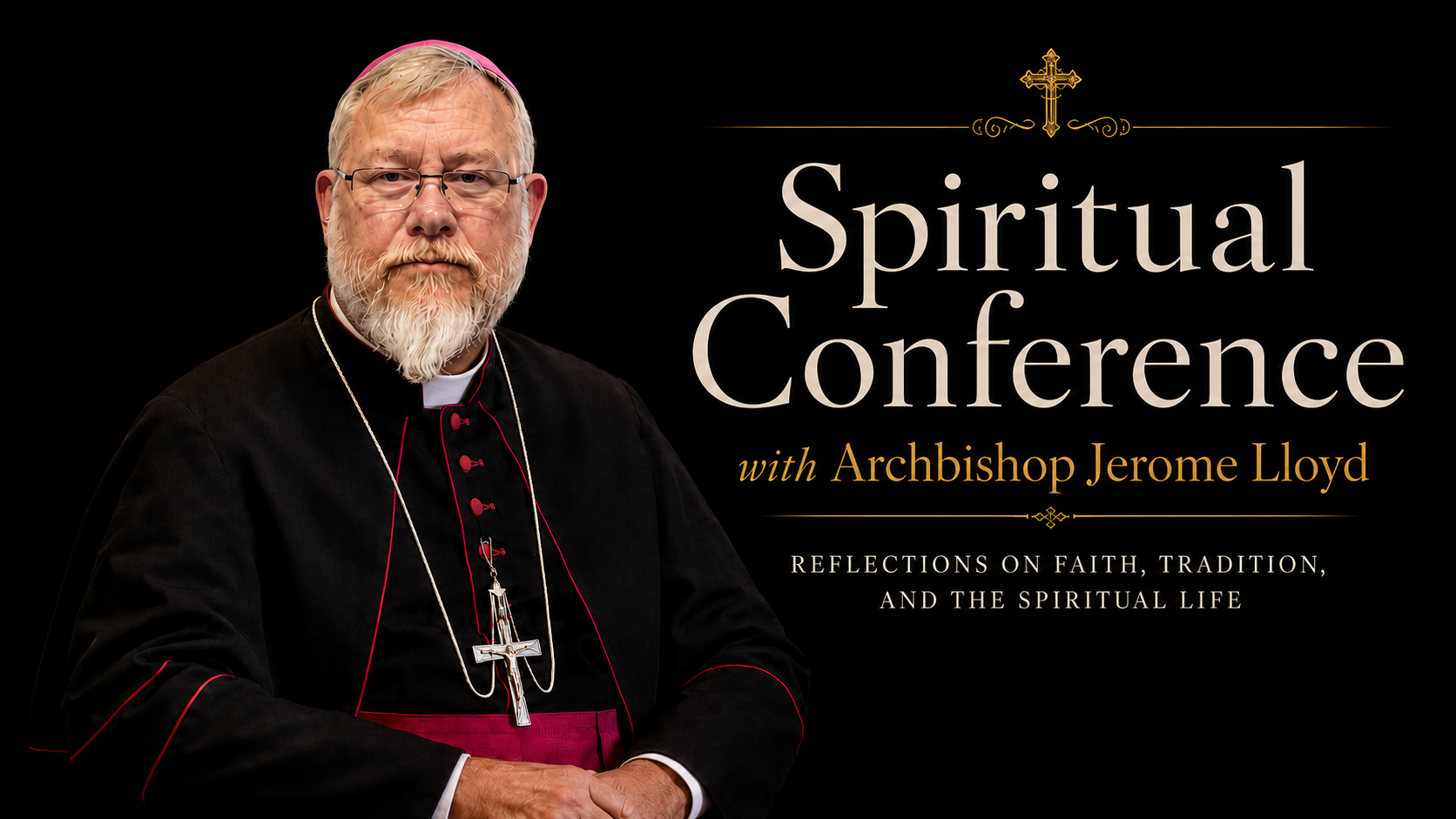
The question arose during this week’s Nuntiatoria Live Q&A on OldRomanTV, the weekly Thursday programme broadcast after the evening Angelus. HE ✠Jerome Lloyd was reflecting upon a thoroughly modern assumption: “unless I receive Holy Communion I haven’t been to Mass” — the idea that because Communion is available, receiving it is somehow necessary to complete one’s participation. Catholic teaching has never said any such thing. The fuller discussion is worth hearing precisely because it places the familiar Communion procession alongside another queue which has largely disappeared from parish life: the queue outside the confessional.¹
The comparison naturally brought the discussion to Pope St Pius X, whose encouragement of frequent Communion is sometimes invoked as though his reform could be reduced to a simple progression. Catholics once received infrequently; Pius X wanted them to receive frequently; therefore a church in which almost everybody communicates at every Mass must represent the triumphant fulfilment of his intention. His Excellency ✠Jerome put the purpose rather differently during the Q&A: **“he wanted Catholics to become more holy.”**¹ That short sentence is a better guide to Pius X than any statistic concerning the number of communicants. The Pope wanted sanctification, not merely reception.
The decree Sacra Tridentina Synodus of 1905 addressed a real distortion in Catholic devotional life. In some places, frequent Communion had come to be regarded as suitable chiefly for those who had already attained unusual spiritual perfection. The decree rejected that understanding and encouraged frequent, even daily, reception among Catholics properly disposed. Yet the qualifications were integral to the reform. The communicant was to be in the state of grace and to approach with a right intention: not through habit, vanity or human respect, but in order to please God, to be more closely united to Him and to seek in the Eucharist the divine remedy for human weakness.² The purpose was not to make reception less serious. It was to make the Eucharist more fruitful in ordinary Catholic lives.
That supernatural purpose emerged clearly in the OldRomanTV discussion. His Excellency ✠Jerome spoke of Catholics becoming “more conscious”, striving to live “more consciously aware of God”, and recovering the proper sense of holy fear: not terror of God, but the habitual awareness of His presence which ought to shape a Christian life. Holy Communion, he remarked, is “a great boon to the spiritual life”, because the Eucharist strengthens the soul by grace.¹ Frequent Communion was therefore never conceived as an isolated liturgical habit. It belonged within a life increasingly ordered towards God.
Pius X did not, of course, require Confession before every Communion. Traditional Catholic discipline never imposed such a rule. A Catholic already living in the state of grace may receive frequently without sacramental Confession before each reception, and venial sin does not of itself exclude a communicant from the altar. The Council of Trent nevertheless taught with equal clarity that one conscious of mortal sin must not approach the Eucharist without previous sacramental Confession when Confession is available.³ The distinction is elementary Catholic sacramental theology. Confession restores the supernatural life which mortal sin destroys; the Eucharist nourishes and increases that supernatural life in the soul which possesses it.
It was while explaining that relationship that His Excellency ✠Jerome made the observation which goes to the heart of the present problem: “if more people received Holy Communion, more people would go to confession, more people then would be striving to live a holier life.”¹ That was not presented as a verbatim quotation from Pius X, but as an explanation of the pastoral logic behind his reform. It is difficult to fault. Greater desire for union with Christ ought to produce greater vigilance over anything which destroys that union. More frequent Communion should make the state of one’s soul more important, not less. It should sharpen the conscience, deepen repentance and intensify the desire for holiness.
The striking feature of modern Western Catholic life is that one part of this pattern survived while another withered. Frequent Communion remained normal; frequent Confession did not. The reform of Pius X assumed a penitential culture already in existence: Catholics who knew what mortal sin was, understood the state of grace, examined their consciences, confessed grave sins, sought amendment, prepared themselves for Communion and made thanksgiving afterwards. Once that culture weakens, the same outward practice can remain while acquiring a very different practical meaning. The frequency has survived more successfully than the discipline which was supposed to accompany it.
Pope Pius XII was already careful to preserve the balance. In Mediator Dei he encouraged sacramental Communion and at the same time recalled the need for proper dispositions and St Paul’s command that the Christian examine himself before approaching. He also reaffirmed a point which contemporary parish culture easily obscures: the faithful are warmly encouraged to communicate, but a lay person does not have to receive sacramentally at every Mass in order truly to assist at the Holy Sacrifice.⁴ A Catholic may participate devoutly and make a spiritual Communion. He may remain in his place because he has already received, because he is uncertain about his disposition, or because he knows that he should first seek absolution.
In many churches, however, custom has supplied an unwritten rubric of its own. If one attends, one receives. At an ordinary Sunday Mass the procession can be so universal that staying in the pew becomes conspicuous. Weddings and funerals present the problem particularly clearly, because practising Catholics, nominal Catholics and non-Catholics are often gathered together and the movement of the congregation itself can generate pressure to join the queue. Someone who refrains may wonder what others will infer. The “human respect” expressly excluded by Sacra Tridentina Synodus can therefore operate in exactly the wrong direction: not by discouraging Communion, but by encouraging it when conscience ought to give pause.
The danger is not merely social awkwardness. Once reception becomes something everybody simply does, the need for personal discernment can fade from view. The Holy See acknowledged this pastoral problem directly in Redemptionis Sacramentum, restating that anyone conscious of grave sin must ordinarily receive sacramental absolution before Communion and warning against the faithful approaching the altar “indiscriminately”.⁵ That document appeared in 2004. The phenomenon has not become less serious merely because it has become familiar.
The figures point in the same direction, though they cannot disclose the state of any individual conscience. Pew Research Center reported in 2025 that 82% of American Catholics attending Mass weekly receive Communion all or most of the times they attend. Yet only 53% of weekly Mass-goers reported going to Confession even once a year. Among American Catholics as a whole, 23% reported annual or more frequent Confession, while 47% said they never confessed.⁶ Those figures do not prove that particular Catholics are receiving sacrilegiously, and statistics cannot adjudicate the internal forum. They do, however, describe a sacramental culture in which reception of one sacrament has remained habitual while reception of the other has become increasingly unusual.
That disparity cannot easily be explained by suggesting that mortal sin has itself become unusual. Catholic moral teaching has not altered the gravity of adultery, fornication, abortion, pornography, deliberate hatred, serious theft, fraud or the conscious rejection of grave religious obligations. The Sunday obligation has not quietly ceased to exist. Contemporary culture has hardly become less conducive to grave sin than the Catholic societies of previous generations. If Confession is disappearing while Communion becomes nearly universal among those attending Mass, the more credible explanation is not unprecedented sanctity but a weakening consciousness of what grave sin is and what it does to the supernatural life.
Here the crisis of Confession meets a wider crisis of Catholic moral language. If commandments are presented chiefly as ideals, culpability chiefly through mitigating circumstances, repentance as self-acceptance and amendment as accompaniment, the confessional will inevitably begin to look less necessary. Communion can meanwhile survive because it can be given a different practical meaning: participation, belonging, welcome, inclusion, completion of the ceremony. Transubstantiation may remain firmly stated in the Catechism while the discipline surrounding reception ceases to communicate the gravity of what receiving the Eucharist actually means.
Nuntiatoria has already examined part of this problem in “The Five-Point Question Facing Leo XIV”, which considered the 2024 Real Presence Coalition survey of practising American Catholics. The survey was not a statistically representative sample of all American Catholics and should not be treated as one. Its internal comparisons were nevertheless revealing. Catholics exclusively attending the Traditional Latin Mass reported exceptionally high belief in the Real Presence and comparatively frequent Confession even when compared with already practising Catholics attending the modern rite.⁷ The finding canonises nobody and condemns nobody. It does, however, underline the old Catholic principle that practice forms people. Liturgical and sacramental habits shape the way Catholics understand sin, grace, sacrifice and the Eucharist.
A Catholic culture in which Confession is regularly available, examination of conscience is normal, mortal and venial sin are preached intelligibly, preparation precedes Communion and thanksgiving follows it creates a particular understanding of the Blessed Sacrament. So does a culture in which Confession is difficult to find and virtually everyone receives automatically. Neither catechesis nor liturgy operates in a vacuum. The habits surrounding a sacrament teach before a priest has opened his mouth to explain anything.
St Paul’s words therefore sound startlingly severe beside much contemporary practice: “Whosoever shall eat this bread, or drink the chalice of the Lord unworthily, shall be guilty of the body and of the blood of the Lord.” He commands the Christian to prove himself before eating and drinking, warning that one who receives unworthily “eateth and drinketh judgment to himself”.⁸ That is not an argument against frequent Communion. It is an argument about what Holy Communion is. The warning exists because the Gift is so great.
One of the more arresting moments in this week’s Q&A came when a viewer explained that circumstances prevented her from attending Mass and receiving the Eucharist. His Excellency ✠Jerome suggested that she might offer prayer in reparation for sacrilegious Communions, describing it as “a supreme act of charity” for somebody who cannot receive to pray “in reparation for those who can but shouldn’t.”¹ There is something deeply Catholic in that contrast. A person physically unable to receive may hunger intensely for the Eucharist, while someone standing only yards from the altar may approach through habit without serious examination. Access to a sacrament is a grace; it is not a substitute for disposition.
None of this requires the restoration of the excessive rigorism which Pius X himself opposed. A Catholic troubled by scrupulosity and imagining that every imperfection excludes him from Communion has misunderstood the traditional discipline from the opposite direction. The Church distinguishes venial from mortal sin for a reason. The Eucharist strengthens Christians in weakness, increases charity, remits venial sin and assists the soul against future grave sin. Frequent Communion, worthily received, is an immense good. The error lies not in frequency but in detaching frequency from the sacramental and moral world within which Pius X encouraged it.
The recovery needed is therefore more profound than an appeal for people to go to Confession more often, though that would be no bad beginning. Catholics need once again to understand why Confession exists, what mortal sin does, what sanctifying grace is, why examination of conscience matters, and why the Eucharist is not simply the next stage in the Sunday liturgy. Priests need to make Confession genuinely available, not merely theoretically obtainable by appointment. Catholics in the state of grace should receive frequently and joyfully; Catholics conscious of grave sin should seek absolution and return to the altar restored. The confessional is not an obstacle between the sinner and Christ. It is one of the places where Christ meets the sinner and gives him back the supernatural life necessary for sacramental union.
The question can therefore be put very simply. If the Communion queue stretches through the church while the confessional stands unused, what exactly has been achieved? One need not accuse anybody of sacrilege to recognise the pastoral contradiction. Either the Catholic population has reached an extraordinary degree of habitual sanctity, or the connection between sin, Confession, grace and worthy Communion has weakened. The first possibility would be comforting. Everything observable in Western Catholic life makes the second rather more plausible.
This week’s Nuntiatoria Live Q&A on OldRomanTV is worth watching in full because the discussion did not begin from a campaign against frequent Communion. It began from the reason Pius X encouraged it. “He wanted Catholics to become more holy.” That is the standard against which the subsequent history has to be measured. His reform envisaged Catholics more consciously aware of God, more attentive to grace, more serious about sin and more determined to become saints. The hope, as His Excellency ✠Jerome expressed it, was that “if more people received Holy Communion, more people would go to confession, more people then would be striving to live a holier life.”¹
The tragedy is not that Catholics learnt to receive Holy Communion more frequently. The tragedy is that the frequency survived while much of the penitential, moral and supernatural culture which gave it meaning gradually fell away. Pius X did not measure the success of frequent Communion by the number of people who left their pews. He wanted souls to become holy.
The Communion queue is therefore only half the picture.
The empty confessional tells the rest.
¹ OldRomanTV, Nuntiatoria Live Q&A — Edition CXXII, weekly Thursday broadcast following the evening Angelus; discussion of Holy Communion, Confession, Pope St Pius X, holiness and Eucharistic reparation, especially c. 1:44–1:49.
² Sacred Congregation of the Council, Sacra Tridentina Synodus: Decree on Frequent and Daily Communion, 20 December 1905.
³ Council of Trent, Session XIII, Chapter VII and Canon XI; Code of Canon Law, Canon 916.
⁴ Pope Pius XII, Mediator Dei, 20 November 1947.
⁵ Congregation for Divine Worship and the Discipline of the Sacraments, Redemptionis Sacramentum, §§81–83.
⁶ Pew Research Center, “Catholic Communion, confession, devotions and other practices in the US”, 16 June 2025.
⁷ Nuntiatoria, “The Five-Point Question Facing Leo XIV”, 28 August 2026; Real Presence Coalition, Executive Summary — Survey of U.S. Lay Catholics, 2024.
⁸ I Corinthians 11:27–29, Douay-Rheims Bible.



Leave a Reply