

Faithful unto Healing: Martyrdom, Perseverance, and the Quiet Power of Obedience
MASS Sacerdótes Dei
LESSON 2 Timothy 4: 1-8
GOSPEL St Matthew 16:24-27
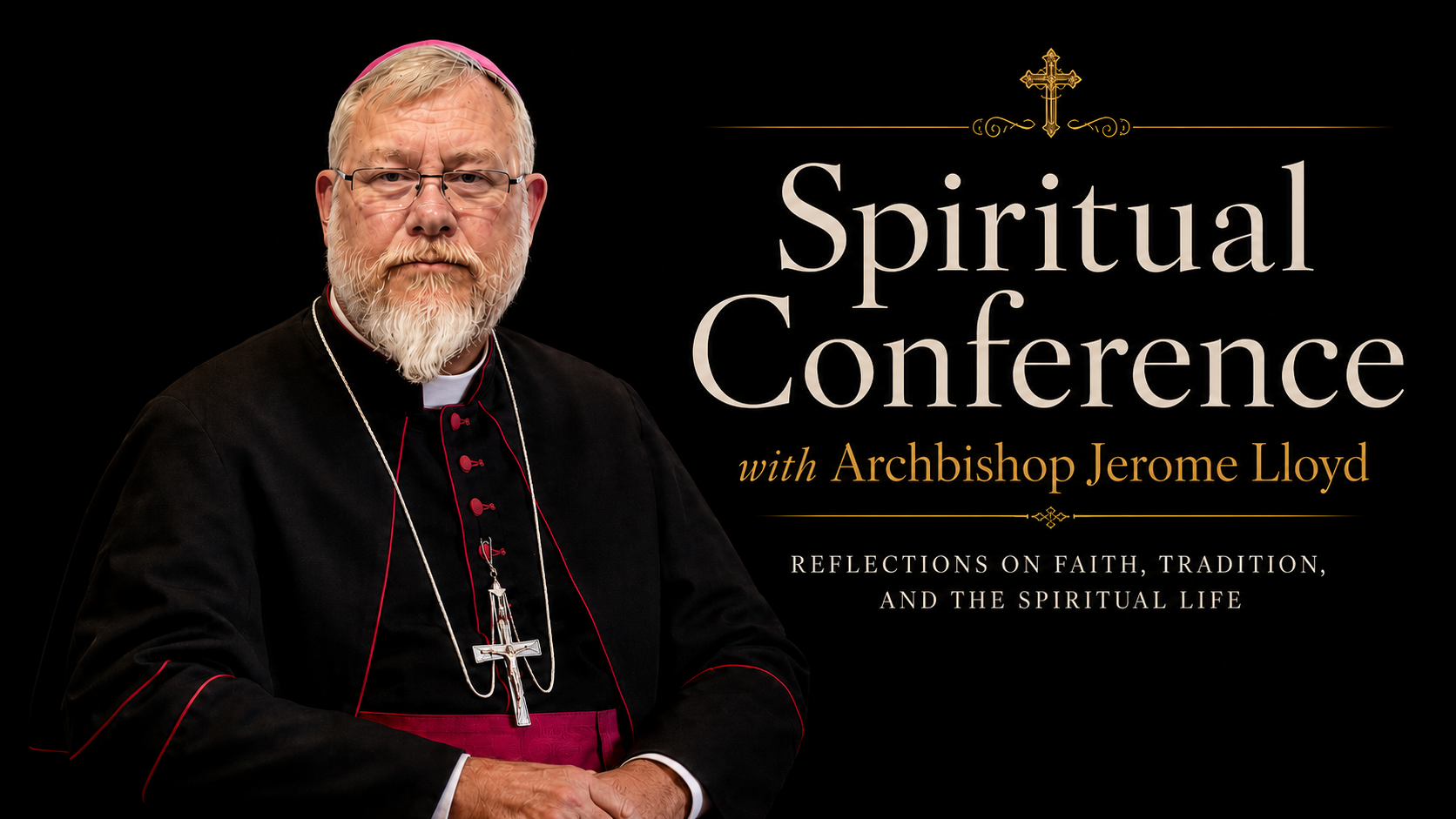
HOMILIST Mt Revd Jerome Lloyd OSJV

Beloved in Christ,
The Church does not keep the memory of saints as one keeps curiosities in a cabinet—interesting relics from a safer, simpler age. She keeps them because their world was fractured, hostile, and unstable, and because in such a world they learned how to remain faithful. Saint Blaise and Saint Laurence of Canterbury belong precisely to that category. Their lives are preserved not because they were easy, but because they were costly; not because they were successful by worldly measures, but because they were obedient unto the end.
Saint Blaise lived on the margins of an empire in transition, in Sebaste of Armenia Minor—what we would now recognise as Cappadocia in central Anatolia. This was a frontier land, culturally mixed, politically insecure, and religiously volatile. Christianity might be tolerated in one province and violently suppressed in another. Blaise himself was educated as a physician, trained to heal bodies, before being recognised by the Christian community as a healer of souls and acclaimed bishop. His authority preceded his office; his sanctity preceded his martyrdom.
When persecution intensified under Licinius, Blaise withdrew from the city into the hills. This was not cowardice, nor desertion of his flock, but a prudent continuation of pastoral ministry under threat. The faithful continued to seek him out. Tradition tells us that wild animals gathered peaceably around him in that cave—a detail not meant as sentiment, but as theology. It is an ancient sign that holiness restores right order: a man rightly ordered under God, and therefore at peace even with creation itself.
Blaise did not seek martyrdom. He was discovered almost by accident, betrayed by providence rather than by fear. Hunters tracking game found animals sheltering with him and reported him to the authorities. Dragged back to Sebaste to face trial, he continued to act as a bishop even under sentence of death. On the road, the faithful came to him for blessing and prayer. A woman brought her young son, choking on a fishbone and close to death. Blaise prayed, made the sign of the Cross, and the child was healed. Only afterwards did he suffer scourging and finally beheading.
It is from this final act of charity, performed on the road to martyrdom, that the Church’s devotion to Saint Blaise as healer flows. The blessing of throats today is not a quaint survival from a superstitious past. It is a confession of faith: that God heals, that He works through prayer and intercession, and that even on the threshold of death the Christian vocation is to bless and to give life.
This matters profoundly today. We live in an age of unprecedented medical and technological power, yet one marked by deep spiritual and psychological illness. Ours is an age of disordered speech—tongues that wound rather than heal, words detached from truth, voices amplified without wisdom. The blessing of throats is therefore not only about physical ailments. It is a prayer that our speech itself may be healed: that what passes through the throat may once again be ordered to truth, reverence, and praise of God. In a culture of outrage, slogans, and digital noise, this petition is anything but trivial.
Alongside Saint Blaise, the Church quietly commemorates Saint Laurence of Canterbury, whose witness is different in form but no less demanding. Laurence was born in Rome and formed within the Gregorian mission. Sent to England with Saint Augustine, he succeeded him as Archbishop of Canterbury at a moment when the fragile Christianisation of England appeared to be collapsing. After the death of King Æthelberht, his son Eadbald rejected the faith, embraced pagan practices, and lived in public moral disorder. The mission seemed to have failed. Others abandoned their posts and returned to the Continent.
Laurence, too, was tempted to withdraw. Humanly speaking, his instinct was understandable. But on the eve of his departure, he was recalled—sharply and painfully—to his duty. The tradition of Saint Peter scourging him in a dream is not a tale of cruelty but a theological warning: the episcopal office is not conditional upon success. A shepherd does not abandon the flock because it falters. Laurence remained, and by remaining he preserved the Church in England until God, in His own time, brought about the king’s conversion.
Together, these two bishops expose a modern illusion: that holiness must be either comfortable or immediately effective. Blaise’s martyrdom did not end persecution. Laurence’s perseverance did not instantly transform England. Yet both were obedient, and that obedience bore fruit beyond their own horizon. The economy of grace works slowly, patiently, and often invisibly—something a results-driven age finds hard to accept.
Their witness also confronts a culture drowning in escapism. Addiction, distraction, curated identities, and virtual worlds function as modern caves—places of withdrawal not to encounter God, as Blaise did, but to avoid reality altogether. Against this, the saints remind us of a deeper truth: Christians themselves are set apart, blessed, consecrated. Through baptism, absolution, and the Eucharist, we are continually being made holy. We are not meant to escape the world, but to sanctify it, beginning with our own lives.
The application, then, is stark but hopeful. We are called to be healers in a wounded age, faithful in a faltering Church, and steadfast in a culture that prizes comfort over truth. Like Saint Blaise, we must be willing to suffer for the Gospel and to bless even as we are led to trial. Like Saint Laurence, we must refuse to abandon our charge when fidelity becomes difficult and unrewarded. And like both, we must trust that God still works—quietly, patiently, powerfully—through those who remain faithful.
In such fidelity, Christ is manifested still.
Homilies Archive

Mass Propers


![Today’s Mass: October 03 St Thomas [de Cantilupe] of Hereford](https://i0.wp.com/nuntiatoria.org/wp-content/uploads/2026/10/thomascantilupemasstitle.jpg?fit=1024%2C585&ssl=1)


DAILY MASS ONLINE
One of the earliest online apostolates dedicated to the Traditional Latin Mass, Old Roman TV began broadcasting the Holy Sacrifice on the Feast of the Assumption, 15 August 2008. During the COVID-19 pandemic, additional programming — devotions, catechesis, and conferences — was added to support the faithful in prayer and formation.
Support the daily Holy Mass on Old Roman TV by offering a Mass intention — for loved ones, thanksgiving, or the repose of souls. Your intention helps sustain the sacred liturgy and brings grace to those you remember before God’s altar.
SUPPORT THE DAILY MASS ONLINE
Likely the world’s longest-running daily online broadcast of the
Traditional Latin Mass, streaming faithfully since the
Feast of the Assumption 2008.

This apostolate cannot continue without immediate help
Please support us with a contribution toward
chapel rent, sacristy supplies, operating costs, and web-hosting.
Our essential monthly costs reach £1,000.



Leave a Reply