

Holy Monday: Judgment, Fruitfulness, and the Purification of Worship
Within the sacred sequence of Holy Week, Holy Monday stands as a day of theological severity and luminous clarity. If Palm Sunday manifests Christ as King in triumph, Holy Monday reveals Him as Judge in truth, stripping away illusion, exposing corruption, and demanding the fruits worthy of repentance. The tradition of the Church—drawing from the Synoptic Gospels, deepened by the Fathers, and systematised by the scholastics—presents not a series of isolated events, but a unified drama: the cleansing of the Temple, the cursing of the fig tree, and the authoritative teaching of Christ in Jerusalem.¹
The cleansing of the Temple must be understood first not as an act of mere reform, but as a priestly intervention of eschatological significance. When Christ enters the Temple and expels the money changers, overturning their tables and driving them out, He does not simply restore decorum; He asserts dominion. As St. Thomas Aquinas explains in the Summa Theologiae, Christ’s action is not an instance of disordered anger, but of zeal ordered to justice, a righteous indignation directed toward the honour of God.² This distinction is critical: Christ’s zeal is not reactive but principled, not emotional but judicial. He acts as the true High Priest, purifying the place of sacrifice and condemning the profanation that had overtaken it.
The Fathers interpret this act with remarkable unanimity. Origen reads the Temple as the soul, within which worldly attachments—symbolised by the merchants—have displaced the primacy of God.³ St. Augustine extends the image further, applying it to the Church herself when she risks becoming entangled with temporal interests at the expense of divine worship.⁴ Thus, the cleansing is not merely historical but perpetual; it is a warning that wherever sacred things are subordinated to worldly gain, Christ will come in judgment to purify.
Dom Prosper Guéranger situates this event within the broader collapse of the Old Covenant order. The Temple, though still standing in splendour, is already under divine sentence. Its rituals have become hollow, its priesthood compromised, its purpose obscured. Christ’s act, therefore, is both a condemnation and a transition: the Temple of stone yields to the Temple of His Body, and the sacrificial system prepares to be fulfilled and superseded in the sacrifice of Calvary.⁵
The cursing of the fig tree, which follows closely upon this event, intensifies the same judgment under a different sign. Christ approaches a tree rich in leaves yet barren of fruit and pronounces a curse upon it, causing it to wither.⁶ To the superficial reader, this appears harsh; to the Fathers, it is one of the most profound symbolic acts of the Passion. St. John Chrysostom insists that Christ does not act out of need or frustration, but to instruct.⁷ The fig tree represents Israel—outwardly flourishing, adorned with the leaves of the Law and ritual observance, yet lacking the fruit of faith, charity, and obedience.
St. Jerome sharpens this interpretation by noting that leaves without fruit signify the appearance of righteousness without its substance.⁸ There is, in this, a warning not only to Israel but to every age of the Church: the danger of substituting external conformity for interior conversion. The scholastic tradition, again following Aquinas, reads this miracle as a judicial sign in which Christ exercises His authority to bless and to curse, to give life and to withdraw it.⁹ The withering of the tree is thus not destruction for its own sake, but revelation—a visible manifestation of the invisible judgment that falls upon fruitlessness.
The theological unity between the Temple cleansing and the fig tree becomes evident when read together. The Temple is full of activity but devoid of true worship; the fig tree is full of leaves but devoid of fruit. Both are condemned, not for what they lack in form, but for what they lack in substance. The message is unmistakable: God is not deceived by appearances. Ritual without devotion, structure without truth, profession without charity—these are not merely insufficient; they are subject to judgment.
The third dimension of Holy Monday is Christ’s teaching in the Temple, where His authority is openly challenged by the chief priests and elders.¹⁰ This confrontation reveals both the blindness and the anxiety of the religious establishment. Christ’s response, given through parables such as the Wicked Husbandmen, constitutes not merely instruction but indictment. St. Augustine interprets this parable as a direct judgment upon unfaithful stewards who have abused their authority and rejected the Son.¹¹ The vineyard will be taken from them and given to others—a warning that extends beyond its immediate historical context to all who hold responsibility within the Church.
In this light, Holy Monday assumes a profoundly ecclesiological dimension. It is not simply about first-century Judaism; it is about the perennial danger within the people of God. The Temple can be corrupted; the fig tree can be barren; the stewards can become unfaithful. The presence of divine institutions does not guarantee fidelity. On the contrary, it intensifies accountability.
The spiritual tradition receives these events as a direct address to the soul. The Temple is the interior life: is it a house of prayer, or has it become a marketplace? The fig tree is the visible Christian life: does it bear fruit, or merely leaves? The authority of Christ confronts each soul: is it received, or resisted?
Thus, Holy Monday stands as a day of divine scrutiny. The King who entered Jerusalem in triumph now examines, judges, and prepares to offer Himself. What He condemns is not weakness, but hypocrisy; not poverty, but sterility; not ignorance, but refusal. It is, therefore, a summons—not only to contemplation of Christ’s actions in Jerusalem, but to the purification of the soul in anticipation of the Cross.
- Matthew 21:12–23; Mark 11:12–18; Luke 19:45–48 (Douay-Rheims Bible).
- St. Thomas Aquinas, Summa Theologiae, II–II, q.158, a.1–2 (Leonine ed., Rome, 1895).
- Origen, Commentary on Matthew, Book XVI, §§10–12 (PG 13:1389–1392).
- St. Augustine, Tractates on the Gospel of John, Tractate 10.2 (PL 35:1468).
- Dom Prosper Guéranger, The Liturgical Year, Passiontide and Holy Week (Dublin: James Duffy, 1870), pp. 266–269.
- Matthew 21:18–19; Mark 11:12–14, 20–21.
- St. John Chrysostom, Homilies on the Gospel of Matthew, Homily 68.1–2 (PG 58:645–648).
- St. Jerome, Commentary on Matthew, 21:18–19 (PL 26:153–154).
- St. Thomas Aquinas, Summa Theologiae, III, q.44, a.4.
- Matthew 21:23–46.
- St. Augustine, Sermon 87, §§3–4 (PL 38:530–532).
related articles


Latest articles
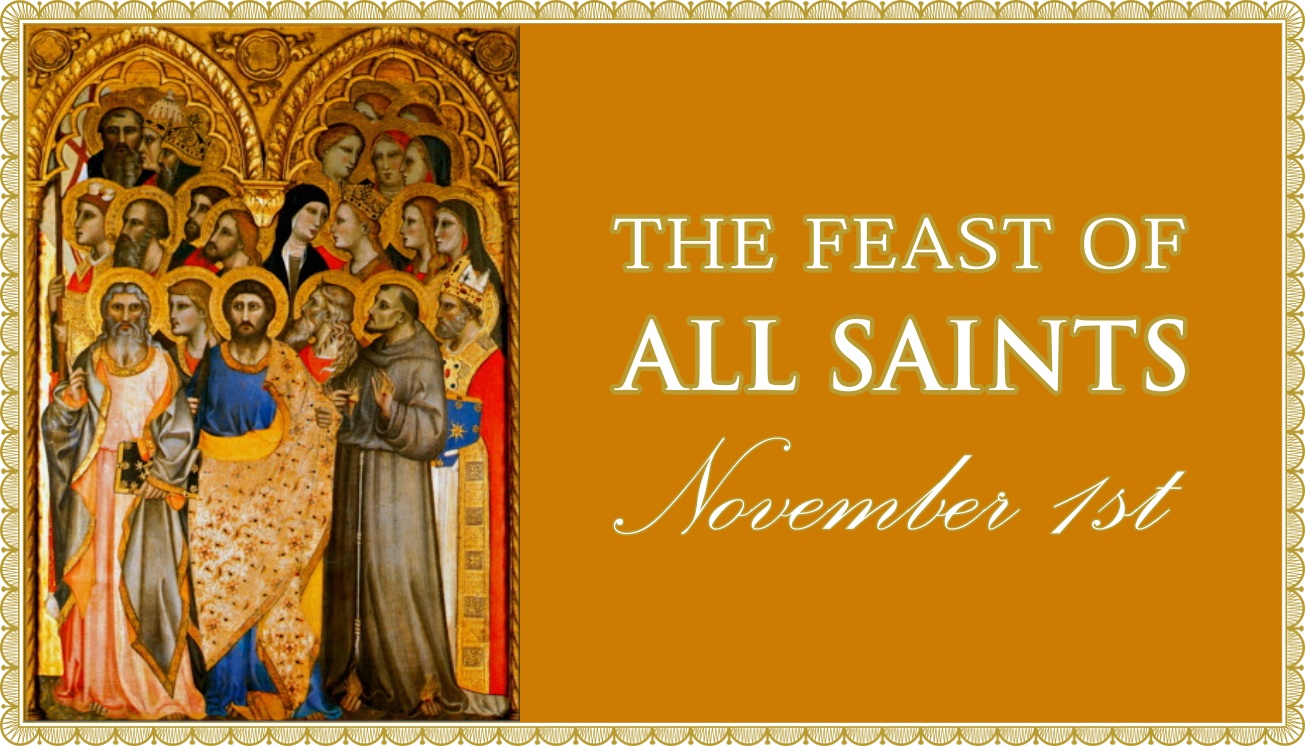
- Today’s Mass: November 1 All SaintsThe Solemnity of All Saints, celebrated on November 1st, honours all saints, both recognised and unknown. This tradition dates back to the Fifth Century, with Pope Gregory IV formalising the date. The day’s liturgy emphasises the significance of the saints’ intercession and their merit through Christ’s sacrifice, inviting the faithful to rejoice in their honour.
- Today’s Mass: October 31 Vigil of All SaintsThe Vigil of All Saints, observed in traditional chapels, commemorates martyrs who sacrificed their lives for Christ. Originating from the Eighth Century, it involves a solemn vigil with penitential liturgy and fasting. This preparation anticipates All Saints’ Day, reflecting the Church’s reverence for saints and their intercession in prayers.
- 01.11.26 Nuntiatoria CXXX: MEMENTOAs the Church observes All Saints and All Souls in November, it underscores the deeper responsibilities of faith, charity, and fidelity beyond mere remembrance. The editorial highlights the importance of preserving traditions and understanding the obligations to the deceased and future generations. It advocates for active faith and charitable actions in daily life.
- ORDO w/c 01.11.26From 1–8 November 2026, the Church commemorates All Saints and reflects on the faithful departed. This period includes diverse celebrations such as the Octave of All Saints, All Souls’ Day, and the feasts of St Charles Borromeo and St Willibrord. These observances highlight the communion among saints, those in purification, and the Militant Church, emphasising charity and the efficacy of intercession.
- REQUIEM AETERNAM: THE CHURCH THAT WILL NOT FORGET HER DEADThe All Souls liturgy highlights the Catholic Church’s commitment to assisting the departed through the Holy Sacrifice of the Mass, intercessory prayers, and suffrages. It explores the theology of Purgatory, the significance of the Requiem, and the privilege established by Benedict XV for offering three Masses, encouraging remembrance of the deceased.





Leave a Reply