
Abandon the Desire for Conflict: Power, Peace, and the Resurrection in the Easter Message of Pope Leo XIV
A Universal Admonition, Not a Partisan Rebuke
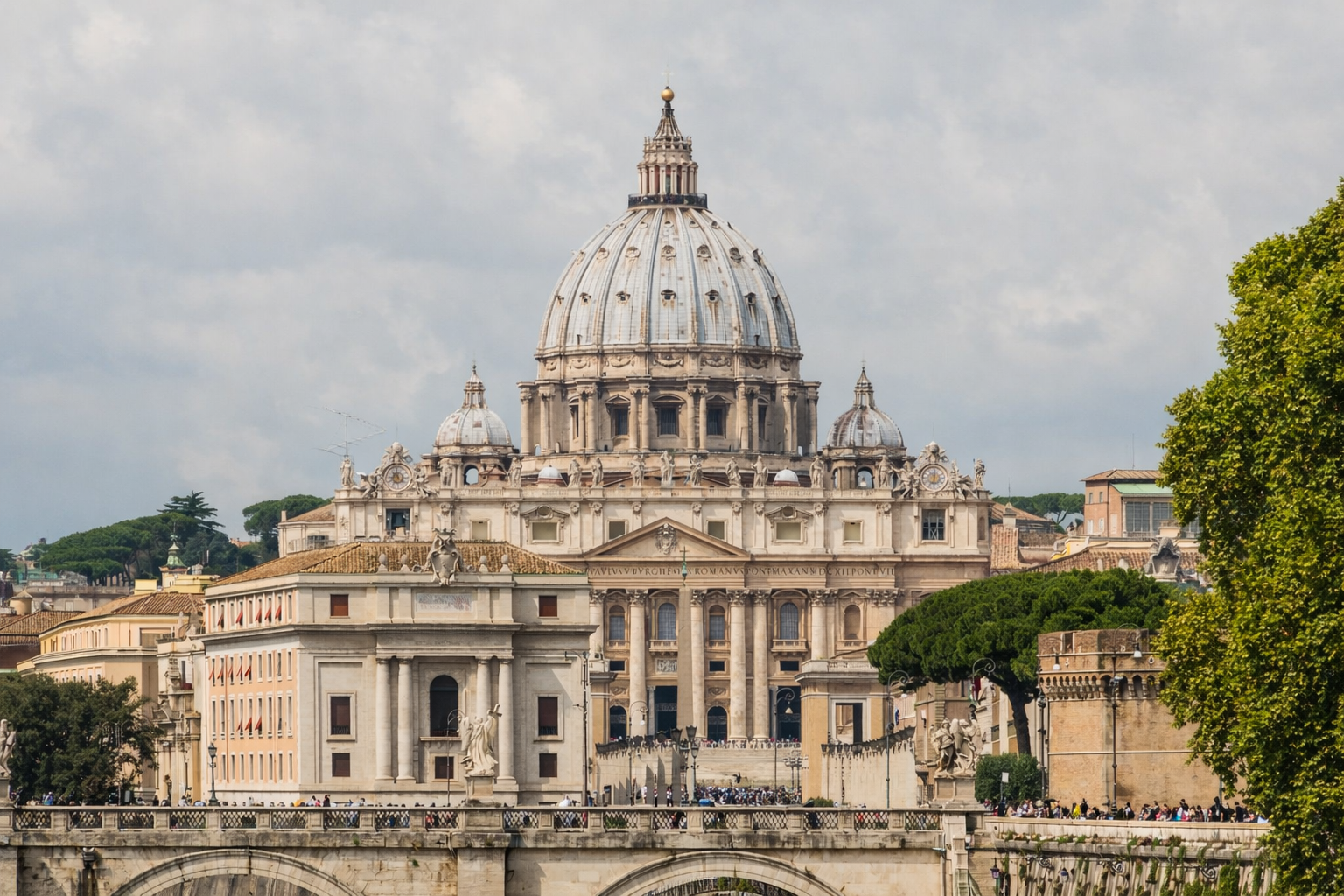
On Easter Sunday 2026, Pope Leo XIV delivered his first Urbi et Orbi blessing from St Peter’s Basilica, issuing a stark appeal: that world leaders must “abandon every desire for conflict, domination, and power.” This line, widely circulated in international media, has already been framed by some commentators as an implicit criticism of contemporary geopolitical actors, including Donald Trump and the State of Israel. Such a reading, while understandable in a charged political climate, fails to do justice to the nature of the papal text itself. Leo does not name nations, leaders, or conflicts; his appeal is deliberately universal, addressed not to one bloc or ideology, but to the human condition as such—especially as it manifests in political authority. To reduce the message to a veiled diplomatic critique is therefore to misread its genre; this is not policy commentary, but moral theology.
The Diagnosis Beneath the Headline
What distinguishes Leo’s message is not its call for peace—common enough in papal rhetoric—but the depth of its diagnosis. Conflict, he suggests, does not originate primarily in disputed borders, competing interests, or historical grievances; it arises from something more fundamental: the disordered will. Here Leo stands squarely within the tradition of St Augustine of Hippo, who located the origin of war in amor sui usque ad contemptum Dei—the love of self to the contempt of God. Wars are not merely external events, but the outward expression of interior disorder; nations go to war because men desire domination. Likewise, St Thomas Aquinas, while permitting just war under strict conditions, insists that even legitimate conflict must be governed by right intention; the moment war becomes an instrument of ambition, vengeance, or ideological imposition, it ceases to be just, regardless of its pretext. Leo’s formulation—“abandon the desire for conflict”—is therefore more radical than it first appears, for he calls not merely for restraint in action, but for purification of intention.
Peace as Order, Not Sentiment
The Catholic tradition has never equated peace with the mere absence of war; following Augustine, it defines peace as tranquillitas ordinis—the tranquillity of order. That order is not constructed by political negotiation alone, but grounded in truth, justice, and ultimately in God. This understanding was given modern expression by Pope John XXIII, who taught that true peace must be founded on the moral law and the dignity of the human person, not secured by force alone nor sustained by balance-of-power calculations. Leo’s Easter message stands in continuity with this teaching, yet sharpens the emphasis: the crisis of the modern world is not simply that wars occur, but that humanity has become habituated to them. Violence is no longer experienced as tragic necessity, but as a normal instrument of policy, and thus his warning concerning a “globalization of indifference” names a moral desensitisation by which suffering is observed, quantified, and ultimately ignored.
Against the Idolatry of Power
At the heart of the message lies a rejection of what Leo has elsewhere termed the “idolatry of power.” This is not confined to any one nation or ideology, but is a structural temptation inherent in all political systems. Whether democratic or authoritarian, Western or Eastern, modern states tend toward the absolutisation of sovereignty, the instrumentalisation of human life, and the prioritisation of strategic advantage over moral truth. In this sense, Leo’s words function as a judgment—not on particular leaders, but on the logic of modern geopolitics itself; every state that treats power as an end rather than a means stands under this critique. Attempts to localise the message—reducing it to commentary on one leader or one nation—therefore diminish its scope, for the Pope is not entering the partisan arena, but exposing the deeper metaphysical disorder that renders such conflicts recurrent and, in a fallen world, predictable.
The Resurrection as the Measure of Power
The most easily overlooked dimension of the message is its explicitly Paschal character. Leo speaks not as a neutral observer of international affairs, but as the herald of the Resurrection: Christ conquers not by force, but by sacrifice; He reigns not by domination, but by obedience unto death; the Resurrection vindicates not the will to power, but the will to self-gift. This establishes a standard against which all earthly power is measured: power that destroys is not divine, power that coerces is not ultimate, and power that refuses sacrifice is disordered. In this light, the call to “abandon the desire for conflict” is not naïve idealism, but a demand that political authority conform—however imperfectly—to the pattern revealed in Christ.
A Word to All Rulers
Properly understood, Leo XIV’s message neither singles out particular actors nor exempts them; it applies universally—to Western democracies and their alliances, to regional powers engaged in territorial conflict, and to ideological regimes that justify violence in the name of progress or identity. Every ruler who governs through force must reckon with the question posed by the Resurrection: what kind of power do you exercise? This universality is precisely what gives the message its force; it cannot be dismissed as partisan, because it is addressed to all, and in addressing all, it confronts each.
Conversion Before Diplomacy
In the end, Leo XIV’s Easter appeal is not a policy proposal but a call to conversion. Diplomacy may restrain conflict temporarily, but it cannot eliminate its source; only a transformation of the human will can do that. This is the uncomfortable truth at the heart of the Christian proclamation: peace is not achieved merely by changing systems, but by changing men. Until that occurs, the cycle of conflict will persist—regardless of treaties, institutions, or rhetoric. The Resurrection, therefore, is not simply a consolation, but a challenge; it reveals both the possibility of peace and the cost of attaining it, and it places before every ruler, and every nation, the same demand: abandon not only the instruments of war, but the desire that gives them life.
¹ Pope Leo XIV, Urbi et Orbi, Vatican.va, 5 April 2026.
² St Augustine of Hippo, De Civitate Dei, XIX.12.
³ St Thomas Aquinas, II–II, q.40, a.1.
⁴ Pope John XXIII, 1963, §§1–5.
RELATED ARTICLES


Latest ARTICLES
- Today’s Mass: September 19 St. Januarius, Bishop and Companion MartyrsSt. Januarius and companion martyrs were martyred during the persecution under Diocletian. St. Januarius, patron of the city of Naples and bishop of Beneventum, was beheaded with his deacons and some others.
- Sermon for St. Januarius and his CompanionsToday we celebrate the feast of St. Januarius and his companions. About St. Januarius little is known except that he was among the many martyrs during the great persecution under the Emperor Diocletian.
- 20.09.26 Nuntiatoria CXXIV: QUOD ACCEPIMUS, CUSTODIMUS ET TRADIMUSThe editorial emphasises the importance of understanding our inheritance as custodians rather than owners. It highlights the obligation to preserve and transmit the Christian Faith, sacraments, and traditions to future generations. Through gratitude and fidelity, those who receive must ensure that what has been entrusted does not end with them.
- ONE LORD, ONE FAITH, ONE BAPTISM: The Seventeenth Sunday after PentecostThe Seventeenth Sunday after Pentecost emphasises the love of God and neighbour, rooted in divine justice. The Mass articulates the necessity of one faith and baptism, ensuring charity is not sentimental but deeply theological. The Gospel challenges believers to recognise Christ’s dual nature as both David’s son and Lord, reinforcing true Christian charity.
- AN AWARD IS NOT A MEETINGLambeth Palace has withdrawn the Hubert Walter Award given to Hafiz Tahir Ashrafi for reconciliation, citing previously unknown controversial comments. This raised questions about the vetting process prior to the award. While Ashrafi has defended his record of protecting minority rights, the Palace must clarify why such issues were overlooked initially.



Leave a Reply