

Easter Wednesday in the Tridentine Rite: The Manifestation of the Risen Christ in the Breaking of Bread
Easter Wednesday, continuing within the radiant unity of the Paschal Octave, brings the Church’s contemplation of the Resurrection to a moment of luminous resolution. The proclamation has been made; the witnesses have spoken; the wounds have been shown; the understanding has been opened. Now the sacred liturgy gathers these threads and fixes the gaze of the faithful upon a single, decisive truth: the risen Christ is not merely remembered, nor only believed—He is known, truly and intimately, in the sacramental life of His Church.¹
The Octave remains whole and indivisible. The Gloria resounds as on the first day; the Sequence Victimae paschali laudes continues its triumphant chant; the Alleluia returns again and again—not as redundancy, but as descent into depth. The Church does not pass beyond Easter; she dwells within it. For the Resurrection is not an event exhausted by narration; it is a mystery inexhaustible, and therefore must be contemplated under many aspects, until its light penetrates both intellect and will.²
The station for this day is at the Basilica of St Lawrence Outside the Walls, where rests the deacon and martyr who, when commanded to produce the treasures of the Church, presented the poor and declared: *Ecce thesaurus Ecclesiae.*³ In this place, the Church proposes not merely doctrine, but embodiment. The Resurrection, if real, must take form in charity; the life received in Baptism must flower in sacrifice; the grace communicated in the Eucharist must issue forth in the offering of the self. The altar and the gridiron are not opposed: they are united. What is received sacramentally must be lived existentially.
The Introit, drawn from Wisdom, is given with precision: *Introduxit vos Dominus in terram fluentem lac et mel… alleluia, ut lex Domini semper sit in ore vestro.*⁴ The Church addresses her neophytes—and through them, all the faithful—as those who have passed from bondage into inheritance. The “land flowing with milk and honey” is no longer a figure of earthly promise, but the reality of divine life infused. Milk—the nourishment of the newly born; honey—the sweetness of contemplation. Together they signify the dual nourishment of the Christian soul: doctrine received and grace savoured. As Thomas Aquinas teaches, grace is not extrinsic assistance but a participation in the divine nature itself—quaedam participatio divinae naturae—whereby man is elevated into a new order of being.⁵
The Collect gathers this into supplication: that what has been received in sacrament may be preserved in life. The Church, ever sober in her joy, knows that grace once given must be guarded. The Council of Trent speaks with clarity: the justified must persevere, must cooperate, must not presume upon what they have received.⁶ The Octave is therefore not merely festal—it is formative; not only celebratory, but pedagogical. It is the Church’s school of perseverance.
The Epistle (Acts 3:13–15, 17–19), proclaimed in the city where the Apostles first bore witness, places before us the stark paradox of the Paschal mystery: *“Auctorem vitae interfecistis, quem Deus suscitavit a mortuis.”*⁷ You killed the Author of life—and God raised Him. Here sin is neither excused nor diminished; it is exposed in its full gravity. And yet grace is shown to be greater still. The very act of rejection becomes the occasion of redemption.
John Chrysostom comments with incisive clarity:
“He does not simply accuse them, but leads them to repentance… showing that even this they did in ignorance, and that there is hope of salvation.”⁸
Thus the Resurrection is not only triumph—it is invitation. Poenitemini igitur et convertimini. Repent, therefore, and be converted. The Paschal mystery demands response. It is not a spectacle to be admired from afar, but a reality into which one must enter, a life to be embraced, a death to be undergone.
The Gospel (Luke 24:13–35) returns us to Emmaus—but now with deliberate focus upon its culmination: *“Et cognoverunt eum in fractione panis.”*⁹ They knew Him in the breaking of bread.
This is the axis upon which Easter Wednesday turns.
The disciples walked with Christ; they heard Him; they received instruction from His own lips—and yet they did not recognise Him. It was not ignorance of fact that obscured their sight, but a failure of perception. Only when He took bread, blessed it, broke it, and gave it to them were their eyes opened.
Here the Church speaks not symbolically, but sacramentally.
Augustine of Hippo declares:
“Non frustra Dominus in fractione panis voluit cognosci… qui corpus suum daturus erat Ecclesiae.”¹⁰
“Not without reason did the Lord will to be recognised in the breaking of bread… He who was to give His Body to the Church.”
What occurred at Emmaus is not a passing moment of recognition—it is the revelation of a permanent mode of presence. Christ is known where He gives Himself. He is recognised where He is received.
The same Lord who walked with the disciples walks with His Church. The same Christ who opened the Scriptures continues to speak in the liturgy. The same Body once visible is now sacramentally present upon the altar. The difference is not absence, but veiling; not distance, but mode.
The Secret and Postcommunion prayers draw this mystery inward, beseeching that those who receive the sacred mysteries may be conformed to them. For the Eucharist does not merely signify union—it effects it. As Thomas Aquinas teaches, this sacrament brings about the unity of the Mystical Body: *“Hoc sacramentum est signum unitatis Ecclesiae… et effectivum ipsius.”*¹¹
The Council of Trent affirms with dogmatic precision that in the Eucharist “vere, realiter et substantialiter continetur Corpus et Sanguis Domini nostri Jesu Christi.”¹² The Resurrection is thus not confined to the past; it abides, it is made present, it is given.
Dom Prosper Guéranger observes that throughout this Octave the Church refuses any return to ordinary time, because the Resurrection inaugurates not merely a feast, but a new creation.¹³ The neophytes, clothed in white, are not commemorating—they are manifesting. They are what the Resurrection produces.
And yet here the liturgy confronts us with a truth as searching as it is consoling.
Christ walks with us—and we do not see Him.
Christ speaks to us—and we do not understand.
Christ gives Himself to us—and we do not recognise Him.
This is not because He is absent—but because we are unformed.
Therefore the Church persists. She repeats. She instructs. She illumines. She leads the soul from blindness to sight, from familiarity to recognition, from reception to transformation.
For the Resurrection is not only to be proclaimed—it is to be recognised.
Not only believed—but perceived.
Not only celebrated—but lived.
Surrexit Dominus vere.
And He is made known to us—in the breaking of bread.
¹ Dom Prosper Guéranger, The Liturgical Year: Paschal Time, trans. Laurence Shepherd (Fitzwilliam, NH: Loreto Publications, 2000), pp. 111–112.
² Josef A. Jungmann, The Mass of the Roman Rite, vol. 1 (New York: Benziger, 1951), pp. 373–374.
³ St Ambrose, De Officiis Ministrorum, II.28.140 (PL 16:141).
⁴ Missale Romanum, editio typica 1920, Feria IV infra Octavam Paschae, Introit (Introduxit vos Dominus).
⁵ Thomas Aquinas, Summa Theologiae, I–II, q.110, a.2.
⁶ Council of Trent, Session VI (1547), Decretum de Iustificatione, cap. 13 (DH 1541).
⁷ Holy Bible, Acts 3:15 (Douay-Rheims).
⁸ John Chrysostom, Homiliae in Acta Apostolorum, Homily 10 (PG 60:86).
⁹ Holy Bible, Luke 24:35 (Douay-Rheims).
¹⁰ Augustine of Hippo, Sermo 235, 3 (PL 38:1117).
¹¹ Thomas Aquinas, Summa Theologiae, III, q.73, a.3.
¹² Council of Trent, Session XIII (1551), Decree on the Eucharist (DH 1636).
¹³ Guéranger, The Liturgical Year, pp. 113–114.
related articles


Latest articles
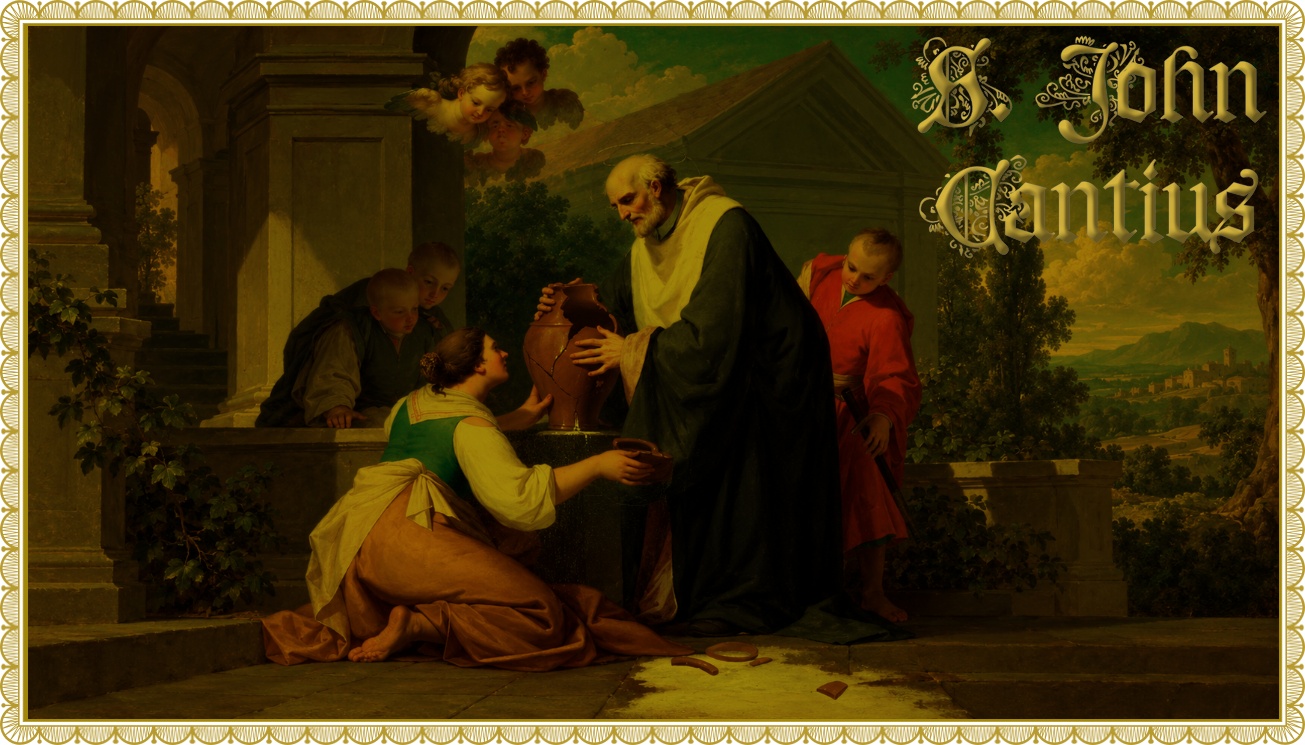
- Today’s homily: St John CantiusThe account of St John of Kenty illustrates true charity, as he prioritised the needs of a poor man over his own comfort, exemplifying how knowledge of faith must translate into actions. His life was marked by humility, generosity, and a dedication to both charitable works and doctrinal integrity, urging a holistic expression of faith.
- Today’s Mass: October 22 St John CantiusSt John of Kenty, originally a humble country lad, succeeded as a theology professor in Kraków but faced opposition that led to his role as a parish priest. Known for his kindness, he lived simply, aiding the poor. After winning his parishioners’ hearts, he returned to teaching, living a life of humility and faith.
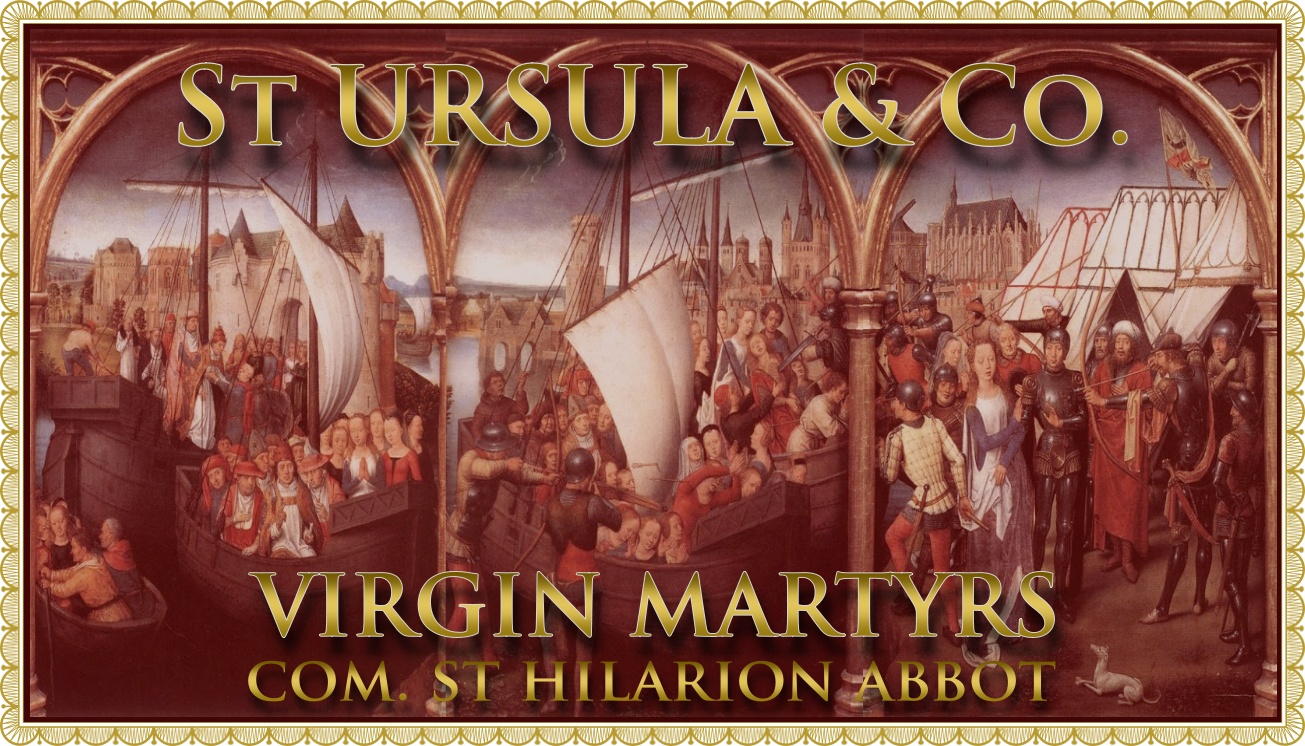
- Today’s Mass: October 21 St Ursula, Virgin Martyr & CompanionsSt Ursula and Companions, Virgins and Martyrs; Commemoration of St Hilarion, Confessor. Though legends concerning Ursula and eleven thousand virgins are historically uncertain, early Christian martyrs were venerated at Cologne. St Hilarion, Palestinian hermit and disciple of St Anthony, embraced severe penance and solitude, dying in 371 aged eighty.
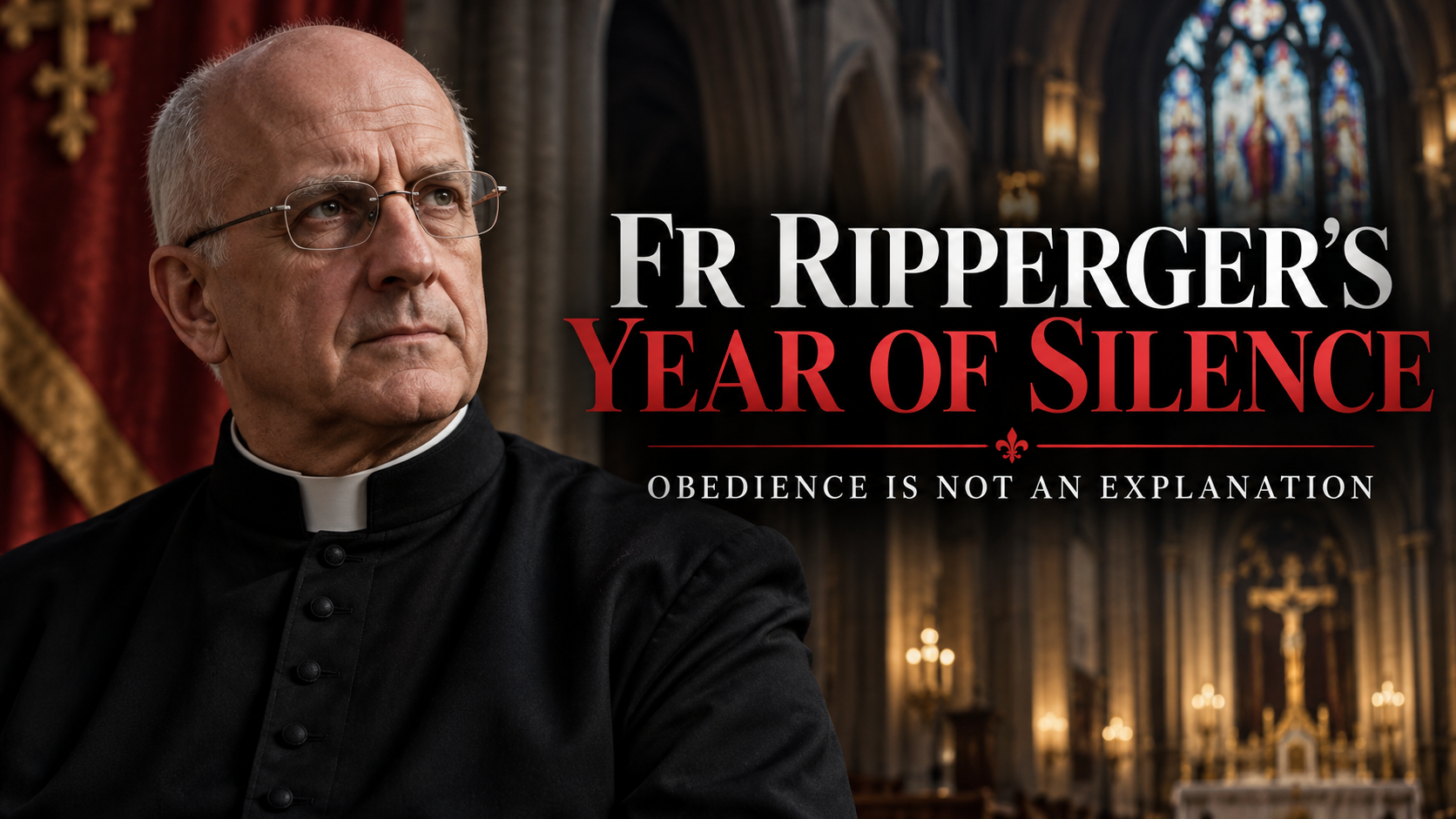
- FR RIPPERGER’S YEAR OF SILENCE: Obedience is not an explanationFr Chad Ripperger has accepted a year-long withdrawal from public speaking as requested by Archbishop Golka of Denver, aimed at focusing on his priestly community. This decision, following the removal of another exorcist, raises concerns about the Church’s balance between discretion and public witness regarding exorcism and supernatural matters.
- Today’s Mass: October 20 Octave Day of St Edward, King & ConfessorEdward the Confessor, England’s last Saxon king, ruled from 1042 until his death in 1066. Born in 1003, he fled to Normandy during Danish rule and returned to take the throne. His reign is debated, seen as both weak and a time of peace. Edward’s legacy includes the establishment of Westminster Abbey, where he is buried.



Leave a Reply