

The First Sunday after Pentecost: Charity Given, Charity Lived, Charity Judged
The Liturgy, Theology, and Spirituality of the First Sunday after Pentecost in the Tridentine Rite

The First Sunday after Pentecost stands not as a gentle beginning, but as a decisive unveiling. The mysteries have been given: the Father revealed, the Son sacrificed, the Holy Ghost poured forth. What remains is not further revelation, but response. The Church does not delay in stating the principle that governs the entire season: Deus caritas est—God is charity. And from this principle, all else follows with inexorable clarity.
For the Epistle does not propose charity as an ideal, but as a definition. “He that loveth not, knoweth not God: for God is charity.” This is not metaphor. It is ontology. To know God is to participate in charity; to lack charity is to remain outside divine life. The Holy Ghost, given at Pentecost, does not merely bestow gifts—He communicates the very love by which God loves Himself. The Christian life is therefore not moral imitation alone; it is participation in divine being.
But this participation is not abstract. It is mediated through sacrifice. “In this is charity: not as though we had loved God, but because He hath first loved us, and sent His Son to be a propitiation for our sins.” The origin of charity is not human effort, but divine initiative. The Cross is not the consequence of love—it is its manifestation. Thus the charity into which the faithful are drawn is cruciform: it gives, it suffers, it redeems.
And what is given in sacrifice is made present in the Eucharist. The Blood poured from the side of Christ is the Blood offered upon the altar; the Body given on Calvary is the Body received in Holy Communion. Charity is not only revealed—it is communicated. The faithful do not merely contemplate divine love; they receive it sacramentally.
Here the structure becomes absolute:
God is charity.
That charity is manifested in the Cross.
The Cross is made present in the Eucharist.
The Eucharist is given to the faithful.
And what is given must be lived—or it condemns.
This is the law of the First Sunday after Pentecost.
For the Epistle immediately presses the consequence: “If any man say, I love God, and hateth his brother; he is a liar.” Charity cannot remain interior. It must become visible, concrete, sacrificial. The presence of God in the soul is tested not by profession, but by transformation. As Thomas Aquinas teaches, charity is the form of all the virtues, giving life to every act and ordering it toward God. Where charity is absent, nothing avails.
The Gospel sharpens this truth into judgment. “Be ye therefore merciful, as your Father also is merciful.” The measure is no longer human—it is divine. And immediately the standard is declared: “With the same measure that you shall mete withal, it shall be measured to you again.” Charity becomes the criterion of judgment. The soul is weighed not according to what it has received, but according to what it has become.
Thus the paradox of the Epistle is resolved: “Fear is not in charity: but perfect charity casteth out fear.” The absence of fear is not presumption—it is perfection. The soul that truly abides in charity need not fear judgment, because it has already been conformed to the Judge. “That we may have confidence in the day of judgment: because as He is, we also are in this world.”
Here the liturgy reveals its full severity. The First Sunday after Pentecost is not introductory—it is definitive. It establishes that the life of grace is not static. It advances toward judgment. Every act of charity participates in that final verdict; every failure of charity anticipates it.
The prayers of the Mass confirm this movement. The Gradual cries: “O Lord, be thou merciful to me: heal my soul, for I have sinned against thee.” Charity, if it is real, produces repentance. The soul that knows God knows its own insufficiency. Thus humility becomes the ground of love.
The Secret brings the logic to its sacrificial conclusion: that through the offering, we ourselves may become “an eternal offering” to God. The Christian is not merely present at the Sacrifice—he is drawn into it. The charity received in Communion demands that the communicant become what he has received: an oblation.
And here the Eucharistic dimension becomes inescapable. The same Sacrament that communicates charity also discerns it. As Paul the Apostle warns elsewhere, the one who receives unworthily receives judgment. The Eucharist does not merely unite—it reveals. It perfects the soul open to charity and exposes the soul that resists it.
Thus the First Sunday after Pentecost stands as the governing law of the entire season:
Charity is given.
Charity must be lived.
Charity will be judged.
There is no refuge in sentiment.
There is no salvation in partial love.
There is no communion without conformity.
And so the Church does not begin the long green season with comfort, but with clarity. The gift of the Holy Ghost is not an ornament—it is a transformation. The life of God has been placed within the soul. What remains is whether that life will be perfected or resisted.
For the measure is simple, and it cannot be altered:
As He is, so must we be.
And in that likeness—or its absence—
the soul will stand or fall
before the judgment seat of God.
- 1 John 4:8–21 (Douay-Rheims).
- Luke 6:36–42 (Douay-Rheims).
- Thomas Aquinas, Summa Theologiae, II–II, q.23, a.8.
- Cf. Roman Missal, First Sunday after Pentecost, Gradual and Secret.
related articles


Latest articles
- QUI BENE DISTINGUIT, BENE DOCET ~ He who distinguishes well, teaches well: Spiritual Conference for Nuntiatoria CXXIIIIn a series of Tuesday conferences, the speaker explores themes about recognising reality, receiving divine gifts, and understanding spiritual truths. He highlights the importance of making careful distinctions to maintain sound judgment, especially in an age consumed by distractions and superficial assessments. True wisdom lies in distinguishing truth from perception and nurturing an authentic inner life centred on Christ.
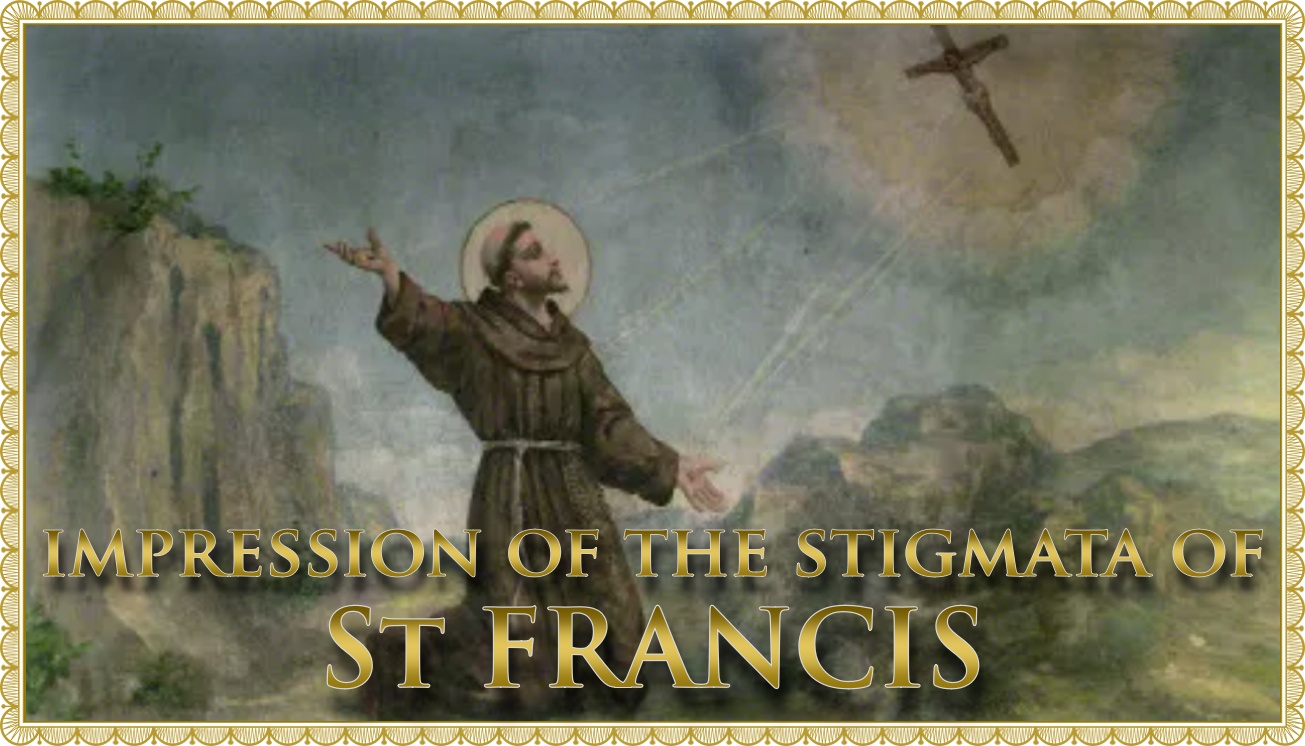
- Today’s homily: Impression of the Stigmata upon St FrancisFrom serving the lepers he once shunned to receiving Christ’s wounds upon Mount Alvernia, Saint Francis shows how grace transforms a soul through obedient love. His stigmata call us to let the Cross shape our lives, beginning with the particular act of mercy or sacrifice we have been reluctant to offer.
- Today’s Mass: September 17 Impression of the Stigmata of St Francis of AssisiSaint Francis received the stigmata because he had first allowed the Cross to transform his soul. His wounds were not a spectacle, but God’s answer to a world growing cold: the visible sign of a life consumed by crucified love. We may never bear Christ’s wounds in our flesh, but we must bear their likeness through penance, fidelity, patience, mercy and sacrificial love.
- Sermon for Stigmata of St. FrancisToday marks the feast of St. Francis’ stigmata, celebrating his transformation from a wealthy merchant’s son to a devoted preacher of poverty and humility. He founded the Franciscan order, emphasising evangelisation and simplicity. His experience of receiving the stigmata exemplifies the Christian doctrine of redemption through suffering, distinguishing it from other faiths.
- Today’s homily: Wednesday Michaelmas EmberThe homily reflects on the significance of fasting and prayer in the Christian faith, emphasising their role in spiritual growth and self-mastery. By juxtaposing scripture from Amos and the Gospel of Mark, it highlights the need for gratitude and humility during abundance, urging believers to recognise their dependence on God. True repentance transforms and restores one’s relationship with Him.



Leave a Reply