

When Fear Overrides Judgment: Henry Nowak, Policing, and the Collapse of Equal Justice

The conviction at Southampton Crown Court of Vikrum Digwa for the murder of Henry Nowak ought, in ordinary circumstances, to mark the end of the matter. A jury has heard the evidence, the facts have been tested, and a verdict has been returned. A young man, unarmed and alone, was attacked and killed, and the man responsible has now been convicted. In the narrow and procedural sense, justice has been done.
But this is not a case that closes with a verdict. It is a case that exposes something far more troubling, because the most disturbing element is not confined to the act of violence itself, but lies in the moment immediately after it—when the system tasked with recognising reality appears, however briefly, to have misidentified it.
Henry Nowak was eighteen years old, at the beginning of his adult life, and in his first term at university. On the night of his death, he had been out with friends and was making his way home. By every account, he was not involved in conflict, not engaged in aggression, not presenting any threat. He encountered a stranger carrying a large bladed weapon, described in court as an eight-inch knife worn openly.¹ What followed was not a complex or ambiguous interaction but a sudden and lethal assault: multiple stab wounds, delivered with force, leaving him bleeding heavily in the street.²
When officers arrived, the scene did not require interpretation. It required recognition. One man was gravely wounded. Another man was present who had been carrying a weapon. This is not a subtle distinction. It is the most basic form of situational awareness upon which all policing depends.
And yet, at that precise moment, the clarity of the scene was displaced. The attacker alleged racism.
That allegation, later described by prosecutor Nicholas Lobbenberg KC as a “wicked lie about a dying man” and a calculated “trump card,” did not simply add information to the situation—it reordered it.³ What stood before the officers was no longer a bleeding victim and a potential assailant; it became, even if only for seconds, a scenario reframed through the lens of accusation.
This is the critical point. The failure here was not confusion. It was displacement. The hierarchy of facts—what is seen, what is happening, who is injured—was interrupted by the sudden gravitational pull of a narrative claim.
A man was bleeding. Another man was not. That should have settled the matter, at least in the first instance. Instead, an allegation—untested, unverified, and issued by the only armed individual present—appears to have carried sufficient weight to disrupt that immediate judgment.
That does not happen by accident. It happens when institutions are conditioned to respond to certain risks more urgently than others.
The response of Hampshire Police, culminating in an apology from Deputy Chief Constable Robert France, acknowledges the outcome but does not yet fully confront the cause. “He was the victim,” France stated publicly following the verdict.⁴ That is true. But the question is not what is now known; it is what was acted upon in the moment.
To understand that moment, one must understand the environment in which modern policing operates. British policing has, for decades, been shaped by the imperative to avoid discrimination, reinforced in the aftermath of the Macpherson Report, which formally identified “institutional racism” as a structural concern within policing.⁵ That finding has since informed training, operational guidance, and professional expectations across forces in England and Wales.
This has created a system in which allegations of racism are not merely taken seriously—as they should be—but are treated as carrying immediate operational significance. The intention is clear. The consequence, however, is more complex.
For when the fear of failing to respond to an allegation becomes greater than the fear of misreading the scene itself, judgment is no longer anchored in reality. It is calibrated against perception. The officer is no longer asking only, “What is happening?” but also, “What will it look like if I get this wrong?”
It is at that point that judgment does not simply falter—it is redirected. The visible reality of the situation is no longer primary. The potential narrative surrounding it becomes a competing force.
This is not conjecture. It is precisely what the language of the prosecution implies. A “trump card” only functions if it is expected to work. It only works if the system is known to be responsive to it.
In other words, the system has become predictable in its sensitivities.
That predictability is dangerous. Because a system that can be anticipated in this way can also be manipulated. It does not require widespread bad faith; it requires only that individuals understand which claims will trigger immediate institutional response.
The result, as this case suggests, is that an unverified allegation can momentarily displace the most obvious fact in the scene: the identity of the victim.
The professional standards set by the College of Policing require officers to act with integrity, objectivity, and a commitment to evidence-based decision-making.⁶ But those standards presuppose a hierarchy in which evidence remains primary. When that hierarchy is disrupted—even briefly—the system ceases to function as intended.
The legal context reinforces rather than complicates this point. Section 139 of the Criminal Justice Act 1988 prohibits the possession of bladed articles in public places, subject to specific defences, including religious reasons such as the carrying of a kirpan.⁷ However, Home Office guidance and case law emphasise that such defences are contingent upon proportionality and context. Weapons of a size and character inconsistent with symbolic religious use fall outside that protection.⁸ The blade used in this case, as presented in court, was not of a kind that could plausibly be treated as merely symbolic.
There was, therefore, no legal ambiguity that required resolution at the scene. There was only the need to recognise what was already apparent.
The ongoing investigation by the Independent Office for Police Conduct will examine procedures, decisions, and compliance with statutory duties under the Police Reform Act 2002.⁹ It will determine whether individual officers acted within the framework of their training. But it is unlikely, on its own, to resolve the deeper issue, because that issue is not procedural. It is cultural.
It lies in the unspoken hierarchy of risks within the institution itself: the relative weight assigned to reputational harm versus immediate physical reality. If officers are conditioned—implicitly or explicitly—to treat certain allegations as carrying exceptional danger, then it is entirely foreseeable that those allegations will shape behaviour, even when the physical evidence points elsewhere.
That is what this case reveals. Not a random failure, but a predictable one.
The principle of equal justice depends upon the consistent application of a simple order: reality first, interpretation second. A wounded individual is treated as a victim until evidence proves otherwise. An armed individual is treated as a potential threat until that threat is neutralised. Allegations are investigated, not assumed.
In the Nowak case, that order appears to have been disrupted. Not because it is unclear, but because it was displaced.
The death of Henry Nowak is a personal tragedy of the most absolute kind. But it is also a public warning. A system that allows fear—whether of accusation, criticism, or reputational damage—to override immediate judgment is a system that has begun to lose its coherence.
The conviction at Southampton Crown Court addresses the act of violence. What remains is to address the conditions that allowed the moment of misjudgment to occur.
If those conditions are left unchanged, the next failure will not be an anomaly. It will be the same pattern, repeated under different circumstances.
And once again, the cost will be borne by the person the system failed to recognise in time: the victim.
¹ Trial reporting on R v Digwa, Southampton Crown Court, describing the defendant carrying an eight-inch bladed weapon.
² Medical and forensic evidence presented to the jury confirming multiple stab wounds and cause of death.
³ Nicholas Lobbenberg KC, prosecution closing speech, describing the racism allegation as a “wicked lie” and “trump card.”
⁴ Statement by Deputy Chief Constable Robert France, Hampshire Police, issued following the verdict (May 2026).
⁵ Macpherson Report, Home Office, 1999.
⁶ College of Policing, Code of Ethics (latest edition).
⁷ Criminal Justice Act 1988, s.139 (possession of bladed articles).
⁸ Home Office, Offensive Weapons Guidance; relevant case law on proportionality and lawful excuse.
⁹ Independent Office for Police Conduct, statutory remit under the Police Reform Act 2002.
RELATED ARTiCLES


LATEST ARTICLES
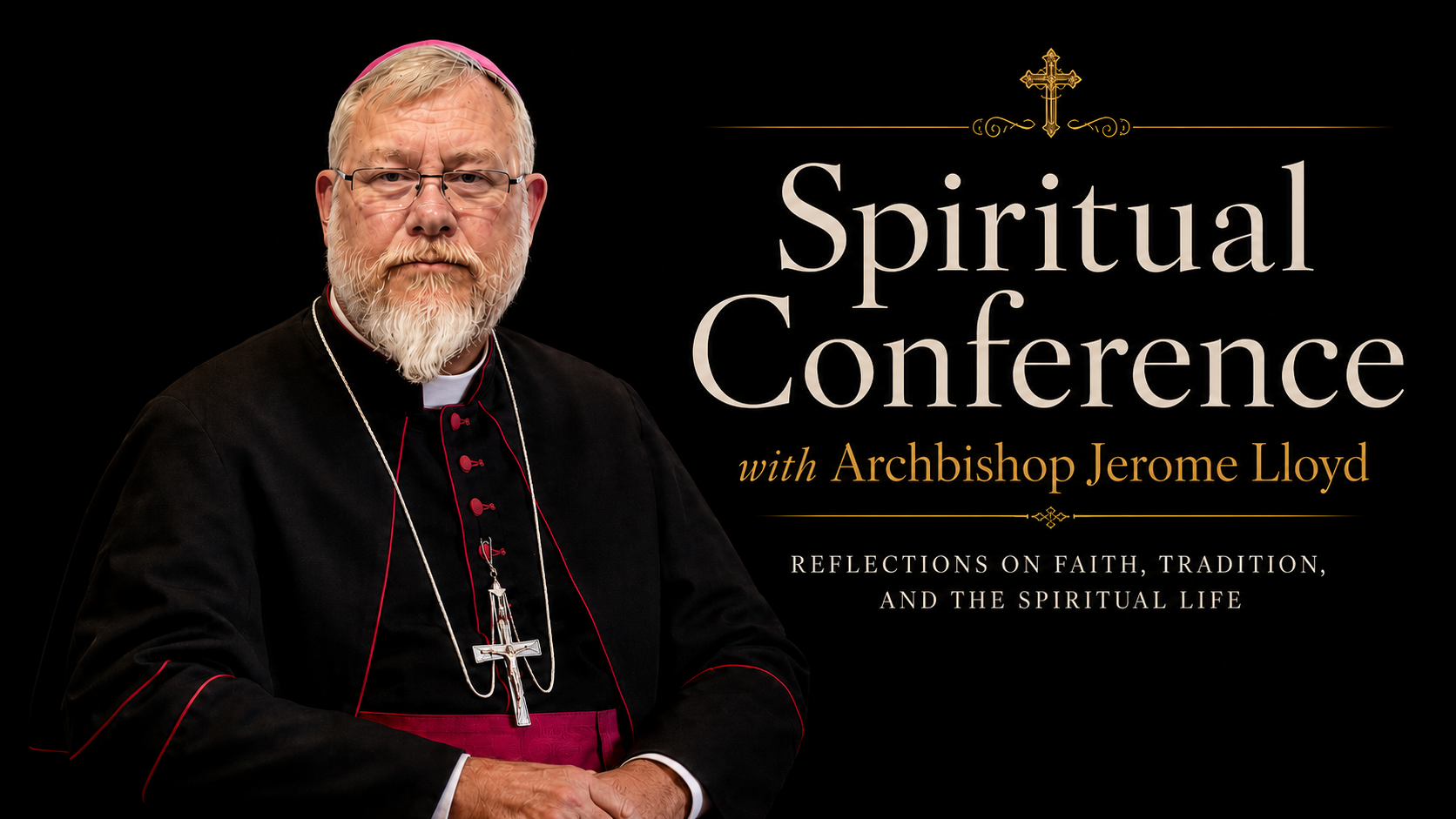
- QUI BENE DISTINGUIT, BENE DOCET ~ He who distinguishes well, teaches well: Spiritual Conference for Nuntiatoria CXXIIIIn a series of Tuesday conferences, the speaker explores themes about recognising reality, receiving divine gifts, and understanding spiritual truths. He highlights the importance of making careful distinctions to maintain sound judgment, especially in an age consumed by distractions and superficial assessments. True wisdom lies in distinguishing truth from perception and nurturing an authentic inner life centred on Christ.
- Today’s homily: Impression of the Stigmata upon St FrancisFrom serving the lepers he once shunned to receiving Christ’s wounds upon Mount Alvernia, Saint Francis shows how grace transforms a soul through obedient love. His stigmata call us to let the Cross shape our lives, beginning with the particular act of mercy or sacrifice we have been reluctant to offer.
- Today’s Mass: September 17 Impression of the Stigmata of St Francis of AssisiSaint Francis received the stigmata because he had first allowed the Cross to transform his soul. His wounds were not a spectacle, but God’s answer to a world growing cold: the visible sign of a life consumed by crucified love. We may never bear Christ’s wounds in our flesh, but we must bear their likeness through penance, fidelity, patience, mercy and sacrificial love.
- Sermon for Stigmata of St. FrancisToday marks the feast of St. Francis’ stigmata, celebrating his transformation from a wealthy merchant’s son to a devoted preacher of poverty and humility. He founded the Franciscan order, emphasising evangelisation and simplicity. His experience of receiving the stigmata exemplifies the Christian doctrine of redemption through suffering, distinguishing it from other faiths.
- Today’s homily: Wednesday Michaelmas EmberThe homily reflects on the significance of fasting and prayer in the Christian faith, emphasising their role in spiritual growth and self-mastery. By juxtaposing scripture from Amos and the Gospel of Mark, it highlights the need for gratitude and humility during abundance, urging believers to recognise their dependence on God. True repentance transforms and restores one’s relationship with Him.
CURRENT EDITION


DAILY MASS ONLINE
One of the earliest online apostolates dedicated to the Traditional Latin Mass, Old Roman TV began broadcasting the Holy Sacrifice on the Feast of the Assumption, 15 August 2008. During the COVID-19 pandemic, additional programming — devotions, catechesis, and conferences — was added to support the faithful in prayer and formation.
Support the daily Holy Mass on Old Roman TV by offering a Mass intention — for loved ones, thanksgiving, or the repose of souls. Your intention helps sustain the sacred liturgy and brings grace to those you remember before God’s altar.
SUPPORT THE DAILY MASS ONLINE
Likely the world’s longest-running daily online broadcast of the
Traditional Latin Mass, streaming faithfully since the
Feast of the Assumption 2008.

This apostolate cannot continue without immediate help
Please support us with a contribution toward
chapel rent, sacristy supplies, operating costs, and web-hosting.
Our essential monthly costs reach £1,000.
MASS INTENTIONS
If your offering is for a Mass Intention, kindly complete the form below in full so we may correctly match it to your donation. For anniversary intentions — birthdays, wedding anniversaries, anniversaries of death — please be sure to include the relevant date.


Today’s Mass Propers
- Today’s Mass: September 17 Impression of the Stigmata of St Francis of Assisi
 Saint Francis received the stigmata because he had first allowed the Cross to transform his soul. His wounds were not a spectacle, but God’s answer to a world growing cold: the visible sign of a life consumed by crucified love. We may never bear Christ’s wounds in our flesh, but we must bear their likeness through penance, fidelity, patience, mercy and sacrificial love.




Leave a Reply