

The Invention of the Holy Cross: The Hidden Wood and the Unhidden Mystery

The Feast of the Invention of the Holy Cross, kept on the third day of May in the traditional Roman Rite, belongs to that class of liturgical commemorations which modern man finds difficult precisely because they presuppose a world he has largely abandoned. It is a feast that speaks without hesitation of relics, of sacred places, of divine providence acting within history; and yet, more profoundly still, it speaks of a Church that remembers not ideas but events, not abstractions but realities wrought in time and space. The word invention itself, now dulled by modern usage, must be recovered to its proper meaning: not the creation of what did not exist, but the uncovering of what was always there. Thus the Church does not celebrate a pious embellishment, but a rediscovery—a bringing again into the light of that wood upon which hung the salvation of the world.
When Saint Helena, guided by faith rather than curiosity, undertook her pilgrimage to Jerusalem in the fourth century, she did so in a world already marked by both memory and suppression. The holy places had not been forgotten by the faithful, but they had been obscured—deliberately overlaid with the monuments of a pagan order that sought not merely to dominate the land, but to erase the claim that God had acted there. Under the witness preserved by Eusebius of Caesarea, these structures were dismantled, and the earth itself was opened.¹ What emerged from that excavation were three crosses, indistinguishable to the eye, silent witnesses to an event that had altered the course of history. And yet, as later recounted by Socrates Scholasticus, the true Cross was made known through a sign of divine favour, restoring certainty where human perception could not suffice.² What had been hidden was not thereby changed; it had only been concealed. Its recovery was not an act of creation, but of recognition.
The Fathers of the Church, standing closer to these events in both time and sensibility, did not treat the Cross as a mere historical curiosity. For them, it was nothing less than the axis of creation, the point at which all things converge and from which all things are restored. Cyril of Jerusalem speaks of the wood of the Cross as though it were diffused throughout the world, its fragments multiplying its presence rather than diminishing it, so that what was once singular becomes, in grace, universal.³ John Chrysostom does not hesitate to call it a trophy raised against the powers of darkness, a standard planted in the midst of a fallen world as the sign of a victory already won.⁴ And Ambrose of Milan, contemplating the same mystery, sees in it the great reversal: that shame becomes glory, defeat becomes triumph, and death itself becomes the instrument of life.⁵ There is in these Fathers no trace of embarrassment, no instinct to soften the scandal. The Cross is proclaimed in its starkness precisely because it is, in that very starkness, the revelation of divine wisdom.
The scholastic tradition, far from diminishing this vision, receives it and renders it with a clarity that is at once rigorous and reverent. Thomas Aquinas, in the ordered precision of his inquiry, asks whether it was fitting that Christ should die upon the Cross, and answers not by diminishing the mystery, but by entering more deeply into it.⁶ The Cross, he teaches, is fitting because it manifests all that must be manifested: the obedience of the Son, the gravity of sin, the justice of God, and the immensity of divine love. It is not an arbitrary means, but the most expressive one, the one in which every aspect of redemption is made visible. Moreover, in a recapitulation already glimpsed by Irenaeus of Lyons, the wood of the Cross answers the wood of Eden: as death entered through a tree, so life is restored through the tree of Calvary.⁷ In this way the Cross is not merely an event within history; it is the key that unlocks history itself.
Yet it is in the liturgy that this mystery attains its fullest expression, for here the Cross is not only proclaimed and explained, but made present and lived. The traditional Roman liturgy of the Invention of the Holy Cross does not adopt a tone of lamentation, as though it were confined to the sorrow of Good Friday. Rather, as Prosper Guéranger observes, it resounds with triumph, for the Church contemplates the Cross already in the light of the Resurrection.⁸ It is not merely the instrument of death; it is the throne of the King, the standard under which the faithful are gathered. And as Dom Odo Casel would later articulate with profound insight, the liturgy does not leave the faithful at a distance from these mysteries, but draws them into participation, so that the sacrifice of Christ is not only remembered but made operative in the life of the Church.⁹ The Cross, therefore, is not behind us as a relic of the past; it stands before us as a present reality, demanding response.
If there is a tragedy peculiar to the modern age, it lies in the fact that the Cross, once buried beneath the stones of paganism, has been buried again—this time not in the earth, but in the mind. It is retained as a symbol, but emptied of its force; displayed, but not embraced; invoked, but not understood. The modern world will tolerate a Cross that consoles, but not a Cross that commands; a Cross that affirms, but not a Cross that contradicts. Yet it is precisely in contradiction that the Cross reveals its truth, for it stands against every attempt to reduce Christianity to a system of comfort or a programme of self-fulfilment. It insists, with an authority that cannot be evaded, that redemption is wrought through sacrifice, that love is proven in self-offering, and that glory is inseparable from suffering.
Thus the Feast of the Invention of the Holy Cross is not confined to the memory of a fourth-century excavation. It is renewed in every age, and indeed in every soul, in which the Cross is rediscovered. For beneath the accumulated layers of habit, distraction, and sin, the Cross lies hidden still—not as an external object, but as the pattern of life to which the Christian is called. To uncover it is to recognise anew that the path of Christ is the path of the Cross, and that there is no other.
What Saint Helena uncovered in Jerusalem was not merely a relic of antiquity, but the very axis upon which the world turns. And if that axis is obscured, everything built upon it begins to falter. But if it is found again—raised, honoured, and embraced—then both the Church and the soul recover their centre. For the Cross, once discovered, does not permit indifference. It demands not only veneration, but conformity; not only admiration, but participation. It is not enough that it be found. It must be taken up.
¹ Eusebius of Caesarea, Vita Constantini, III.25–28.
² Socrates Scholasticus, Historia Ecclesiastica, I.17.
³ Cyril of Jerusalem, Catecheses, XIII.4.
⁴ John Chrysostom, Homilies on the Gospel of John, 85.
⁵ Ambrose of Milan, De Obitu Theodosii, 43.
⁶ Thomas Aquinas, Summa Theologiae, III, q.46, a.4.
⁷ Irenaeus of Lyons, Adversus Haereses, V.16.
⁸ Prosper Guéranger, The Liturgical Year, Paschal Time.
⁹ Dom Odo Casel, The Mystery of Christian Worship.
related articles


Latest articles
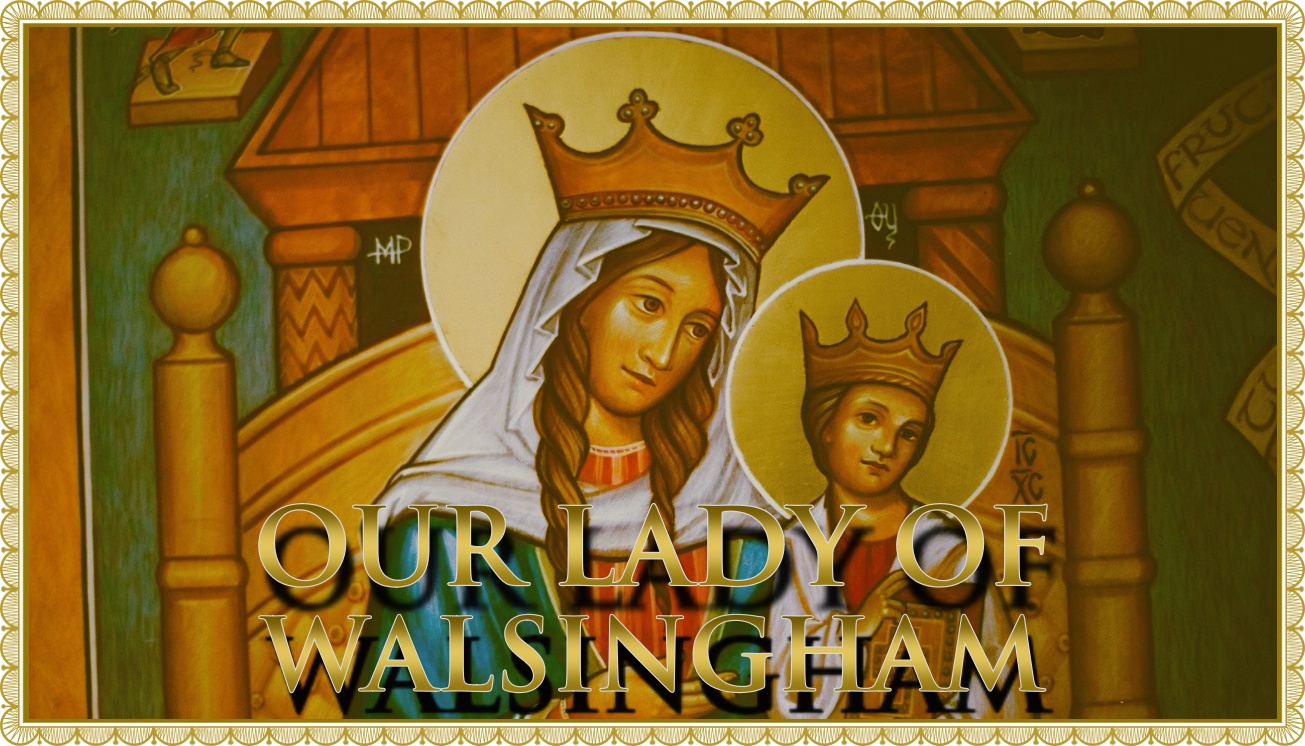
- Today’s homily: Our Lady of WalsinghamThe Mass reflects on the significance of Walsingham, Loreto, and the Christian soul as “Holy Houses” that embody the connection between heaven and earth. It highlights Mary’s central role in the Incarnation and emphasises the importance of inner conversion by inviting believers to reflect on their own hearts as dwelling places for God.
- Today’s Mass: September 24 Our Lady of WalsinghamThe Feast of Our Lady of Walsingham commemorates the vision of Mary that inspired Richeldis de Faverches to build a replica of her house in Nazareth in 1061. This shrine became a significant pilgrimage site, attracting royal visits until its destruction in 1538. The revival of pilgrimage in the 20th century reaffirmed its spiritual importance.
- Sermon for Blessed Virgin Mary of RansomToday, we commemorate the feast of the Blessed Virgin Mary of Ransom, which honours the Mercedarians, a religious order founded in 1218 to free Christian captives from the Moors in Spain. Their mission persists today, highlighting the ongoing relevance of ransoming captives amidst contemporary persecution, combining spiritual redemption with social responsibility.
- OUR LADY OF RANSOM: THE MOTHER OF THE REDEEMER AND THE BREAKING OF CHAINSThe Feast of Our Lady of Ransom, celebrated on 24 September, commemorates the Mercedarian Order’s mission to redeem Christian captives, embodying the concept of liberation from sin through Christ’s sacrifice. This day’s significance links historical devotion with England’s Catholic restoration, connecting the feast to both the Incarnation and personal spiritual freedom.
- Today’s Mass: September 23 Pope Saint Linus, MartyrPope Saint Linus, a nobleman from Tuscany, became an early Christian leader, first in Gaul and then as the Pope after Saint Peter. He was martyred for his faith, noted for his role in baptising and appointing bishops. Saint Thecla, inspired by Saint Paul, chose virginity and endured persecution, ultimately receiving martyrdom.





Leave a Reply