

Tabor for Calvary: The Light That Strengthens the Faithful
MASS Reminiscere
LESSON 1 Thessalonians 4. 1-7
GOSPEL St Matthew 17:1-9
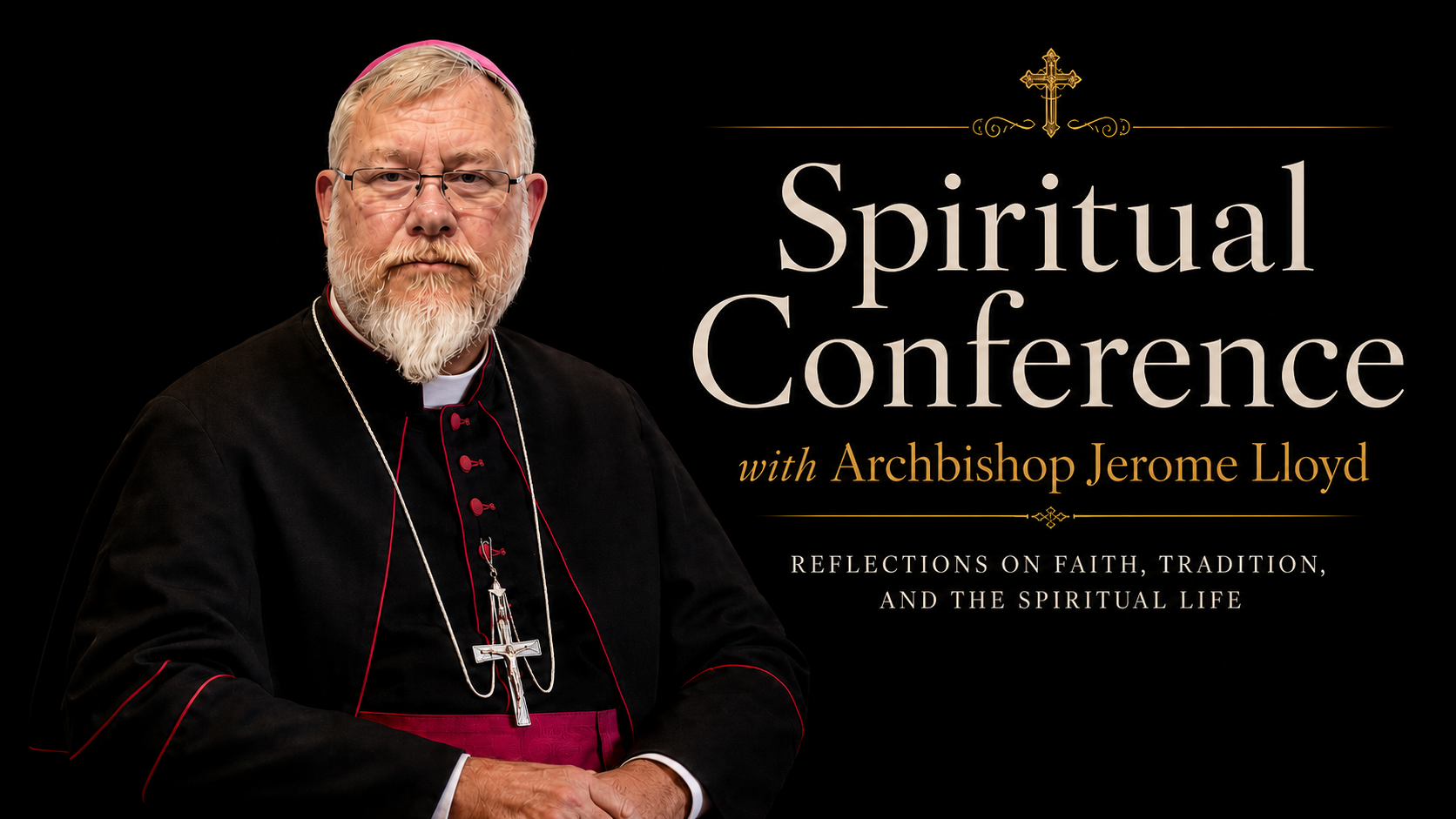
HOMILIST Mt Revd Jerome Lloyd OSJV

Beloved in Christ,
On this Second Sunday in Lent, Holy Mother Church places before us the sublime mystery of the Transfiguration. Last Sunday we beheld Christ in the wilderness, fasting and tempted by Satan. Today we behold Him upon the mountain, radiant with uncreated light. The contrast is deliberate. The same Christ who endured hunger and assault now reveals divine splendour. In both, He leads us into the heart of the Christian life — where suffering and glory are inseparably entwined.
Why does our Lord unveil His majesty at this precise moment? Because He has just foretold His Passion. He shows His glory in order to fortify His disciples against the scandal of the Cross. He allows them to see, for a fleeting moment, what He is by nature — so that when they see Him betrayed, scourged, and crucified, their faith may not utterly fail.
“This is My beloved Son… hear ye Him.”
The Father’s command is not ornamental. It is imperative. Hear Him when He speaks of suffering. Hear Him when He speaks of self-denial. Hear Him when He speaks of the Cross. The Transfiguration is not an escape from Calvary; it is its hidden explanation.
The liturgy deepens this truth. The Introit cries: Reminiscere miserationum tuarum, Domine — “Remember Thy mercies, O Lord.” We begin not with triumph but with supplication. Psalm 24 speaks of distress, humiliation, enemies, sin. Lent is realism. The soul lifts itself to God precisely because it knows its weakness.
The Collect is even more stark: “O God, Who seest that we have no power of ourselves.” There is no Pelagianism here. No illusion of moral autonomy. We ask to be defended outwardly in our bodies and inwardly in our souls — from adversities that afflict the flesh and from evil thoughts that wound the heart. The warfare is both visible and invisible.
Then St. Paul defines the will of God without ambiguity: hæc est voluntas Dei, sanctificatio vestra. Sanctification. That is the point of Lent. Not aesthetic religiosity. Not spiritual excitement. Sanctification — the ordering of the body, the purification of desire, justice toward one’s neighbour. The glory of Tabor reveals what grace accomplishes in human nature when it is disciplined and purified.
This Sunday also bears the memory of yesterday’s Ember Saturday, when the same Gospel was proclaimed in connection with priestly ordinations. The Church placed this vision before the ordinands so that they might understand what they are to become: men conformed to Christ in both suffering and glory. Now, on this Sunday, the entire faithful are summoned into that same conformity. The repetition is not redundancy; it is insistence. We are slow to learn. We are easily discouraged. The Church repeats the vision because we need it again.
In Rome, the stational church today is the Basilica of Santa Maria in Domnica on the Caelian Hill. There, under the mantle of the Theotokos, the faithful gathered for centuries to hear this Gospel. Mary is the perfect hearer of the Father’s command. She heard, she obeyed, she endured. She witnessed both the hidden glory of Nazareth and the unveiled horror of Calvary. The Church sets her before us as model of steadfast discipleship. Tabor did not spare her the Cross; neither will it spare us. But it prepares us.
Peter, overcome by consolation, says, “Lord, it is good for us to be here.” Of course it is. We all prefer Tabor to Jerusalem. We prefer illumination to obedience, consolation to endurance. But Christ does not permit them to remain. He leads them down the mountain. The mission is not yet complete.
So it is with us. Consolations are real. Moments of clarity are real. But they are given to strengthen us for fidelity when light withdraws. The true test of faith is not how we behave in ecstasy, but how we endure in obscurity.
As they descend, the disciples see “no one, but Jesus only.” That is the essence of Lent. When distractions fall away, when ambitions are stripped back, when comforts are reduced, if we see Jesus only, it is enough.
Beloved, the Transfiguration reveals your destiny. The light that shone from Christ’s Face is not alien to human nature; it is the future of human nature redeemed. But the path runs through sanctification. Through obedience. Through the Cross.
Therefore let us ascend the mountain of prayer, fasting, and almsgiving. Let us not seek merely the emotion of religion but the transformation of the soul. Let us hear Him — in the command to forgive, in the call to purity, in the demand for perseverance.
Tabor is given for Calvary. The glory is shown so that the scandal may be endured. And if we remain faithful — if we hear Him — then the light we glimpse today will not be fleeting.
It will be eternal.
In the Name of the Father, and of the Son, and of the Holy Ghost. Amen.
Homilies Archive

Mass Propers


DAILY MASS ONLINE
One of the earliest online apostolates dedicated to the Traditional Latin Mass, Old Roman TV began broadcasting the Holy Sacrifice on the Feast of the Assumption, 15 August 2008. During the COVID-19 pandemic, additional programming — devotions, catechesis, and conferences — was added to support the faithful in prayer and formation.
Support the daily Holy Mass on Old Roman TV by offering a Mass intention — for loved ones, thanksgiving, or the repose of souls. Your intention helps sustain the sacred liturgy and brings grace to those you remember before God’s altar.
SUPPORT THE DAILY MASS ONLINE
Likely the world’s longest-running daily online broadcast of the
Traditional Latin Mass, streaming faithfully since the
Feast of the Assumption 2008.

This apostolate cannot continue without immediate help
Please support us with a contribution toward
chapel rent, sacristy supplies, operating costs, and web-hosting.
Our essential monthly costs reach £1,000.


Leave a Reply