

Borrowed Faith, Broken Britain
The right does need religion — but not borrowed faith: moral credit, civilisational exhaustion, and the failure of instrumental Christianity
A civilisation that spends its moral inheritance while denying its source does not renew itself—it exhausts itself.
The recent exchange in The Critic, particularly the intervention by James Price, represents a rare moment of clarity in an otherwise superficial debate. Against the now-familiar claim—advanced most explicitly by Tom Jones—that Christianity in politics is effectively “as dead as the corpse on the cross,” Price offers a necessary corrective: that Christianity is not only socially beneficial, but true.
This instinct is sound. But it does not go far enough.
For the question is not whether Christianity is politically useful. It is whether any civilisation can endure once it ceases to believe the truths that originally gave rise to its moral and political order. A society may borrow moral language; it cannot indefinitely borrow moral reality.
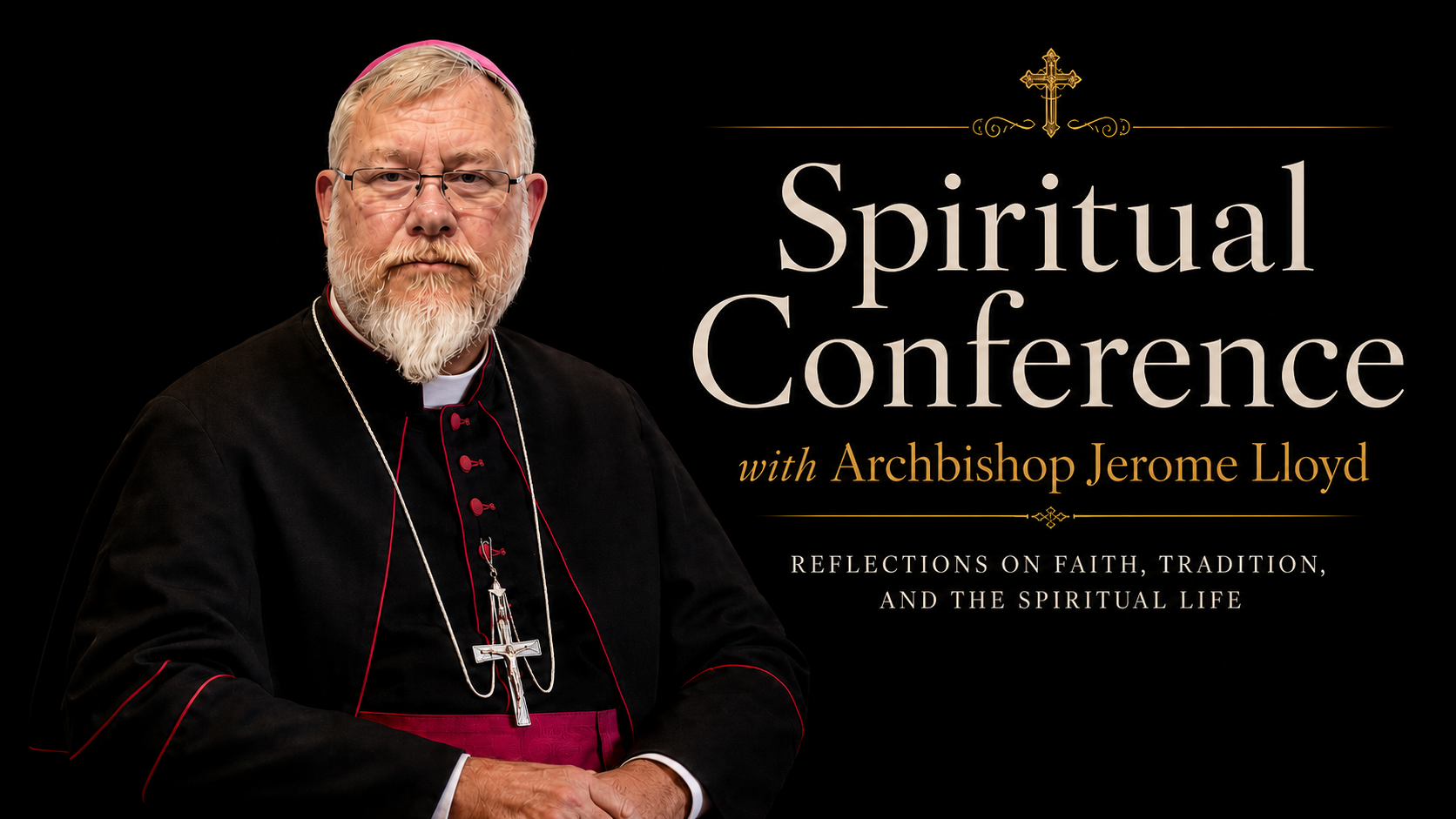
It is precisely this deeper problem that the Titular Archbishop of Selsey, Dr Jerome Lloyd, identified in his address to the New Culture Forum in Brighton on 10 February 2026. What began as a lecture—Can You Build a Future on Borrowed Faith?—has since taken on the character of a civilisational diagnosis. Britain, he argues, has attempted for two generations to preserve “the moral language of Christianity while quietly discarding the metaphysical and moral convictions that made that language intelligible.”¹ The result is not neutrality, but exhaustion—a civilisation living on moral credit.
Moral Credit and the Dissolution of Meaning
Price is correct to insist that Christianity is “the bedrock of practically everything in our society,” asking with disarming simplicity: “once you strip it away, what is there left to conserve?”² The uncomfortable answer, as Dr Lloyd demonstrates, is not nothing—but something far more precarious: inheritance without understanding, continuity without conviction, form without substance.
Britain continues to speak the language of dignity, equality, compassion, and justice. Yet these terms now function less as conclusions derived from shared premises than as assertions enforced without them. As Dr Lloyd observes, we are living with “inherited instincts operating after the account that funded them has been closed.”¹ Moral consensus has become moral inertia.
This is not decline in the ordinary sense. It is metabolic consumption: a civilisation burning through the last reserves of a moral inheritance it can no longer reproduce.
Here the insight of Augustine of Hippo proves diagnostic rather than historical. A society is defined by what it loves; reorder that love, and the entire moral architecture reorganises with it.³ Law becomes procedure. Freedom becomes assertion. Rights detach from duties.
A civilisation cannot conserve what it no longer believes; it can only preserve the appearance of conservation while the substance disappears.
Demography as Moral Autobiography
Dr Lloyd does not argue rhetorically. He begins with arithmetic. Fewer than half of adults in England and Wales are now married.⁴ The total fertility rate stands at approximately 1.44—well below replacement level.⁵ Nearly 29 per cent of households consist of a single individual.⁶ Population growth is driven primarily by net migration rather than natural increase.⁷
“These are not moral judgements,” he insists. “They are demographic facts.”¹
Yet demography is not morally neutral. It is moral autobiography. It records, with statistical clarity, what a society believes about itself. A society that does not reproduce itself biologically will not reproduce itself culturally. A people that ceases to form families will, in time, cease to form a civilisation.
The consequences extend beyond numbers. Fewer marriages yield fewer stable households. Fewer children yield fewer networks of obligation, inheritance, and memory. Where the family thins, the state expands—not ideologically, but structurally.
The psychological data follow the same trajectory. Anxiety and depression are rising, particularly among younger cohorts.⁸ Loneliness has become sufficiently widespread to require ministerial oversight.⁹ Suicide remains one of the leading causes of death among men under fifty.¹⁰
This is not coincidence. It is coherence. Britain has become, in Dr Lloyd’s formulation, “a society organised around radical autonomy, surprised to discover that autonomy without attachment yields isolation.”¹
Freedom, severed from truth, becomes a burden it cannot bear.
The Illusion of Instrumental Christianity
Price seeks to recover Christianity by appealing to its benefits: community, charity, family stability—“tangible benefits” for political life.²
But this is where the argument reaches its limit.
Christianity cannot be reduced to its outputs. These goods are not detachable features; they are the fruit of a coherent account of reality—of man as created, fallen, and ordered toward redemption. Remove that account, and the goods do not persist; they distort.
Charity becomes sentiment without judgement. Compassion becomes non-interference. Community becomes identity. Forgiveness—central to Price’s critique of cancellation—becomes unintelligible without sin.
Britain has already attempted the experiment Price proposes: to retain Christian ethics while discarding Christian metaphysics. The result is not renewal but exhaustion.
What remains is not Christianity, but its residue.
The Church of England: A Hollow Centre
At the critical moment, Price turns to the Church of England as a ready-made solution, suggesting it could “again become a powerful focal point for a humble but substantive civic national identity.”²
This is the hinge of his argument—and the point at which it collapses.
For it assumes that the institution retains the theological coherence necessary to perform this role. Dr Lloyd’s analysis demonstrates that this assumption no longer holds. The Church of England has not merely declined; it has been reconfigured within the anthropology of the age. Its public voice reflects the moral assumptions of contemporary culture more often than it challenges them.
This is not administrative weakness but ontological shift. An established Church that mirrors the civilisation it inhabits cannot also correct it. It becomes instead a vehicle for its continuation.
Thus the paradox: the institution most readily available as a source of renewal is itself implicated in the disorder it is meant to remedy.
Form remains. Authority evaporates.
A civilisation cannot be rebuilt upon a Church that no longer speaks with conviction about the nature of truth, the reality of sin, or the necessity of redemption.
From Oath to Process: The Moral Vacuum Revealed
Dr Lloyd’s historical contrast sharpens the diagnosis. In 1064, Harold Godwinson swore an oath upon sacred relics. To break that oath was not merely political failure but a violation of reality itself.¹⁴
Modern Britain retains the language of accountability but has lost the metaphysical framework that gave it force. When institutions fail, we do not repent; we investigate. We do not restore; we review.
The Rotherham inquiry identified at least 1,400 victims of exploitation.¹⁶ The facts were known. The failure was moral. Fear—of reputational damage, of appearing discriminatory—overrode judgement. One victim testified: “They said I was choosing that lifestyle. I was thirteen.”¹⁸
This is what moral credit looks like in its terminal phase: the preservation of moral language alongside the collapse of moral action.
The pattern extends. Tens of thousands of missing children reports annually.¹⁹ Assisted suicide framed as dignity.²⁰ Record abortion figures exceeding 250,000 in a single year.²¹
These are not isolated developments. They are the logical consequences of an anthropology that no longer recognises inherent limits.
Anthropology Unmoored and the Crisis of Truth
At the root of the crisis is not politics but anthropology. Historic Britain operated within a Christian understanding of the human person: endowed with dignity, bound by moral law, ordered toward truth.
Modern frameworks increasingly replace this with a vision of the self as sovereign—identity constructed, desire authoritative, limits negotiable.
Once this shift occurs, everything else follows. Law becomes procedural. Institutions become managerial. Education becomes therapeutic. Debate becomes risk-managed rather than truth-seeking.²²
A culture that no longer knows what man is cannot know what man is for. And a society that cannot answer that question cannot sustain a coherent moral order.
Truth, Not Utility
Price is at his strongest when he recognises that Christianity’s value lies not in its utility but in its truth. His closing remark—“I’ve got some Good News about that ‘corpse’”—points to the Resurrection, the claim upon which everything stands or falls.²³
This is the dividing line.
If Christianity is true, then it is not a political accessory but a comprehensive account of reality. It cannot be selectively applied or tactically deployed. It must be believed—or it will not endure.
If it is false, then its benefits are irrelevant.
What cannot continue is the present condition: attempting to preserve Christian moral outcomes while denying Christian metaphysical truth. That is not conservation. It is consumption.
Conclusion: The Point of No Return
The right does indeed need religion. But not as nostalgia. Not as branding. Not as a convenient inheritance invoked but not believed.
It requires something far more demanding: a return to living faith—to a moral and metaphysical framework capable of sustaining the goods it seeks to preserve.
Dr Jerome Lloyd’s diagnosis, delivered in Brighton on 10 February 2026, is therefore both precise and prophetic. Britain is not post-Christian in any stable sense. It is a civilisation living on borrowed faith—drawing down reserves it cannot replenish.
And moral credit, once exhausted, does not renew itself.
There is no stable end point to this process. There is only the moment—approaching now—when a civilisation discovers that it has spent its inheritance, dismantled its foundations, and no longer believes in anything capable of sustaining what remains.
At that point, the question is no longer whether Christianity is politically useful.
It is whether anything else is capable of taking its place.
¹ Dr Jerome Lloyd, Can You Build a Future on Borrowed Faith?, New Culture Forum, Brighton, 10 February 2026 (selsey.org).
² James Price, “The Right Does Need Religion,” The Critic, 16 April 2026.
³ Augustine of Hippo, De Civitate Dei, XIV.28.
⁴ Office for National Statistics, Marriages in England and Wales: 2021–2022.
⁵ Office for National Statistics, Births in England and Wales: 2022.
⁶ Office for National Statistics, Families and Households in the UK: 2023.
⁷ Office for National Statistics, UK Population Overview: Migration and Natural Change, 2023.
⁸ NHS Digital, Adult Psychiatric Morbidity Survey.
⁹ UK Government, Minister for Loneliness, 2018.
¹⁰ Office for National Statistics, Suicides in the UK: 2022.
¹⁴ Historical accounts of Harold Godwinson’s oath (1064).
¹⁶ Alexis Jay, Independent Inquiry into Child Sexual Exploitation in Rotherham (1997–2013), 2014.
¹⁸ Ibid.
¹⁹ National Crime Agency, UK Missing Persons Unit Reports.
²⁰ UK Parliament, Assisted Dying Bill Debates (2023–2025).
²¹ Department of Health and Social Care, Abortion Statistics, England and Wales: 2022.
²² UK Department for Science, Innovation and Technology, Barriers to Research on Sex and Gender.
²³ Price, “The Right Does Need Religion.”
related articles


Latest articles
- Today’s Mass: September 18 St. Joseph of CupertinoSt. Joseph of Cupertino, born in 1603, was a devoted Franciscan known for mystical experiences and levitations during prayer. Despite early struggles with learning and rejection, he found his path to holiness through humility and devotion, attracting many followers. Canonised in 1767, he is the patron saint of air travellers and those with learning disabilities.
- Sermon for St. Joseph of CupertinoToday marks the feast of St. Joseph of Cupertino, a humble priest known for his unusual ecstatic levitations. Born into poverty, he struggled for acceptance within religious orders. His sanctity was recognised by the public despite being seen as a nuisance by his order, highlighting the tensions between genuine spirituality and societal norms.
- QUI BENE DISTINGUIT, BENE DOCET ~ He who distinguishes well, teaches well: Spiritual Conference for Nuntiatoria CXXIIIIn a series of Tuesday conferences, the speaker explores themes about recognising reality, receiving divine gifts, and understanding spiritual truths. He highlights the importance of making careful distinctions to maintain sound judgment, especially in an age consumed by distractions and superficial assessments. True wisdom lies in distinguishing truth from perception and nurturing an authentic inner life centred on Christ.
- Today’s homily: Impression of the Stigmata upon St FrancisFrom serving the lepers he once shunned to receiving Christ’s wounds upon Mount Alvernia, Saint Francis shows how grace transforms a soul through obedient love. His stigmata call us to let the Cross shape our lives, beginning with the particular act of mercy or sacrifice we have been reluctant to offer.
- Today’s Mass: September 17 Impression of the Stigmata of St Francis of AssisiSaint Francis received the stigmata because he had first allowed the Cross to transform his soul. His wounds were not a spectacle, but God’s answer to a world growing cold: the visible sign of a life consumed by crucified love. We may never bear Christ’s wounds in our flesh, but we must bear their likeness through penance, fidelity, patience, mercy and sacrificial love.



Leave a Reply