This edition of Nuntiatoria confronts the cultural and ecclesial crisis of our moment with theological realism and editorial clarity. Across homilies, essays, and analyses, it exposes how faith is eroded when doctrine is subordinated to sentiment, expertise divorced from theology, and tradition treated as an obstacle rather than inheritance. From the ordering of the early…
The British Parliament has passed Clause 208, removing criminal liability for women terminating their own pregnancies without limit on gestation. While the Abortion Act 1967’s 24-week limit remains, its practical enforcement is undermined. Critics argue this change represents a profound moral shift in legal protections for the unborn, altering the foundations of human rights.
The Old Roman Apostolate celebrates the second anniversary of the priestly ordinations of Fr Nicholas Cobangbang and Fr Marcel Samson, who have diligently served the community for two years. The faithful are encouraged to pray for their continued strength and commitment to their sacred pastoral responsibilities. Ad multos annos.
The ferial days of Sexagesima quietly deepen the lesson of the Sower. In violet silence and without Alleluia, the Church forms souls in perseverance, humility, and hidden fidelity. Conversion is not emotional resolve but daily endurance. The Word bears fruit only where patient obedience prepares the soil of the heart.
On 12 February 2026, the Dicastery for the Doctrine of the Faith issued a communiqué following a meeting with the Society of Saint Pius X. It emphasizes a need for theological dialogue on essential doctrines, aiming to clarify “minimal requirements for full communion.” This marks a potential shift in addressing post-conciliar tensions within the Church.
The ferial days of Sexagesima quietly deepen the lesson of the Sower. In violet silence and without Alleluia, the Church forms souls in perseverance, humility, and hidden fidelity. Conversion is not emotional resolve but daily endurance. The Word bears fruit only where patient obedience prepares the soil of the heart.
On February 10, 2026, the Old Roman Apostolate celebrates the second anniversary of Deacon Jose M. Salcedo’s ordination. Serving at Divine Mercy Chapel in San Mateo, Rizal, he supports liturgical and charitable life, assists at Mass, and proclaims the Gospel. The anniversary highlights gratitude for his dedicated service and ongoing pastoral role.
Sexagesima Sunday marks the second Sunday of the Gesima season, focusing on the Parable of the Sower. This parable illustrates various responses to God’s word, emphasizing that while many do not respond, a faithful remnant exists. Despite struggles, believers are encouraged to persist in spreading the Gospel, as some will indeed bear fruit.
Sexagesima Sunday, the second Sunday before Ash Wednesday, marks the beginning of the Pre-Lenten season in the Roman Catholic and some Protestant churches. The term means “sixtieth” in Latin and emphasizes themes of hearing God’s Word, preparing for Lenten repentance, and reflecting on the parable of the sower to cultivate fruitful faith.
Sexagesima Sunday emphasizes the importance of internalizing God’s Word amidst trials and afflictions. It shifts focus from exile to personal capability in receiving grace, urging believers to endure suffering without despair. The liturgy critiques self-reliance and promotes perseverance, calling for a deep, patient faith rather than superficial responses in a distracted culture.
This edition of Nuntiatoria confronts the cultural and ecclesial crisis of our moment with theological realism and editorial clarity. Across homilies, essays, and analyses, it exposes how faith is eroded when doctrine is subordinated to sentiment, expertise divorced from theology, and tradition treated as an obstacle rather than inheritance. From the ordering of the early Church and the witness of the saints, to contemporary failures in governance, safeguarding, law, medicine, and public morality, this issue insists that Christianity cannot survive as mood, memory, or aesthetic. Only truth received, guarded, and lived can renew the Church and heal a collapsing culture.
The content outlines the liturgical calendar for the week of February 8 to 15, focusing on the themes of repentance and preparation leading into Lent. It highlights significant saints, including St Cyril of Alexandria and St Scholastica, and emphasizes the importance of spiritual warfare, perseverance, and grace. Key liturgical practices and colors are also noted, marking a transition toward Lent.
The Archbishop of Selsey critiques modern culture’s apathy towards faith and truth, emphasizing the dangers of false compassion that detaches morality from God. He warns of a spiritual and civilizational decline, urging a return to authentic Christian teachings and active witness of Christ, to counter societal disintegration and moral confusion.
The film “Catholics,” aired in 1973, explores the tension between Tradition and Modernism within the Church following Vatican reforms. It portrays a near-future where traditional Latin Mass is suppressed by modernist authorities, reflecting contemporary ecclesiastical challenges. The narrative highlights the importance of fidelity to Catholic identity amidst obedience to changing doctrines.
In February 2026, the Rape Gang Inquiry commenced in London to investigate grooming gang crimes and institutional failures, funded by public donations. While it aims to document abuse and uphold survivors’ voices, it lacks legal authority to compel testimony. In contrast, a forthcoming statutory inquiry offers investigatory powers but faces criticism over delays and skepticism regarding its effectiveness. Together, these inquiries reflect public distrust in state accountability for child protection.
Timothy Goode’s essay critiques traditional church architecture for signaling exclusion, arguing that its hierarchical forms prioritize certain bodies, particularly in the context of disability. He posits that architecture should be evaluated based on contemporary experience. In contrast, the essay emphasizes that sacred space mediates spirituality and embodies theological significance, advocating for a balance that respects both inclusion and tradition.
The article discusses the ongoing crisis of ecclesial authority, emphasizing that historical tensions are not new but have re-emerged. It highlights the Church’s tradition of maintaining unity without compromising truth, referencing figures like Augustine and the implications of Vatican I. It advocates for a balance of fidelity and resistance within communion, resisting both hyperpapalism and schism.
In February 2026, John Dunnett resigned from his honorary post in protest against the Church of England’s adoption of the Prayers of Love and Faith, which are intended for same-sex couples but face theological opposition. This controversy highlights a tension between maintaining doctrine and promoting practices that appear to affirm relationships outside traditional marriage definitions. Similar debates are emerging within Catholicism under Pope Francis, raising concerns about the integrity of Church teachings.
A Catholic school and parish in Long Beach was violently desecrated in what Bishop Mark Trudeau called the worst vandalism he has seen locally. This was not random damage, but a targeted assault on Christian worship — and a warning we ignore at our peril.
Bishop Stephen Conway’s intervention in the House of Lords regarding Clause 191 of the Crime and Sentencing Bill highlights a critical concern over the legal removal of protections for viable unborn children. By suggesting procedural changes instead of preserving legal accountability for abortion, he exemplifies a troubling shift in moral discourse, undermining both justice and the sanctity of life.
A jury in New York awarded $2 million to Fox Varian, a 22-year-old detransitioned woman, marking a significant legal precedent in gender medicine. The case scrutinized the affirmative therapy practices that led to a double mastectomy at age sixteen without adequate diagnosis, highlighting issues of consent and accountability in adolescent gender treatment.
The appointment of Sr Raffaella Petrini as President of the Pontifical Commission for the State of Vatican City highlights the distinction between civil governance and ecclesial authority. While her role is coherent with Catholic theology, concerns arise over increasing lay participation in sacramental governance, which risks conflating administrative competence with ecclesial authority.
The article examines the ecclesiastical crisis in the Catholic Church, emphasizing the importance of fidelity to apostolic doctrine over institutional authority, as illustrated by Athanasius and Bellarmine. It defends the positions of the SSPX, ORA, and SSF as necessary custodians of faith amid ambiguity, advocating resistance without judgment of papal authority.
The article by John Prysor-Jones analyzes conflicts within the Church of England, asserting that these disputes over issues like ordination and same-sex relationships are primarily psychological rather than theological. It critiques how beliefs are often reframed as emotional expressions, leading to a shift from doctrinal authority to psychological interpretation, impacting broader church discourse.
The SSPX’s announcement of new episcopal consecrations in July 2026 raises concerns over the Church’s unresolved issues, reflecting a persistent imbalance between authority and Tradition. Despite the Society’s efforts for dialogue, effective resolutions have been lacking. This situation highlights a deeper pastoral crisis that demands serious attention for the sake of souls.
Britain faces a demographic crisis marked by low fertility, high abortion rates, and reliance on migration. The essay argues these issues reflect deeper moral and cultural failures rather than mere economic challenges. It advocates for embracing family-centered policies, re-evaluating migration as a substitute, and restoring societal values to ensure civilizational continuity.
The Priestly Society of Saint Pius X (SSPX) announced new episcopal consecrations scheduled for July 1, 2026, citing a grave necessity for continuity in traditional ministry. With only two bishops serving a global membership of approximately 1,480, the Society emphasizes the need to ensure sacramental governance amidst ongoing ecclesial tensions.
The Anglican Diocese of London’s funding for the Racial Justice Priority reflects a shift from theological to ideological frameworks, increasingly repurposing the Anglican pulpit for social management rather than Gospel proclamation. This change poses a cautionary tale for the Catholic Church, highlighting the dangers of prioritizing experience and process over divine revelation and doctrine.
The article discusses the debate over the Roman Rite post-Second Vatican Council, emphasizing the often-overlooked 1965 Missal as a transitional phase between the Missals of 1962 and 1970. It explores Pope Benedict XVI’s attempt to reconcile tradition and reform, while addressing the fragmentation of liturgical memory and the ongoing generational shift towards recognizing the importance of continuity in liturgy.
The essay examines the crisis of distinguishing between the ministerial and common priesthood in the Catholic Church, arguing that synodality reflects a theological shift initiated by Karl Rahner. This has led to priesthood being perceived more functionally, undermining sacramental authority and raising pressures for women’s ordination. The conclusion emphasizes the need to restore sacramental realism.
Recent reports suggest Pope Leo XIV may have repealed a 2023 rescript by Pope Francis that ended free or subsidized housing for cardinals. However, no official confirmation exists, leaving the claims rooted in journalism rather than formal canon law. The situation highlights the need for clarity and transparency in Vatican governance.
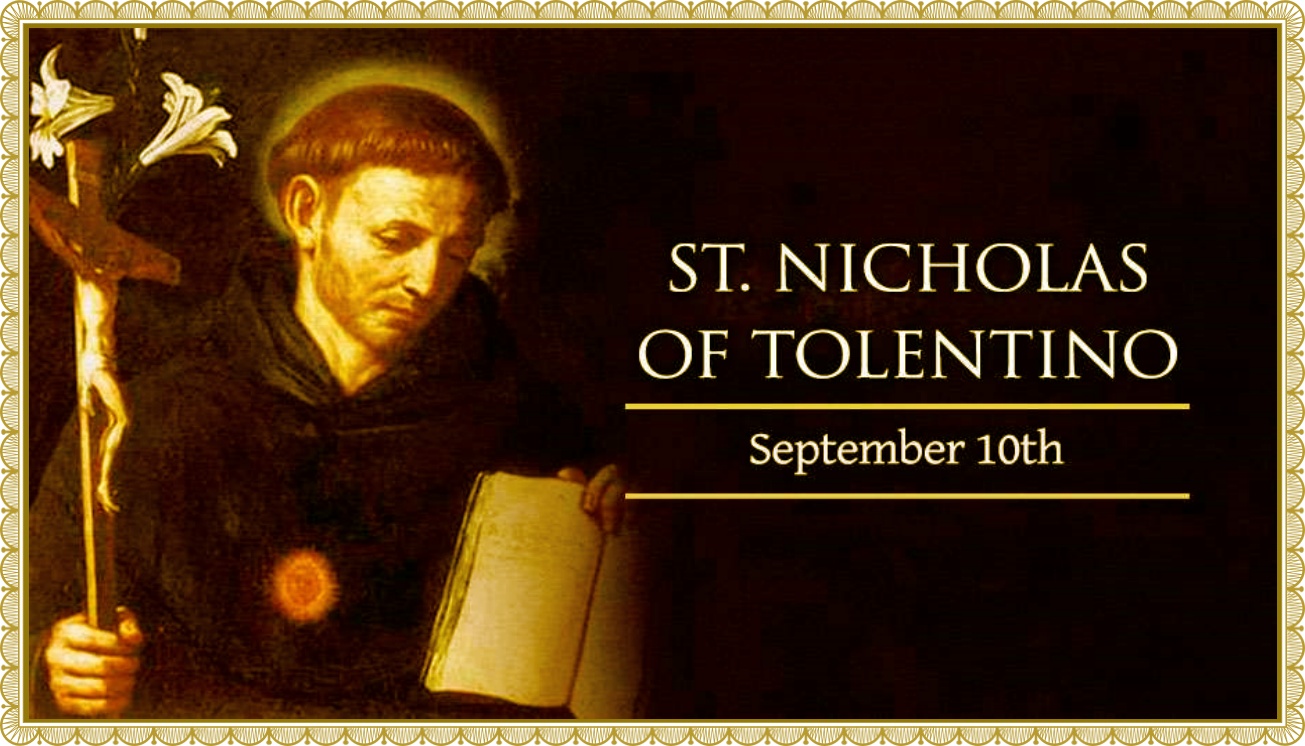
The reflection celebrates Saint Nicholas of Tolentino, emphasising that holiness is achieved not through personal efforts but through grace. It highlights his life of service, prayer, and self-discipline, suggesting that his true sanctity stems from dependence on God. The message reinforces the importance of a single-hearted focus on God in one’s spiritual journey.
Saint Nicholas of Tolentino, born around 1246 in Italy, became a devout Augustinian hermit known for his piety and dedication to preaching. He spent his later years in Tolentino, promoting virtue, and maintaining his chastity until his death in 1306. Canonised in 1446, his tomb is revered by the faithful.
Today we honour St. Nicholas of Tolentino, who lived from 1245 to 1305. Abiding in Tolentino, he dedicated his life to ministry, healing, and reconciliation amidst societal discord. A member of the Augustinian order, he exemplified service without seeking fame, inspiring others to witness their faith in everyday life.
The feast of Our Lady’s Nativity, of ancient Eastern origin and established at Rome by the time of Pope St Sergius I, celebrates Mary as the immaculate New Eve and the dawn of salvation, the chosen tabernacle from whom the Redeemer would take His flesh. Today the Church also commemorates St Gorgonius, an officer of the imperial household at Nicomedia who, with his companion Dorotheus, embraced the Faith and suffered martyrdom under Diocletian in A.D. 303; his relics were later translated to Rome.
The content emphasises the disconnect between the names associated with Catholicism and the actual practices of faith. It highlights the importance of embodying belief through genuine actions, urging self-examination rather than mere external observance. Ultimately, it advocates for a restoration of sincerity in faith, calling individuals to authentically reflect their beliefs through their lives and worship.



 The British Parliament has passed Clause 208, removing criminal liability for women terminating their own pregnancies without limit on gestation. While the Abortion Act 1967’s 24-week limit remains, its practical enforcement is undermined. Critics argue this change represents a profound moral shift in legal protections for the unborn, altering the foundations of human rights.
 The Old Roman Apostolate celebrates the second anniversary of the priestly ordinations of Fr Nicholas Cobangbang and Fr Marcel Samson, who have diligently served the community for two years. The faithful are encouraged to pray for their continued strength and commitment to their sacred pastoral responsibilities. Ad multos annos.
 The ferial days of Sexagesima quietly deepen the lesson of the Sower. In violet silence and without Alleluia, the Church forms souls in perseverance, humility, and hidden fidelity. Conversion is not emotional resolve but daily endurance. The Word bears fruit only where patient obedience prepares the soil of the heart.
 On 12 February 2026, the Dicastery for the Doctrine of the Faith issued a communiqué following a meeting with the Society of Saint Pius X. It emphasizes a need for theological dialogue on essential doctrines, aiming to clarify “minimal requirements for full communion.” This marks a potential shift in addressing post-conciliar tensions within the Church.
 On February 10, 2026, the Old Roman Apostolate celebrates the second anniversary of Deacon Jose M. Salcedo’s ordination. Serving at Divine Mercy Chapel in San Mateo, Rizal, he supports liturgical and charitable life, assists at Mass, and proclaims the Gospel. The anniversary highlights gratitude for his dedicated service and ongoing pastoral role.
 Sexagesima Sunday marks the second Sunday of the Gesima season, focusing on the Parable of the Sower. This parable illustrates various responses to God’s word, emphasizing that while many do not respond, a faithful remnant exists. Despite struggles, believers are encouraged to persist in spreading the Gospel, as some will indeed bear fruit.
 This edition of Nuntiatoria confronts the cultural and ecclesial crisis of our moment with theological realism and editorial clarity. Across homilies, essays, and analyses, it exposes how faith is eroded when doctrine is subordinated to sentiment, expertise divorced from theology, and tradition treated as an obstacle rather than inheritance. From the ordering of the early Church and the witness of the saints, to contemporary failures in governance, safeguarding, law, medicine, and public morality, this issue insists that Christianity cannot survive as mood, memory, or aesthetic. Only truth received, guarded, and lived can renew the Church and heal a collapsing culture.
 The content outlines the liturgical calendar for the week of February 8 to 15, focusing on the themes of repentance and preparation leading into Lent. It highlights significant saints, including St Cyril of Alexandria and St Scholastica, and emphasizes the importance of spiritual warfare, perseverance, and grace. Key liturgical practices and colors are also noted, marking a transition toward Lent.
 The Archbishop of Selsey critiques modern culture’s apathy towards faith and truth, emphasizing the dangers of false compassion that detaches morality from God. He warns of a spiritual and civilizational decline, urging a return to authentic Christian teachings and active witness of Christ, to counter societal disintegration and moral confusion.
 The film “Catholics,” aired in 1973, explores the tension between Tradition and Modernism within the Church following Vatican reforms. It portrays a near-future where traditional Latin Mass is suppressed by modernist authorities, reflecting contemporary ecclesiastical challenges. The narrative highlights the importance of fidelity to Catholic identity amidst obedience to changing doctrines.
 In February 2026, the Rape Gang Inquiry commenced in London to investigate grooming gang crimes and institutional failures, funded by public donations. While it aims to document abuse and uphold survivors’ voices, it lacks legal authority to compel testimony. In contrast, a forthcoming statutory inquiry offers investigatory powers but faces criticism over delays and skepticism regarding its effectiveness. Together, these inquiries reflect public distrust in state accountability for child protection.
 Timothy Goode’s essay critiques traditional church architecture for signaling exclusion, arguing that its hierarchical forms prioritize certain bodies, particularly in the context of disability. He posits that architecture should be evaluated based on contemporary experience. In contrast, the essay emphasizes that sacred space mediates spirituality and embodies theological significance, advocating for a balance that respects both inclusion and tradition.
 The article discusses the ongoing crisis of ecclesial authority, emphasizing that historical tensions are not new but have re-emerged. It highlights the Church’s tradition of maintaining unity without compromising truth, referencing figures like Augustine and the implications of Vatican I. It advocates for a balance of fidelity and resistance within communion, resisting both hyperpapalism and schism.
 In February 2026, John Dunnett resigned from his honorary post in protest against the Church of England’s adoption of the Prayers of Love and Faith, which are intended for same-sex couples but face theological opposition. This controversy highlights a tension between maintaining doctrine and promoting practices that appear to affirm relationships outside traditional marriage definitions. Similar debates are emerging within Catholicism under Pope Francis, raising concerns about the integrity of Church teachings.
 A Catholic school and parish in Long Beach was violently desecrated in what Bishop Mark Trudeau called the worst vandalism he has seen locally. This was not random damage, but a targeted assault on Christian worship — and a warning we ignore at our peril.
 Bishop Stephen Conway’s intervention in the House of Lords regarding Clause 191 of the Crime and Sentencing Bill highlights a critical concern over the legal removal of protections for viable unborn children. By suggesting procedural changes instead of preserving legal accountability for abortion, he exemplifies a troubling shift in moral discourse, undermining both justice and the sanctity of life.
 A jury in New York awarded $2 million to Fox Varian, a 22-year-old detransitioned woman, marking a significant legal precedent in gender medicine. The case scrutinized the affirmative therapy practices that led to a double mastectomy at age sixteen without adequate diagnosis, highlighting issues of consent and accountability in adolescent gender treatment.
 The appointment of Sr Raffaella Petrini as President of the Pontifical Commission for the State of Vatican City highlights the distinction between civil governance and ecclesial authority. While her role is coherent with Catholic theology, concerns arise over increasing lay participation in sacramental governance, which risks conflating administrative competence with ecclesial authority.
 The article examines the ecclesiastical crisis in the Catholic Church, emphasizing the importance of fidelity to apostolic doctrine over institutional authority, as illustrated by Athanasius and Bellarmine. It defends the positions of the SSPX, ORA, and SSF as necessary custodians of faith amid ambiguity, advocating resistance without judgment of papal authority.
 The article by John Prysor-Jones analyzes conflicts within the Church of England, asserting that these disputes over issues like ordination and same-sex relationships are primarily psychological rather than theological. It critiques how beliefs are often reframed as emotional expressions, leading to a shift from doctrinal authority to psychological interpretation, impacting broader church discourse.
 The SSPX’s announcement of new episcopal consecrations in July 2026 raises concerns over the Church’s unresolved issues, reflecting a persistent imbalance between authority and Tradition. Despite the Society’s efforts for dialogue, effective resolutions have been lacking. This situation highlights a deeper pastoral crisis that demands serious attention for the sake of souls.
 Britain faces a demographic crisis marked by low fertility, high abortion rates, and reliance on migration. The essay argues these issues reflect deeper moral and cultural failures rather than mere economic challenges. It advocates for embracing family-centered policies, re-evaluating migration as a substitute, and restoring societal values to ensure civilizational continuity.
 The Priestly Society of Saint Pius X (SSPX) announced new episcopal consecrations scheduled for July 1, 2026, citing a grave necessity for continuity in traditional ministry. With only two bishops serving a global membership of approximately 1,480, the Society emphasizes the need to ensure sacramental governance amidst ongoing ecclesial tensions.
 The article discusses the debate over the Roman Rite post-Second Vatican Council, emphasizing the often-overlooked 1965 Missal as a transitional phase between the Missals of 1962 and 1970. It explores Pope Benedict XVI’s attempt to reconcile tradition and reform, while addressing the fragmentation of liturgical memory and the ongoing generational shift towards recognizing the importance of continuity in liturgy.
 The essay examines the crisis of distinguishing between the ministerial and common priesthood in the Catholic Church, arguing that synodality reflects a theological shift initiated by Karl Rahner. This has led to priesthood being perceived more functionally, undermining sacramental authority and raising pressures for women’s ordination. The conclusion emphasizes the need to restore sacramental realism.




Leave a Reply