- Sermon for Corpus Christi
Today, Corpus Christi is celebrated, honouring the Eucharist as a central act of Christian worship. Instituted to affirm Christ’s real presence, this feast also reflects on the historical development of Eucharistic devotion. The sacrament is both an act of adoration and an opportunity for communal participation, uniting the faithful in Christ’s sacrifice.
- The Month of the Sacred Heart: The Burning Centre of Christianity
The Feast of the Most Sacred Heart of Jesus reveals the depth of Christ’s love as the source of the Eucharist and Salvation. This heart, symbolic of divine charity, necessitates a responsive love from humanity. Encountering this love transforms the soul, while indifference brings judgement. It embodies grace, devotion, and the essence of faith.
- Sermon for Trinity Sunday
Today marks Trinity Sunday, a celebration of the doctrine distinguishing Christianity from other religions. The nature of God as Trinity—Father, Son, and Holy Spirit—reveals God’s relationship with humanity through acts of creation, redemption, and sanctification. This doctrine, essential for understanding divine nature, safeguards the faith against inaccuracies.
- The Crown of Revelation: Trinity Sunday and the First Sunday After Pentecost in the Tridentine Rite
Trinity Sunday serves as a profound moment in the liturgical calendar, prompting the faithful to contemplate the mystery of God rather than specific historical events. The Church guides believers from understanding God’s actions to recognising His essence. This feast not only celebrates the Trinity but also emphasises the participation of the faithful in divine life through worship and the sacraments.
- The Long Green Season: The Church’s Life in the Spirit from Pentecost to the Last Things
The Season after Pentecost in the Tridentine Rite is the longest liturgical period, representing the Church’s earthly existence during the age of the Holy Ghost. It emphasises spiritual growth, perseverance, and the necessity of daily cooperation with grace. This season culminates in the ultimate realities of judgment and the call to holiness, preparing believers for eternity.
- Corpus Christi: The Presence that Consumes, the Sacrifice that Endures, the Communion that Judges
Corpus Christi is a feast that reveals the profound mystery of the Eucharist, celebrating Christ’s Real Presence as both Body and Sacrifice. It compels the Church to worship Him, emphasising that receiving the Eucharist transforms the faithful into offerings themselves. This sacrament embodies a journey towards eternal life and divine judgement.
- The First Sunday after Pentecost: Charity Given, Charity Lived, Charity Judged
The First Sunday after Pentecost reveals the essence of charity as divine love, not merely an ideal but the very definition of knowing God. It highlights that true participation in charity requires sacrifice, manifested through the Eucharist. Consequently, individuals are called to live out this charity, as their judgment depends on its presence in their lives.
- When Fear Overrides Judgment: Henry Nowak, Policing, and the Collapse of Equal Justice
Henry Nowak’s murder exposed more than a violent crime—it revealed a policing culture where fear of accusation can override basic judgment. When a dying victim is handcuffed and an untested allegation is believed, equal justice itself is placed in jeopardy.
- Universities against the law: Scotland’s Institutional Evasion Exposed
Scottish universities are failing to uphold the legal distinctions regarding single-sex spaces as clarified by the UK Supreme Court. Most institutions lack clear policies, prioritising feelings over legal obligations. This inconsistency raises questions about the integrity of education and the responsibilities of universities to align practices with existing laws.
- Magnifica Humanitas and the Crisis of Method: When the Church Speaks to the World Without First Speaking as the Church
Magnifica Humanitas addresses the Church’s response to the rise of artificial intelligence, asserting that while it highlights moral concerns, it risks prioritising humanity over God. The encyclical’s method, beginning with shared understanding rather than theological roots, may displace fundamental truths of faith, challenging the Church’s core mission to glorify God.
- Continuity or Contradiction? Cardinals Muller, Sarah, and the Crisis Beneath the Crisis
Cardinals Müller and Sarah highlight a crucial church crisis that demands resolution of apparent contradictions in Church teachings. They assert that the Church’s authority must demonstrate continuity with previous doctrines, as obedience without clarity is insufficient. This unresolved tension calls for a deeper understanding of truth, not mere adherence to authority.
- The Demographic Winter and the Lost Generation: Britain’s Crisis of Continuity
Recent reports reveal a significant demographic crisis in Britain, with birth rates plummeting to historic lows and nearly one million young people classified as NEET. This reflects not only an economic imbalance but a rupture in generational continuity, undermining the foundation needed for a stable society and future succession.
- The Dissolution of the Marian Franciscans: A Community That Was Not Allowed to Take Root
The Marian Franciscans, a religious community established in Portsmouth in 2015 and later in Dundee, will dissolve on 31 May 2026. Despite attracting vocations and demonstrating growth, a change in episcopal leadership led to their removal from Dundee, preventing their establishment as a permanent community and resulting in their extinction.
- Governance Without Limit: The Rescript of Leo XIV and the Quiet Dissolution of Ecclesial Order
The Rescript of Leo XIV, issued on 25 March 2026, alters ecclesiastical governance by permitting diocesan bishops to dismiss major superiors of religious institutes, reallocating authority and challenging the principle of subsidiarity. This shift risks diminishing the Church’s internal order and autonomy, raising concerns about the long-term implications for Church governance.
- The Great Reversal: Europe’s Deportation Turn, Britain’s Silence, and the Politics of Selective Outrage
The article discusses Europe’s shift towards stricter immigration enforcement, reflecting a departure from previous moral condemnations of similar policies, especially during the Trump era. It outlines the European Parliament’s recent vote to adopt measures like increased detention and external processing of migrants, highlighting a tension between moral language and emerging administrative necessities within broader political contexts.
- Tommy Robinson, the Bishop of Oxford, and the Managed Silence of a Fading Liberal Order
The postponement of Tommy Robinson’s appearance at the Oxford Union reflects a significant shift in Britain’s intellectual landscape, moving from a culture of open debate to one of avoidance. This trend undermines the confidence in truth’s ability to withstand challenge, suggesting that institutions now prioritise social stability over rigorous intellectual engagement.
- Two Roads to Chartres: France’s Pilgrimages of Tradition and the Future of the Church
Each Pentecost, two contrasting pilgrimages in France reflect divergent responses to contemporary Catholicism. One, led by Notre-Dame de Chrétienté, seeks restoration within the Church, while the other, organised by the Society of Saint Pius X, prioritises fidelity to tradition. Together, they highlight significant tensions regarding the Church’s future and identity.
- The Courage to Speak: Maeve Halligan, Cambridge, and the Collapse of Managed Truth
Maeve Halligan’s recent speech at the Cambridge Union highlights the challenging environment for open discourse in contemporary public life. By questioning the conflation of compassion with compliance, she advocates for rigorous intellectual engagement and the necessity of crossing boundaries in debate, especially regarding contentious social issues. Halligan’s address exemplifies a crucial call for truth amid societal pressures.
- The Burning of Churches and the Erasure of a People: Banyamulenge Christians, the Congo, and the Moral Economy of Silence
Churches destroyed. Communities displaced. In eastern Congo, Banyamulenge Christians face not just violence—but erasure. Why does the world remain largely silent? A signature Nuntiatoria editorial examines the crisis and the hierarchy of global attention.
- When the Law Is Quietly Rewritten: Sussex, Prevent, and the Expanding Reach of Institutional Power
The University of Sussex’s recent amendment of its Prevent duty description highlights a troubling trend of public institutions stretching statutory obligations beyond their intended limits. This shift risks academic freedom and lawful speech, as it undermines the defined responsibilities set by Parliament, allowing institutions to interpret laws in ways that expand their powers.
- When Ideology Refuses the Law: Brighton Council, the Equality Act, and the Erosion of Public Trust
Brighton & Hove City Council’s reaction to recent EHRC guidance on the Equality Act highlights a troubling trend of public bodies disregarding established law due to ideological beliefs. While political debate on legislative change is permissible, public authorities must adhere to existing laws, especially when these laws have long been in place, ensuring public trust and equality before the law.
- Winterthur and the Crisis of European Security: When Ordinary Places Become Sites of Fear
Three people were injured in a stabbing attack at Winterthur station in Switzerland. But beyond the immediate horror lies a larger question: can Europe maintain public trust if institutions seem unable — or unwilling — to speak plainly about recurring patterns of violence?

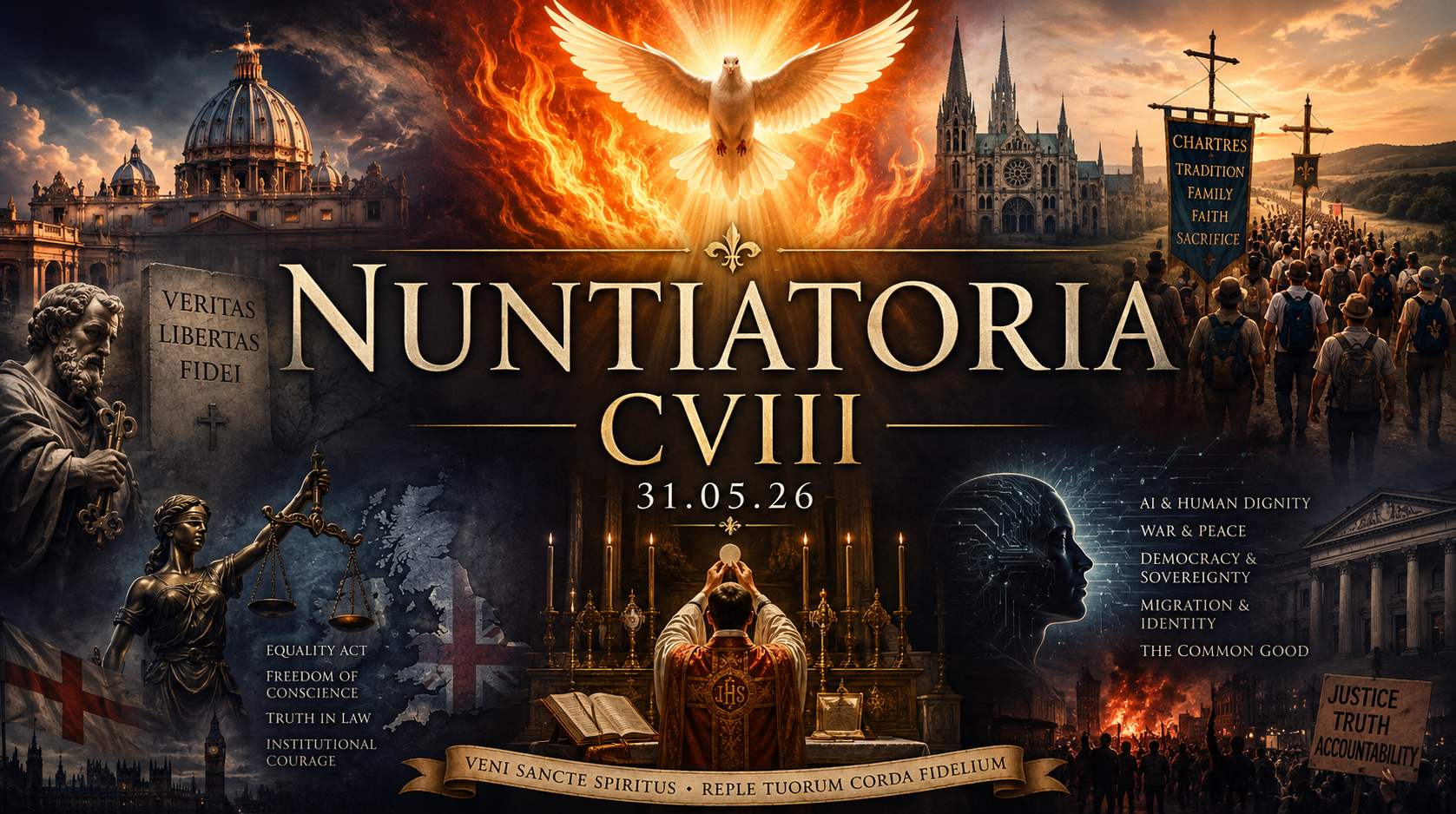

 Today, Corpus Christi is celebrated, honouring the Eucharist as a central act of Christian worship. Instituted to affirm Christ’s real presence, this feast also reflects on the historical development of Eucharistic devotion. The sacrament is both an act of adoration and an opportunity for communal participation, uniting the faithful in Christ’s sacrifice.
 The Feast of the Most Sacred Heart of Jesus reveals the depth of Christ’s love as the source of the Eucharist and Salvation. This heart, symbolic of divine charity, necessitates a responsive love from humanity. Encountering this love transforms the soul, while indifference brings judgement. It embodies grace, devotion, and the essence of faith.
 Today marks Trinity Sunday, a celebration of the doctrine distinguishing Christianity from other religions. The nature of God as Trinity—Father, Son, and Holy Spirit—reveals God’s relationship with humanity through acts of creation, redemption, and sanctification. This doctrine, essential for understanding divine nature, safeguards the faith against inaccuracies.
 Trinity Sunday serves as a profound moment in the liturgical calendar, prompting the faithful to contemplate the mystery of God rather than specific historical events. The Church guides believers from understanding God’s actions to recognising His essence. This feast not only celebrates the Trinity but also emphasises the participation of the faithful in divine life through worship and the sacraments.
 The Season after Pentecost in the Tridentine Rite is the longest liturgical period, representing the Church’s earthly existence during the age of the Holy Ghost. It emphasises spiritual growth, perseverance, and the necessity of daily cooperation with grace. This season culminates in the ultimate realities of judgment and the call to holiness, preparing believers for eternity.
 Corpus Christi is a feast that reveals the profound mystery of the Eucharist, celebrating Christ’s Real Presence as both Body and Sacrifice. It compels the Church to worship Him, emphasising that receiving the Eucharist transforms the faithful into offerings themselves. This sacrament embodies a journey towards eternal life and divine judgement.
 The First Sunday after Pentecost reveals the essence of charity as divine love, not merely an ideal but the very definition of knowing God. It highlights that true participation in charity requires sacrifice, manifested through the Eucharist. Consequently, individuals are called to live out this charity, as their judgment depends on its presence in their lives.
 Henry Nowak’s murder exposed more than a violent crime—it revealed a policing culture where fear of accusation can override basic judgment. When a dying victim is handcuffed and an untested allegation is believed, equal justice itself is placed in jeopardy.
 Scottish universities are failing to uphold the legal distinctions regarding single-sex spaces as clarified by the UK Supreme Court. Most institutions lack clear policies, prioritising feelings over legal obligations. This inconsistency raises questions about the integrity of education and the responsibilities of universities to align practices with existing laws.
 Magnifica Humanitas addresses the Church’s response to the rise of artificial intelligence, asserting that while it highlights moral concerns, it risks prioritising humanity over God. The encyclical’s method, beginning with shared understanding rather than theological roots, may displace fundamental truths of faith, challenging the Church’s core mission to glorify God.
 Cardinals Müller and Sarah highlight a crucial church crisis that demands resolution of apparent contradictions in Church teachings. They assert that the Church’s authority must demonstrate continuity with previous doctrines, as obedience without clarity is insufficient. This unresolved tension calls for a deeper understanding of truth, not mere adherence to authority.
 Recent reports reveal a significant demographic crisis in Britain, with birth rates plummeting to historic lows and nearly one million young people classified as NEET. This reflects not only an economic imbalance but a rupture in generational continuity, undermining the foundation needed for a stable society and future succession.
 The Marian Franciscans, a religious community established in Portsmouth in 2015 and later in Dundee, will dissolve on 31 May 2026. Despite attracting vocations and demonstrating growth, a change in episcopal leadership led to their removal from Dundee, preventing their establishment as a permanent community and resulting in their extinction.
 The Rescript of Leo XIV, issued on 25 March 2026, alters ecclesiastical governance by permitting diocesan bishops to dismiss major superiors of religious institutes, reallocating authority and challenging the principle of subsidiarity. This shift risks diminishing the Church’s internal order and autonomy, raising concerns about the long-term implications for Church governance.
 The article discusses Europe’s shift towards stricter immigration enforcement, reflecting a departure from previous moral condemnations of similar policies, especially during the Trump era. It outlines the European Parliament’s recent vote to adopt measures like increased detention and external processing of migrants, highlighting a tension between moral language and emerging administrative necessities within broader political contexts.
 The postponement of Tommy Robinson’s appearance at the Oxford Union reflects a significant shift in Britain’s intellectual landscape, moving from a culture of open debate to one of avoidance. This trend undermines the confidence in truth’s ability to withstand challenge, suggesting that institutions now prioritise social stability over rigorous intellectual engagement.
 Each Pentecost, two contrasting pilgrimages in France reflect divergent responses to contemporary Catholicism. One, led by Notre-Dame de Chrétienté, seeks restoration within the Church, while the other, organised by the Society of Saint Pius X, prioritises fidelity to tradition. Together, they highlight significant tensions regarding the Church’s future and identity.
 Maeve Halligan’s recent speech at the Cambridge Union highlights the challenging environment for open discourse in contemporary public life. By questioning the conflation of compassion with compliance, she advocates for rigorous intellectual engagement and the necessity of crossing boundaries in debate, especially regarding contentious social issues. Halligan’s address exemplifies a crucial call for truth amid societal pressures.
 Churches destroyed. Communities displaced. In eastern Congo, Banyamulenge Christians face not just violence—but erasure. Why does the world remain largely silent? A signature Nuntiatoria editorial examines the crisis and the hierarchy of global attention.
 The University of Sussex’s recent amendment of its Prevent duty description highlights a troubling trend of public institutions stretching statutory obligations beyond their intended limits. This shift risks academic freedom and lawful speech, as it undermines the defined responsibilities set by Parliament, allowing institutions to interpret laws in ways that expand their powers.
 Brighton & Hove City Council’s reaction to recent EHRC guidance on the Equality Act highlights a troubling trend of public bodies disregarding established law due to ideological beliefs. While political debate on legislative change is permissible, public authorities must adhere to existing laws, especially when these laws have long been in place, ensuring public trust and equality before the law.
 Three people were injured in a stabbing attack at Winterthur station in Switzerland. But beyond the immediate horror lies a larger question: can Europe maintain public trust if institutions seem unable — or unwilling — to speak plainly about recurring patterns of violence?






Leave a Reply