

Vatican Grants Two-Year Extension for the Traditional Latin Mass in Cleveland
The Holy See has granted a two-year extension allowing the celebration of the Traditional Latin Mass (TLM) according to the 1962 Roman Missal in two parish churches of the Diocese of Cleveland, Ohio. The decision, while limited in scope and duration, represents a rare concession under the restrictive framework of Traditionis Custodes and has been received with quiet relief among the faithful attached to the traditional liturgy.
Limited Permission Under Tight Oversight
According to diocesan confirmation reported by The Catholic Herald, the two parishes authorized to continue the TLM are St Mary’s Church in Akron and St Stephen’s Church in Cleveland. Both communities have maintained long-standing devotion to the older form of the Mass, celebrated with diocesan approval prior to Traditionis Custodes (2021), which required bishops to obtain explicit Vatican authorization for any continued use of the pre-conciliar liturgy.¹
Nancy Fishburne, Director of Communications for the Diocese of Cleveland, confirmed that the Holy See had approved the request for renewal, permitting the two churches to continue hosting the TLM for at least two more years.² The extension runs until 2027, when the arrangement will again be subject to review by the Dicastery for Divine Worship and the Discipline of the Sacraments.
Context: Traditionis Custodes and Its Aftermath
Issued by Pope Francis in July 2021, Traditionis Custodes reasserted that the post-conciliar Missal of Paul VI is the “unique expression of the lex orandi of the Roman Rite,” effectively relegating the traditional liturgy to exceptional status.³ Bishops now require explicit Vatican permission to authorize its use, particularly in parish churches. This has led to the reduction or elimination of public celebrations in numerous dioceses worldwide.
In that context, the Cleveland extension is noteworthy. It reflects both the willingness of the diocese to advocate for its traditional faithful and the Vatican’s capacity to show measured flexibility when local pastoral need is demonstrated. Yet, the limited duration—two years—underscores the conditional nature of such permissions. The extension does not signify a policy reversal but a temporary accommodation.
Community Reaction and Pastoral Implications
Within the diocesan TLM communities, the response has been one of subdued gratitude. For many parishioners at St Mary’s and St Stephen’s, the news represents continuity rather than victory—a reprieve that allows them to remain within their parishes while maintaining their liturgical identity. Una Voce Greater Cleveland, which coordinates traditional liturgies in the area, lists both parishes among the few remaining diocesan sites for the old Mass, alongside those served by religious institutes such as the Institute of Christ the King Sovereign Priest.⁴
While no public pastoral letter from Bishop Edward Malesic has yet been issued, the diocesan memorandum archive confirms that the permission has been formally recognized.⁵ Reports indicate that certain restrictions remain—possibly limiting the frequency of Masses and their public advertisement—but these have not been published in detail.⁶
Comparative Perspective
Across the United States, reactions to Traditionis Custodes have varied widely. Some dioceses, including Chicago and Arlington, have reduced or suppressed public celebrations of the TLM. Others, such as Cleveland, have sought and obtained temporary continuations under Rome’s oversight. Commentators within the traditional movement have pointed to this case as evidence that episcopal initiative remains decisive: where bishops advocate for their faithful, extensions can be obtained.⁷
Yet even supporters of the old liturgy acknowledge the precariousness of the arrangement. The two-year time frame mirrors similar limited authorizations elsewhere, suggesting a trial period rather than an endorsement. The Holy See continues to monitor such communities closely, emphasizing unity around the reformed liturgy.
The Broader Significance
The Cleveland extension therefore stands as both encouragement and warning. It demonstrates that fidelity to the traditional Roman Rite, pursued with humility and respect for ecclesial authority, can find space within the present disciplinary regime. At the same time, it reveals the fragility of that space and the continuing tension between organic continuity and juridical control.
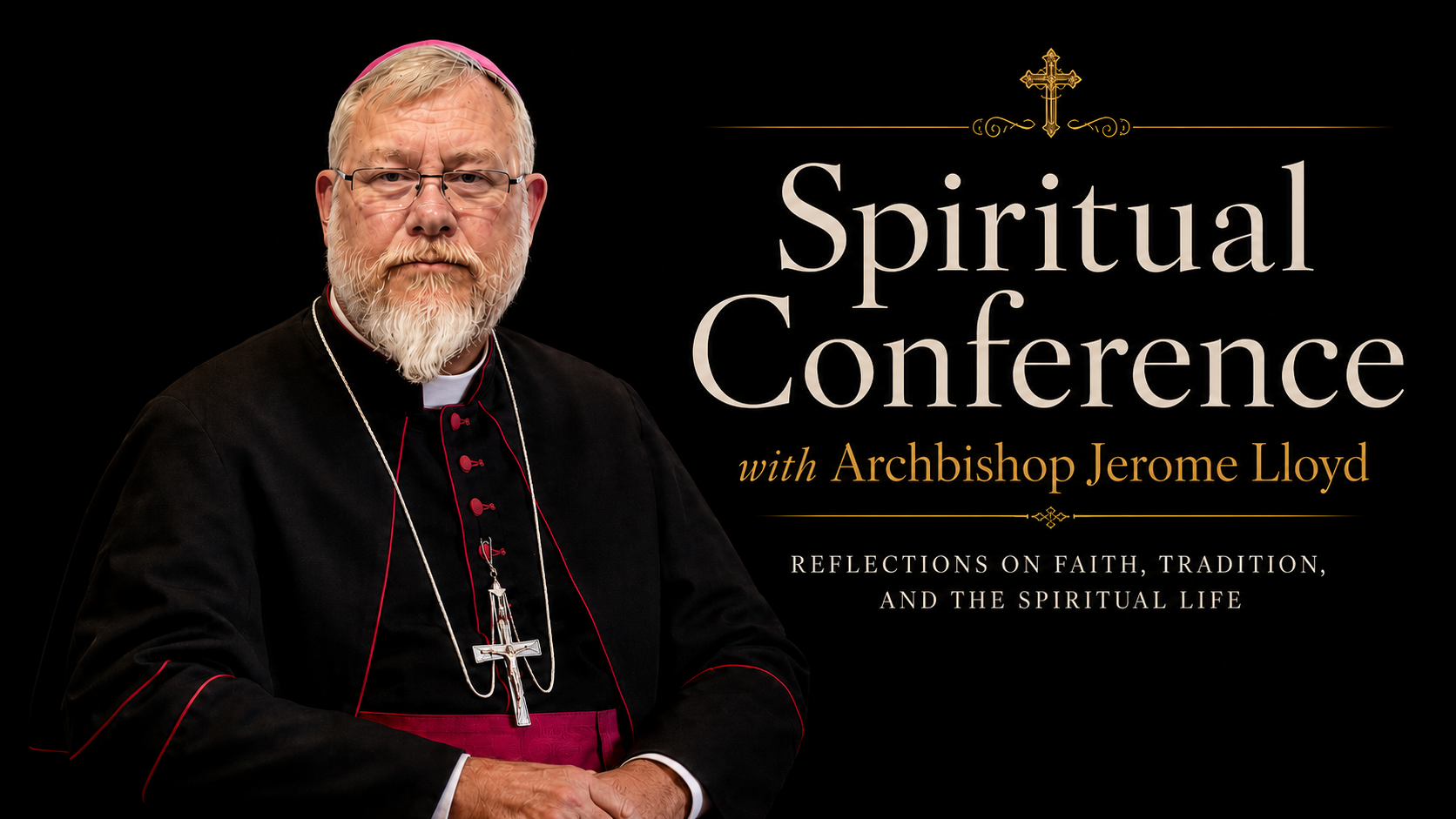
Reflecting on this episode, the Archbishop of Selsey observed that the shifting enforcement of Traditionis Custodes exposes “the fickleness of authority and the fidelity of Tradition.” The faithful attached to the ancient liturgy, he noted, are “fed with permissions, not sacraments,” enduring a “cycle of baiting and gaslighting” from those who claim to guard unity while dismantling the very foundations of it. In his view, the Old Roman Apostolate and the Society of St Pius X maintain their distance “not from the Church, but from the confusion that reigns within her structures,” preserving the faith by refusing to build upon “shifting sand.”
The Archbishop’s reflection serves as a sober commentary on the moment: a reminder that pastoral concessions mean little without doctrinal stability, and that the enduring strength of the Church lies not in administrative decrees, but in the unbroken continuity of her faith, worship, and sacramental life.
- The Catholic Herald, “Vatican grants two-year extension for Latin Mass in Cleveland,” 20 October 2025.
- Diocese of Cleveland, Office of Communications, statement via The Catholic Herald, October 2025.
- Pope Francis, Traditionis Custodes (Motu Proprio), 16 July 2021.
- Una Voce Greater Cleveland, “Traditional Latin Mass Schedule,” uvgreatercleveland.org.
- Diocese of Cleveland, Office of the Chancellor, Diocesan Memorandum (April 2025), dioceseofcleveland.org.
- WDTPRS Blog, “TLM extended by Rome in the Diocese of Cleveland for two years,” 19 October 2025.
- Ibid.
- Archbishop Jerome Lloyd OSJV DD FRSA, “On the Fickleness of Authority and the Fidelity of Tradition,” http://www.selsey.org, October 2025.



Leave a Reply