

Holy Family/Within the Octave of Epiphany
by the Revd Dr Robert Wilson PhD (Cantab), Old Roman Apostolate UK
“How is it that ye sought me? Did you not know that I must be about my Father’s business?”
Today we celebrate the feast of the Holy Family. This falls on the Sunday within the Octave of the great feast of the Epiphany. The theme of the feast of the Epiphany is the showing forth or making known of the divinity of Christ to the world. On the feast day itself we hear the story of the visitation of the Magi, the manifestation of Christ to the Gentiles. On the Octave Day of the Epiphany we celebrate the Baptism of the Saviour, the manifestation of the Three Persons of the Trinity. The Gospel for next Sunday will be the changing of water into wine, the first of the signs of Jesus in which he manifested his glory and his disciples put their faith in him.
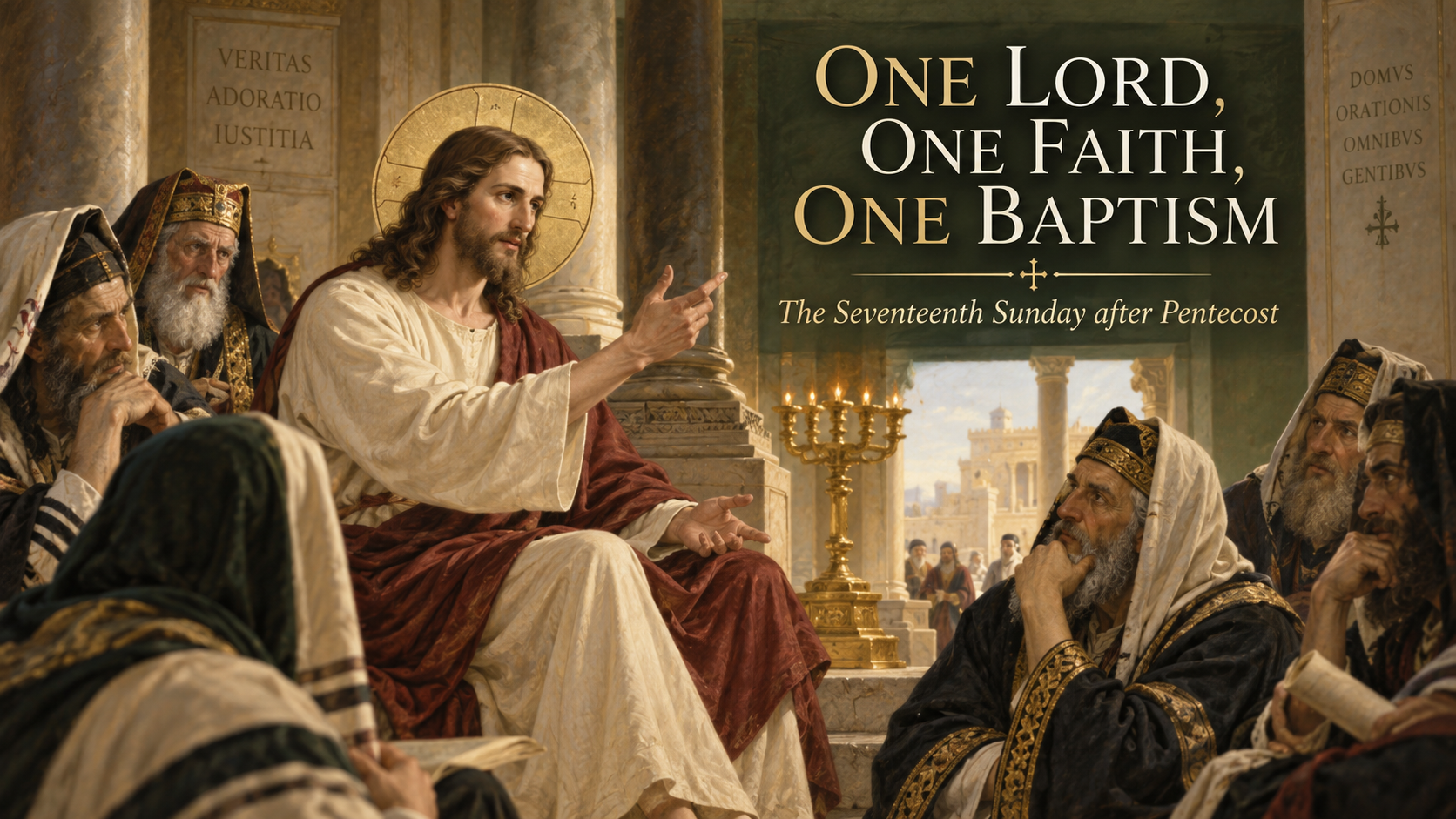
The Gospel for today’s feast (which is also the Gospel for the Sunday within the Octave of the Epiphany) is another example of this theme of epiphany, of manifestation. It is the story of Jesus’ visit with his parents to the Temple at Jerusalem when he was twelve years old. What happened on this occasion was a foretaste of what was to come later in his public ministry. We have recently celebrated the Feast of the Circumcision of Christ, as one born of a woman, born under the law, in order to redeem those under the law, that they might obtain the adoption of sons. In today’s Gospel we hear how Jesus was subject to his family and observed the custom of the Jewish Law. Yet there will be a sign of what was to come. When his parents returned, Jesus remained in Jerusalem without their knowing it. When they had come a days journey they sought him among their kinsfolk and acquaintance. When they did not find him they returned to Jerusalem and sought for him. After three days they found him in the Temple, sitting in the midst of the doctors, hearing them and asking them questions “And all that heard him were astonished at his wisdom and answers. And seeing him they wondered. And his mother said to him; “Son why hast thou done so to us? Behold thy father and I have sought thee sorrowing. And he said to them: How is it that ye sought me. Wist ye not that I must be about my Father’s business?” Though his parents did not fully understand this at the time it was an early intimation of the remarkable authority which would later be the basis of Jesus’ public ministry. It was a moment of epiphany, of manifestion. It was something his mother kept and pondered in her heart. It was a foretaste of things to come.
What astonished Jesus’ contemporaries was the authority with which he acted. He went around not simply talking about God, but claiming to be his representative on earth, acting and speaking for him. He taught them as one having authority, and not as the scribes (Matthew 7: 29). “What manner of a man is this, that even the winds and the sea obey him” (Matthew 8:27). “Never man spake like this man” (John 7:46). Many saw him as a prophet, like one of the old prophets. Yet, as many also saw, his own self claim was greater than that of a prophet. The prophets had looked forward to the age of the new covenant when sins would be forgiven. Jesus proclaimed that this age was being inaugurated in his own person and ministry. The prophets prefaced their utterances with “Thus saith the Lord”, but Jesus said, “Ye have heard that it was said by them of old time, but I say unto you”. He thus said in his own name what the Law of Moses said in God’s name. It was not so much the content of the teaching (though many found that scandalous enough) but the authority with which Jesus spoke. “Think not that I am come to destroy the Law and the Prophets, I am not come to destroy but to fulfil” (Matthew 5:17). He claimed to be the full, final and definitive revealer of God’s will. In his coming the Kingdom of God is made present. He says that man’s attitude to him will determine God’s attitude to them on the last day. He proclaims rest for the weary and heavy laden, and that he alone knows the Father and the Father knows him (Matthew 11:27-30).
Jesus was condemned for blasphemy, for making himself equal with God. Jesus replied that he did not claim anything for himself on his own authority, but everything for what the Father was accomplishing through him. He and the Father are one, utterly identified, for they are one in action, but not identical, for the Father is Father and not Son. “The Son can do nothing by himself, but what he seeth the Father do; for what things soever he doeth these also doeth the Son likewise. For the Father loveth the Son and sheweth him all things that he himself doeth…. He that honoureth not the Son honoureth not the Father that sent him” (John 5: 19-23). To have met him is to have been met and judged by God. To have seen him is to have seen the Father (John 14:9).
Jesus’ self claim challenged his contemporaries and it challenges us today. To reject it is to say that Jesus was a false prophet and blasphemer, who claimed an authority that he did not rightly have. To accept it is to accept that Jesus is indeed who he said he was, the only begotten Son of the Father who came to bring forgiveness in his own words and mighty works, but above all in his saving death. “This is my blood of the new testament, which is shed for many for the remission of sins” (Matthew 26:28).
“How is it that ye sought me? Did you not know that I must be about my Father’s business?”



Leave a Reply