

St Peter Nolasco and the Measure of Christian Love
MASS “Justus ut palma florebit”
LESSON 1 Cor. 4:9-14
GOSPEL St Luke 12:32-34
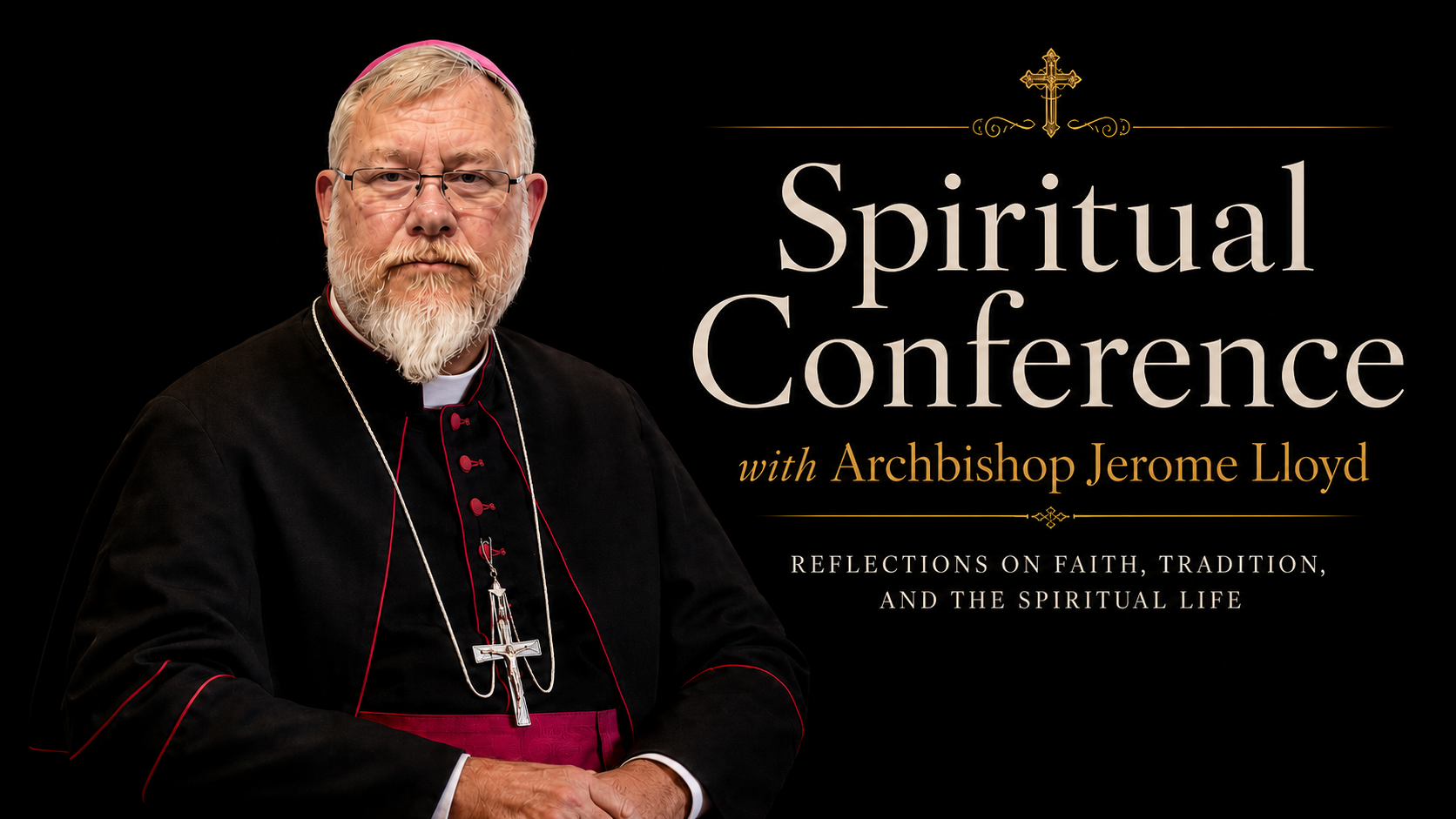
HOMILIST Mt Revd Jerome Lloyd OSJV

Beloved in Christ, welcome to this broadcast Mass on the feast of St Peter Nolasco.
Not very much is known about his earliest years. He was born sometime between 1182 and 1189, to noble parents in the Languedoc region of southern France, and he died in 1256.¹ What we do know with certainty is this: by 1203 he had moved to Barcelona, and by then the Gospel had already taken hold of his life with a radical seriousness.
To understand St Peter Nolasco, we must place him in his historical setting. We are speaking of the Mediterranean coastal world of southern France, Spain, and Portugal, stretching across the Straits of Gibraltar into North Africa. For centuries large portions of this region—Andalusia especially, with cities such as Córdoba, Seville, Málaga, and Granada—were under Moorish rule.² The frontier between Christian and Islamic territories shifted constantly. It was an unstable and violent age, marked by raids, skirmishes, and reprisals. Captives were taken on both sides and sold into slavery.³
In times of relative peace, a grim economy of ransom developed. Noble captives might be redeemed for great sums of money; the poor almost never. For the vast majority of Christian captives, there was no realistic hope of release. Worse still, captivity often entailed intense pressure to abandon the Christian faith.⁴
It was into this brutal reality that St Peter Nolasco heard the Gospel words take flesh: *“Greater love hath no man than this, that he lay down his life for his friends.”*⁵ Moved by Christ’s charity, he began personally to ransom Christian captives. In 1218, inspired by visions of Our Lady—shared also, according to tradition, by King James I of Aragon—he founded the Royal, Military, and Religious Order of Our Lady of Mercy, also known as Our Lady of Ransom.⁶
The Order attracted young noblemen who brought with them their inheritances—not to secure comfort, but to be spent entirely on mercy. These resources were used to ransom enslaved Christians. But St Peter went further. He bound his friars by a fourth vow, beyond poverty, chastity, and obedience: a vow to offer themselves in exchange for captives, even unto death, if necessary, to preserve another Christian’s faith.⁷
This was not theatrical heroism. It was the literal imitation of Christ.⁸
The Mercedarians were technically friars—mendicant religious like the Dominicans and Franciscans—but the Order also included knights. Some were clergy; others were lay religious. As with the Hospitallers or the Templars, these men took religious vows. They were forbidden to shed blood, yet they provided protection for ransom missions into dangerous territories. Their weapon was not the sword, but self-sacrifice.⁹
It is said that St Peter Nolasco himself was responsible for the liberation of some forty thousand Christians.¹⁰ Within the first century of the Order’s existence, seventy to eighty thousand souls had been ransomed from captivity. These numbers are staggering—but more staggering still is the love that made them possible.
St Paul’s words in today’s Epistle explain the inner logic of such a life: *“We are made a spectacle to the world… the refuse of this world.”*¹¹ The Apostle describes not defeat, but fidelity. St Peter Nolasco accepted the world’s contempt because he had already surrendered his life to Christ.
We see the same Gospel pattern repeated across the centuries. We think of saints who offered themselves in the place of others, giving their lives so that another might live.¹² The Church has always known such charity in times of persecution, when parents, pastors, and faithful have embraced death rather than abandon Christ or allow others to be destroyed for His sake.¹³
And this brings the saint uncomfortably close to us.
When we celebrate martyrs and heroic confessors, we often ask: Would I die for Christ? But St Peter Nolasco presses the question further: Would I die for my brother or sister in Christ? For to do so is, in truth, to die for God.¹⁴
The religious vocation, with its vows, can appear to us as something extreme. In reality, it is simply literal. Religious life does not invent a new Gospel; it intensifies the one given to all.¹⁵ The evangelical counsels of poverty, obedience, and chastity are not optional ideals for a spiritual elite. They are the form of Christian life itself, lived with varying degrees of radicality.¹⁶
All Christians are called to live in a spirit of poverty—trusting God rather than clinging to possessions. “Fear not, little flock,” says the Lord; *“your Father knows what you need.”*¹⁷
All Christians are called to obedience—to God’s law, to Christ’s teaching, to the commandments which our Lord did not abolish but fulfilled.¹⁸
All Christians are called to chastity—married or unmarried—ordering their lives according to God’s design, not the spirit of the age.¹⁹
And though we do not take a formal fourth vow, every baptized Christian is called to live its spirit: a love of neighbour so real, so costly, that it mirrors our love of God.²⁰
Perhaps—and this is a hard saying—the limits we place on loving our neighbour reveal the limits we place on loving God.²¹ We will go so far, and no further. We will give so much, and no more. But divine charity knows no such calculation. True love is self-emptying.²² It pours itself out in patience, mercy, sacrifice, and fidelity.
So today, St Peter Nolasco leaves us with a question that does not permit evasion:
How deep is my love for God?
How deep is my love for my neighbour?
Do I constrain it, ration it, hold it back?
For to love my neighbour is to love God.²³ And the measure I use for one is the measure I use for the other.
In the name of the Father, and of the Son, and of the Holy Ghost. Amen.
- Roman Martyrology (pre-1955), Die XXV Decembris; Alban Butler, The Lives of the Fathers, Martyrs, and Other Principal Saints, vol. I (1756).
- Isidore of Seville, Historia Gothorum; Edward Gibbon, Decline and Fall, chs. 51–52.
- Charles Verlinden, L’Esclavage dans l’Europe médiévale, vol. I (1955).
- St Thomas Aquinas, Summa Theologiae, II–II, q. 10, a. 10.
- John 15:13 (Vulgate).
- Constitutiones Ordinis Beatae Mariae de Mercede (1272); Pedro de San Cecilio, Historia Ordinis de Mercede (1615).
- Constitutiones Antiquae Ordinis de Mercede, c. 3–4.
- Philippians 2:5–8; St Leo the Great, Sermon 59.
- St Bernard of Clairvaux, De Laude Novae Militiae; William of Tyre, Historia rerum.
- Butler, Lives of the Saints, vol. I.
- 1 Corinthians 4:9–13; St John Chrysostom, Homilies on First Corinthians.
- St Ambrose, De Officiis Ministrorum, I.41.
- Eusebius, Ecclesiastical History, Book VIII.
- Matthew 25:40; St Augustine, In Ep. Ioannis ad Parthos, Tract. VIII.
- St Basil the Great, Longer Rules, Prologue.
- St Thomas Aquinas, Summa Theologiae, II–II, q. 186.
- Luke 12:32–34; St Gregory the Great, Homilies on the Gospels, XXXII.
- Matthew 5:17–19; St Irenaeus, Adversus Haereses, IV.13.
- 1 Corinthians 7:32–35; St Jerome, Against Jovinian, I.
- 1 John 4:20–21; St Cyprian, De Opere et Eleemosynis.
- St John Chrysostom, Homilies on Matthew, L.
- 1 Corinthians 13:4–7; St Augustine, De Trinitate, VIII.
- Matthew 22:37–40; St Gregory of Nyssa, On the Love of the Poor.
Homilies Archive

Mass Propers


![Today’s Mass: October 03 St Thomas [de Cantilupe] of Hereford](https://i0.wp.com/nuntiatoria.org/wp-content/uploads/2026/10/thomascantilupemasstitle.jpg?fit=1024%2C585&ssl=1)


DAILY MASS ONLINE
One of the earliest online apostolates dedicated to the Traditional Latin Mass, Old Roman TV began broadcasting the Holy Sacrifice on the Feast of the Assumption, 15 August 2008. During the COVID-19 pandemic, additional programming — devotions, catechesis, and conferences — was added to support the faithful in prayer and formation.
Support the daily Holy Mass on Old Roman TV by offering a Mass intention — for loved ones, thanksgiving, or the repose of souls. Your intention helps sustain the sacred liturgy and brings grace to those you remember before God’s altar.
SUPPORT THE DAILY MASS ONLINE
Likely the world’s longest-running daily online broadcast of the
Traditional Latin Mass, streaming faithfully since the
Feast of the Assumption 2008.

This apostolate cannot continue without immediate help
Please support us with a contribution toward
chapel rent, sacristy supplies, operating costs, and web-hosting.
Our essential monthly costs reach £1,000.



Leave a Reply