
The Jubilee of Youth and the Mirage of a “Different World”
Rome – On August 3, 2025, Pope Leo XIV addressed an estimated one million young people gathered at Tor Vergata Field for the closing Mass of the Jubilee of Youth, part of the broader Holy Year celebrations. In a scene reminiscent of World Youth Day spectacles, pilgrims from roughly 150 nations—many having camped overnight after a vigil—listened as the Pope told them: “You are the sign that a different world is possible. A world of fraternity and friendship, where conflicts are not resolved with weapons, but with dialogue.”¹
The message was one of optimism and universal solidarity, with the Pope urging youth to return home inspired, to “spread your enthusiasm and the witness of your faith,” and to “aspire to great things, to holiness.”² He offered words of closeness to those suffering in war zones, naming Gaza and Ukraine among those unable to attend. The next global youth gathering—World Youth Day—is scheduled for August 3–8, 2027, in Seoul, South Korea.³
A Gathering of Scale and Symbolism
The Vatican reported more than one million attendees, alongside 7,000 priests and 450 bishops.⁴ Such numbers underscore the attraction of large-scale Catholic events in an age when regular parish life and vocations have been in steep decline. The Holy Year itself is projected to draw over 32 million pilgrims,⁵ yet these headline figures mask the continuing crisis of participation in the Church’s sacramental life, particularly in the West.
It is worth noting that, despite the energy and emotional resonance of such gatherings, they are no substitute for the lived reality of Catholicism rooted in the parish, the family, and the local altar. The fervour of the crowd often dissipates on return home if it is not grounded in solid catechesis, the regular reception of the sacraments, and the discipline of daily prayer.⁶ St. John Chrysostom warned that enthusiasm without doctrine is like “a lamp without oil”⁷—bright for a moment, extinguished when the fuel is lacking.
A Different World—But Which One?
The phrase “a different world is possible” can be taken in two radically different ways. In the Catholic sense, the transformation of the world begins with conversion to Christ, the acceptance of the Cross, and the living of the moral law as revealed by God and taught infallibly by His Church. Yet in the modern idiom, such language can be easily co-opted by a secular utopianism—one that promises fraternity without the Fatherhood of God, peace without penance, and unity without truth.
The Catholic tradition does not imagine that war will cease merely by dialogue, for dialogue without conversion cannot reconcile man to God or man to man. As Pope Pius XI taught in Ubi Arcano Dei (1922), true peace “cannot be brought about without the return of men to the obedience of God’s law, and to the principles of Christ’s Gospel.”⁸ St. Augustine, in his City of God, observed that “peace is the tranquillity of order,”⁹ meaning the right ordering of human wills to God’s will. Without this, fraternity degenerates into sentimentalism, and peace into political expediency.
From Spectacle to Sanctification
If the youth who filled Tor Vergata are truly to be “the sign” of a better world, they must be formed in the Faith not as an inspirational ideal but as a binding and life-shaping reality. That requires bishops and priests to present them with the fullness of Catholic doctrine, undiluted by the demands of modern culture, and to offer them the Mass and sacraments in their most reverent and God-honouring form.¹⁰
Large gatherings can inspire, but the true test is whether they foster vocations, strengthen marriages, and produce a generation of Catholics willing to endure ridicule, persecution, and sacrifice for the sake of the Gospel. Without such fruits, the “different world” proclaimed will remain a mirage—momentarily dazzling, but vanishing in the desert of modern unbelief. As St. Ignatius of Antioch counselled, “It is better to be silent and be a Christian than to talk and not to be one”¹¹—reminding us that witness is proven in deeds, not crowds.
Conclusion
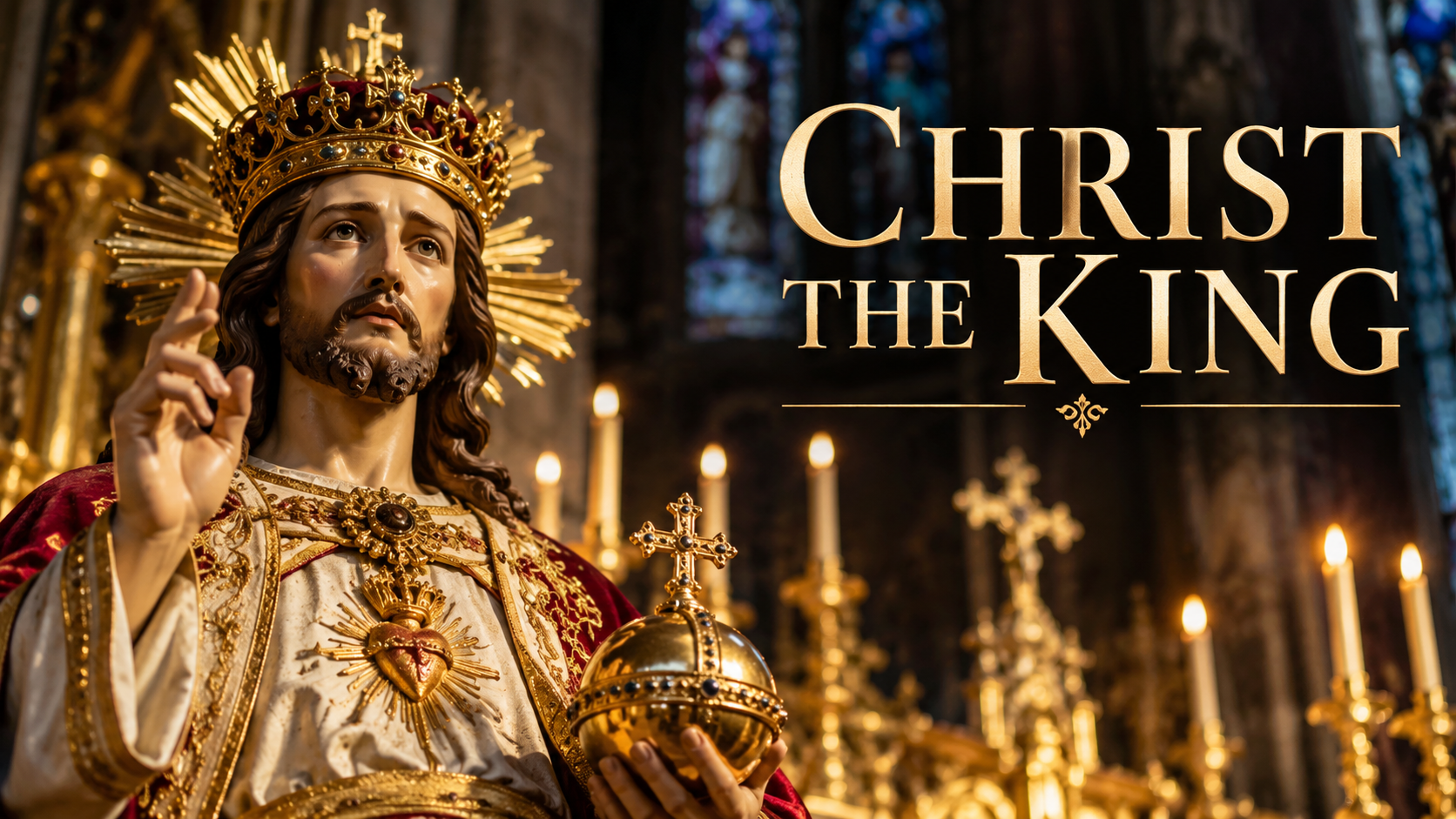
The Jubilee of Youth was undoubtedly a triumph of organisation and atmosphere, but the Catholic world must ask itself whether such events serve as points of conversion or as temporary spectacles. A truly different world will not come from human fraternity alone but from the Kingship of Christ, Who reigns through hearts and nations converted to His truth. Anything less is not the Kingdom of God, but a passing enthusiasm.¹²
¹ Politico, Pope tells 1 million Catholic youths they are ‘the sign a different world is possible’, 3 Aug 2025.
² Ibid.
³ AP News, Pope Leo XIV tells 1 million Catholic youths that they are ‘the sign a different world is possible’, 3 Aug 2025.
⁴ Reuters, Pope Leo exhorts crowd of million Catholic youth to spread their faith, 3 Aug 2025.
⁵ Politico, Pope tells 1 million Catholic youths…, 3 Aug 2025.
⁶ Catechism of the Catholic Church, 1324–1327.
⁷ St. John Chrysostom, Homilies on the Gospel of Matthew, Homily 43.
⁸ Pope Pius XI, Ubi Arcano Dei Consilio, §49, 23 Dec 1922.
⁹ St. Augustine, De Civitate Dei [City of God], XIX, 13.
¹⁰ Pope Pius X, Acerbo Nimis, §29, 15 Apr 1905.
¹¹ St. Ignatius of Antioch, Letter to the Ephesians, 15.
¹² Pope Pius XI, Quas Primas, §11, 11 Dec 1925.


Leave a Reply