

“In Silentio et Veritate” — In Silence and in Truth

To the clergy and faithful of the Old Roman Apostolate,
and to all who seek the truth of Christ,
grace and peace in Our Lord Jesus Christ.
Carissimi, Beloved in Christ,
When the prophet Isaiah declared, “In silentio et spe erit fortitudo vestra”—“In quietness and in hope shall be your strength” (Is. 30:15)—he spoke to a people who had sought security in human alliances rather than in God. The same is true today. Our world, filled with ceaseless noise and restless invention, promises control, progress, and peace, yet has lost all inward stillness. The Church, too, tempted to imitate the world, must rediscover her strength where it has always lain: in silence and in truth.
This edition of Nuntiatoria, bearing that same title, unfolds like a meditation on that ancient promise. Its pages reveal not only the turmoil of our age, but the path of renewal—through contemplation, courage, and fidelity to the eternal Word.
The Saints Who Teach Us How to Reform
This Sunday, the Nineteenth after Pentecost, coincides with the feast of Saint Peter of Alcántara, the spiritual guide of Saint Teresa of Avila. God often unites His saints in pairs to show the harmony between contemplation and action, silence and truth.
Peter, the humble Franciscan, was the confessor who steadied Teresa when her visions and reforms were doubted. His penances were unimaginable—his nights spent in prayer, his body clothed only in rough sackcloth, his food almost nothing. Yet his austerity was luminous with peace. Teresa, aflame with divine love, restored the Carmelite Order not by agitation but by obedience to God’s will. She called Peter “a man more from heaven than from earth,” and her own reform drew its power from his counsel: “Follow truth and do not fear.”
Their friendship, born in mutual holiness, shows how reform truly happens. It is not born of rebellion, nor of bureaucratic programs, but of sanctity. Peter and Teresa changed the Church precisely because they first let God change them.
The Silence That Speaks More Than Words
Among the reflections in this week’s edition is a study of the silent recitation of the Lord’s Prayer in the traditional Mass. The priest prays alone, but not apart; he prays on behalf of all, while the faithful join in interior union. This sacred silence is not absence but presence. It proclaims, without sound, that God alone acts in the mystery of salvation.
How unlike the modern world’s cult of noise! Whether in politics, media, or even liturgy, we are told that participation means speech, that worth is measured by visibility. Yet it is the quiet soul that truly participates in grace. In the stillness of the Canon, the Church breathes; in the hush of adoration, she remembers Who she is.
Let us, therefore, recover this silence—not the cowardice of withholding truth, but the reverent silence that listens before speaking. From such silence, the word of truth gains its power.
Truth Against the Noise of the Age
This edition also bears witness to the Church’s struggle for integrity in a time of confusion. We read of Cardinal Sarah’s appeal for reverence, a reminder that fidelity to the Traditional Latin Mass is not nostalgia but obedience to what sanctifies. We read, too, of Cardinal Cupich’s promotion in Rome, emblematic of a system that rewards ideological conformity over holiness. We see the pain of communities like the Transalpine Redemptorists, once trusting the “Synodal Church,” now realising that compromise with modernism only breeds betrayal.
And beyond the walls of the Church, the same drama unfolds. Governments promise safety through surveillance—digital ID systems sold as convenience but leading to control. Lawmakers cry “tolerance” while proposing an Islamophobia definition that would make even the truth of faith suspect, silencing Christians in their own land. Meanwhile, those who expose such contradictions are dismissed as “far-right,” when in truth they are defending the very liberties on which our civilisation rests.
In all these spheres, we meet the same temptation—to exchange truth for peace, and silence for approval. But peace without truth is deceit, and silence without faith is surrender.
The Saints’ Answer to Modern Tyrannies
What, then, are we to do? The saints give us the answer. Like Peter of Alcántara, we must become men and women of interior freedom, unmoved by the threats or fashions of the world. Like Teresa of Avila, we must work where God places us, reforming our homes, parishes, and communities from within. Their reforms began in cloisters and confessionals; ours must begin in the heart.
While governments and even some churchmen seek to build a new Babel of control and self-worship, the faithful must build sanctuaries of truth and prayer. Let your home be one. Let your family Rosary be an act of defiance against the tyranny of distraction. Let your adherence to the old liturgy, to clear doctrine, and to the perennial Magisterium be a quiet protest against the world’s amnesia.
The Church does not need new strategies—she needs saints who live in silentio et veritate.
The Wedding Garment of Grace
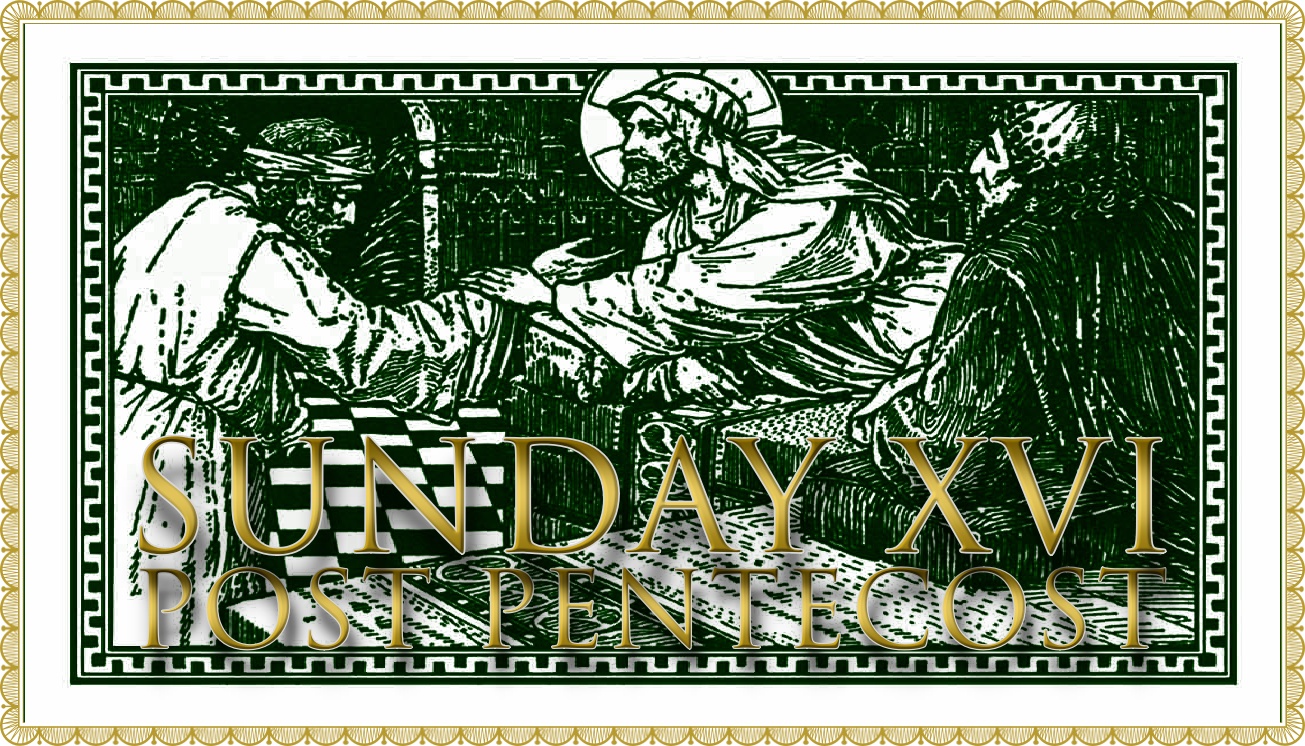
This Sunday’s Gospel tells of the man who came to the wedding feast without a garment. That garment is grace, woven of repentance and fidelity. In our day, many seek to enter the banquet without conversion, to enjoy the comfort of religion without the cost of discipleship. But the saints remind us: holiness is not optional attire—it is the condition of belonging.
If we wear the garment of grace—through confession, penance, and prayer—we will stand radiant before the King, even as the world falls into darkness.
Conclusion: The Light of Silence, the Strength of Truth
My beloved children, the days ahead will test your faith. The world will mock your fidelity to Tradition; institutions will call your obedience rebellion. Do not answer every accusation. Sometimes the most powerful testimony is the peace of a silent soul. As Saint Peter of Alcántara wrote, “The greatest wisdom is to seek God where the world cannot see Him.”
Therefore, live as children of silence and truth. Pray in stillness, speak with clarity, and act with courage. The noise of the age will pass, but truth endures. Silence may seem empty, but it is filled with God.
In silentio et veritate—in silence and in truth—there the light of Christ abides, and there the Church shall stand until the end of time.
Haec est Via.

✠ Jerome Seleisi
Titular Archbishop of Selsey
Primus of the Old Roman Apostolate
Footnotes
¹ Isaiah 30:15.
² St Teresa of Avila, Life, ch. 27.
³ St Peter of Alcántara, Treatise on Prayer and Meditation, ch. 1.
⁴ St Teresa of Avila, Foundations, ch. 4.
⁵ Missale Romanum (1570), Dominica XIX post Pentecosten, Gospel of Matthew 22:11–14.
⁶ Pope Pius XI, Mortalium Animos (1928), §§9–11.
⁷ Pope Pius XII, Mediator Dei (1947), §§23–25.
⁸ Pope Leo XIII, Libertas Praestantissimum (1888), §§15–19.


Leave a Reply