

In Epiphania Domini – The Epiphany of Our Lord

To the clergy and faithful of the Old Roman Apostolate,
and to all who seek the truth of Christ,
grace and peace in Our Lord Jesus Christ.
Carissimi, Beloved in Christ,
In this edition of Nuntiatoria, the reflections placed before you do not arise from abstract concern, nor from a desire to comment endlessly on controversy. They arise from the lived reality of faith at this moment—how Christ is confessed, how the Church worships, how authority is exercised, and how hope is sustained when clarity is costly.
Several articles in this edition return to the Feast of the Epiphany and the mysteries bound up with it: the Baptism of Christ, the Miracle of Cana, and the gifts brought by the Magi—gold, frankincense, and myrrh. These were not chosen merely because of the season. They address a more fundamental confusion: uncertainty about who Christ is and what His revelation demands of us. Gold confronts our reluctance to speak plainly of Christ’s kingship; frankincense challenges a tendency to reduce worship to expression rather than adoration; myrrh forces us to reckon with sacrifice and suffering in a Church often tempted to promise consolation without the Cross.
This concern carries directly into the articles addressing worship itself, particularly the reflection on eastward orientation. These pieces do not argue for nostalgia or preference. They ask whether the Church still understands worship as something received and directed toward God, rather than arranged primarily around ourselves. Posture, silence, and orientation are not secondary matters. Over time, they shape belief, expectation, and reverence in ways that words alone cannot.
Other contributions in this edition engage the present strain placed upon ecclesial authority. The analysis of contemporary liturgical conflict and enforcement does not deny the Church’s right to govern her worship. It raises a more difficult question: whether authority today is being exercised with theological explanation and persuasion, or increasingly through procedural command alone. When appeals to Rome become necessary over matters once governed by shared understanding, it signals not strength, but uncertainty within the Church’s own self-understanding.
This uncertainty is examined further in the discussion of proposals for juridical accommodation or structural peace for the ancient Roman Rite. These articles acknowledge the fatigue many feel and the desire for stability. Yet they also warn against confusing administrative settlement with healing. Structures can manage coexistence, but they cannot resolve unresolved theological divergence—particularly in matters of tradition, moral theology, and authority.
Importantly, this edition is not solely diagnostic. The article examining traditionalist Catholic demographics and vocational trends was written to counter despair with evidence. It observes, concretely, that where worship is coherent, doctrine clear, and expectations demanding, the faith is not merely preserved but transmitted. Families are formed, vocations emerge, and belief takes root across generations. This is not triumphalism. It is a sober pastoral observation: fidelity tends to bear fruit.
Finally, several articles engage the wider institutional environment in which the Church now operates—safeguarding regimes, ideological pressure, and assumptions increasingly at odds with Christian anthropology. These reflections are offered not to provoke fear, but to insist on truthfulness. Pastoral care cannot be exercised well if reality is misnamed. Where definitions of harm, care, or identity are reshaped without reference to creation or reason, the Church is obliged to speak clearly, even when doing so carries a cost.
In this edition of Nuntiatoria, the aim is not to resolve every tension, but to name them honestly and pastorally. The Church does not serve the world by mirroring its anxieties, nor by retreating into silence. She serves it by remaining herself—faithful in worship, clear in teaching, and patient in hope.
May the Lord who was manifested to the nations guide all who read these reflections in truth and peace.
Haec est Via.

✠ Jerome Seleisi
Titular Archbishop of Selsey
Primus of the Old Roman Apostolate
THIs WEEK’s EDITION


Latest
- Today’s Mass: September 19 S. Eustace & Companions, MartyrsSt. Eustachius, formerly General Placidus, experienced a transformative vision of Christ while hunting. After converting with his family, he endured persecution, losing them temporarily. Reuniting after military success, he ultimately refused to worship pagan deities, leading to his martyrdom with his family. They were later honoured with a church.
- Sermon for St. Eustacius/ Seventeenth Sunday after PentecostThe feast of St. Eustacius, celebrated on the Seventeenth Sunday after Pentecost, commemorates early Christian martyrs who refused to renounce their faith. Despite limited historical knowledge of St. Eustacius, his story embodies the courage of many Christians who, facing persecution from the Roman Empire, chose martyrdom over idolatry, ultimately shaping the Church’s foundation.
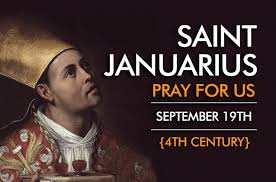
- Today’s Mass: September 19 St. Januarius, Bishop and Companion MartyrsSt. Januarius and companion martyrs were martyred during the persecution under Diocletian. St. Januarius, patron of the city of Naples and bishop of Beneventum, was beheaded with his deacons and some others.
- Sermon for St. Januarius and his CompanionsToday we celebrate the feast of St. Januarius and his companions. About St. Januarius little is known except that he was among the many martyrs during the great persecution under the Emperor Diocletian.
- 20.09.26 Nuntiatoria CXXIV: QUOD ACCEPIMUS, CUSTODIMUS ET TRADIMUSThe editorial emphasises the importance of understanding our inheritance as custodians rather than owners. It highlights the obligation to preserve and transmit the Christian Faith, sacraments, and traditions to future generations. Through gratitude and fidelity, those who receive must ensure that what has been entrusted does not end with them.


Leave a Reply