
When the Threat Is Reversed: Policing, Political Pressure, and the Collapse of Moral Judgment
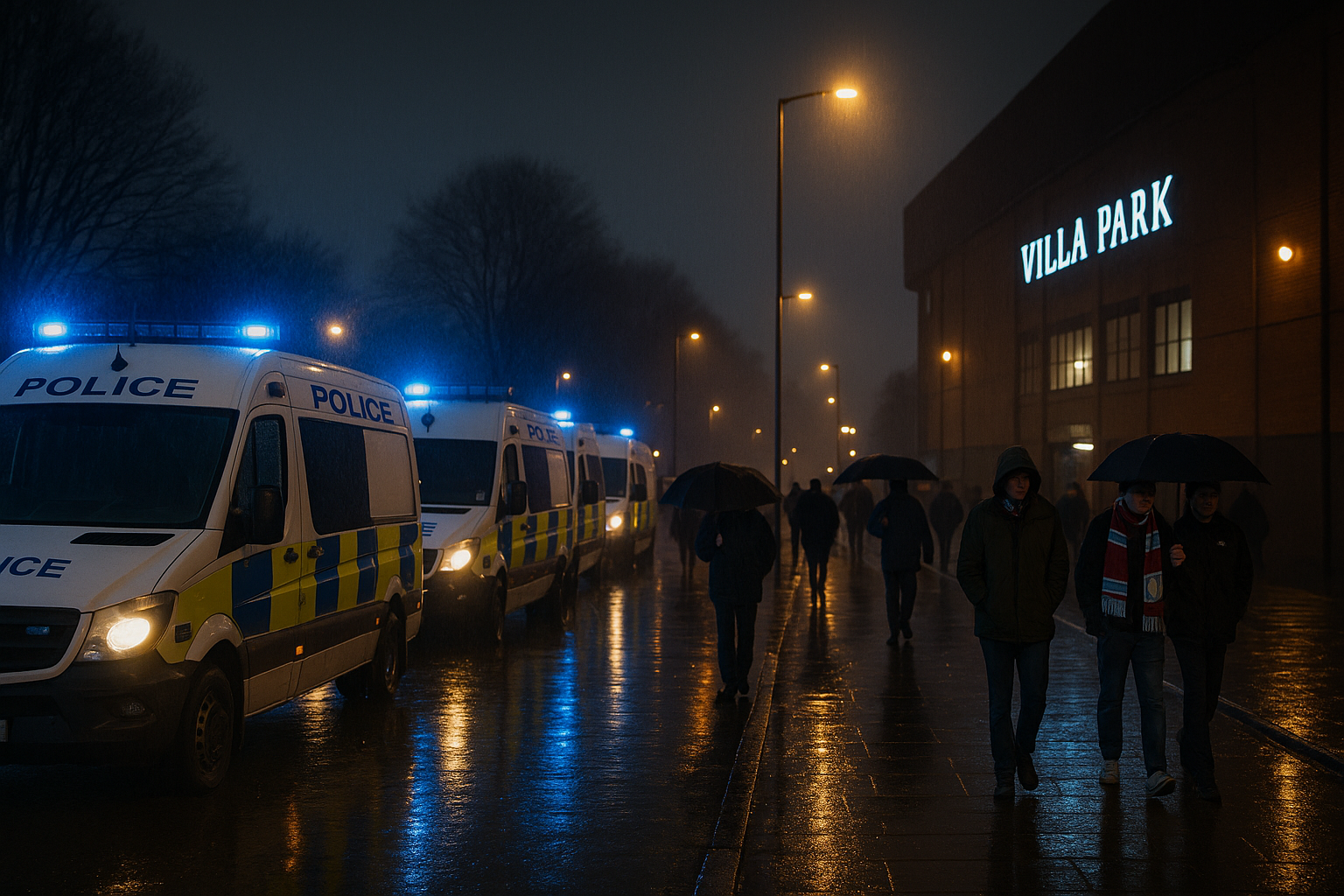
It is difficult to overstate the seriousness of what has now been established in relation to the banning of Maccabi Tel Aviv supporters from attending a European fixture in Birmingham. In a Britain that claims to have absorbed the lessons of the Macpherson Report, a major police force failed to disclose material intelligence concerning a credible, violent, and hateful threat directed at a minority group—while repeatedly emphasising, instead, the supposed threat posed by that same group.
This was not a marginal lapse. It was a profound inversion of moral and operational responsibility.
Subsequent parliamentary scrutiny and investigative reporting have established that West Midlands Police possessed intelligence indicating that local actors were prepared to arm themselves to target visiting Israeli—and therefore predominantly Jewish—supporters. That intelligence was not disclosed when the force was questioned by MPs. Instead, the public justification for the ban leaned heavily on allegations concerning the behaviour of Maccabi fans themselves, drawing on disputed, exaggerated, and in some cases demonstrably inaccurate claims about prior incidents abroad.
The effect was to present Jewish supporters not as a group requiring protection, but as a risk to be managed through exclusion.
This matters because policing is not merely a technical exercise in crowd control. It is a moral practice, grounded in truth, proportionality, and the equal dignity of persons before the law. When a police force frames the targets of animus as the source of danger, it is not acting neutrally. It is engaging in institutional victim-blaming.
The explanations offered by the force—that MPs did not ask sufficiently precise questions, or that certain intelligence did not meet internal thresholds for disclosure—will convince no one beyond the circle of bureaucratic self-defence. The test is not whether parliamentarians used the correct wording. It is whether material facts bearing directly on public safety and discrimination were withheld while a misleading narrative was allowed to stand. On that measure, the failure is unequivocal.
Nor can this episode be dismissed as an isolated procedural error. The documentary record suggests that the decision to ban supporters preceded the assembly of the evidential case used to justify it. Minutes from safety advisory discussions, combined with the later emergence of “significant intelligence,” give the strong impression of a conclusion reached first and rationalised afterwards. That is not intelligence-led policing. It is outcome-led justification.
International commentators have been blunter still. Several have described the affair as emblematic of a wider antisemitic double standard: a readiness to treat Jewish presence as inherently provocative, and Jewish vulnerability as an inconvenience to be managed away. The language used to defend the ban—invoking unverified foreign incidents and framing Jewish supporters as uniquely problematic—would rightly be regarded as unacceptable if applied to almost any other minority group.
For Nuntiatoria readers, this pattern will be familiar. In November 2025, this publication analysed the Maccabi ban as a case study in police fabrication and a new institutional double standard, warning that when public bodies absorb sectarian assumptions from the surrounding political culture, they cease to function as impartial guarantors of justice. The developments since then have not weakened that diagnosis. They have confirmed it.
Political Advocacy and Sectarian Pressure
An additional and unavoidable dimension of the affair is the role played by Muslim MPs representing Birmingham constituencies, whose public statements did not merely comment on the police decision but actively endorsed and legitimised it. While definitive proof of direct operational interference may never be produced, the public record demonstrates sustained political advocacy that aligned closely with—and plausibly reinforced—the police’s exclusionary stance.
Most notably, Ayoub Khan, MP for Birmingham Perry Barr, publicly welcomed the ban and framed it not as a reluctant policing judgment but as a moral necessity. He stated that “Maccabi Tel Aviv should not even be playing within this international competition,” collapsing the distinction between a football club, its supporters, and the actions of a foreign state. In further remarks circulated through local media and social platforms, he described the exclusion of the fans as “a huge victory,” language that treats the removal of a minority group from public life as an achievement in itself.
A similar posture was adopted by Iqbal Mohamed, who publicly supported the ban within a broader rhetorical framework linking domestic policing decisions to grievances arising from the Israel–Gaza conflict. His interventions contributed to a narrative in which the mere presence of Israeli supporters was framed as intrinsically inflammatory, irrespective of their conduct.
What is as telling as these statements is the absence of any corresponding concern for the safety of Jewish supporters. Neither MP is on record as calling for enhanced protection, targeted enforcement against those issuing threats, or public reassurance to the Jewish community once intelligence about hostile mobilisation became known. That silence is not morally neutral. In this context, it functions as tacit endorsement of exclusion as the preferred solution.
It is therefore reasonable to suspect that political pressure—explicit or ambient—shaped the environment in which West Midlands Police operated. Contemporary British policing is acutely sensitive to accusations of communal insensitivity and political backlash. Sustained advocacy by elected representatives, particularly when framed in the language of safeguarding and cohesion, creates a powerful incentive to choose the path of least resistance. In Birmingham, that path was not the robust policing of threats, but the removal of the threatened group.
This is not an indictment of Muslim MPs as such. It is a warning about the corrosive effect of identity-driven, sectarian politics on the neutral administration of law and order. When elected representatives frame the exclusion of a minority as a moral good, they corrode the principle of equal protection before the law. The police may bear operational responsibility for the ban, but politicians who championed it helped shape the moral and political conditions in which such a decision could be taken—and defended.
A Post-Macpherson Reversal
Post-Macpherson Britain was meant to have learned that institutional bias does not always present itself as overt hostility. More often, it appears in subtler forms: in whose testimony is believed, whose fears are taken seriously, and whose presence is framed as a problem. When intelligence about a violent threat against Jews can be minimised or withheld, while speculative allegations about Jewish behaviour dominate the public explanation, the lesson has not merely been forgotten. It has been reversed.
There will be reviews, inspectorate reports, and carefully worded apologies. These may yet clarify lines of accountability. They will not, on their own, repair the deeper damage: the erosion of trust that occurs when the institutions charged with protecting minorities appear willing to sacrifice truth for administrative convenience.
A society that tolerates such inversions should not be surprised when its claims to fairness ring hollow.
- Parliamentary evidence and subsequent reporting on undisclosed intelligence regarding threats to Maccabi Tel Aviv supporters, January 2026.
- Analysis of decision-making chronology and evidentiary inconsistencies within West Midlands Police, January 2026.
- International commentary describing the Maccabi ban as indicative of antisemitic double standards in British public life, January 2026.
- Public statements by Ayoub Khan MP welcoming the ban and opposing Maccabi Tel Aviv’s participation, reported October 2025.
- Reporting on public support for the ban by Iqbal Mohamed MP and his linkage of domestic policing decisions to the Israel–Gaza conflict, October 2025.
- Nuntiatoria, “Police Fabrication and the New Double Standard: The Maccabi Ban, Sectarian Politics, and the Moral Collapse of British Institutions,” 23 November 2025.
RELATED ARTICLES


Latest ARTICLES
- Today’s Mass: September 19 St. Januarius, Bishop and Companion MartyrsSt. Januarius and companion martyrs were martyred during the persecution under Diocletian. St. Januarius, patron of the city of Naples and bishop of Beneventum, was beheaded with his deacons and some others.
- Sermon for St. Januarius and his CompanionsToday we celebrate the feast of St. Januarius and his companions. About St. Januarius little is known except that he was among the many martyrs during the great persecution under the Emperor Diocletian.
- 20.09.26 Nuntiatoria CXXIV: QUOD ACCEPIMUS, CUSTODIMUS ET TRADIMUSThe editorial emphasises the importance of understanding our inheritance as custodians rather than owners. It highlights the obligation to preserve and transmit the Christian Faith, sacraments, and traditions to future generations. Through gratitude and fidelity, those who receive must ensure that what has been entrusted does not end with them.
- ONE LORD, ONE FAITH, ONE BAPTISM: The Seventeenth Sunday after PentecostThe Seventeenth Sunday after Pentecost emphasises the love of God and neighbour, rooted in divine justice. The Mass articulates the necessity of one faith and baptism, ensuring charity is not sentimental but deeply theological. The Gospel challenges believers to recognise Christ’s dual nature as both David’s son and Lord, reinforcing true Christian charity.
- AN AWARD IS NOT A MEETINGLambeth Palace has withdrawn the Hubert Walter Award given to Hafiz Tahir Ashrafi for reconciliation, citing previously unknown controversial comments. This raised questions about the vetting process prior to the award. While Ashrafi has defended his record of protecting minority rights, the Palace must clarify why such issues were overlooked initially.



Leave a Reply