

“As with Gladness Men of Old”: Epiphany as Revelation, Pilgrimage, and Consummation
Introduction and provenance.
The Epiphany hymn As with gladness men of old was composed in 1860 by the Anglican poet and hymn writer William Chatterton Dix. Though Victorian in date, its theological structure is markedly catholic in instinct: biblical typology, patristic exegesis, moral application, and eschatological fulfilment are held together in a single, coherent arc. Far from being a sentimental meditation on the Magi, the hymn functions as a compact theological treatise on Epiphany itself—understood not merely as a historical commemoration, but as a perennial pattern of Christian life: revelation received, obedience rendered, sacrifice offered, holiness pursued, and glory attained.¹

The Star and the Primacy of Divine Initiative.
The hymn opens with gladness, immediately situating Epiphany within the theology of joy proper to divine self-manifestation. The Magi do not discover Christ through autonomous inquiry; they are drawn by a sign given. Patristic commentators are explicit that the star is not a merely natural phenomenon but a providential instrument adapted to the condition of those who seek. St John Chrysostom insists that the star behaved unlike any celestial body—appearing, moving, and resting so as to instruct rather than merely indicate.² St Leo the Great develops the doctrinal consequence: the star signifies prevenient grace, calling the Gentiles before they can merit the call.³
Scholastic theology later clarifies this dynamic. St Thomas Aquinas teaches that God leads men according to the mode suited to them, elevating natural knowledge by supernatural light.⁴ The Magi, accustomed to reading the heavens, are led by a heavenly sign to the Lord of heaven. Dix’s prayer—“So, most gracious God, may we evermore be led to Thee”—universalises this economy of grace. Epiphany is not exhausted in a past event; it continues wherever God draws souls to Himself through signs, sacraments, and truth. This accords with the Church’s constant teaching that God offers to all men the grace necessary for salvation, while remaining the first mover in every act of conversion.⁵
As with gladness men of old
Did the guiding star behold
As with joy they hailed its light
Leading onward, beaming bright
So, most gracious God, may we
Evermore be led to Thee
As with joyful steps they sped
To that lowly cradle bed
There to bend the knee before
Him whom heaven and earth adore
So may we with willing feet
Ever seek Thy mercy-seat
As they offered gifts most rare
At that cradle rude and bare
So may we with holy joy
Pure, and free from sin’s alloy
All our costliest treasures bring
Christ, to Thee, our heavenly King
Holy Jesus, every day
Keep us in the narrow way
And, when earthly things are past
Bring our ransomed souls at last
Where they need no star to guide
Where no clouds Thy glory hide.
In the heavenly country bright
Need they no created light
Thou its light, its joy, its crown
Thou its sun, which goes not down.
There forever may we sing
Hallelujahs to our King
Pilgrimage, Humility, and Adoration.
The hymn then shifts from revelation to response. The Magi move with “joyful steps,” a phrase that unites obedience and gladness. Yet their journey terminates not in splendour but in abasement: a “lowly cradle bed.” Patristic preaching repeatedly dwells on this paradox. St Augustine contrasts the poverty of the place with the majesty of the Child, teaching that humility is the necessary gateway to divine knowledge.⁶ St Leo similarly insists that Christ’s kingship is revealed precisely through lowliness, lest human pride mistake Him for a worldly ruler.⁷
The Magi’s bodily action—“there to bend the knee”—is central. Epiphany culminates in adoration, not observation. The hymn’s transition, “So may we with willing feet ever seek Thy mercy-seat,” draws the faithful into this posture. The “mercy-seat” recalls both the propitiatory of the Ark and its fulfilment in Christ Himself, whom St Paul names as the true hilastērion.⁸ Liturgically, this language resonates unmistakably with the altar, where Christ is made present sacramentally and adored as Lord. The hymn thus affirms, in poetic form, the Church’s perennial insistence on bodily reverence, sacrificial worship, and the objective reality of Christ’s presence, against any reduction of faith to interior sentiment alone.
Gifts, Sacrifice, and the Moral Life.
When Dix turns to the gifts of the Magi, he assumes their traditional symbolic weight without rehearsing it explicitly. Patristic consensus interprets gold, frankincense, and myrrh as confessions of Christ’s kingship, divinity, and sacrificial death.⁹ St Gregory the Great extends this symbolism into the moral life: gold signifies wisdom offered to God, incense prayer, and myrrh the mortification of the flesh.¹⁰ Dix’s insistence that our offering be “pure, and free from sin’s alloy” stands squarely within this tradition.
Scholastic theology clarifies the inner logic of such offering. For St Thomas, external sacrifice is ordered to interior oblation; the gift signifies the self given over to God.¹¹ Magisterially, the Church teaches that the faithful, united to Christ’s one sacrifice, are called to offer themselves as a “living sacrifice” in holiness and obedience.¹² The hymn’s Christological clarity—addressing Christ as “our heavenly King”—is not incidental. It safeguards the ontological kingship of Christ, rooted in His divine person, against any merely functional or moralised conception of His authority.
Perseverance and the Narrow Way.
The fourth movement of the hymn turns from offering to endurance. “Keep us in the narrow way” echoes Christ’s own teaching that the path to life is difficult and few find it. Patristic catechesis is unanimous that illumination inaugurates struggle rather than abolishes it. St Cyril of Jerusalem warns the newly baptised that the Christian life demands vigilance and discipline after grace has been received.¹³
In scholastic terms, the petition concerns the grace of perseverance, which cannot be presumed but must be sought.¹⁴ The hymn’s daily horizon—“every day”—rejects episodic or seasonal piety. Magisterially, the Church maintains both the necessity of grace and the reality of human cooperation, a balance held here in the simplicity of prayer rather than theoretical abstraction.¹⁵
Eschatological Fulfilment and the Uncreated Light.
The hymn concludes by deliberately discarding the image with which it began. In the “heavenly country bright,” no star is needed. This is a profoundly patristic instinct. St Gregory of Nyssa and the Dionysian tradition teach that created mediations fall away in glory, where God is known directly in the light of His own being.¹⁶ Dix’s language closely mirrors the Apocalypse: the heavenly city has no need of sun or moon, for the glory of God is its light.¹⁷
Scholastic theology names this final state through the doctrine of the lumen gloriae, by which the blessed are enabled to see God as He is.¹⁸ Christ is confessed here as the eternal Sun who never sets, uniting Johannine light-theology with royal Christology. The hymn ends not with description but with doxology: unending Alleluia. Earthly Epiphany thus yields to heavenly liturgy, of which the Church’s worship is a true, though veiled, participation.
Conclusion.
As with gladness men of old is not merely a seasonal hymn but a doctrinal synthesis. It traces the whole economy of salvation from prevenient grace to final glory, using the Magi as the archetype of the Christian vocation. In an age prone to reducing Epiphany to aesthetic tradition or cultural myth, the hymn quietly but firmly insists that revelation demands obedience, worship demands sacrifice, and joy demands truth. The Magi do not merely see the light; they follow it, kneel before it, and are transformed by it. The Church sings this hymn in order to pray that she—and her children—may do the same, until signs give way to sight and the King Himself is all in all.

- William Chatterton Dix, Hymns of Love and Joy (London: Rivingtons, 1861).
- St John Chrysostom, Homilies on Matthew, Homily 6.
- St Leo the Great, Sermon 31 (On the Epiphany).
- St Thomas Aquinas, Summa Theologiae I, q.1, a.1; III, q.36, a.7.
- Council of Trent, Decree on Justification, chs. 5–6.
- St Augustine, Sermon 202.
- St Leo the Great, Sermon 36.
- Romans 3:25.
- St Irenaeus, Adversus Haereses III.9.2; Origen, Homilies on Genesis 14.
- St Gregory the Great, Homilies on the Gospels 10.
- St Thomas Aquinas, Summa Theologiae II–II, q.85, a.2.
- Romans 12:1; Council of Trent, Session XXII.
- St Cyril of Jerusalem, Catechetical Lectures I.
- St Thomas Aquinas, Summa Theologiae I–II, q.109, a.10.
- Council of Trent, Decree on Justification, ch. 13.
- St Gregory of Nyssa, Life of Moses II; Pseudo-Dionysius, Mystical Theology.
- Revelation 21:23.
- St Thomas Aquinas, Summa Theologiae I, q.12, a.5.
related articles


Latest articles
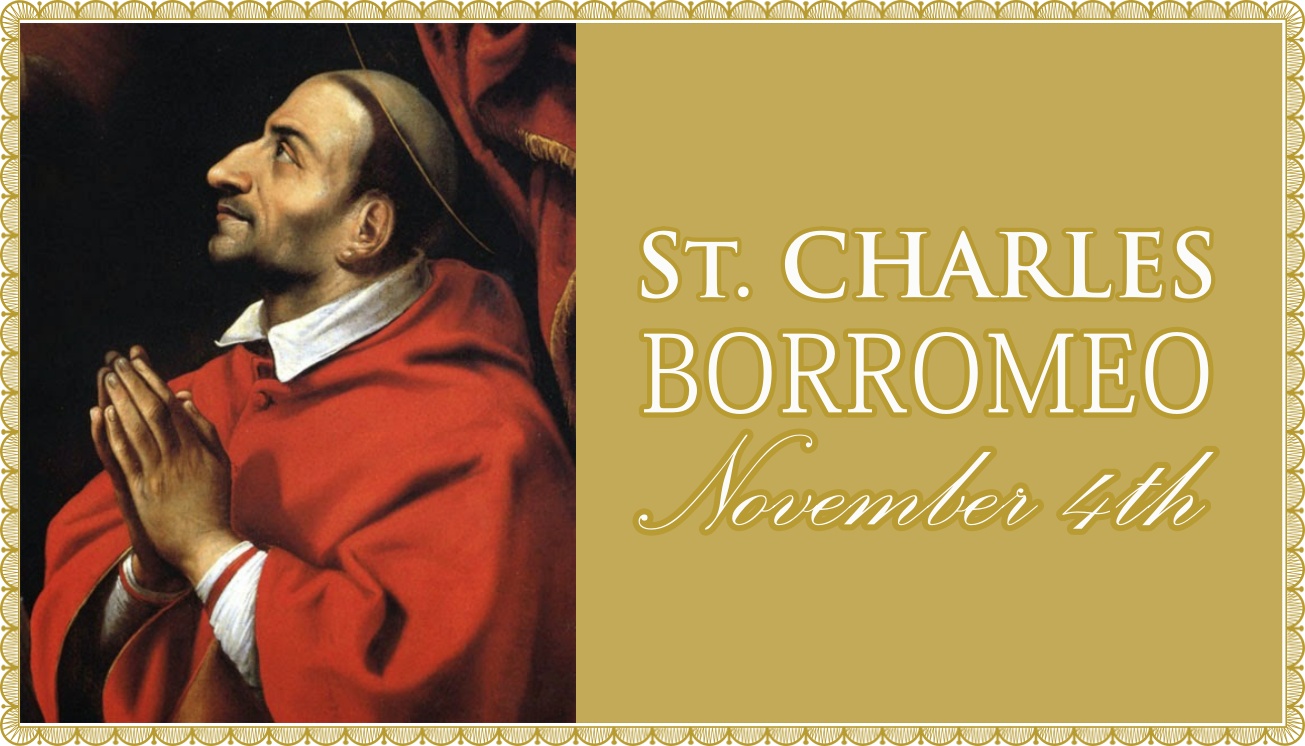
- Today’s Mass: November 4 St Charles BorromeoSt. Charles Borromeo (1538–1584) reformed the Church through holiness amid the corruption of his age—guiding Trent, renewing Milan, and serving heroically during plague. With Ss. Vitalis and Agricola and in the Octave of All Saints, he calls today’s Church to fidelity, reverence, and courageous sanctity amid confusion and decline.
- MEMENTO MORI: LEARNING TO LIVE IN THE LIGHT OF ETERNITYThis pastoral meditation reflects on the importance of remembering death to inspire a more faithful life, especially during the month of All Saints and All Souls. It urges individuals to embrace their mortality, make meaningful choices, and engage in prayer for the departed, thereby cultivating a closer relationship with God and living purposefully.
- WHEN THE BISHOP BECOMES THE MESSAGE: The Cult of Personality, Episcopal Pride and the Betrayal of Apostolic TrustArchbishop Josef Grünwidl of Vienna has openly advocated for women’s ordination, reflecting a troubling trend among bishops who express personal opinions at odds with established Catholic doctrine. This practice undermines their primary role of teaching the faith and raises concerns about episcopal pride and the proper handling of doctrinal authority by the Church.
- SANDIE PEGGIE: WHEN THE UNION FAILS THE WOMEN IT SHOULD DEFENDThe Royal College of Nursing successfully defended its actions in a discrimination case brought by Sandie Peggie, yet the ruling highlights concerns about the union’s failure to acknowledge members’ rights amid ideological conformity. This raises critical questions regarding the adequacy of trade union representation for employees facing complex workplace issues.
- Today’s homily: St Winefride of HolywellSt Winefride’s courage, and the survival of devotion to her through centuries of persecution, reveal the cost and beauty of Christian fidelity. Her feast challenges us to move beyond outward observance, cultivate genuine holiness, resist compromise, and persevere in sanctifying grace, ready to meet Christ, our divine Bridegroom.





Leave a Reply