

Veritas Renovat — Truth Renews

To the clergy and faithful of the Old Roman Apostolate,
and to all who seek the truth of Christ,
grace and peace in Our Lord Jesus Christ.
Carissimi, Beloved in Christ,
In presenting this eighty-third edition of Nuntiatoria, I write with a pastoral heart but also with the sober clarity that these times demand. Our chosen motto, Veritas Renovat—Truth renews—is not a decorative phrase. It is the thread woven through every reflection, critique, and exhortation contained in these pages. It is the indispensable key to the renewal of the Church, of our society, and of our own souls.
We live in an age that has taught men to expect renewal without repentance, community without conversion, identity without inheritance, and spiritual vitality without sacrifice. Many today speak of restoring civilisation, revitalising culture, or rediscovering Christian roots, yet they recoil at the cost of truth—at the sharp edge of doctrine, the discipline of moral law, the demands of worship, and the divine claim upon the human heart. But renewal built upon sentimentality or vagueness can never endure. We cannot heal a civilisation with borrowed faith, nor can we strengthen a Church by diluting the Gospel.
Truth alone renews because truth alone liberates. When Christ tells us that “the truth shall make you free,” He reveals not an abstraction but the living reality of His own Person. Renewal is not a slogan or programme. It is the soul returning to God, the mind submitting to revelation, the heart allowing grace to break through the calluses of pride and fear. It is the community that orders itself around worship rather than novelty, and around charity grounded in the Cross rather than the shifting enthusiasms of the age.
This conviction is nowhere more beautifully echoed than in the Tridentine liturgy of the Second Sunday of Advent, which forms the spiritual backdrop to this edition. The ancient propers place before us the figure of St John the Baptist, the Forerunner whose cry is ever timely: “Prepare ye the way of the Lord, make straight His paths.” Advent’s second movement is not gentle nostalgia; it is a call to interior straightening, the levelling of pride, the cleansing of conscience, the embracing of penitence that clears the way for Christ’s approach.
The Epistle teaches us patientiam et consolationem Scripturarum—that every word of God leads toward the fulfilment of His promises in Christ, the hope of both Jew and Gentile. The Gospel reveals the Messiah by His works: the blind see, the dead rise, the poor receive the Gospel. And yet it ends with a warning: “Blessed is he whosoever shall not be scandalised in Me.” Thus the liturgy unites mercy and judgment, consolation and holy fear. Christ comes in grace now; He will come in glory later. Only the soul that embraces truth is ready for both.
This edition bears witness to that same conviction. In these pages, we confront the illusions that promise life yet deliver only confusion: contested identities, hollow religiosities, the pretence of pluralist harmony detached from the uniqueness of Christ, the mirage of ecclesial renewal through structural tinkering rather than spiritual discipline. We examine the crisis of authority that afflicts both Church and society, reminding ourselves that the authority Christ entrusts to His Church is a sacred munus, not a managerial tool. And we draw deeply from the perennial wisdom of the Fathers, the Magisterium, and the saints whose lives speak more clearly than any manifesto.
But this is not a catalogue of failings; it is a call to hope. For truth does not renew by condemnation but by illumination. When the Church returns to her own tradition, she discovers again the radiance of her identity. When society recovers the natural law, it regains the foundations of justice and peace. When the individual turns his face toward God, the grace of conversion transfigures the very ground of his being.
Here in Advent, the Church reminds us that renewal begins not in the public square but in the heart. John the Baptist’s call rings across the centuries because its demand is perennial: straighten what has grown crooked, purify what has become clouded, silence the noise that drowns the voice of God. Only then can the soul recognise the One who comes, healing in His wings and judgment in His hand.
In these turbulent days, you who strive to keep the faith may feel isolated, misunderstood, or weary. Yet take heart. The renewal of the Church has never begun from palaces or parliaments but from prayer, from fidelity, from the quiet courage of souls who refuse to abandon the truth they have received. Every authentic renewal in Christian history has been a return—a return to Christ, a return to the sacraments, a return to the truth that never ages.
This is the work before us. Not merely to analyse our times, but to live as witnesses to the truth that renews. To restore reverence in worship, integrity in doctrine, purity in life, and charity rooted in sacrifice. To form communities where the faith is not an accessory but the organising principle of our existence. Above all, to proclaim—by word, deed, and the example of our lives—that Christ is King, His truth is unchanging, and His grace is sufficient.
May this edition strengthen you in that resolve. May it help you see more clearly the illusions that must be cast aside, and the firm ground upon which we must stand. And may the motto of this edition be the motto of our hearts: Veritas Renovat. For in the truth of Christ lies the only renewal our age will ever know.
With my blessing and paternal affection,
Haec est Via.

✠ Jerome Seleisi
Titular Archbishop of Selsey
Primus of the Old Roman Apostolate
THIs WEEK’s EDITION


Latest
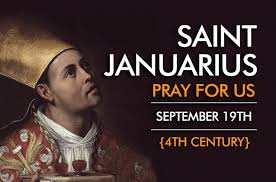
- Today’s Mass: September 19 St. Januarius, Bishop and Companion MartyrsSt. Januarius and companion martyrs were martyred during the persecution under Diocletian. St. Januarius, patron of the city of Naples and bishop of Beneventum, was beheaded with his deacons and some others.
- Sermon for St. Januarius and his CompanionsToday we celebrate the feast of St. Januarius and his companions. About St. Januarius little is known except that he was among the many martyrs during the great persecution under the Emperor Diocletian.
- 20.09.26 Nuntiatoria CXXIV: QUOD ACCEPIMUS, CUSTODIMUS ET TRADIMUSThe editorial emphasises the importance of understanding our inheritance as custodians rather than owners. It highlights the obligation to preserve and transmit the Christian Faith, sacraments, and traditions to future generations. Through gratitude and fidelity, those who receive must ensure that what has been entrusted does not end with them.
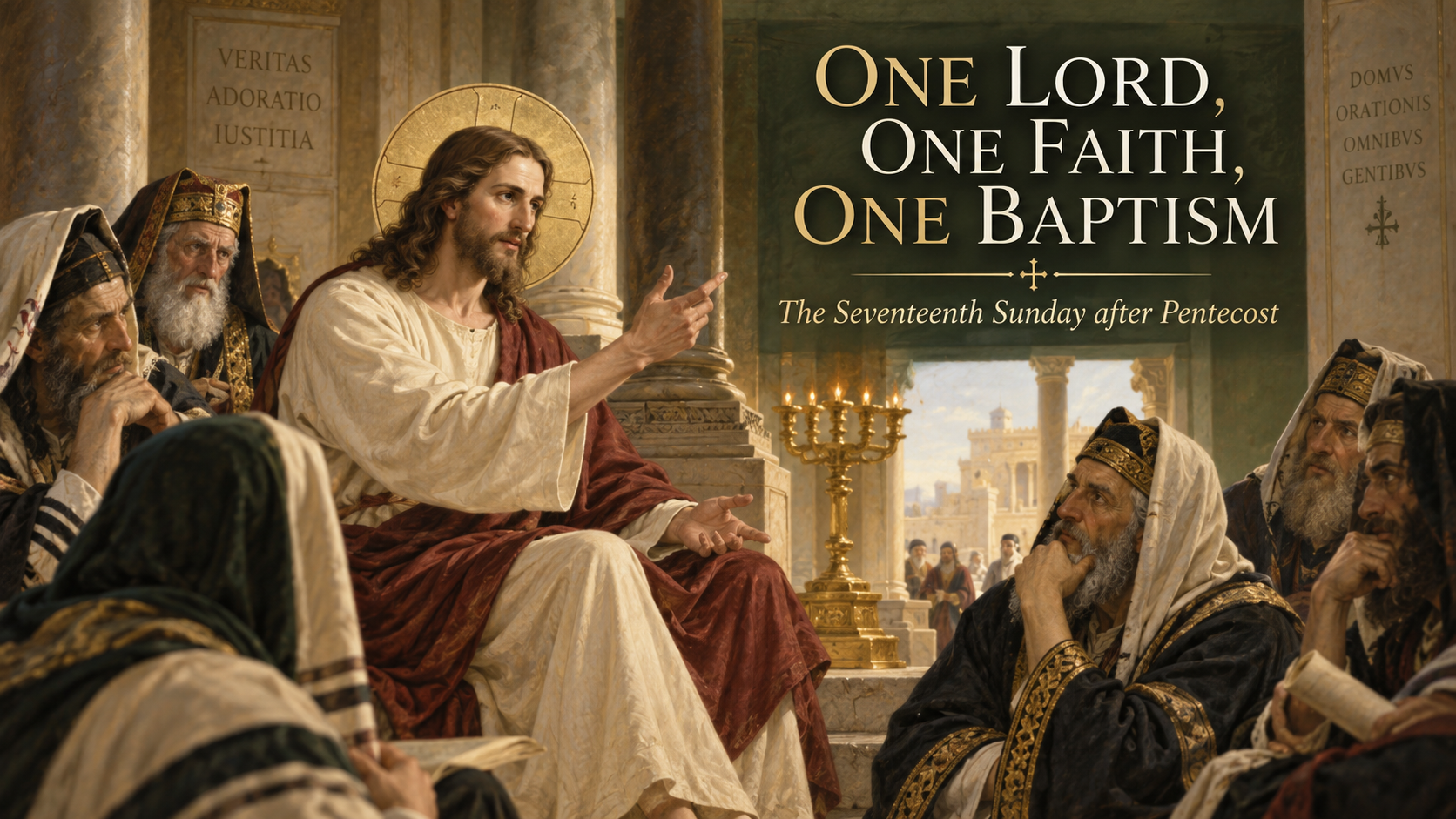
- ONE LORD, ONE FAITH, ONE BAPTISM: The Seventeenth Sunday after PentecostThe Seventeenth Sunday after Pentecost emphasises the love of God and neighbour, rooted in divine justice. The Mass articulates the necessity of one faith and baptism, ensuring charity is not sentimental but deeply theological. The Gospel challenges believers to recognise Christ’s dual nature as both David’s son and Lord, reinforcing true Christian charity.
- AN AWARD IS NOT A MEETINGLambeth Palace has withdrawn the Hubert Walter Award given to Hafiz Tahir Ashrafi for reconciliation, citing previously unknown controversial comments. This raised questions about the vetting process prior to the award. While Ashrafi has defended his record of protecting minority rights, the Palace must clarify why such issues were overlooked initially.



Leave a Reply