

THE FEMALE DIACONATE AND THE SACRAMENT OF HOLY ORDERS: THE PETROCCHI COMMISSION REAFFIRMS TRADITIONAL DOCTRINE
The Vatican has released the long-awaited summary of the Commission for the Study of the Female Diaconate, established in 2020 and chaired by Cardinal Giuseppe Petrocchi, confirming that women cannot be admitted to the diaconate understood as a degree of the Sacrament of Holy Orders. The published status quaestionis brings five years of historical and theological research to a clear theological conclusion: the sacramental diaconate belongs integrally to the one Sacrament of Holy Orders, which the Church has no authority to confer upon women.
The Commission’s findings offer a decisive clarification at a time of renewed speculation—both ecclesial and secular—about a “female diaconate” as a pathway toward broader sacramental reform. While the text refuses to pronounce a definitive dogmatic judgment on diaconal ordination for women in the technical canonical sense, it states that “the possibility of proceeding in the direction of admitting women to the diaconate understood as a degree of the sacrament of Holy Orders is excluded,” grounding this conclusion in Sacred Scripture, Tradition, and the ecclesiastical Magisterium.¹
The report emphasises that this conclusion emerges from the convergence of the relevant disciplines. Historical research into the “deaconesses” of the early Church, long invoked by advocates of female ordination, demonstrates that these women exercised important charitable and catechetical roles, particularly in relation to other women, but were not ordained through sacramental imposition of hands nor integrated into the hierarchical structure of Holy Orders. Their functions, the Commission notes, have no direct continuity with the ministerial diaconate restored and defined by the post-conciliar Magisterium.²
The Commission explicitly affirms the Church’s inability, rather than simple unwillingness, to alter the essential matter of the sacraments instituted by Christ. This reasoning follows the logic of St John Paul II’s apostolic letter Ordinatio Sacerdotalis (1994), which solemnly stated:
“the Church has no authority whatsoever to confer priestly ordination on women, and this judgment is to be definitively held by all the Church’s faithful.”³
In 2018, the Congregation for the Doctrine of the Faith clarified that the teaching of Ordinatio Sacerdotalis bears the mark of infallibility, as a repetition of the ordinary and universal Magisterium—even if not defined ex cathedra.⁴
According to the Commission’s theological synthesis, this principle applies by necessity to the diaconate when understood as a sacramental order, since the diaconate is not a standalone ministry but a degree of one sacrament with the presbyterate and episcopate. The text explicitly rejects the widespread claim that the Church might ordain women to the diaconate if the diaconate could be separated from the sacrament of Holy Orders. Such a proposal would require the Church to invent a new sacrament, which it has no authority to do.
While the Commission’s conclusion is unambiguous, it avoids issuing a technical definitive judgment parallels to Ordinatio Sacerdotalis, explaining that the historical question surrounding the role of deaconesses and the development of the diaconate introduces methodological caution. The absence of a formula identical to John Paul II’s judgment on the priesthood means the current conclusion, while “strong,” is not phrased as a universal definitive judgment in itself. In essence: the conclusion binds theological reasoning, but does not constitute a formal new definition.
The Commission also observes that the Church already provides avenues for women’s ecclesial participation through instituted ministries, governance roles, catechesis, and charitable leadership, without sacramental ordination. Historically, deaconesses functioned precisely in these areas, not in sacramental ministry. The report therefore implies that calls for a “female diaconate” should be articulated within the framework of non-ordained ministries, not by attempting to alter Holy Orders.
Reaction to the publication has been divided along familiar theological lines. Traditionalist commentators have welcomed the clarity. Dr Peter Kwasniewski described the report as “a much-needed reaffirmation that the sacraments are not malleable instruments of cultural accommodation, but divine institutions,” warning that continuous agitation on the question damages the unity of the Church’s sacramental life.⁵
Meanwhile, advocates of reform have expressed disappointment. Dr Phyllis Zagano, a leading proponent of restoring the female diaconate, argues that the Commission “misses the pastoral urgency of women’s sacramental ministry in the Church,” while suggesting that historical evidence reveals a more sacramental understanding of deaconesses in some Eastern contexts.⁶ The Commission’s treatment of Eastern sources is likely to remain the subject of scholarly debate, though the summary indicates that no ancient evidence satisfies the theological criteria of sacramental ordination.
The sum of the report is a reminder that the Church’s sacramental theology is not subject to ecclesiastical experiment, nor to the pressures of cultural expectation. The sacrament of Holy Orders, as the Commission states, is received from Christ through the Apostolic Tradition, and therefore lies beyond the scope of disciplinary reform.
In the words of Ordinatio Sacerdotalis, upheld again implicitly here:
the Church’s lack of authority is precisely what secures her fidelity.
- Vatican News, “Petrocchi Commission: No admittance to female diaconate as sacramental order,” Vatican City, summary publication, December 2025.
- Ibid., summary of historical findings on deaconesses and sacramental ordination.
- John Paul II, Ordinatio Sacerdotalis, Apostolic Letter on Reserving Priestly Ordination to Men Alone, May 22, 1994.
- Congregation for the Doctrine of the Faith, “Response to a Dubium on the Infallibility of Ordinatio Sacerdotalis,” 2018.
- Peter Kwasniewski, interview commentary responding to the Commission summary, December 2025.
- Phyllis Zagano, commentary circulated to Catholic media following publication of the Commission summary, December 2025.


LAtest
- Mary Is Co-Redemptrix: Cardinal Burke Reopens Rome’s Marian ControversyCardinal Raymond Leo Burke has declared the Virgin Mary as “Co-Redemptrix” amidst controversy over the Vatican’s restriction on this title. The debate revolves around the appropriateness of certain theological language and whether terminology historically used can still accurately express Marian cooperation in Redemption without compromising Christ’s unique role.
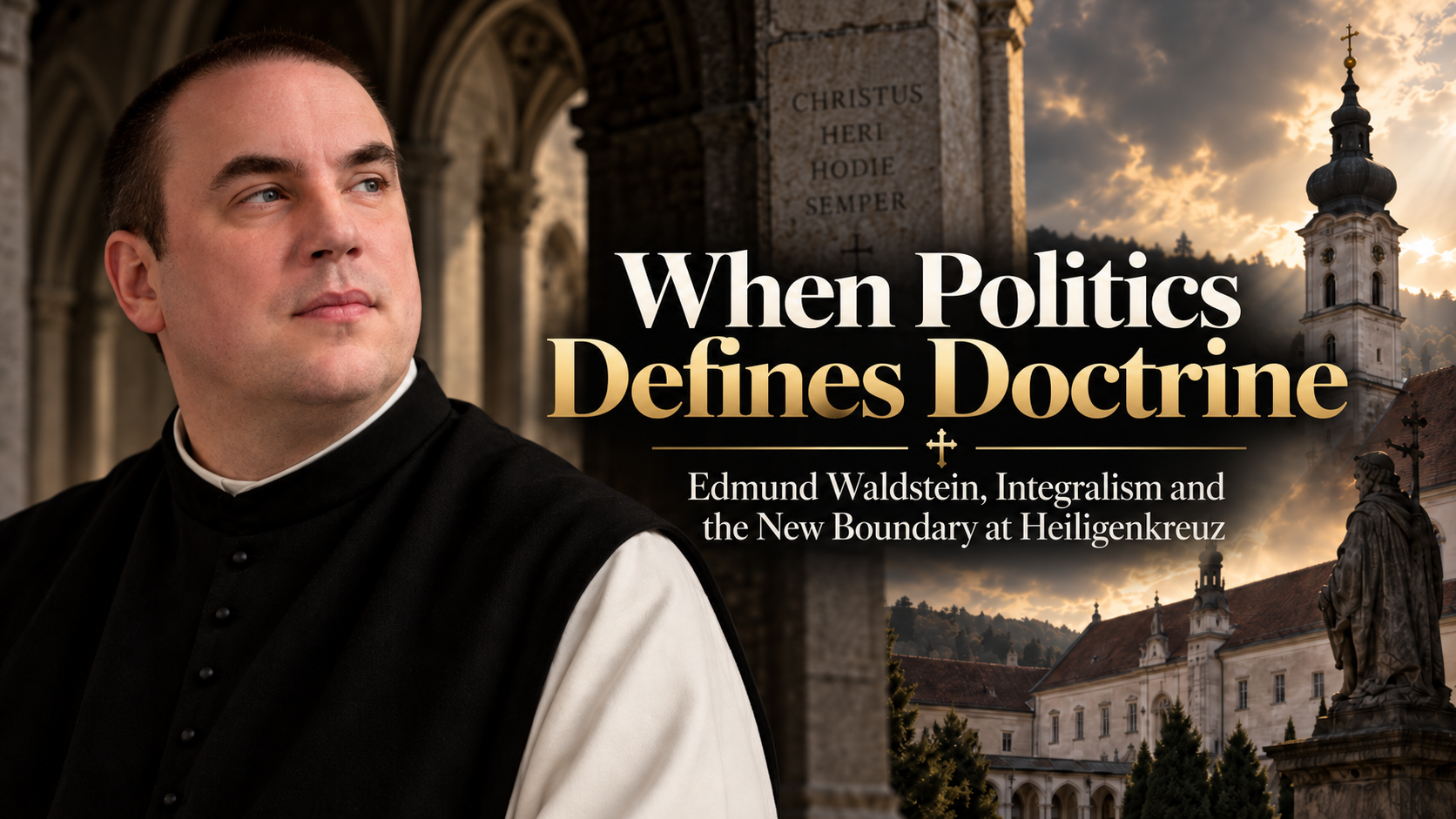
- When Politics Defines Doctrine: Edmund Waldstein, Integralism and the New Boundary at HeiligenkreuzThe ongoing exclusion of Father Edmund Waldstein from teaching at Heiligenkreuz has sparked debate on the limits of acceptable Catholic thought, particularly regarding integralism and its relationship to Church doctrine. Critics argue that Waldstein and similar positions challenge both Catholic teachings and democratic values, raising questions about the intersection of faith and politics.
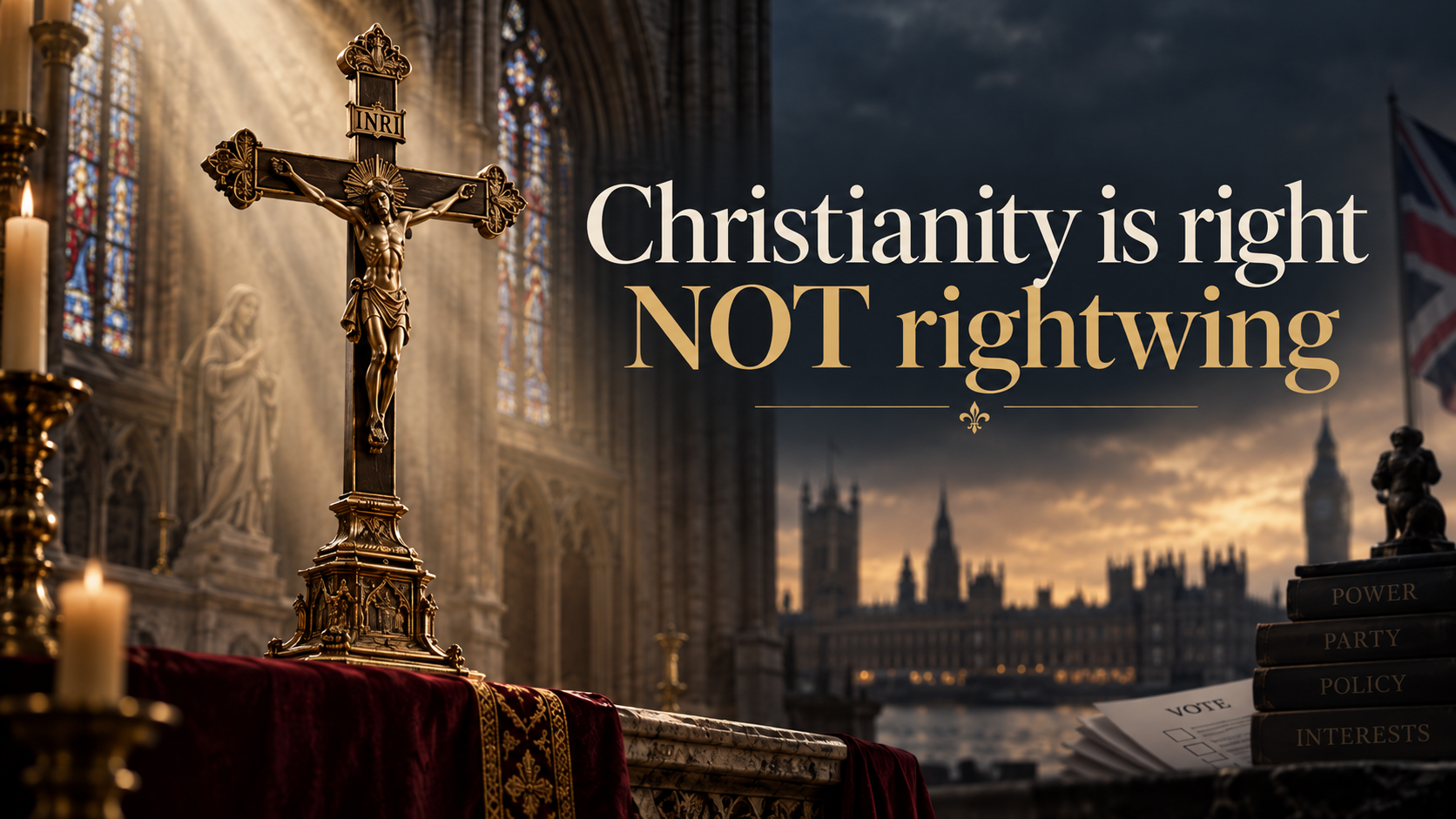
- Christianity Is Right ~ Not Right WingThe article discusses the distinction between Catholic orthodoxy and modern political ideologies, particularly the Right and Christian nationalism. It argues that Catholic beliefs about family, morality, and authority predate contemporary political classifications and should not be conflated with right-wing politics. The ordo amoris framework is presented as a guiding principle for evaluating political alliances while maintaining a focus on the common good and the Social Kingship of Christ.
- Today’s homily: The Nativity of the Blessed Virgin MaryThe Nativity of the Blessed Virgin Mary marks a significant moment in salvation history, representing the dawn of the Incarnation. Mary’s birth, unnoticed by the world, was part of God’s providential plan leading to Christ. This feast invites reflection on humility, obedience, and trust in God’s will, emphasising Mary’s role as the Mother of the Redeemer.
- Today’s Mass: September 08 The Nativity of the Blessed Virgin MaryThe Nativity of the Blessed Virgin Mary celebrates her birth, symbolising a new beginning tied to salvation. Originating in the East, it gained recognition in Rome under Pope Sergius I. Additionally, the feast commemorates Saint Hadrian, a martyr who converted to Christianity, underscoring themes of faith and redemption.



Leave a Reply