

A Quiet Exodus: Why One-Third of New Catholic Priests in Britain Are Former Anglican Clergy
The newly published Convert Clergy in the Catholic Church in Britain report reveals a remarkable truth: since 1992, more than one-third of all Catholic priestly ordinations in Britain have come from former Anglican clergy⁵. In that same period, 491 former Anglican clergy have been ordained as Catholic priests⁴, and nearly 700 Anglican clergy and religious have entered into full communion³. These figures demonstrate a profound ecclesial shift: as doctrinal instability destabilises Anglican identity, many of its most committed ministers seek the sacramental assurance and doctrinal clarity of the Catholic Church.
The Figures Behind the Movement
The statistical evidence is striking:
- 491 former Anglican clergy ordained Catholic priests (1992–2024)⁴
- 29% of diocesan ordinations in England and Wales were former Anglican clergy⁶
- 35% of all ordinations—diocesan and Ordinariate combined—were former Anglican clergy⁵
- In 2015–2024, 9% of diocesan and 19% of combined ordinations came from former Anglican clergy⁷
These are not marginal additions; they represent a significant proportion of the Catholic Church’s new priests across an entire generation.
The Doctrinal Crisis in Anglicanism
The clergy departing Anglicanism describe a common experience: the gradual collapse of doctrinal coherence. Repeated innovations in ministry and moral teaching have created an environment in which clergy who hold to historic Christian doctrine find themselves increasingly isolated. For Anglo-Catholics, the crisis is particularly acute: questions surrounding the validity of orders, the nature of the sacraments, and the Church’s identity have become unavoidable.
This instability disrupts the spiritual lives of the clergy themselves and of those they serve. The result is not merely dissatisfaction; it is a sense of ecclesial homelessness.
Reception: Entering Full Communion
Former Anglican clergy enter the Catholic Church through the Profession of Faith, acknowledging the fullness of Catholic doctrine. Their Anglican orders are not recognised—Apostolicae Curae (1896) declared them “absolutely null and utterly void”¹. Reception thus marks both an act of fidelity to truth and a willingness to begin again.
Formation: Completing What Was Begun
Formation in the Catholic Church ensures clergy receive theological grounding in sacramental theology, ecclesiology, moral theology, and canon law.
The St Barnabas Society, founded in 1896, plays a crucial role in supporting clergy and their families, who often lose income, housing, and pensions when leaving Anglican ministry². Formation aims to complete and deepen their previous training within a coherent sacramental and doctrinal framework.
Ordination: A New Sacramental Reality
Former Anglican clergy are ordained de novo, entering into the sacramental priesthood of the Catholic Church with a renewed sense of vocation. Among these are clergy of diverse Anglican backgrounds—evangelical, liberal, and Anglo-Catholic—and 16 former Anglican bishops⁸.
The Role of Anglicanorum coetibus
Pope Benedict XVI’s Anglicanorum coetibus (2009) provided a permanent structure for groups of Anglicans entering full communion⁹. The Personal Ordinariate of Our Lady of Walsingham allows clergy and laity to retain approved elements of Anglican patrimony while enjoying the full sacramental life of the Catholic Church. This structure has been deeply significant in stabilising communities and supporting clergy in transition.
Experiences Shared by Convert Clergy
The 2025 Benedict XVI Centre report includes extensive qualitative interviews with former Anglican clergy. Many recount years of discernment before reaching the point of conversion. One priest described the process as “a call to fidelity that left no room for delay,” reflecting a common theme of an internal imperative to seek doctrinal stability. Others spoke of the “loneliness” experienced within Anglican structures when defending traditional teaching, especially on sacramental theology and moral doctrine¹⁰.
Several clergy reported that Anglicanism’s increasing doctrinal pluralism made ministry “unpredictable and often conflicted,” leaving them unable to offer consistent catechesis to their congregations. The decision to leave, while costly, was described by many as “a liberation of conscience”¹⁰.
Experiences Shared by Those They Ministered To
The same report included testimonies from the faithful who accompanied clergy into the Catholic Church. Many described the transition as “a step into clarity,” especially regarding the sacraments and moral teaching¹⁰. Some spoke of the difficulty of leaving longstanding Anglican parishes, yet expressed gratitude for the stability and sacramental assurance found in the Catholic Church.
Members of groups entering the Ordinariate reported experiencing “a renewed sense of unity and identity,” particularly when encountering the beauty of Catholic liturgy combined with familiar elements of Anglican spiritual culture. Others highlighted the pastoral care offered by convert clergy as especially meaningful, shaped by their depth of experience and sacrifice.
Individual Examples
Michael Nazir-Ali, former Bishop of Rochester, cited the need for coherent doctrine and moral teaching as central to his conversion. He emphasised the importance of “decisions that bind and endure,” highlighting the Catholic Church’s magisterial stability¹¹.
Richard Pain, former Bishop of Monmouth, described his reception as a “fresh beginning rooted in ancient faith,” expressing gratitude for both what he received as an Anglican and what he discovered in Catholic communion¹².
John Broadhurst, former Bishop of Fulham, spoke publicly of the intense tension within Anglican structures over issues such as women’s ordination, describing a climate he felt was unsustainable for clergy holding to tradition¹³.
David Waller, now bishop-ordinary of the Ordinariate, has described full communion not as a break with his past but as the completion of a spiritual journey, offering continuity of ministry within a stable ecclesial home¹⁴.
What the Movement Signifies
The large number of Anglican clergy entering the Catholic Church reveals two parallel truths. First, the Church of England is losing many of its most experienced and orthodox ministers. Second, the Catholic Church—despite the challenges of the modern era—remains the custodial home of apostolic faith, attracting those who seek sacramental coherence and doctrinal certainty.
These clergy bring with them not only pastoral experience but also a powerful witness to the enduring truth of the Catholic Church. Their presence is a reminder that those who search for fidelity, continuity, and clarity continue to find them within the Catholic tradition.
- Leo XIII, Apostolicae Curae (1896).
- St Barnabas Society, History of the Society (2024), stbarnabassociety.org.uk.
- Crux, “Roughly 1/3 of Catholic clergy ordained in Britain… come from Anglicanism,” 20 November 2025.
- Convert Clergy in the Catholic Church in Britain: The Role of the St Barnabas Society (St Barnabas Society & Benedict XVI Centre, 2025), pp. 4–6.
- Ibid., pp. 7–8.
- Ibid., p. 12.
- The Tablet, “More than one in three Catholic ordinations are former Anglican clergy,” 19 November 2025.
- Benedict XVI Centre, ibid., Appendix B.
- Pope Benedict XVI, Anglicanorum coetibus (2009).
- St Mary’s University, “New research explores experiences of clergy transitioning between Christian denominations in Britain,” 2025.
- EWTN UK, “Former Anglican Bishop Michael Nazir-Ali discusses his decision to convert to Catholicism,” 2021.
- Premier Christian News, “Former Bishop of Monmouth joins the Catholic Church,” 2024.
- Public comments of John Broadhurst reported in primary sources summarised at en.wikipedia.org/wiki/John_Broadhurst.
- Catholic News Agency, “Former Anglican priest ordained a Catholic bishop,” 2024.


LAtest
- TRADITION BEHIND THE FENCEThe Vatican’s prohibition of the traditional Ad Petri Sedem pilgrimage to St Peter’s Basilica has sparked controversy, especially among traditional Catholics. While some cite scheduling conflicts, the broader issue lies in the restrictive policies of Traditionis custodes, which may confine traditional liturgical practices to specific enclaves, risking the transmission and recognition of Catholic Tradition within the wider Church.
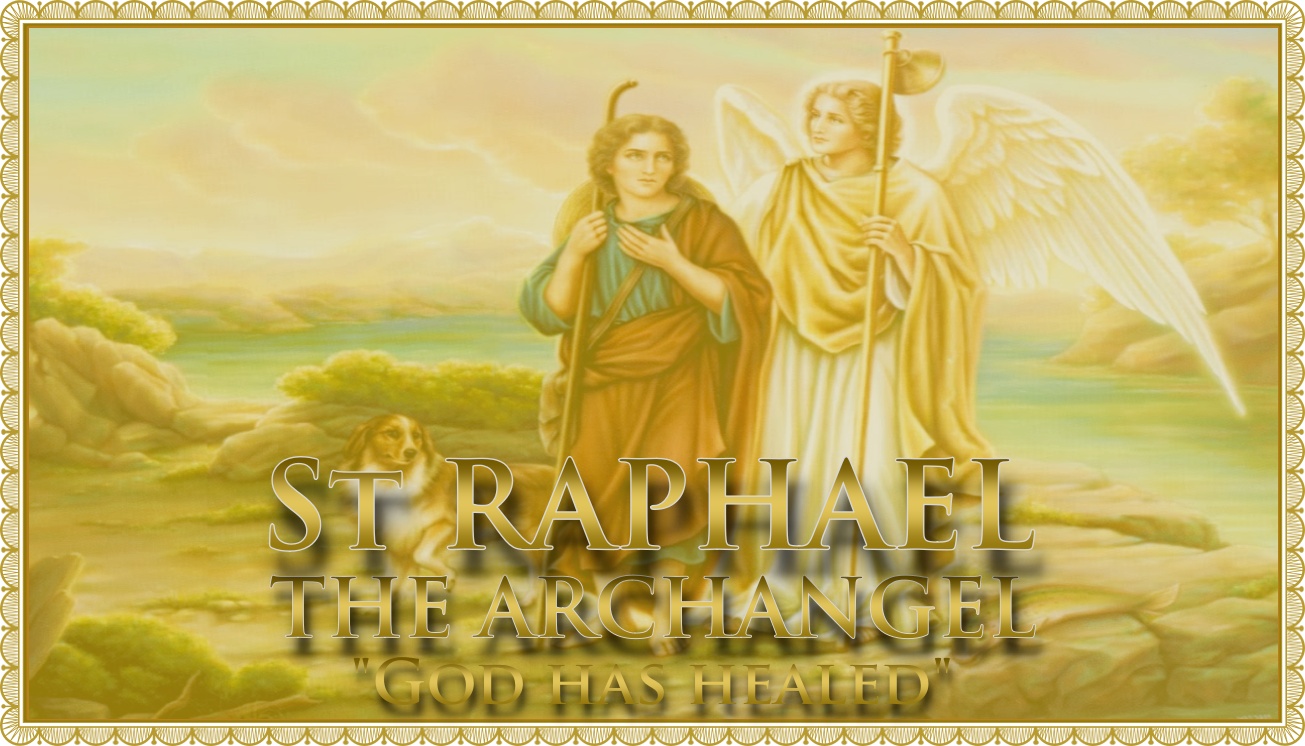
- Today’s Mass: October 24 St Raphael the ArchangelThe Feast of Saint Raphael the Archangel highlights his healing powers as depicted in the Book of Tobit, where he aids Tobit and his son, Tobiah. Venerated as a protector of travellers and the blind, Raphael is celebrated for his miraculous interventions. His legacy includes support for nurses, matchmakers, and Catholic studies.
- 25.10.26 Nuntiatoria CXXIX: CHRISTUS REXThe text discusses the relationship between Christ’s kingship and authority within the Church amidst contemporary challenges. It contrasts ecclesiastical power with genuine faith, emphasising that authority must protect divine truth rather than alter it. The witness of imprisoned priests illustrates the enduring significance of fidelity to Christ over institutional conformity.
- THE DOMESTIC CHURCH: 25 October – 2 November 2026 A Home with Room for Heaven: Preparing for All Saints and All SoulsThe content outlines a week’s plan for traditional Catholic families to prepare for the feasts of All Saints and All Souls. Emphasising daily prayers, remembrance of the deceased, and engagement with children’s activities, it aims to integrate Catholic customs into family life, enriching spiritual practices and fostering a shared faith experience.
- ORDO w/c 25.10.26The text outlines the liturgical calendar for the last week of October and the beginning of November, highlighting key celebrations. Notable events include the Feast of Christ the King, St Evaristus, the Vigil of Saints Simon and Jude, and the Feast of All Saints, emphasising themes of holiness, unity in faith, and the Church’s teachings.



Leave a Reply