
The criminalisation of compassion: silent prayer, free speech, and the new UK abortion buffer zones
Introduction: When conscience becomes contraband
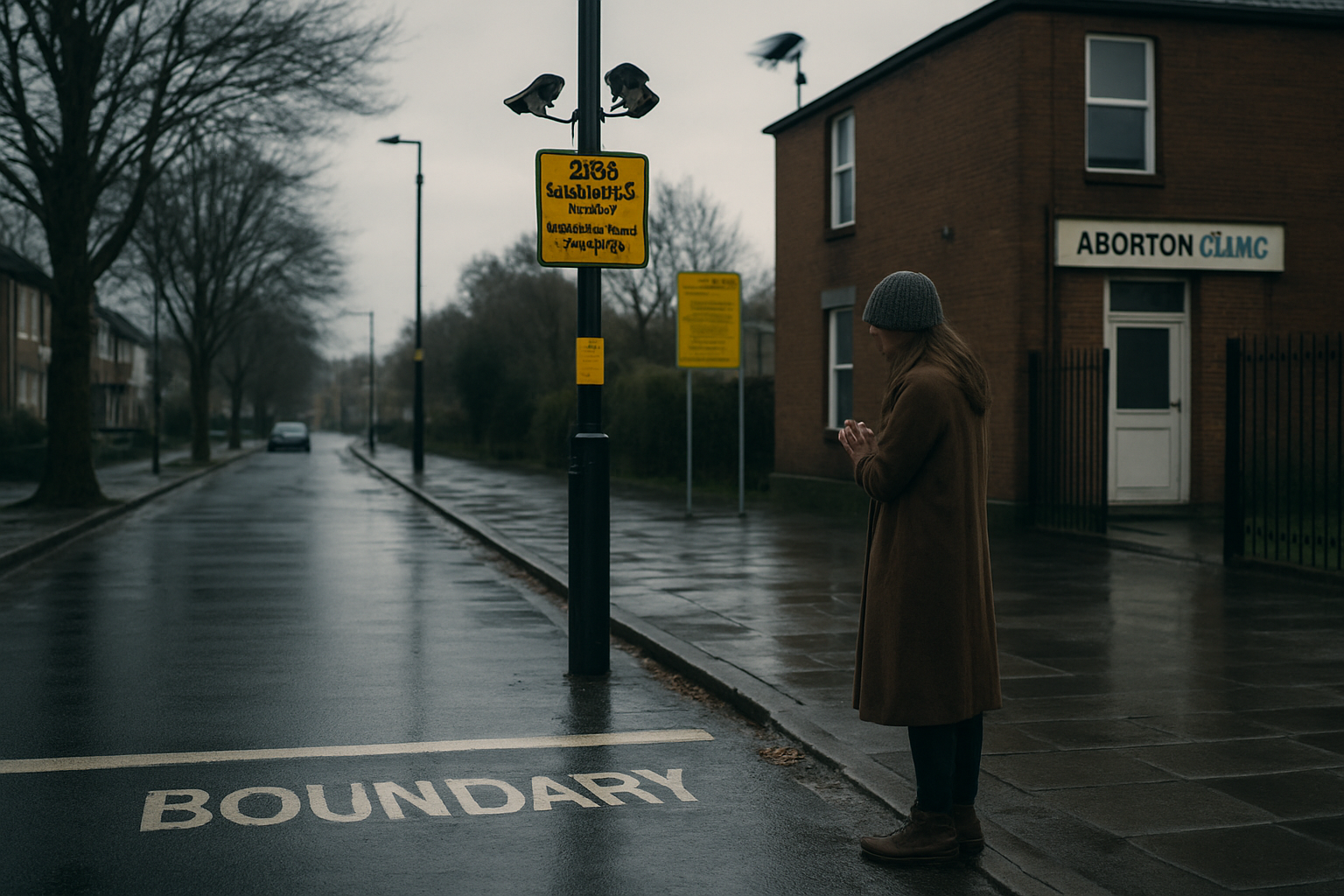
In December 2025, The Telegraph reported that Isabel Vaughan-Spruce—a Christian woman who has prayed silently outside abortion clinics for more than twenty years—now faces renewed criminal investigation for doing so within a statutory “safe access zone.”¹ Her alleged offence is not harassment, obstruction, intimidation, or speech. It is silent prayer.
She did not approach anyone. She did not speak to anyone. She held no sign and offered no words. Her conduct consisted of standing quietly in a public place, hands folded, lips closed, eyes lowered. Yet this was deemed sufficient to justify police intervention and the prospect of criminal charges.
This is not a marginal dispute about abortion policy. It is a test case for the moral and constitutional direction of the British state. When law reaches beyond conduct and expression and begins to scrutinise intention, belief, and conscience itself, a civilisational boundary has been crossed.
The slow remaking of public space
For most of its history, British law treated public space as presumptively open. Restrictions existed to prevent violence, obstruction, or disorder, but moral disagreement—even sharp disagreement—was not itself grounds for exclusion.
That settlement has been steadily dismantled. Local Public Spaces Protection Orders (PSPOs), introduced under the Anti-social Behaviour, Crime and Policing Act 2014, allowed councils to restrict conduct deemed harmful to “quality of life.”² Around abortion clinics, PSPOs were increasingly used to exclude pro-life presence. Even so, they remained local, time-limited, and at least formally tied to evidence of disturbance.
The Public Order Act 2023 marked a decisive escalation. Parliament imposed a uniform national rule: a 150-metre exclusion zone around every abortion clinic in England and Wales, irrespective of history or context.³ Within these zones, it became a criminal offence to do anything that intentionally or recklessly “influences” a person’s decision to access, provide, or facilitate abortion services, or that causes “harassment, alarm or distress” in connection with such services.⁴
Notably, the law requires no obstruction, no intimidation, no communication, and no complaint. What matters is not effect, but inferred intention.
From conduct to conscience
The Vaughan-Spruce case exposes the internal logic of this framework. Silent prayer cannot be heard, read, or objectively verified. It cannot, in any ordinary sense, influence another person’s decision. Its only direct effect is interior—to the person praying.
Yet enforcement practice has treated visible prayerful presence as capable of constituting influence.⁵ The implication is unmistakable: belief, when embodied, is itself actionable.
This represents a profound departure from the moral assumptions that once undergirded British law. Traditionally, the law punished acts, not thoughts; deeds, not conscience. Even offensive opinions enjoyed protection so long as they were not coercive. Once silent prayer is deemed criminally relevant, that distinction collapses. The state is no longer regulating public order; it is interrogating moral allegiance.
Natural law, moral realism, and the limits of law
Christian moral theology clarifies what is at stake here. In the classical natural-law tradition articulated by St Thomas Aquinas, moral truth is not created by legislation. It is rooted in the order of reality itself. Human law (lex humana) derives its legitimacy from its conformity to that prior moral order (lex naturalis), and its authority extends only to outward acts necessary for the common good.
Conscience, within this framework, is not subjective preference or emotional intuition. It is the act of practical reason by which a person recognises moral truth and binds himself to act accordingly. To compel action against a well-formed conscience is not merely to inconvenience a citizen, but to injure the very faculty by which moral responsibility is exercised.
Silent prayer outside an abortion clinic is intelligible within this tradition as a restrained moral act: non-coercive, non-verbal, ordered toward the good, and undertaken precisely because conscience demands witness without compulsion. It expresses a form of moral realism—the conviction that human life and moral responsibility exist independently of legal recognition.
The buffer-zone regime implicitly rejects this realism. It treats moral truth as reducible to emotional experience and legal consensus, and dissent as a species of harm. In doing so, it substitutes a therapeutic conception of public order for a moral one.
A familiar pattern: patristic memory and public conformity
The early Christian tradition encountered a strikingly similar logic under Roman rule. Christians were not initially persecuted for private belief, but for public non-conformity. What drew suspicion was not violence, but refusal to participate in acts deemed symbolically necessary for social cohesion.
Their quiet refusal—non-violent, often silent—was perceived as destabilising precisely because it testified to a higher moral allegiance. Silence itself became suspect. Presence became provocation.
The parallel is not exact, but it is instructive. Once again, authority claims to act in the name of social harmony and protection. Once again, the problem is not disorder, but the visibility of an alternative moral vision. Once again, law seeks not merely outward compliance, but inward alignment.
The Christian response, then as now, was not rebellion but witness: obedience where possible, resistance where conscience forbade compliance, and acceptance of marginalisation rather than interior surrender.
The paradox of protection
Supporters of buffer zones argue that such laws are necessary to protect women from distress. Yet the legislation requires no evidence of vulnerability or impact in individual cases. It does not distinguish between aggressive protest and passive presence. Protection is assumed; liberty is conditional.
This produces a profound paradox. Autonomy is defended by eliminating alternative moral visions from public sight. Freedom of choice is preserved by criminalising those who quietly dissent. Articles 9 and 10 of the European Convention on Human Rights exist precisely because such freedoms are most endangered when beliefs are unpopular.⁸ The buffer-zone regime reverses that logic.
International observers have noted this inversion. The United States Department of State has expressed concern about the compatibility of UK buffer-zone enforcement with established norms of religious liberty and free expression.⁹
From neutrality to moral enforcement
The deeper issue is not abortion alone. It is the transformation of the state from neutral arbiter into moral enforcer. Belief is not outlawed, but it is rendered invisible. Public space is purified of dissent not through persuasion, but through exclusion. Presence becomes pressure. Conviction becomes coercion. Silence becomes suspicion.
Once this logic is accepted, it admits no principled limit.
Conclusion: the threshold of conscience
Isabel Vaughan-Spruce stands accused not of violence, harassment, or obstruction, but of praying quietly in a public place. That fact alone should give pause.
The criminalisation of compassion does not arrive with spectacle. It advances incrementally, under the language of safety and protection, until conscience itself becomes a matter of state concern. When prayer is treated as evidence and silence as provocation, the question is no longer about buffer zones.
It is whether the modern state still recognises any moral authority beyond itself.
¹ The Telegraph, “I’ve silently prayed outside abortion clinics for 20 years. Now, I face criminal charges,” 12 December 2025.
² Anti-social Behaviour, Crime and Policing Act 2014, Part 4.
³ Public Order Act 2023, s.9.
⁴ Public Order Act 2023, s.9.
⁵ Home Office, Non-statutory guidance on abortion clinic safe access zones (England and Wales), 2024.
⁶ Abortion Services (Safe Access Zones) (Scotland) Act 2024.
⁷ Abortion Services (Safe Access Zones) Act (Northern Ireland) 2022.
⁸ European Convention on Human Rights, Articles 9 and 10.
⁹ U.S. Department of State, International Religious Freedom Report: United Kingdom, 2023.


latest
- Today’s Mass: September 19 St. Januarius, Bishop and Companion MartyrsSt. Januarius and companion martyrs were martyred during the persecution under Diocletian. St. Januarius, patron of the city of Naples and bishop of Beneventum, was beheaded with his deacons and some others.
- Sermon for St. Januarius and his CompanionsToday we celebrate the feast of St. Januarius and his companions. About St. Januarius little is known except that he was among the many martyrs during the great persecution under the Emperor Diocletian.
- 20.09.26 Nuntiatoria CXXIV: QUOD ACCEPIMUS, CUSTODIMUS ET TRADIMUSThe editorial emphasises the importance of understanding our inheritance as custodians rather than owners. It highlights the obligation to preserve and transmit the Christian Faith, sacraments, and traditions to future generations. Through gratitude and fidelity, those who receive must ensure that what has been entrusted does not end with them.
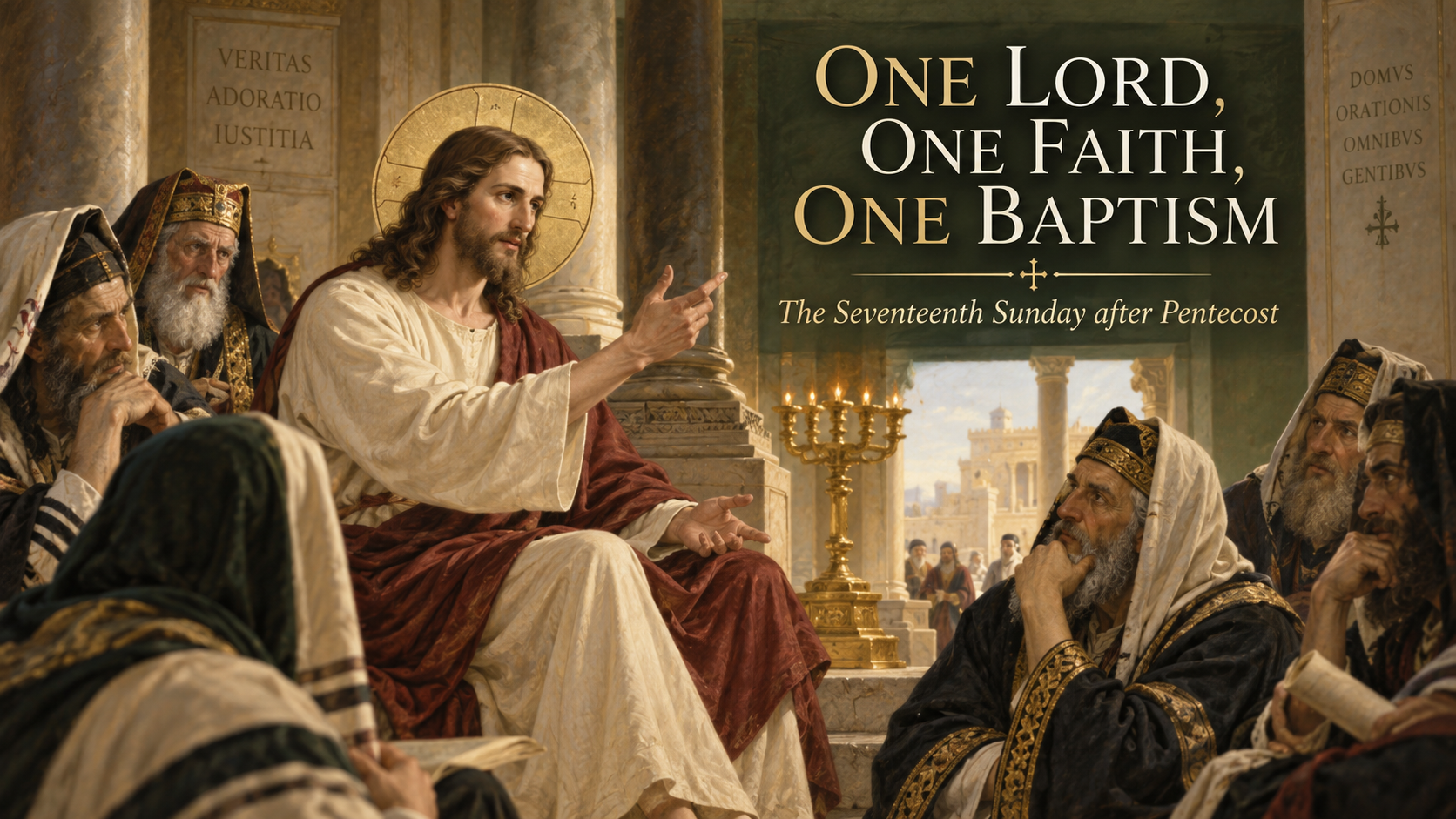
- ONE LORD, ONE FAITH, ONE BAPTISM: The Seventeenth Sunday after PentecostThe Seventeenth Sunday after Pentecost emphasises the love of God and neighbour, rooted in divine justice. The Mass articulates the necessity of one faith and baptism, ensuring charity is not sentimental but deeply theological. The Gospel challenges believers to recognise Christ’s dual nature as both David’s son and Lord, reinforcing true Christian charity.
- AN AWARD IS NOT A MEETINGLambeth Palace has withdrawn the Hubert Walter Award given to Hafiz Tahir Ashrafi for reconciliation, citing previously unknown controversial comments. This raised questions about the vetting process prior to the award. While Ashrafi has defended his record of protecting minority rights, the Palace must clarify why such issues were overlooked initially.



Leave a Reply