
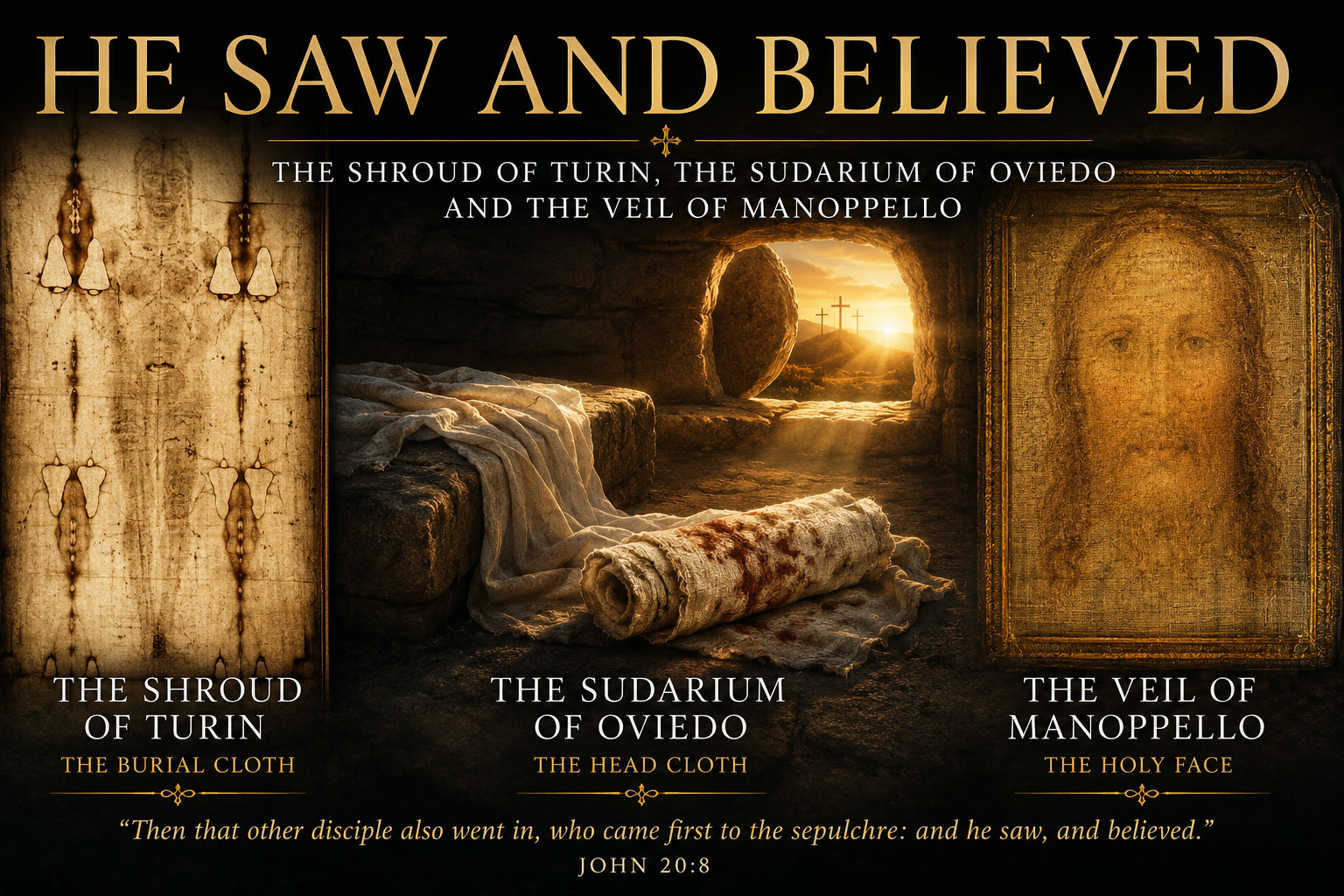
HE SAW AND BELIEVED: The Shroud of Turin, the Sudarium of Oviedo and the Veil of Manoppello
The latest scientific investigation of the Turin Shroud has not solved its mystery. It has instead made one fact increasingly difficult to ignore: this cloth continues to resist both easy authentication and easy dismissal. Yet perhaps the most illuminating way to consider the Shroud is not by itself. Beside it stand the bloodstained Sudarium of Oviedo and the mysterious Holy Face of Manoppello. Their reported correspondences lead us back to an often-overlooked detail of the Resurrection narrative: St John did not merely discover that the tomb was empty. He examined what had been left behind — and “he saw, and believed.”

The most recent major scientific analysis of the Turin Shroud was published in July 2026 in Scientific Reports. Researchers applying modern DNA and metagenomic techniques to official samples collected during the 1978 investigation found an extraordinarily complex biological archive: human mitochondrial DNA, microorganisms, plant material and animal traces accumulated through centuries of exposure, handling and veneration. The authors were commendably restrained. Such material, they concluded, cannot establish whether the Shroud is medieval or two thousand years old.¹
That caution matters. Serious consideration of the Shroud should never depend upon exaggerating evidence favourable to authenticity or concealing evidence which appears inconvenient. Indeed, another significant study published in April 2026 examined surviving fragments from the University of Arizona sample used in the famous 1988 radiocarbon tests. Rachel Freer-Waters and A. J. Timothy Jull found those fragments textilely consistent with the main Shroud and detected no evidence supporting the frequently proposed theory that the radiocarbon sample came from an invisible medieval repair.² That finding strengthens the case for taking the 1988 dating seriously.
It does not, however, settle every scientific question surrounding the relic. When the raw radiocarbon data were eventually released and statistically reassessed, researchers reported significant heterogeneity among the measurements and argued that the procedure merited reconsideration.³ Separately, Wide-Angle X-ray Scattering analysis of cellulose degradation produced a result compatible — under assumptions concerning the linen’s environmental history — with a much older textile.⁴ Neither approach simply cancels the other. The responsible conclusion is therefore more modest: the dating question remains contested, while the mechanism responsible for the image remains unresolved.
And that second question is crucial. Whatever date one assigns to the linen, the Turin Shroud bears the front and back representation of a man who appears to have suffered injuries consistent with scourging and crucifixion. The image is exceptionally superficial, physically unlike an ordinary painting, and has generated competing chemical, artistic and physical hypotheses for decades. No explanation has secured universal acceptance.
But perhaps modern investigation has made a deeper methodological mistake: it has treated the Shroud too often as though it stood alone. The Gospel according to St John does not describe a solitary cloth in the empty tomb. It describes linen cloths, and then it deliberately identifies another cloth associated specifically with the head. That becomes significant when the Shroud is considered beside two other relics traditionally associated with the Passion: the Sudarium of Oviedo and the Holy Face of Manoppello.
The three are not evidentially equal. They do not possess equally secure histories. They do not exhibit the same physical phenomena. That distinction must be maintained. Yet it is precisely because they are so different that their reported correspondences deserve attention. The Turin Shroud is the central object. It presents the image and wounds of the whole body. The Sudarium of Oviedo is different. It carries no comparable body image. It is a smaller bloodstained linen associated particularly with the head of a dead man. Researchers comparing it with Turin have reported correspondences in the position of stains, anatomical relationships and wounds.
A medico-legal comparison published in February 2026 in Pensamiento assembled those similarities and concluded that the evidence examined was compatible with the proposition that the two cloths had been in contact with the same corpse.⁵ This is the conclusion of that study, not an established scientific consensus, and should be stated as such. Yet it remains a remarkable claim precisely because the two relics are physically different objects with separate histories.
Popular accounts often add that both cloths have been identified as bearing blood group AB. That assertion should not carry the principal argument. Ancient blood typing is vulnerable to degradation, contamination and microbial interference. The more persuasive question concerns where the stains occur, how the anatomical relationships compare and whether the wounds recorded upon one cloth correspond significantly with those upon the other. The proposition is therefore not merely that two ancient textiles bear blood. It is that two different cloths, performing two different apparent functions, preserve physical information which investigators have argued is compatible with contact with the same crucified man.
That already makes Oviedo important. But St John makes it more important still. Mary Magdalene reaches the sepulchre first. She sees that the stone has been removed. Her immediate explanation is perfectly natural: “They have taken away the Lord out of the sepulchre, and we know not where they have laid him.” That is the first hypothesis of Easter morning. Not Resurrection, but removal. Someone has taken the body.
Peter and John therefore run to the tomb with an ordinary explanation already available to them. John arrives first. He stoops down and looks inside. Peter enters. And at this point the Evangelist suddenly becomes extraordinarily precise about the cloths. John 20:5 describes τὰ ὀθόνια — ta othonia, the linen cloths. The verb repeatedly used is a form of κεῖμαι — keimai: to lie, to be situated, to be placed, to remain in a position. Peter then observes another object. John calls it τὸ σουδάριον — to soudarion. He expressly tells us that it had been associated with Christ’s head, and he carefully distinguishes it from the other linens. It was not with them but separately ἐντετυλιγμένον — entetyligmenon, wrapped or rolled, “in one place”.
Only after giving these details does John write: “Then that other disciple also went in, who came first to the sepulchre: and he saw, and believed.” That sequence is everything. The empty tomb alone cannot explain John’s belief. Mary had already seen the empty tomb, and her conclusion was: “They have taken away the Lord.” Something about what John saw inside altered the meaning of the emptiness.
St John Chrysostom understood the passage precisely this way. The linen cloths themselves, he argued, were evidence that the body had not simply been stolen. Thieves removing a corpse would hardly stop first to strip away the burial linens, particularly given the spices used in the burial, nor would they have reason to deal separately with the cloth which had been about the head. Chrysostom therefore treats the disposition of the cloths as a sign of the Resurrection.⁶ St Thomas Aquinas preserves the same interpretation in his commentary on St John.
There is an ancient alternative. St Augustine interpreted “he saw, and believed” as meaning that John initially believed Mary’s report that the body had been removed. That reading deserves acknowledgement. Yet the Chrysostomic interpretation possesses considerable narrative force because John does not merely tell us that the tomb was empty. He records what remained, and he records its arrangement. The Catechism of the Catholic Church follows substantially the same line. It observes that the empty tomb in itself was not direct proof of the Resurrection, since the absence of the body might have been explained in another way. Yet it adds that the condition of the tomb and the linen cloths suggested to John that Christ’s absence **“could not have been of human doing.”**⁷
That is the decisive point. John does not present the first material evidence of Easter as simply nothing. He presents something left behind: the linen cloths, and separately, the soudarion which had been about the head. This is why the Sudarium of Oviedo occupies a unique place in the modern comparison. Of the three relics under consideration, Oviedo corresponds most directly to an object explicitly named in the Gospel narrative. The Greek soudarion is not a modern apologetic invention. John remembers the head-cloth. He remembers that it was distinct from the other burial linens. He remembers where it was. And he regarded that detail as important enough to record.
This does not prove that the cloth preserved in Oviedo is the soudarion of John 20. But neither should the convergence be dismissed. The Gospel describes burial linens and a separate head-cloth. Christian tradition preserves a large burial cloth and a separate bloodstained head-cloth. Modern investigators report significant forensic correspondences between them. That is not proof, but it is evidence, and it deserves to be treated as such.
The Holy Face of Manoppello contributes a third, but more tentative, line of enquiry. Unlike Oviedo, its relationship to John 20 is indirect. Its advocates identify it instead with the historic tradition of Veronica’s Veil, associated with Christ before the Crucifixion. That historical identification remains disputed and should not be placed on the same evidential footing as the comparison between Turin and Oviedo. Yet the object itself remains intriguing. Manoppello bears a visible image upon an extremely thin and translucent fabric. Researchers digitally correcting distortions in the cloth and comparing the resulting image with the Turin Shroud have reported substantial correspondence in relative anatomical proportions and positions. A 2019 study concluded that the degree of superimposability was sufficient to raise seriously the possibility of a relationship between the two images.⁸
Again, this proves neither that Manoppello is Veronica’s original veil nor that Turin is Christ’s burial cloth. It establishes something more limited: another historically venerated cloth presents an image which researchers have found anatomically compatible in significant respects with the image upon the Shroud.
The evidential hierarchy therefore matters. Turin is the principal object: the large burial linen bearing the image and wounds of a crucified man. Oviedo is the strongest corroborative relic: a separate bloodstained head-cloth whose forensic patterns have been reported as compatible with those upon the Shroud and whose apparent function corresponds directly with an object named in John 20. Manoppello is the more tentative witness: another mysterious image displaying reported anatomical correspondence with Turin, but whose identification with Veronica remains historically less secure.
This hierarchy does not weaken the argument. It strengthens it. Apologetics becomes fragile when every suggestive relic is declared authentic before the evidence warrants such certainty. Catholicism has no need of that insecurity. Truth does not require assistance from exaggeration.
The same discipline must govern discussion of the Shroud itself. The April 2026 textile study makes the invisible-repair explanation of the Arizona radiocarbon sample considerably harder to sustain, and that must be admitted. The July 2026 DNA investigation cannot date the Shroud or identify the man whose image it bears, and that must be admitted too. The WAXS dating depends upon assumptions regarding environmental history, and that likewise must be admitted. But intellectual honesty works both ways. The radiocarbon date does not explain the image. The statistical re-examination of the original data raises legitimate questions about sample homogeneity. The Shroud records a remarkably detailed pattern of injuries appropriate to crucifixion. The Sudarium preserves an independently transmitted pattern of stains which investigators have argued corresponds with those injuries. Manoppello presents another image displaying reported anatomical correspondences. And the Gospel itself preserves the apparently unnecessary detail that linen cloths and a separate head-cloth were precisely what confronted Peter and John when they entered the tomb.
That cumulative convergence is the real question. Not whether any single experiment “proves” the Resurrection. It cannot. The Resurrection is not a chemical reaction awaiting identification by spectroscopy. It is a supernatural event in history: the crucified Christ raised bodily into glorified life. No microscope can detect “Resurrection”. But Christianity is also uncompromisingly incarnational. The Word was made flesh. Christ was scourged in a real body. Real thorns wounded His head. Real nails penetrated His hands and feet. Real blood was shed. His side was opened. His corpse was taken down from the Cross. A cloth was placed about His head. His body was wrapped in linen. He was laid in a tomb. Christianity therefore has no reason to fear physical evidence. Matter matters because God entered matter.
And it is precisely physical evidence that St John places before us. Mary sees an empty tomb and concludes: “They have taken away the Lord.” John arrives with that explanation already in his mind. He enters. He sees the linen cloths. He sees separately the soudarion which had been about the head. And then: “He saw, and believed.”
John did not believe merely because Jesus was gone. He believed because of the manner in which Jesus was gone. That is the heart of the passage. An empty tomb could mean theft. The evidence remaining inside it meant something else.
Two thousand years later, the Shroud of Turin, the Sudarium of Oviedo and the Holy Face of Manoppello cannot make John’s act of faith for us. Nor should anyone attempt to make them do so. But neither should they be dismissed simply because the implications are uncomfortable. The Shroud remains an extraordinary textile whose image has resisted a universally accepted explanation. The Sudarium presents a distinct bloodstained cloth whose forensic characteristics have been reported as compatible with the same injured man. Manoppello offers a third, more tentative, anatomical correspondence. And before any of them became subjects of laboratories, microscopes or digital overlays, St John left us an eyewitness account in which the condition of the burial cloths was precisely what transformed an empty tomb from evidence of removal into evidence of Resurrection.
The modern investigations therefore bring us back, not ultimately to the laboratory, but to the threshold of the sepulchre. Mary’s hypothesis stands before us: “They have taken away the Lord.” John looks inside. The body is gone, but the cloths remain. The separate head-cloth remains. Something about what he sees excludes the ordinary explanation. And the Evangelist records the moment with almost brutal simplicity: “He saw, and believed.”
Perhaps that is still the proper approach to these relics: not credulity, not scepticism masquerading as sophistication, and not a demand that science manufacture faith, but simply a willingness to look at the evidence. For John did not believe because there was nothing to see. He believed because there was. And if even two of these ancient cloths once touched the same crucified body, then the material evidence which arrested the Apostle’s attention on Easter morning may not belong only to the written memory of the Church. It may still be among us.
¹ Gianni Barcaccia et al., “DNA signatures preserved in the official 1978 sample collection of the Shroud of Turin,” Scientific Reports 16 (9 July 2026), article 21206.
² Rachel Freer-Waters and A. J. Timothy Jull, “Analysis of textile fragments from the 1988 radiocarbon samples of the Turin Shroud,” npj Heritage Science 14 (18 April 2026), article 263.
³ Tristan Casabianca, Emanuela Marinelli, Giuseppe Pernagallo and Benedetto Torrisi, “Radiocarbon Dating of the Turin Shroud: New Evidence from Raw Data,” Archaeometry 61 (2019), 1223–1231.
⁴ Liberato De Caro, Teresa Sibillano, Rocco Lassandro, Cinzia Giannini and Giulio Fanti, “X-ray Dating of a Turin Shroud’s Linen Sample,” Heritage 5 (2022), 860–870.
⁵ Jesús Díaz-Ropero López, “Comparison between the Sudarion of Oviedo and the Shroud of Turin,” Pensamiento 81, no. 317 (2026), 1223–1240.
⁶ St John Chrysostom, Homily 85 on the Gospel according to St John, on John 20:1–10; cf. St Thomas Aquinas, Commentary on the Gospel of John, chapter 20, lecture 1.
⁷ Catechism of the Catholic Church, §640; cf. §657.
⁸ Liberato De Caro, Emilio Matricciani and Giulio Fanti, “A Comparison between the Face of the Veil of Manoppello and the Face of the Shroud of Turin,” Heritage 2 (2019), 339–355.
RELATED ARTiCLES


LATEST ARTICLES
- Today’s Mass: October 16 St Hedwig of SilesiaHedwig of Silesia, a member of the Bavarian comital House of Andechs, was Duchess of Silesia from 1201 and of Greater Poland from 1231 as well as High Duchess consort of Poland from 1232 until 1238. She was canonized by the Catholic Church in 1267 by Pope Clement IV.
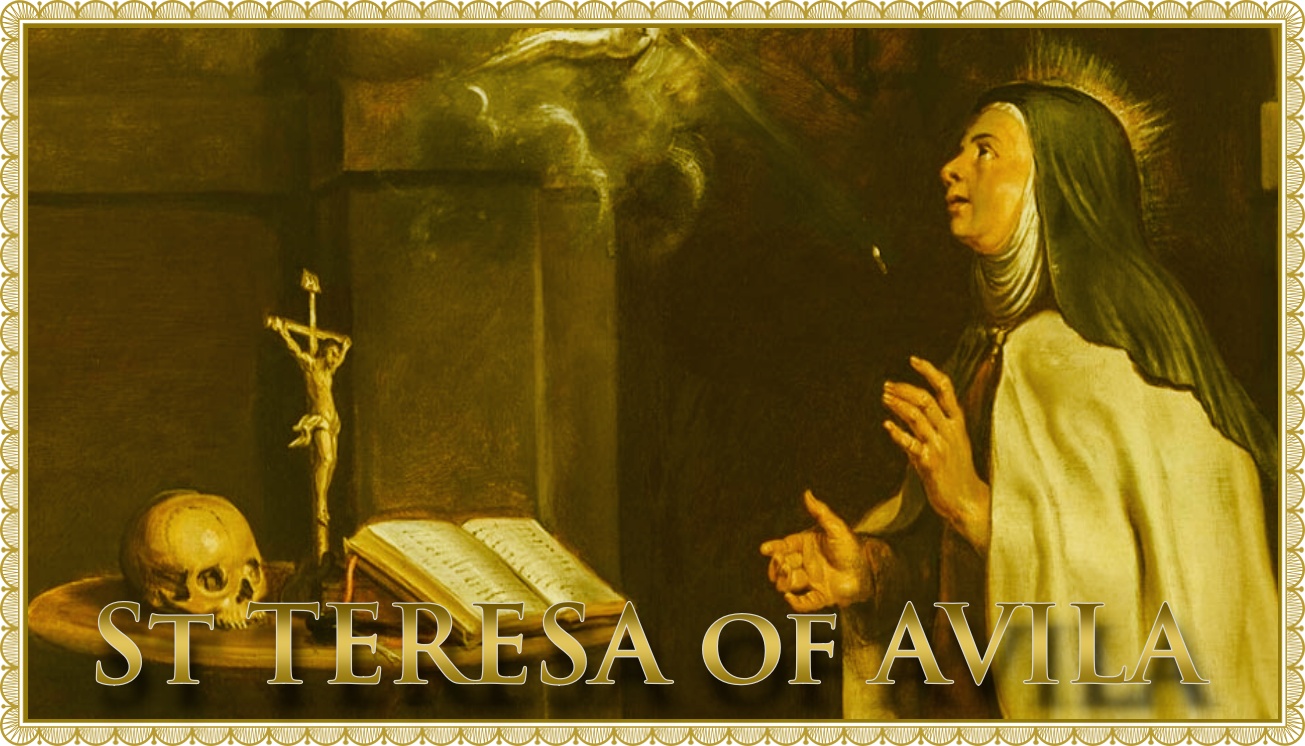
- Today’s Mass: October 15 St Teresa of AvilaSaint Teresa of Avila, born in 1515, was the reformer of the Carmelite Order and founded the Discalced Carmelites. Renowned for her mystical writings, she faced opposition while establishing numerous convents. Teresa’s deep spiritual insights and experiences led to her canonisation in 1622, and her feast is celebrated on 15 October.
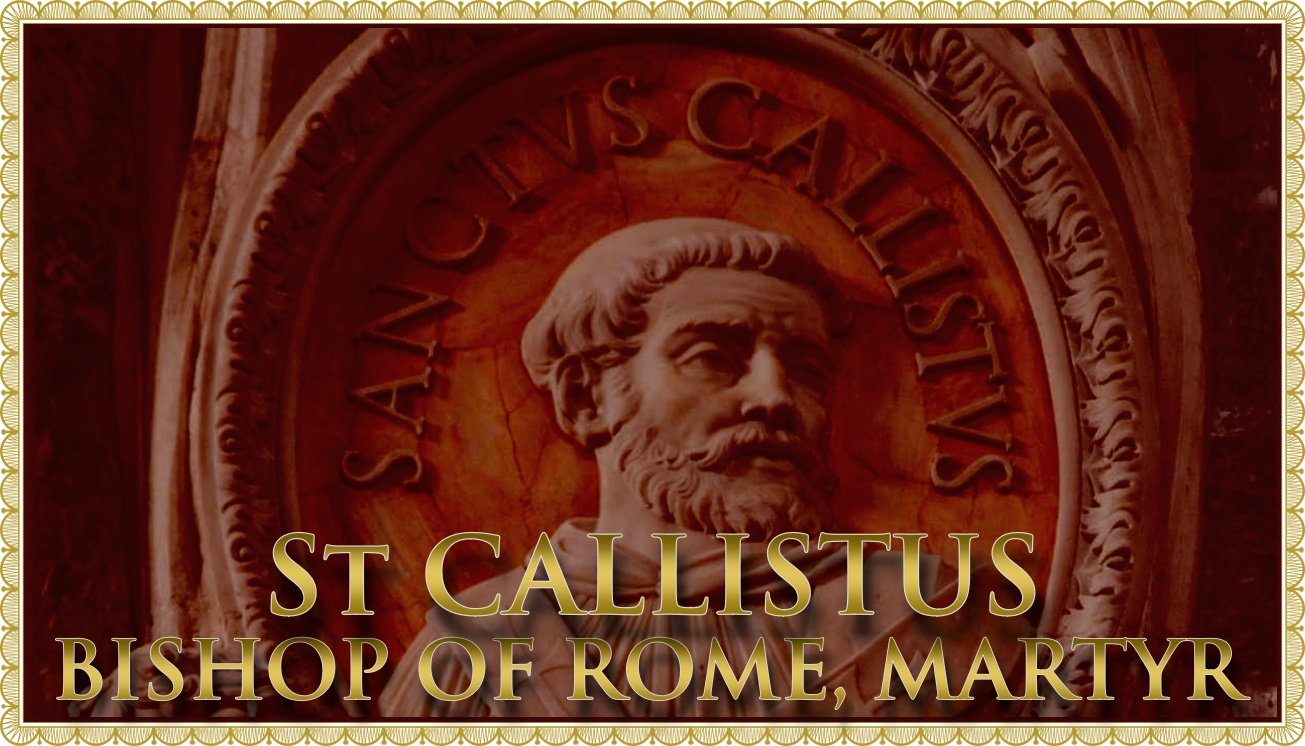
- Today’s Mass: October 14 St Callistus, Bishop of Rome & MartyrCallistus was born to a Christian slave who had a Christian master in second-century Rome. He was placed in charge of a Christian bank which went broke. He fled the city, but was caught and sentenced to the treadmill, then later to the tin mines. He was later ransomed and returned to Rome…
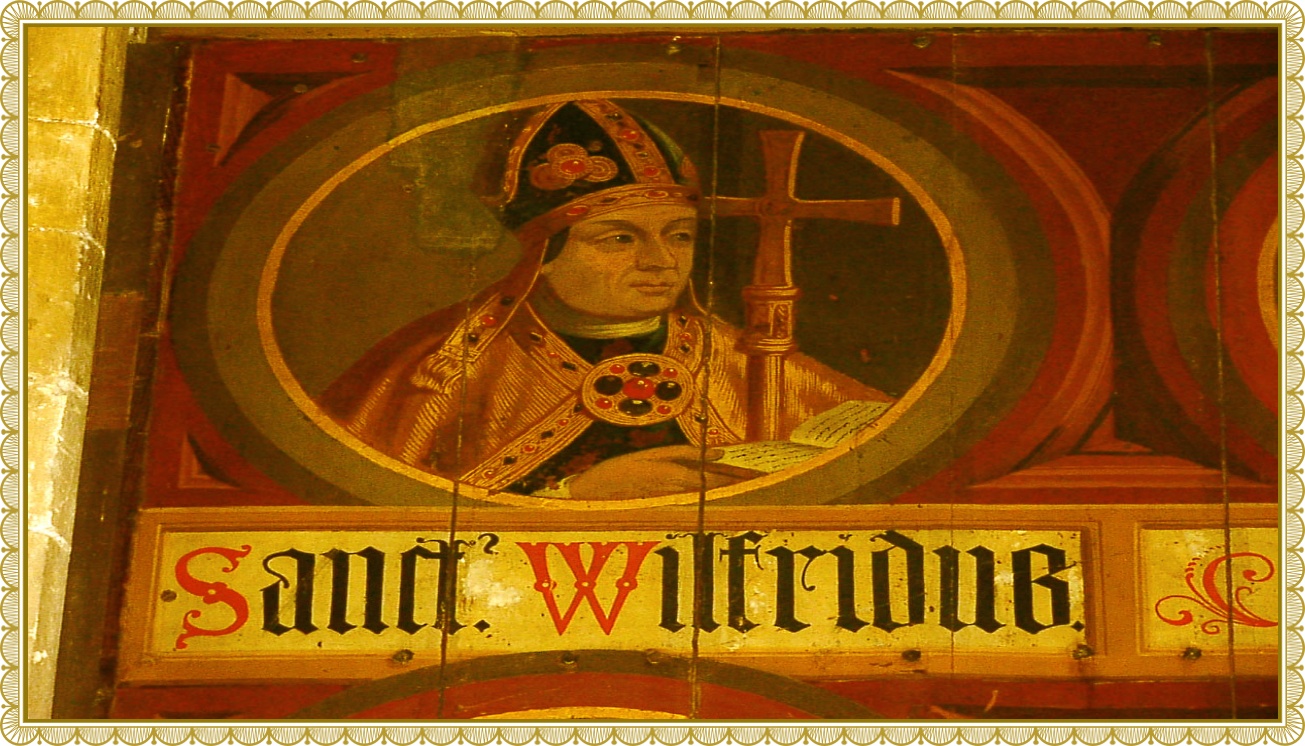
- Sermon for St. WilfridToday marks the feast of St. Wilfrid, who was pivotal in establishing the Roman Christian tradition in England over the Irish. Born in 634 in Northumbria, he travelled to France and Italy, eventually becoming bishop of York. Despite conflicts with kings and church leaders, he successfully evangelised Sussex and laid foundations for future missions, showcasing both determination and a contentious spirit. St. Wilfrid passed away in 709, leaving a complex legacy of leadership and zeal for evangelism.
- THE GENERATION THAT WAS TOLD TO MOVE ON Is Rediscovering What the Church Left BehindArchbishop Salvatore Cordileone’s interview highlights the challenge of reconciling Catholic Tradition with contemporary practices, warning that restrictions like Traditionis custodes may deepen existing divisions. He notes younger Catholics are rediscovering traditional worship, which contrasts with the Church’s modern adjustments and emphasizes the need for reflective continuity in liturgical development.
CURRENT EDITION


DAILY MASS ONLINE
One of the earliest online apostolates dedicated to the Traditional Latin Mass, Old Roman TV began broadcasting the Holy Sacrifice on the Feast of the Assumption, 15 August 2008. During the COVID-19 pandemic, additional programming — devotions, catechesis, and conferences — was added to support the faithful in prayer and formation.
Support the daily Holy Mass on Old Roman TV by offering a Mass intention — for loved ones, thanksgiving, or the repose of souls. Your intention helps sustain the sacred liturgy and brings grace to those you remember before God’s altar.
SUPPORT THE DAILY MASS ONLINE
Likely the world’s longest-running daily online broadcast of the
Traditional Latin Mass, streaming faithfully since the
Feast of the Assumption 2008.

This apostolate cannot continue without immediate help
Please support us with a contribution toward
chapel rent, sacristy supplies, operating costs, and web-hosting.
Our essential monthly costs reach £1,000.
MASS INTENTIONS
If your offering is for a Mass Intention, kindly complete the form below in full so we may correctly match it to your donation. For anniversary intentions — birthdays, wedding anniversaries, anniversaries of death — please be sure to include the relevant date.


Today’s Mass Propers
- Today’s Mass: October 16 St Hedwig of Silesia
 Hedwig of Silesia, a member of the Bavarian comital House of Andechs, was Duchess of Silesia from 1201 and of Greater Poland from 1231 as well as High Duchess consort of Poland from 1232 until 1238. She was canonized by the Catholic Church in 1267 by Pope Clement IV.

Leave a Reply