
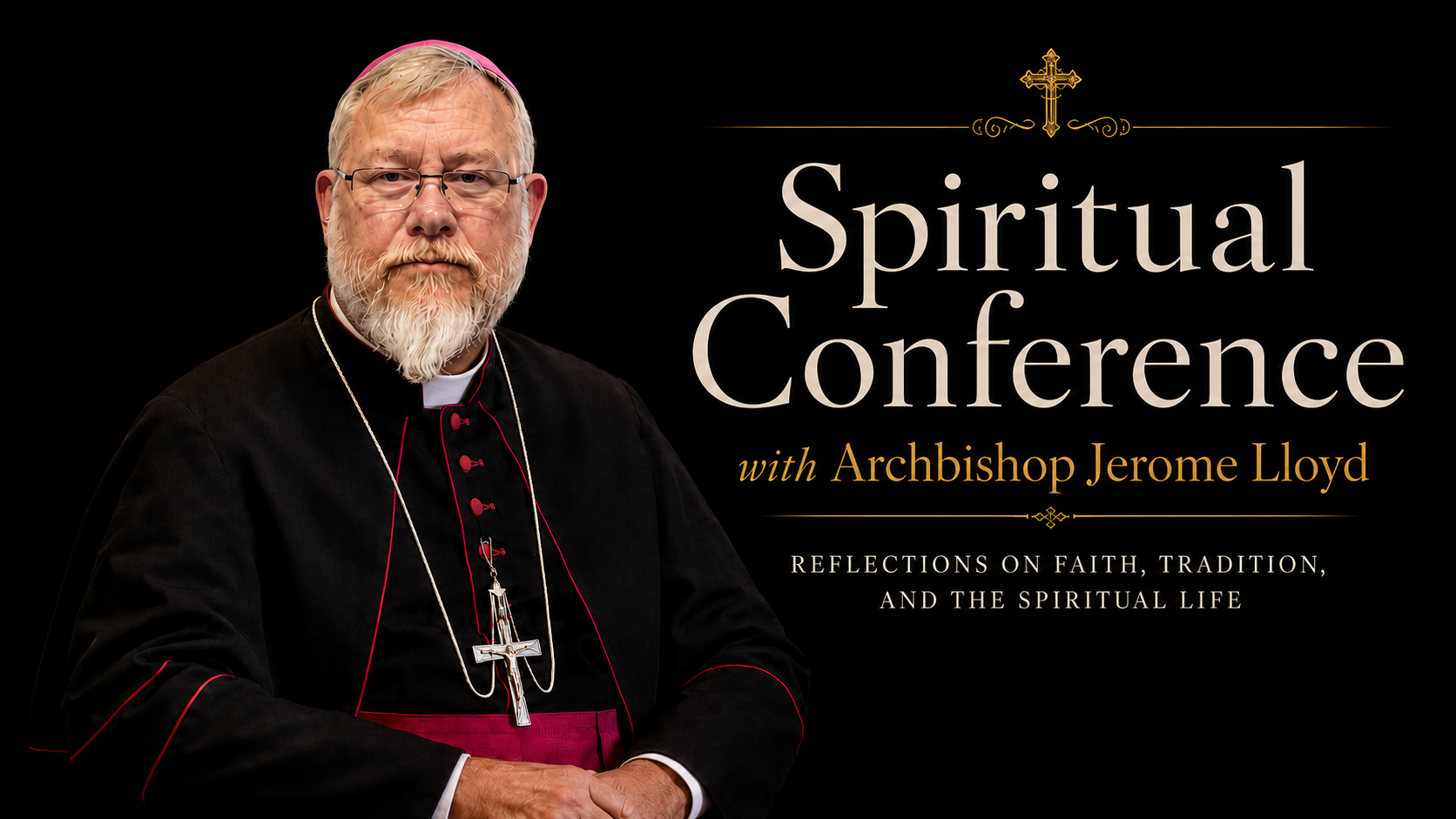
My dear friends
There are moments when fidelity can feel very lonely. A Catholic looks around and sees things which yesterday seemed settled now spoken of as though they were uncertain. Words retain their familiar sound while their meanings shift. Practices once defended are treated with embarrassment; propositions once taught plainly are surrounded with qualifications; things once approached with caution are welcomed as progress. In civil society, realities mankind did not invent are increasingly spoken of as though they were products of legislation, policy or personal declaration. In the Church, too, faithful Catholics can find themselves asking whether what they received from parents, priests, catechisms and saints can really remain true when so many voices appear to have moved elsewhere.
It is precisely then that we need the motto of this edition: Veritas non mutatur consensu — truth is not altered by agreement.¹ It is intellectually important, but even more importantly it can become spiritually consoling. If truth depended upon numbers, the Christian would always need to count heads before believing. If truth depended upon fashion, he would need continually to check whether yesterday’s certainty had survived until morning. If truth depended upon the approval of the powerful, fidelity would remain secure only while authority approved it. If truth depended upon our feelings, every period of dryness, fear or uncertainty would place the Faith itself in danger. But truth does not depend upon these things, because truth depends upon God, and God is Truth.
Our Lord does not say merely that He teaches truth. He says, “I am the way, and the truth, and the life.”² The Catholic’s ultimate security therefore rests not in an argument but in a Person. Before councils deliberated, before theologians disputed, before governments legislated, before journalists commented, before you or I were born, Christ was Truth. When every present controversy has disappeared into history, Christ will remain Truth. Our task is consequently not to manufacture certainty but faithfully to receive what is already real.
We must immediately turn that proposition upon ourselves. It is very easy to say veritas non mutatur consensu while thinking about somebody else’s errors. It is harder to admit that the consensus which most frequently threatens my fidelity may be the little consensus I have constructed around myself: what my friends accept, what my family expects, what colleagues regard as normal, what people online applaud, what my preferred ecclesiastical circle repeats, or simply what I have told myself for so long that I no longer permit God to contradict it. This conference will achieve very little if we leave saying only, “How perfectly that describes Rome,” or, “How accurately that describes the modern world.” The spiritual question is more uncomfortable: what truth of God am I resisting because accepting it would require me to change?
TRUTH IS RECEIVED
One of the characteristic temptations of modern man is to imagine that reality waits for him to decide what it shall be. Yet almost everything most important in our lives arrives before us. We did not decide that we should exist. We did not design human nature. We did not invent good and evil. We did not create the distinction between Creator and creature. We did not establish the Incarnation, Calvary or the Resurrection. We did not devise the Sacraments or construct the Church. We did not create the Blessed Virgin’s divine maternity, the communion of saints or the angelic hosts. We arrived late, and that is one of the most liberating discoveries a creature can make.
The world was already God’s before we entered it. Christ had already redeemed it. The Mass had already been offered through centuries. Saints had already suffered for truths we would later receive without shedding blood. Monks had prayed while kingdoms rose and fell. Mothers had taught children to make the Sign of the Cross. Priests had whispered the words of absolution. Martyrs had discovered that the executioner’s sentence could not alter Christ’s promise. We are heirs before we are actors. The Catholic begins not by inventing but by receiving.
This is the spiritual logic running through the recent Nuntiatoria mottos. Res sunt quod sunt: things are what they are. Therefore Accipere, non fingere: receive, do not invent. Faithful reception requires distinction, hence Qui bene distinguit, bene docet. What has been received must then be guarded and transmitted: Quod accepimus, custodimus et tradimus. Yet all these propositions depend upon something deeper. They are possible only because veritas non mutatur consensu. Truth remains itself independently of our agreement.¹
The question for each of us is whether we really receive Catholicism or whether we have quietly edited it. Most Catholics would never dream of composing their own Creed, yet it is possible to live as though we had done precisely that. We may defend the Real Presence while ignoring Christ’s command to forgive. We may defend indissoluble marriage while treating our spouse with contempt. We may condemn sexual immorality while excusing habitual impurity. We may insist upon reverence in the sanctuary while speaking viciously about our neighbour outside it. We may deplore doctrinal compromises in bishops while making comfortable moral compromises ourselves. Selective orthodoxy remains a form of editing. Accipere, non fingere means receiving those truths which judge us as readily as those which vindicate us.
THE CROWD DOES NOT DETERMINE CALVARY
Scripture repeatedly places fidelity against numbers. Noe did not possess a majority. Abraham was called out from his people. Elias stood against the prophets of Baal. The three young men would not adore Nabuchodonosor’s image although an empire commanded it. The Apostles fled and St Peter denied, but Calvary did not become false because almost everyone had gone away. At the foot of the Cross Our Lady remained, and in her steadfastness we see what fidelity looks like when almost every visible circumstance appears to contradict the promise.
Consider what she confronted. The Child announced by Gabriel as the Son of the Most High was hanging mutilated upon a Roman gibbet.³ The crowds which had acclaimed Him were gone. Religious authority had condemned Him. Political authority had executed Him. His disciples had scattered. His enemies appeared vindicated. Yet nothing true had become false. Gabriel’s words remained true. Christ remained King. The Cross which looked like defeat was accomplishing redemption. Veritas non mutatur consensu.
Yet we must not turn this into the romantic proposition that minorities are automatically right. Pride can make a man positively enjoy being contradicted. Contrariness is not fidelity. A man may stand alone because he is courageous, or he may stand alone because he is wrong. The Catholic question is therefore never simply, “How many agree with me?” It is, “What is true?” followed by the more difficult question, “Am I willing to be corrected by it?” The principle cuts in both directions. It rebukes institutional voluntarism, but it equally rebukes private judgement which assumes that opposition to authority somehow authenticates itself. Pope, bishop, priest, theologian, journalist and traditionalist remain answerable to something they did not invent.¹
For most of us this becomes painfully ordinary. Friends gossip and we join them because refusing would be awkward. Family members expect us to subordinate Sunday Mass to convenience and gradually we cease resisting. We hesitate to make the Sign of the Cross in public. We laugh at the joke because silence might identify us. Fidelity is rarely first tested before emperors. It is usually tested at the dinner table, in the workplace, in family conversations, in what we watch, in what we forward, and in the small compromises nobody except God notices. The martyr’s final non possumus is ordinarily prepared by a thousand earlier occasions upon which he learnt quietly to say yes to God.
AUTHORITY IS RECEIVED TOO
The Gospel of the Eighteenth Sunday after Pentecost prevents this from becoming spiritual individualism. The paralytic is carried before Our Lord and Christ says: “Be of good heart, son, thy sins are forgiven thee.” The scribes accuse Him inwardly of blasphemy. Christ then performs the visible miracle precisely so that they may know that “the Son of man hath power on earth to forgive sins”. The healing of the body authenticates His invisible authority over the soul, and the multitude glorifies God “who had given such power to men”.⁴
Those final words matter. The answer to confused authority is not no authority. Christ gives power to men. He establishes Apostles, gives Peter the keys, institutes Sacraments, and after the Resurrection breathes upon the Apostles saying: “Whose sins you shall forgive, they are forgiven them.”⁵ Catholicism is not spiritual anarchism. Yet notice the direction of the gift: authority is given. The priest does not manufacture absolution. The bishop does not invent episcopacy. Peter does not create the keys. The Church does not produce Revelation. Authority receives before it governs.
That principle explains several controversies considered this week. The traditional Roman liturgy was received before today’s administrators were appointed to regulate it. Synods may listen and deliberate, but Revelation existed before the first questionnaire was distributed. A Pope possesses the unique office instituted by Christ, but he does not become proprietor of the deposit of Faith. At the same time, the traditionalist who sees these distinctions clearly must remember that he too received the Faith. He did not receive authority to reconstruct the constitution of the Church according to his own judgement. Dei Verbum states the principle plainly: the Magisterium “is not above the word of God, but serves it, teaching only what has been handed on”.⁶
The same principle reaches directly into the confessional. We cannot spend the week insisting that bishops must submit to objective truth and then enter Confession attempting to negotiate our own sins. “Yes, Father, but you must understand…” can sometimes introduce a necessary explanation; it can also become the opening sentence of a defence brief. The Sacrament asks something simpler: accusation of oneself. A powerful application of veritas non mutatur consensu would be to make a more candid Confession, naming sin plainly and accepting that God’s judgement of it is more reliable than the excuses by which we have learnt to live with it.
TRUTH WORSHIPPED: WHAT IS THE MASS FOR?
The question of received reality becomes especially important in the liturgy. During Pope Leo XIV’s visit to France, there was much to welcome in his explicit proclamation of Christ, his defence of human life, his call for priestly vocations and his insistence that the magnificent stones of Notre-Dame exist ultimately for worship. He explicitly described the Eucharist as the highest form of prayer and worship, spoke of the Church renewing Christ’s redemptive Sacrifice, and referred to communion in “the one Sacrifice of Christ”. Any fair criticism must begin there: Leo did not deny the sacrificial nature of the Mass.⁷
Yet the article considered this week noted a significant change of emphasis in what followed. Having affirmed the Sacrifice, Leo developed his explanation strongly through what liturgy accomplishes in human experience: peace, fraternity, justice, solidarity, reconciliation and renewed social relationships. None of those fruits is false. The question is one of theological order. What comes first? Is the Mass understood primarily from Christ the High Priest offering His Sacrifice to the Eternal Father, into which the Church is drawn, or principally from the community gathered and transformed through liturgical experience?⁷
Pius XII’s Mediator Dei supplies the older hierarchy with great clarity. Christ is first High Priest and Victim. At the altar the Sacrifice of the Cross is sacramentally represented. The Divine Victim is offered to the Eternal Father for the glory of the Blessed Trinity and the good of the whole Church. The faithful participate by uniting themselves to that prior sacerdotal oblation in praise, thanksgiving, expiation and petition.⁸ God therefore comes first; then Christ the Priest and Victim; then Sacrifice offered to the Father; then the Church’s participation; then the sanctification and transformation of the faithful.
This is not simply a pre-conciliar preference set against Vatican II. Sacrosanctum Concilium itself describes the liturgy as an exercise of the priestly office of Jesus Christ, an action of Christ the Priest and His Mystical Body, and says that “the sacred liturgy is above all things the worship of the divine Majesty”.⁹ Fraternity, reconciliation, participation and human transformation are real fruits of Catholic worship precisely because man is not its ultimate centre.
That distinction matters spiritually because the way we understand the Mass determines the way we attend it. We gather because Christ has summoned us to His altar. We do not create sacred time; we enter it. We do not make the action holy through communal sincerity; Christ acts sacramentally through His priest. We do not create the Church by assembling; the Church gathers us because Christ has already constituted her. The community is real and precious, but it is the fruit of something prior. Worship is Godward before it is community-forming.
The traditional Roman liturgy makes this particularly difficult to forget. Priest and people turn together towards God. Silence refuses to make human activity the measure of significance. The Canon proceeds whether we are emotionally moved or dry, concentrated or distracted, numerous or few. The objective worth of the Sacrifice does not rise and fall with the congregation’s enthusiasm. Here too veritas non mutatur consensu: Calvary is not made real by our experience of it.
But those of us who defend traditional worship must ask whether we actually worship. It is possible to argue eloquently for the ancient Mass and then arrive habitually at the last moment, chatter before Mass, watch everybody else, become irritated by children, and leave immediately afterwards without thanksgiving. We can defend the Godwardness of the liturgy while behaving as spectators. If we believe what we say, our conduct should show it. Come earlier when possible. Recollect yourself. At the elevation, adore. After Holy Communion, give thanks. Let silence become prayer rather than merely an aesthetic preference.
THE ANGELS KNOW WHAT WORSHIP IS
Here the angelic ministry enters not as a devotional addition but as a theological correction. This week’s Ordo gives us St Michael and the Holy Guardian Angels.¹⁰ Catholic realism extends far beyond what we see. St Paul calls the angels “ministering spirits, sent to minister for them, who shall receive the inheritance of salvation”.¹¹
At the Sanctus, we do not invent an acclamation suitable for our gathering. We join theirs. Isaias saw the Seraphim crying, “Holy, holy, holy, the Lord God of hosts”.¹² The Apocalypse gives the same heavenly acclamation before the throne.¹³ The Roman Preface deliberately places the earthly congregation within that heavenly worship when the priest declares that with Angels and Archangels, Thrones and Dominations and the whole heavenly host, the Church sings the hymn of God’s glory.¹⁴ The earthly Church does not summon heaven to validate her worship; she is admitted into a worship already proceeding before God.
The Roman Canon makes the same supernatural orientation explicit. At the Supplices te rogamus, the priest bows profoundly and asks that the offering be borne “by the hands of Thy holy Angel unto Thy altar on high, in the sight of Thy divine Majesty”.¹⁴ The earthly altar opens upon a reality which precedes and surpasses everyone standing around it.
The angels therefore expose the insufficiency of an exclusively anthropological understanding of worship. While governments deliberate, angels adore. While committees vote, angels behold God. Their unceasing worship reminds us that reality is immeasurably greater than the fragment visible to human senses.
That should console Catholics who look at declining numbers and become discouraged. Parishes close, vocations decline, baptisms fall, Catholic institutions abandon Catholic teaching, traditional worship is restricted and faithful people sometimes wonder where everybody has gone. Yet when you kneel at Mass, you are never merely the number visible in the pews. The angels are present. The saints belong to the same communion. Our Lady remains Queen of Angels and Mother of the Church.
That does not make statistics irrelevant. The article on Derry considered this week records a substantial fall in baptisms and declining clergy numbers.¹⁵ Empty seminaries matter. Closed churches matter. The failure to transmit the Faith matters because souls matter. Yet we must not mistake visible numerical weakness for divine abandonment. At Calvary the visible numbers were very poor indeed, but heaven had never been closer to earth.
ST MICHAEL: QUIS UT DEUS?
The angelic conflict reveals the deepest origin of the struggle running through this edition. The first rebellion was the creature’s refusal of the order established by God. Every sin contains something of the same logic. God is God and the creature is creature; God commands and the creature chooses whether he will receive His will or attempt to enthrone his own.
Against that rebellion stands the name Michael: Quis ut Deus? — Who is like unto God? The Apocalypse shows Michael and his angels fighting against the dragon and his angels.¹⁶ His name supplies the theological answer to creaturely pride. Who is like God? Not the Pope, not the State, not a synod, not a scientist, not a journalist, not a traditionalist commentator, not you and not I. Proper order begins when every creature returns to his place beneath the Creator.
We can use St Michael’s name as a daily examination. When somebody contradicts us and pride rises, Quis ut Deus? When Providence disrupts our plans and we become angry because life has not obeyed our timetable, Quis ut Deus? When we imagine that our family, parish, apostolate or even the Church could not survive without us, Quis ut Deus? Much of our anxiety is wounded sovereignty. St Michael restores sanity by reminding us that there is one God, and it is not our vocation to replace Him.
We have considered truth received and truth worshipped. Now the conference turns towards truth obeyed and truth lived. It is not enough to establish that institutions cannot alter reality, that Revelation precedes synods, that the Sacrifice precedes the congregation, or that the angels continue their worship regardless of human confusion. If veritas non mutatur consensu is true, then the same truth which judges institutions also judges me. The second half therefore asks not principally what Rome, governments, bishops, hospitals or professional bodies must do, but what conversion this motto demands from us.
WHEN TRUTH ENTERS THE CONSCIENCE
Bishop ✠Marian Eleganti, reflecting critically upon the language surrounding Amoris Laetitia and contemporary synodality, has used the striking image of truth as a sword being “wrapped in cotton wool”.¹⁷ His point is not that Christian teaching should be delivered harshly. It is that truth necessarily distinguishes: one thing is true and another false, one action good and another sinful, one road leads towards God and another away from Him. Scripture itself compares the word of God to a “two-edged sword” because it penetrates beneath our evasions and judges “the thoughts and intents of the heart”.¹⁸
The danger Eleganti identifies is that the language of accompaniment, discernment and mercy can become so cushioning that doctrine remains formally present while its power to judge conduct and require conversion is scarcely permitted to be felt. The sword has not been discarded; it has been wrapped until its edge no longer seems capable of cutting anything.¹⁷
Yet the sword must cut us too. The Christian is not commanded to enjoy wielding truth against others. The woman taken in adultery encountered Truth Himself and was not humiliated by Him, but neither did Christ pretend adultery had ceased to matter. “Go, and now sin no more.”¹⁹ There is Catholic mercy: the sinner is loved without the sin being renamed, and forgiveness opens towards conversion.
The uncomfortable question is therefore whether we ourselves have wrapped God’s truth in cotton wool. We do it whenever we soften the name of a sin until it no longer troubles the conscience. If I harbour resentment or have persuaded myself that habitual sin is simply part of my personality, truth matters. If I can identify every error in Rome while refusing to acknowledge my own pride, bitterness, gossip, impurity, anger or want of charity, truth matters there too. Veritas non mutatur consensu applies most painfully when I am the consensus which must be broken.
Language is often the first layer of that cotton wool. Cowardice becomes prudence. Gossip becomes concern. Anger becomes righteous indignation. Vanity becomes standards. Attachment becomes loyalty. Spiritual laziness becomes tiredness. Refusal to forgive becomes justice. Contempt becomes discernment. An addiction becomes a habit. An occasion of sin becomes something we can handle. Pride becomes fidelity to principle. We construct vocabularies whose purpose is to prevent reality from reaching the conscience.
A similar principle appears in the articles on Nostra aetate, Assisi and Osaka. Good intentions do not by themselves alter the objective meaning of religious acts.²⁰ The spiritual analogue is immediate. A habitual sin does not cease to be sinful because it is familiar. An occasion of sin does not become safe because we survived it yesterday. A compromised relationship does not become prudent because it has lasted for years. Repetition cannot baptise compromise.
A good examination of conscience therefore asks us to let God name things. Why did I tell that story about another person? Why did I need others to know his fault? Why did I open that page when I knew where it would lead? Why am I so disturbed when another person receives praise? Why do I postpone the prayer which I say matters to me? Once reality is named, grace can address it.
Some of us already know what must change. We do not need another book, conference or podcast. We know the occasion of sin we should remove, the Confession we have postponed, the resentment we must surrender, the prayer we must resume. Sometimes “discernment” becomes a pious word for delaying obedience after the truth is already clear.
THE PARALYTIC MUST RISE
Return to the paralytic, because the Gospel does not end with a theological demonstration. Christ commands him: “Arise, take up thy bed, and go into thy house.”⁴ Forgiveness produces movement. Grace restores the man so that he can do what previously he could not do. The bed which had carried him is now carried by him. The liturgical study published this week draws out this reversal: grace does not merely pardon captivity; it restores freedom.²¹
That is a powerful image for Confession. We do not confess merely to have the record cleared while arranging to return comfortably to the same pattern. Absolution restores us so that we may rise. If we confess gossip, we must guard the tongue. If we confess impurity, we must remove occasions. If we confess neglect of prayer, we must establish prayer. If we confess resentment, we must begin willing the good of the person who offended us.
Some Catholics become discouraged because they confess the same sins repeatedly. Repetition itself need not imply insincerity. The question is whether there is combat. Have we taken practical measures? Have we prayed specifically against the vice? Have we identified when and where we fall? Have we asked our Guardian Angel for assistance at the moment of temptation? Grace does not remove the need for effort; it makes supernatural effort possible. Christ says not merely, “Thy sins are forgiven,” but, “Arise.”
Truth is not altered by agreement, but neither is truth satisfied by agreement. I may agree with every proposition in this conference and remain unchanged. Orthodoxy is indispensable, but orthodoxy is ordered towards union with God. Truth must be believed, loved, obeyed and lived.
TRUTH BECOMES CHARITY
Once truth enters the conscience, it must become charity towards the neighbour. Roger Foley’s experience gives this point unusual force. The article considered this week examines the case of a severely disabled Canadian man who has sought adequate assistance to live outside hospital and who has publicly described conversations concerning assisted death while struggling for the support required to live with greater independence.²² Beneath the medical and political questions lies a spiritual one: what is a human life worth when it becomes radically dependent?
Christianity answers before questions of autonomy, productivity or cost that a human being is made in the image of God. “God created man to his own image.”²³ That does not become less true because the body deteriorates, because somebody requires feeding, because a person cannot work, because care is expensive, or because he feels himself a burden. Human dignity is not conferred by a vote, prognosis, medical assessment or even self-esteem.
Sometimes the consensus we must resist is therefore the terrible consensus inside our own head. A suffering person may begin to believe: I am useless. I am a burden. Nobody needs me. God has forgotten me. Such thoughts can become a private parliament passing laws against hope, but they cannot alter reality. You remain God’s creature, redeemed by the Precious Blood and held within divine Providence. Your prayer can still benefit souls. Your life possesses a value which illness, loneliness and dependency cannot repeal.
Yet this truth judges the healthy too. Do our actions demonstrate what we claim to believe about human dignity? Have we telephoned the elderly person who rarely sees anyone? Do we visit the sick, or merely hold correct opinions about euthanasia? Is there somebody in the congregation whose disability, deafness or frailty makes conversation difficult and whom we therefore avoid? A Catholic defence of life which never becomes patience with actual dependent people is incomplete.
The report concerning Sister Mary Savio gives the same principle a gentler form. Her medical ordeal has called forth prayer, practical assistance and generosity.²⁴ If the sick possess objective dignity, charity cannot remain theoretical. Prayer matters, but so do meals, visits, transport, donations, telephone calls and the ordinary acts by which Christians make the communion of saints visible.
TRUTH BECOMES JUSTICE
Charity also requires justice, and justice requires courage to hear facts which may be uncomfortable. The Rupnik and Lourdes articles illuminate this from different directions. Women accusing Fr Marko Rupnik have sought clarity about their procedural status, while Rupnik retains the rights belonging to an accused person and the presumption of innocence until allegations are established.²⁵ The principle is more demanding than simply choosing a side: due process protects justice, but procedure must serve justice rather than become a substitute for it.
Pope Leo’s later meeting at Lourdes with seven abuse victims was therefore rightly welcomed as an act of listening.²⁶ Listening is not nothing. To allow another person to tell the truth of what happened without immediately defending the institution can itself be morally significant. Yet listening cannot become the final destination when justice requires investigation, judgement, correction or accountability. Truth first requires that reality be heard; justice then requires that reality be acted upon.
The spiritual parallel is uncomfortable. We too can hide behind process. We tell ourselves that we attend Mass, say certain prayers, support the Church and know the Faith. All may be true while a serious fault remains carefully protected from grace. Religious activity can become a procedural defence against conversion: we point to everything we do so that God will not ask about the one thing we refuse to surrender.
What do we not want Our Lord to touch? Which subject immediately produces self-justification? Which fault have our friends learnt never to mention? Where have we substituted religious busyness for holiness? The Lord who healed the paralytic sees the invisible wound before anyone else sees the visible one. We should allow Him to name it.
There is also something here about listening to one another. Some of us are so eager to correct that we scarcely hear. A husband may know the answer before his wife has finished speaking. A parent may respond to a child’s distress with a lecture when what is first needed is attention. A priest may become so familiar with a kind of problem that he ceases to hear the individual soul before him. Truth is not threatened by listening. Precisely because truth is objective, we need not fear facts which disturb our preferred account of events.
TRUTH MUST BE HANDED ON
Truth received, obeyed and lived must finally be transmitted. The Derry article therefore raises a question which belongs not merely to bishops and diocesan planners but to every Catholic household. The figures considered this week show a substantial decline in baptisms in a place where Catholic identity once survived poverty, discrimination and political violence.¹⁵ It is fashionable to dismiss earlier generations as merely “cultural Catholics”, yet those supposedly deficient Catholics baptised their children, taught prayers, filled churches, produced vocations and transmitted an identifiable Faith.
That must become personal. We can lament bishops’ failure to transmit Catholic doctrine while failing to transmit it ourselves. If our children know our opinions about the Pope but do not know the basic prayers, something has gone wrong. If they can repeat our criticisms of modernity but cannot explain the Real Presence, Confession or why the Mass is a Sacrifice, we have transmitted grievance before Faith.
Parents and grandparents should ask whether children see them pray when there is no emergency, whether grace is said before meals, whether Sunday is visibly different, whether feast days are marked, whether children know their Guardian Angel, whether Confession appears in family life as something Catholics actually do, and whether they see adults apologise when adults behave badly. Children learn the Faith not only from propositions but by discovering that the adults around them organise their lives as though those propositions were true.
Those without children are not exempt. Every Catholic contributes to transmission. Older Catholics can teach prayers which younger Catholics were never taught. Godparents can remember that godparenthood is an office, not a photograph. Friends can encourage one another to Confession. Parishioners can welcome young families whose children make noise rather than treating them as inconveniences. If we say Quod accepimus, custodimus et tradimus, somebody must actually hand something on.
THE GUARDIAN ANGEL AND HIDDEN FIDELITY
The Guardian Angels now return, no longer simply as witnesses to heavenly worship but as ministers of Providence within our own pilgrimage. Our Lord says of the little ones: “their angels in heaven always see the face of my Father who is in heaven.”²⁷ St Thomas Aquinas treats angelic guardianship explicitly as part of Divine Providence and teaches that individual men are entrusted to angelic guardians during their earthly pilgrimage.²⁸ This is not childish sentimentality. It belongs to the objective supernatural order whether or not modern man remembers it.
The Guardian Angel does not mean that nothing painful can happen to us. Saints possessed Guardian Angels and were nevertheless persecuted and martyred. Angelic guardianship cannot be reduced to protection from accidents. Its purpose is directed ultimately towards salvation. St Thomas places it within man’s journey towards his supernatural end: human knowledge and affection can fail, dangers arise from within and without, and Providence assigns angelic assistance to direct man towards good.²⁸
That gives us a devotion which should be both affectionate and serious. Greet your Guardian Angel upon waking and ask his assistance before sleep. Invoke him before a difficult conversation rather than preparing only your arguments. Parents should commend their children to their angels, especially when those children are beyond their sight or influence. Before opening the telephone or computer upon which temptation so often arrives, ask your angel to guard your eyes, imagination and temper. Before Mass, ask him to help you recollect yourself; before Confession, to help expose what pride conceals; before Holy Communion, to teach you something of his reverence.
The Guardian Angel also teaches the value of hidden fidelity. Some elderly, sick or housebound Catholics may feel peripheral because they can no longer attend meetings, organise events or perform visible works. Yet the invisible world reminds us that visibility is not the measure of reality. A housebound Catholic offering a Rosary for a priest may be participating profoundly in the Church’s supernatural life. The prayer nobody applauds, the temptation nobody knows you resisted, the suffering quietly offered, the forgiveness never publicly recognised, the duty performed when nobody thanked you: all are real before God.
The Book of Tobias gives us a beautiful image of this hidden Providence. Tobias travels with Raphael without initially understanding the identity of his companion. Only later does the angel reveal the hidden ministry which has accompanied the family through danger, prayer and healing.²⁹ How much of Providence may we understand only afterwards? How often may God have protected, redirected or assisted us by means we did not recognise at the time?
That doctrine can be deeply consoling to somebody who feels abandoned. You may be physically alone without being spiritually deserted. You may pray in a room where nobody else hears you, but your prayer belongs to the worship of the Church. You may be too ill to undertake the works you once performed, but your fidelity has not thereby become useless. The modern world measures significance by visibility and productivity. Heaven does not.
THE SAINTS SHOW US HOW TRUTH BECOMES LIFE
The saints placed before us this week gather the argument into human lives. St Jerome represents the intellect submitting itself to Revelation.¹⁰ His immense learning did not authorise him to stand above the Word of God; it enabled him to serve it. For those of us who read, write, argue and analyse, Jerome asks whether knowledge has made us humbler before truth or merely more skilful at winning arguments. Can I say, without qualification, “I was wrong”? A man may spend his life defending objective truth while becoming personally incapable of receiving correction.
St Thérèse gives another answer to self-construction. Her little way is fundamentally receptive. She does not manufacture greatness but accepts littleness and allows grace to work through it.¹⁰ Much anxiety comes from imagining that sanctity requires us to become somebody else. Thérèse reminds us that holiness begins with the duties, limitations, people and opportunities actually given by Providence.
The great sacrifice may presently be getting out of bed and saying the morning prayers when we do not feel like it. It may be answering kindly the person whose habits irritate us. It may be performing the same duty for the thousandth time without complaint. It may be bearing illness without making everyone around us bear our bitterness as well. The little way is not sentimental because the death of self-love is rarely sentimental.
St Francis then asks what we still possess which prevents Christ from possessing us.¹⁰ The answer need not be money. We can be attached to reputation, control, comfort, grievance, being consulted, being thanked, being right, being recognised as faithful or even being known as traditional. Francis strips the question bare. If Christ asked for this attachment, would we surrender it? Veritas non mutatur consensu eventually becomes fiat: reality received not merely by the intellect but by the whole life.
TRUTH WITHOUT BITTERNESS
There remains one danger especially relevant to Catholics who recognise the crises considered throughout this edition. A man can love truth and gradually cease to love people. He begins by opposing error, then begins to enjoy opposing error, until eventually his religious life is organised chiefly around indignation. He becomes spiritually dependent upon having something to condemn. That is not fidelity but deformation. The angels fight demons without becoming demonic, and St Michael’s strength is inseparable from his humility: Quis ut Deus?
Truth without charity becomes an accusation against ourselves because the Truth we defend commanded us to love. Charity without truth becomes sentimentality because the Christ we claim to love called Himself Truth. When discussing abuse, remember human beings rather than scandal as entertainment. When discussing assisted death, see suffering people rather than abstractions. When discussing those with whom we disagree, remember their human dignity. When discussing Pope Leo, pray for the Pope. When bishops trouble us, pray for their salvation. When somebody attacks Tradition, resist imagining that possession of the better argument necessarily makes us the better man.
A practical discipline can help. Whenever we speak severely about somebody in the Church, pray for that person by name. If we criticise a bishop, offer an Ave for him. If something concerning the Pope angers us, pray for the Pope before commenting. If an opponent irritates us online, refuse to write anything about him which we would be ashamed to repeat before the Blessed Sacrament. This does not weaken criticism; it disciplines the critic. Our object cannot merely be to remain correct during the crisis of the Church. We must remain Catholic while passing through it.
THE PEACE OF RECEIVING
We can now see what the motto asks of us. Veritas non mutatur consensu does not summon us to perpetual argument. Properly understood, it should eventually give peace. We do not have to manufacture reality, reinvent Catholicism, make Revelation true, make the Mass sacred, keep the angels in existence, make human dignity real or personally guarantee the survival of the Church. These realities do not depend upon us. Our task is at once smaller and more demanding: receive what God has given, worship Him according to what He is, repent when His truth judges us, rise when grace restores us, love our neighbour according to his objective dignity, practise justice, hand on what we have received and trust the Providence which extends beyond what we can see.
That peace is not passivity. The paralytic still has to rise. The parent still has to teach. The priest still has to preach. The sick still have to be visited. Injustice still has to be confronted. Error still has to be resisted. Tradition still has to be handed on. But we do these things as servants of reality, not as its authors. That distinction removes a great burden from the soul. We are responsible for fidelity; we are not responsible for being God.
The week’s liturgical journey gives us almost a rule of life. The paralytic teaches us to allow Christ to name the deepest wound, receive forgiveness and rise. Michael asks Quis ut Deus? and demolishes our pretensions to sovereignty. Jerome places intellect beneath Revelation. The Guardian Angels reveal the invisible Providence surrounding apparently ordinary lives. Thérèse teaches us to receive littleness instead of manufacturing importance. Francis asks us to surrender whatever competes with Christ.¹⁰ The movement is coherent: recognise reality, submit to God, receive grace, rise from sin, worship rather than manufacture, serve without demanding recognition, surrender what competes with Christ and hand on what you have received.
The recent Nuntiatoria mottos therefore form more than a sequence of editorial themes. Res sunt quod sunt: things are what they are. Accipere, non fingere: receive, do not invent. Qui bene distinguit, bene docet: he who distinguishes well teaches well. Quod accepimus, custodimus et tradimus: what we have received, we guard and hand on. And now Veritas non mutatur consensu: truth is not altered by agreement. Reality precedes us; therefore we receive rather than invent it. What we receive must be distinguished accurately. What is distinguished must be guarded and transmitted. All this is possible because truth remains true before, during and after our consent.
Let the motto become practical this week. In the morning, before the telephone begins telling you what the world considers important, remember that reality belongs to God. Make your Morning Offering. Greet your Guardian Angel. Ask for grace to recognise truth and obey it. During the day, when pressure or temptation arises, ask: What remains true here whether or not anybody agrees with me? At night, ask where you received reality and where you attempted to negotiate with it. Where did fear of human opinion govern you? Where did pride turn your judgement into a private magisterium? Where did you rename a sin? Where did you know the good and postpone it? Then make your act of contrition and begin again.
Above all, leave this conference with something more demanding than agreement. Let there be one truth you will obey, not merely defend; one sin you will name without euphemism; one occasion of sin you will remove; one person you will forgive, telephone, visit or assist; one neglected duty you will resume; one act of Catholic transmission you will undertake within your family; one improvement in the reverence with which you approach the Holy Sacrifice; and one daily act of confidence in the assistance of your Guardian Angel. Then the motto will no longer describe only the errors of an age. It will have entered the soul.
When you feel alone, remember the angels. When you are contradicted, remember Quis ut Deus? When conscience accuses you, remember the paralytic and go to Confession. When your duties seem insignificant, remember Thérèse. When possessions, pride or control tighten their grip, remember Francis. When the intellect is tempted to stand over Revelation, remember Jerome. When the Church appears weak, remember Calvary. When the liturgy is spoken of as though its meaning began with us, remember that before we opened our mouths the Seraphim were already crying Sanctus, Sanctus, Sanctus. When the world tells you that fidelity is obsolete, remember that no vote can repeal God.
And when you fear that confusion has become too great, that institutions are too powerful, that errors are too widely accepted, or that your own weakness is too deeply established, return finally to Our Lord’s words: “I am the way, and the truth, and the life.”² Truth is not an abstraction abandoned to the mercy of history. Truth has a Face. Truth was born of the Virgin Mary. Truth was crucified under Pontius Pilate. Truth rose from the dead. Truth sits at the right hand of the Father. Truth comes to us upon the altar. Truth forgives us in the confessional. Truth sends His angels to minister according to His Providence. Truth has promised that the gates of hell shall not prevail against His Church.
May St Michael the Archangel defend us in battle and teach us always to ask Quis ut Deus? May our holy Guardian Angels watch over us, restrain us from evil, strengthen us in temptation and direct us towards Heaven. May St Jerome teach us to submit our intellects to Revelation, St Thérèse teach us confidence and littleness, and St Francis teach us to surrender whatever prevents complete possession by Christ. May Our Lady, Queen of Angels, obtain for us fidelity without bitterness, courage without pride, charity without falsehood and purity of heart. And may the Sacred Heart of Jesus keep us steadfast in that Truth which neither the applause of the world, the decisions of institutions, the passage of centuries, the confusion of an age, nor the fears of our own hearts can alter.
Veritas non mutatur consensu.
Truth is not altered by agreement.
¹ 27.09.26 NUNTIATORIA CXXV: VERITAS NON MUTATUR CONSENSU, Nuntiatoria, 25 September 2026.
² St John 14:6, Douay-Rheims Bible.
³ St Luke 1:26–38, Douay-Rheims Bible.
⁴ St Matthew 9:1–8, Douay-Rheims Bible.
⁵ St John 20:21–23, Douay-Rheims Bible.
⁶ Dei Verbum, §10, Second Vatican Council, 18 November 1965.
⁷ THE POPE ANSWERS FRANCE: NOT HERITAGE ALONE, BUT CHRIST, Nuntiatoria, 27 September 2026.
⁸ Mediator Dei, Pope Pius XII, 20 November 1947.
⁹ Sacrosanctum Concilium, especially §§7, 10 and 33, Second Vatican Council, 4 December 1963.
¹⁰ ORDO w/c 27.09.26, Nuntiatoria, 25 September 2026.
¹¹ Hebrews 1:14, Douay-Rheims Bible.
¹² Isaias 6:1–3, Douay-Rheims Bible.
¹³ Apocalypse 4:8, Douay-Rheims Bible.
¹⁴ Missale Romanum, Preface and Canon Missae, especially the conclusion of the Preface and Supplices te rogamus.
¹⁵ THE CHURCH THAT SUSTAINED DERRY DID NOT MISUNDERSTAND BAPTISM, Nuntiatoria, 25 September 2026.
¹⁶ Apocalypse 12:7–9, Douay-Rheims Bible.
¹⁷ THE SWORD IN COTTON WOOL, Nuntiatoria, 28 September 2026.
¹⁸ Hebrews 4:12, Douay-Rheims Bible.
¹⁹ St John 8:1–11, Douay-Rheims Bible.
²⁰ NOSTRA AETATE AT SIXTY: FROM ASSISI TO OSAKA — WHEN DIALOGUE BECOMES WORSHIP, Nuntiatoria, 25 September 2026.
²¹ THE POWER GIVEN TO MEN: XVIII SUNDAY POST PENTECOST, Nuntiatoria, 25 September 2026.
²² ASSISTANCE TO DIE — BUT NOT ASSISTANCE TO LIVE?, Nuntiatoria, 27 September 2026.
²³ Genesis 1:26–27, Douay-Rheims Bible.
²⁴ DEO GRATIAS: HALFWAY THROUGH SISTER MARY SAVIO’S SURGICAL ORDEAL, Nuntiatoria, 27 September 2026.
²⁵ RUPNIK’S ACCUSERS APPEAL TO LEO XIV: THE WOMEN ARE STILL OUTSIDE THE DOOR, Nuntiatoria, 25 September 2026.
²⁶ LOURDES: LEO LISTENS AGAIN — BUT THE UNANSWERED QUESTIONS REMAIN, Nuntiatoria, 28 September 2026.
²⁷ St Matthew 18:10, Douay-Rheims Bible.
²⁸ Summa Theologiae, Prima Pars, Question 113: The Guardianship of the Good Angels, St Thomas Aquinas.
²⁹ Tobias 12, Douay-Rheims Bible.





Leave a Reply