
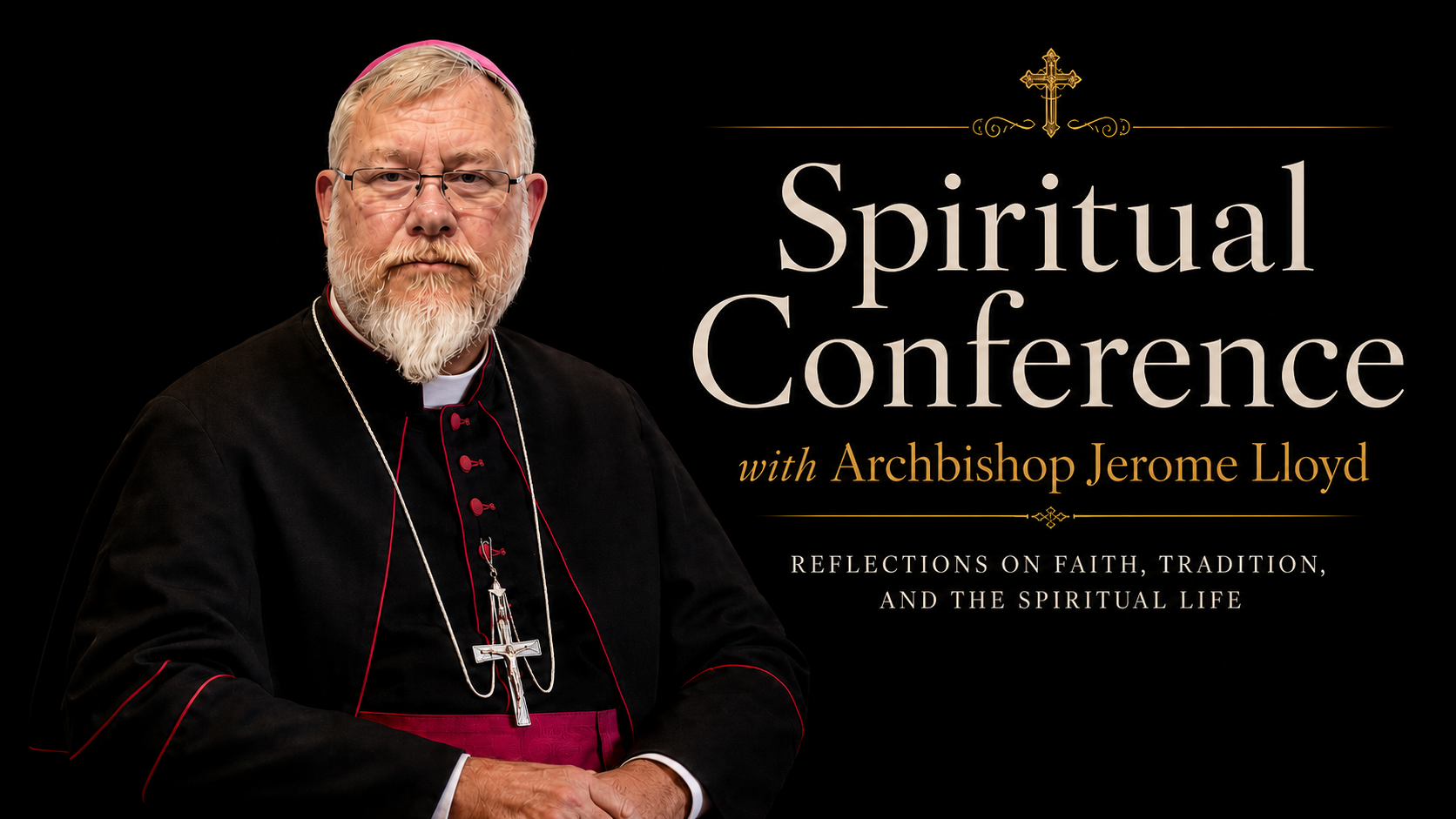
QUAERITE PRIMUM REGNUM DEI – Seek First the Kingdom: Spiritual Conference for Nuntiatoria CXXI
“Seek ye therefore first the kingdom of God, and his justice: and all these things shall be added unto you.”¹ These words from the Gospel of the Fourteenth Sunday after Pentecost provide more than a convenient motto for Nuntiatoria CXXI. They provide a rule by which the whole Christian life can be judged. Our Lord does not tell us that food, clothing, health, work, security, human affection, institutions or temporal responsibilities are unimportant. He tells us that they cannot be first. There is an order among goods because there is an ultimate Good. There are legitimate means because there is a supreme end. The spiritual catastrophe begins whenever something which ought to lead us towards God begins instead to occupy the place belonging to God. Christ therefore says in the same Gospel, “No man can serve two masters.” Martha was occupied with something genuinely good when she served Our Lord, yet Christ told her that “one thing is necessary” and that Mary had chosen “the best part.”² Christian spirituality begins with precisely that ordering. There are many good things worth doing; there is only One Good to be possessed absolutely.
Yet Our Lord says something elsewhere which takes this command considerably deeper. Asked when the Kingdom of God should come, He answered: “The kingdom of God cometh not with observation: Neither shall they say: Behold here, or behold there. For lo, the kingdom of God is within you.”³ We should immediately exclude a modern misunderstanding. Christ is not telling us that religion is merely subjective, that the Kingdom consists in whatever an individual discovers inside himself, or that the Kingdom possesses no visible, doctrinal, sacramental and ecclesial manifestation. Indeed, He spoke these words while the King Himself stood objectively among those who questioned Him, which is why the phrase can also properly convey that the Kingdom was already “in their midst” in the person of Christ. But the Douay-Rheims rendering, “within you,” possesses a profound and entirely Catholic spiritual application: the objective Kingship of Christ must become an interior reign. Before Christian civilisation can be restored, Christ must reign in Christians. Before His rights are proclaimed over society, His rights must be acknowledged over the soul.
Pius XI makes the point with extraordinary precision in Quas Primas, his 1925 encyclical establishing the Feast of Christ the King. Christ, he teaches, must reign in the mind, which submits to revealed truth; in the will, which obeys the divine commandments; in the heart, which loves God above every created affection; and even in the body and its members, which must become instruments of justice and sanctification.⁴ This is the true meaning of saying that the Kingdom must be “within” us. The Christian interior life is not a retreat into subjectivity. It is the conquest of subjectivity by Christ. The intellect which prefers its own opinion to revealed truth is territory not yet wholly surrendered. The will which knowingly refuses a commandment is in rebellion. The imagination habitually occupied with impurity, vengeance, vanity or envy contains provinces in which another law still operates. The passions which are never disciplined have not yet learned obedience to the King. When we pray Adveniat regnum tuum—“Thy Kingdom come”—we cannot mean only that Christ should reign somewhere else.
This gives the whole of Nuntiatoria CXXI a more searching character. The edition contains articles about the liturgy, papal government, priesthood, ecclesiastical restructuring, persecuted Catholics, medicine, law and the evidence surrounding the Resurrection. Each raises a public question, but each also conceals a spiritual question. It is easy to ask whether Rome puts the Kingdom first, whether bishops put the Kingdom first, whether liturgists, chancery officials, diplomats, judges and physicians put the Kingdom first. Christ directs the examination inward. Does the Kingdom of God reign within me? What part of me still resists His government? What resentment have I retained because relinquishing it would cost too much? What appetite have I renamed a “need”? What fear habitually overrules obedience? What ambition has acquired the character of an idol? What secret attachment would I not willingly place upon the altar? The spiritual life begins when we stop regarding ourselves as neutral territory. The heart is never spiritually empty. Someone reigns there.
One article, The Five-Point Question Facing Leo XIV, considers the results of a large American Catholic survey comparing those who attend exclusively the Traditional Latin Mass with those who attend exclusively the modern Roman liturgy. By the Traditional Latin Mass, or TLM, we mean the historic Roman Rite celebrated according to the older liturgical books; by the modern or Novus Ordo Mass we mean the reformed Roman liturgy promulgated under Pope Paul VI after the Second Vatican Council. The survey reported a five-point difference between the two groups on complete belief in Christ’s Real Presence in the Eucharist. “Real Presence” is not a devotional metaphor: Catholic doctrine teaches that after the Consecration Jesus Christ is truly, really and substantially present—Body, Blood, Soul and Divinity—under the appearances of bread and wine. The article therefore asks Leo XIV a serious pastoral question: when a liturgical culture appears strongly associated with Eucharistic belief, Confession, Sunday practice and younger committed Catholics, why should ecclesiastical policy principally regard that culture as something requiring restriction?
Before that question is addressed to the Pope, however, it must be addressed to us. Do we ourselves believe what we say about the Eucharist? St Paul warns the Corinthians: “Let a man prove himself: and so let him eat of that bread, and drink of the chalice.”⁵ Eucharistic faith is not demonstrated merely by winning an argument about Transubstantiation. It is revealed by how we approach the altar, how we prepare for Communion, how quickly we seek Confession after serious sin, how we behave before the tabernacle, how we make our thanksgiving and whether we visit Our Lord when nobody requires us to be in church. St John Paul II began Ecclesia de Eucharistia by declaring that the Church draws her life from the Eucharist.⁶ If that is true of the Mystical Body collectively, it must become true of each of its members personally.
Two other articles, Who Speaks for Leo? and Cardinal Sarah: Diagnosis Without the Cure, explore the developing liturgical situation under Pope Leo XIV. Who Speaks for Leo? reflects on the strikingly different emphases of Cardinal Arthur Roche, the senior Vatican official responsible for liturgical discipline, and Cardinal Robert Sarah, former Prefect of the Congregation for Divine Worship. Roche has publicly defended the continuing restrictive framework of Traditionis Custodes, Pope Francis’s 2021 legislation limiting celebration of the Traditional Mass, while Sarah has repeatedly diagnosed the loss of transcendence, silence, sacredness and supernatural confidence in Western Catholic life. The question “Who speaks for Leo?” therefore asks whether Leo’s eventual policy will be defined by the restrictive administrative approach associated with Roche, the diagnosis associated with Sarah, or by a distinct course of his own.
Cardinal Sarah: Diagnosis Without the Cure presses the question further. Sarah can speak powerfully of secularisation, anthropocentrism, the eclipse of God and the need for silence and transcendence, yet the article asks whether such a diagnosis is adequate if it stops short of recognising the traditional Roman liturgy itself as an obvious part of the remedy. That question has a personal spiritual analogue. We too can become skilled at diagnosis while avoiding cure. We may know exactly why we are distracted in prayer yet refuse to put down the device which distracts us. We may know why resentment is poisoning us yet continue rehearsing the injury. We may know that a friendship leads repeatedly into sin yet refuse to relinquish it. Correct diagnosis is useful only when we permit truth to demand action.
This is where discernment becomes indispensable, and the term needs rescuing from contemporary vagueness. Discernment does not mean searching prayerfully for a justification for whatever we already wish to do. Sacred Scripture says, “Believe not every spirit, but try the spirits if they be of God,” and again, “Prove all things; hold fast that which is good.”⁷ The very command to discern presupposes that not every interior movement should be trusted. Some desires arise from grace, others from habit, fear, wounded pride, sensuality, vanity or temptation. An interior life therefore does not consist in treating every strong feeling as revelation. It consists in bringing thoughts, desires and impulses beneath the judgment of God.
St Ignatius of Loyola provides an especially exact school of discernment in his Spiritual Exercises. He distinguishes movements which draw the soul towards God from those which lead it away, spiritual consolation from spiritual desolation, and he warns that temptation can even operate “under the appearance of good.”⁸ Evil does not always approach a serious Christian looking obviously evil. It can disguise itself as zeal, prudence, righteous anger, necessary resistance, courageous independence, pastoral charity or devotion. Hence we must ask not merely whether an impulse feels religious but where it begins, where it is taking us and what fruit it leaves behind. Ignatius also warns against making important spiritual changes simply because we are passing through desolation. Pain is not proof that God has abandoned a path, just as immediate emotional relief is not proof that He approves a decision.
St John Paul II’s Veritatis Splendor gives this discernment its indispensable objective boundary: freedom depends upon truth. Conscience is not a private sovereign which makes an action good because we sincerely approve it. Conscience judges; it does not manufacture the moral law.⁹ The Catechism similarly calls conscience a judgment of reason and insists that conscience must itself be formed.¹⁰ This distinction is crucial. Catholic interiority is not self-absorption. The essential question is not endlessly, “How do I feel about this?” but, “How do I stand before God?” Authentic discernment requires silence because the loudest voice within us is not necessarily God’s voice. It requires doctrine because God will not inspire us to contradict Revelation. It requires obedience to the moral law because God does not suspend His commandments for our special circumstances. It requires fidelity to the duties of our state in life because extraordinary spiritual ambitions can sometimes become excuses for neglecting ordinary obligations.
Our Lord Himself gives another criterion: “By their fruits you shall know them.”¹¹ St Paul identifies the fruits of the Spirit as charity, joy, peace, patience, benignity, goodness, longanimity, mildness, faith, modesty, continency and chastity.¹² A decision can be painful and still be from God, but if our chosen path habitually makes us more proud, more bitter, more obsessive, less prayerful, less charitable and more self-important, we ought to ask whether we have really discerned the Spirit of Christ or merely baptised our temperament. This matters especially in Traditional Catholic life. Resistance may become necessary, but resistance cannot safely become our identity. Righteous anger can sometimes be justified; permanent anger cannot become the atmosphere of a Christian soul. Christ the King does not conquer us merely by making us correct. He makes us like Himself.
The edition’s study of St Rose of Lima, the great seventeenth-century Dominican tertiary and first canonised saint of the Americas, gives this interior surrender an ascetical expression. Her extraordinary austerities belong to an extraordinary vocation and are not presented for indiscriminate imitation. Their governing principle, however, is universal. Rose believed God was real enough to cost something. Our age is comfortable with religious love so long as love demands little renunciation, yet Christ says: “If any man will come after me, let him deny himself, and take up his cross, and follow me.”¹³ St Paul speaks in the same sacrificial language when he tells Christians to present their bodies as “a living sacrifice, holy, pleasing unto God.”¹⁴ We need not reproduce Rose’s penances to confront the question she poses. Does our religion ever cost us anything? Does prayer cost time? Does chastity cost pleasure? Does forgiveness cost pride? Does generosity cost money? Does Catholic moral truth cost approval? If following Christ never contradicts any preference we possess, we should consider whether we have conformed ourselves to Christ or quietly conformed Christ to ourselves.
This leads directly into the edition’s treatment of active participation in the liturgy. “Active participation,” or participatio actuosa, is the phrase commonly used for the involvement of the faithful in the Church’s worship. It is often reduced in practice to externally observable activity: reading, carrying, singing, processing, distributing or performing some liturgical function appears “active,” whereas kneeling silently appears passive. Yet the Magisterium itself does not support such a crude contrast. St Pius X’s encouragement of active participation was directed towards the faithful entering more profoundly into the sacred mysteries. Pius XII, in Mediator Dei, explained that the faithful unite themselves spiritually to Christ the High Priest and offer themselves with Him, while maintaining the essential distinction between their participation and the sacramental action of the ordained priest. Vatican II likewise calls for active participation while insisting that each person perform all, but only, the parts belonging to his office and expressly including reverent silence among the modes of participation.¹⁵
Leo XIV himself supplied useful clarification in his General Audiences of 19 and 26 August 2026. He associated active participation with deeper awareness of the mystery, continuing conversion, reverent silence and the proper differentiation of liturgical roles; he also recalled the traditional teaching that the faithful learn to offer themselves with and through the hands of the priest.¹⁶ The deepest participation in the Mass is therefore not the acquisition of a function but self-oblation. A mother silently placing anxiety for her child before God, a widower surrendering loneliness, a sinner begging mercy, a young person discerning a vocation, or a sick person uniting pain to Calvary may be participating at a depth invisible to every human observer. The priest places bread and wine upon the altar. Christ places Himself upon it. The Christian must learn to place himself there too.
The traditional Roman liturgy should make this interior offering especially intelligible, but love of Tradition brings its own examination of conscience. We may rightly love the ancient rite’s silence, antiquity, orientation, ceremonial discipline and unmistakable sacrificial character, yet all these things exist for conversion. The silence of the Canon should create silence within us. The Confiteor should accuse us. The Kyrie should make us beg. The Gloria should make us praise. The Lessons should make us listen. The Offertory should teach surrender. The Consecration should compel adoration. The Agnus Dei should teach us that the Lamb is slain because of sin. Holy Communion should conform us to the One whom we receive. The Last Gospel should send us into the world knowing that “the Word was made flesh, and dwelt among us.”¹⁷ A Catholic who leaves a perfectly celebrated Traditional Mass more proud, contemptuous and uncharitable has not proved the inadequacy of the rite. He has failed to receive what the rite offered. Tradition is not given that we might possess something superior. It is given that we might become saints.
The conference now turns from the altar towards the Church’s ministers, although we have not truly left the interior life. When Priesthood Becomes a Job arose from the resignation of ✠Karl-Heinz Wiesemann, Bishop of Speyer, and the wider question of clerical exhaustion. The article does not reduce a particular bishop’s difficulties to one cause; rather, it uses the occasion to examine what has happened to the conception of priesthood when the priest is expected to function simultaneously as administrator, counsellor, safeguarding officer, fundraiser, manager, committee chairman, strategist and institutional troubleshooter. Many such tasks are necessary, but none explains why a man receives Holy Orders. The Epistle to the Hebrews says that the priest is “taken from among men” and “ordained for men in the things that appertain to God, that he may offer up gifts and sacrifices for sins.”¹⁸ If this sacrificial centre disappears, an impossible collection of functions remains without a supernatural principle capable of holding them together.
The remedy cannot therefore be merely administrative. Before the priest is administrator, he is priest; before the meeting comes the altar; before the inbox comes the Divine Office; before strategic planning comes prayer; before accompanying everyone else comes abiding with Christ. The laity can lament the desacralisation of priesthood while helping to produce it. We expect priests to answer every message, attend every meeting, arbitrate every dispute and remain perpetually accessible, then complain that they appear exhausted at the altar. Our Lord Himself said to the Apostles, “Come apart into a desert place, and rest a little.”¹⁹ If we want holy priests, we must want priests who pray, priests who study, priests who hear Confessions, priests who spend time before the Blessed Sacrament and priests who are occasionally unavailable because they are doing something more important than answering us.
Papal Succession: The Right to Correct Francis considers a different manifestation of the same problem of ends and means: the relationship between authority and truth. The article reflects upon Leo XIV’s willingness in one area of Vatican governance to alter a formulation introduced under Pope Francis, thereby illustrating the obvious but sometimes forgotten principle that the decisions of one Pope are not all irreformable acts which bind every successor forever. Genuine succession includes the right—and sometimes the duty—to correct prudential judgments inherited from one’s predecessor. Catholic doctrine does not weaken papal authority by making this distinction. Vatican I teaches that the Holy Ghost was not promised to the successors of Peter so that they might reveal new doctrine, but so that they might sacredly guard and faithfully expound the Revelation handed down through the Apostles.²⁰ The Pope is not proprietor of Revelation, Tradition or the Church. He is their supreme earthly custodian.
That principle should illuminate our own smaller exercises of authority. Parents, priests, teachers, employers, superiors and anyone who possesses influence over another person should ask not merely, “Can I require this?” but, “For what good was this authority entrusted to me?” Authority becomes spiritually corrupt when its possession becomes its own justification. We preserve bad decisions because admitting error feels humiliating. We confuse preference with principle and disagreement with disloyalty. Yet correcting an error does not destroy dignity. Perseverance in truth is a virtue; perseverance in error is obstinacy. How many marriages, friendships, communities and parishes would be transformed by the grace simply to say, “I was wrong”? “God resisteth the proud, and giveth grace to the humble.”²¹
The Bishops in the Shadows concerns reports that Catholics belonging to the underground Church in China may have proceeded with clandestine episcopal consecrations in Fujian. “Underground” Catholics are those who have resisted incorporation into the State-controlled religious structures operating under the Chinese Communist authorities and have maintained allegiance to Rome under conditions of varying pressure and persecution. The reports concerning secret consecrations require appropriate caution because they rely substantially upon anonymous testimony, but the spiritual reality behind the controversy is indisputable: Catholics living under hostile political systems must sometimes decide what they are prepared to lose rather than abandon the Faith. Most of us face smaller penalties—ridicule, professional embarrassment, family hostility or loss of popularity—but the spiritual mechanism is the same. At what price do we become silent? At what point does cowardice rename itself prudence? The Apostles, forbidden to preach Christ, answered: “We ought to obey God, rather than men.”²² Great fidelity is normally prepared by a succession of smaller fidelities.
From Three Dioceses to One? examines proposals surrounding the Catholic dioceses of Leeds, Middlesbrough and Hallam in northern England, all three of which have come under the pastoral responsibility of one bishop amid discussion of possible structural consolidation. The article asks whether combining diocesan administrations can itself amount to renewal when falling numbers of clergy, declining practice and weakened Catholic identity remain unresolved. There may be sound administrative reasons for restructuring, but structures cannot manufacture supernatural life. We repeat the same illusion personally when we buy another spiritual book instead of practising what the last one taught, devise another prayer schedule instead of keeping yesterday’s resolution, change parish rather than forgive, or seek a new spiritual director because the previous one contradicted us. St Paul commands: “Be reformed in the newness of your mind.”²³ We can endlessly rearrange the exterior because the interior man refuses to change. Structures can assist grace; they cannot substitute for it.
The edition’s article concerning Lourdes and the Rupnik mosaics supplies another ascetical lesson. The mosaics in question are works associated with Marko Ivan Rupnik, the former Jesuit artist whose highly recognisable religious art appears in churches and shrines throughout the world and against whom numerous women have made grave allegations of spiritual and sexual abuse. ✠Jean-Marc Micas, Bishop of Tarbes and Lourdes, announced that the mosaics at the shrine would be covered, having said that listening to victims had altered his understanding of the issue. Whatever one thinks about the complex question of art and artist, the spiritual principle is familiar: sometimes healing requires relinquishment. We can become attached not only to sinful things but to beautiful, costly or once-good things. An ambition becomes vanity, a friendship becomes an occasion of sin, a grievance becomes part of our identity, an apostolate becomes the source of our self-worth, even an ecclesiastical controversy can become psychologically indispensable because indignation supplies a sense of purpose. St Paul says: “Mind the things that are above, not the things that are upon the earth.”²⁴ Seeking first the Kingdom means that no created thing may become something we refuse to surrender to God.
The FHR case requires particular explanation because “FHR” is not a theological or medical abbreviation. It is the anonymised set of initials by which a 28-year-old man is identified in the public Court of Protection judgment NHS North East London ICB v FHR and others, decided in August 2026. The Court of Protection is the English court which makes decisions concerning property, welfare and medical treatment for people who lack the mental capacity to make particular decisions for themselves. FHR had suffered a catastrophic hypoxic brain injury in 2020 and remained in a prolonged disorder of consciousness. The question before the court was whether CANH—clinically assisted nutrition and hydration, meaning the provision of food and fluids by medical means such as a feeding tube—should continue. The judge concluded that continued CANH was not in FHR’s best interests and authorised a move to palliative care only, despite significant disagreement among clinicians and the opposition of his family.
The Catholic moral concern raised by the case is not that artificial nutrition and hydration can never become excessively burdensome or medically ineffective. Catholic teaching recognises circumstances in which a treatment no longer achieves its proper purpose or imposes disproportionate burdens. The more fundamental point is that food and water retain their ordinary purpose of nourishing and hydrating a human being. St John Paul II taught that even a person in a persistent vegetative state remains fully a human person possessing fundamental dignity, while the Congregation for the Doctrine of the Faith subsequently confirmed that artificial nutrition and hydration are in principle ordinary and proportionate care so long as they accomplish their proper purpose.²⁵ The spiritual application reaches beyond the courtroom. How do we treat people who cannot repay us—the elderly relative who repeats himself, the disabled person who slows us down, the lonely person who takes too long, the sick person whose dependence interferes with our plans? Our doctrine of human dignity becomes credible when inconvenience becomes charity.
Another article in the edition turns from the vulnerable body to the glorified Body of Christ. He Saw and Believed: The Shroud of Turin, the Sudarium of Oviedo and the Veil of Manoppello examines three objects traditionally associated with the Passion and burial of Our Lord. The Shroud of Turin is the linen cloth bearing the extraordinary image of a crucified man which many Christians identify with the burial shroud of Christ. The Sudarium of Oviedo is a smaller bloodstained cloth traditionally identified as the cloth placed around Christ’s head, while the Veil of Manoppello bears an enigmatic image of a human face associated by tradition with the Holy Face. None of these objects is itself an article of Faith, and Catholic belief in the Resurrection does not depend upon proving the authenticity of any of them. Their significance lies in the historical realism they evoke. Christianity concerns something that actually happened. The Word truly became flesh. Christ truly suffered under Pontius Pilate. His Blood was truly shed. His Body was truly placed within a tomb. On the third day that tomb was truly empty.
St John entered the sepulchre, saw the linen cloths, “and he saw, and believed.”²⁶ St Paul places the whole Christian claim upon the Resurrection: “If Christ be not risen again, your faith is vain.”²⁷ Every crisis treated in Nuntiatoria CXXI is therefore relativised before the empty tomb. Popes die. Governments fall. Dioceses disappear. Liturgical policies are imposed and repealed. Controversies which consume one generation are footnotes to another. Our own bodies return to dust. Christ is risen.
A spiritual conference drawn from an edition containing so much controversy must therefore not conclude in controversy. Christianity does not begin with Francis, Leo, Roche, Sarah, Vatican II, the Novus Ordo, the Traditional Latin Mass, the Chinese agreement, diocesan restructuring or ecclesiastical decline. Christianity begins with Jesus Christ. He precedes every crisis we discuss and will remain when all of them have passed out of human memory. He remains Head of the Church when churchmen fail. He remains Truth when teachers become confused. He remains Eternal High Priest when priests become exhausted. He remains King when rulers forget the limits of their power. He remains substantially present in the Eucharist when Catholics fail to understand what the Eucharist is. He remains the Resurrection and the Life beside the hospital bed and beside the grave. “Jesus Christ, yesterday, and today; and the same for ever.”²⁸
And so we return to Christ’s mysterious words: “The kingdom of God is within you.” The decisive battlefield is nearer than Rome, nearer than a diocesan chancery and nearer even than the nearest parish church. It is the soul. Christ wishes to reign there through sanctifying grace. He wishes truth to govern the intellect, charity to govern the will, purity to govern the imagination, temperance to govern appetite, meekness to govern anger, confidence to govern fear and mercy to govern memory. Mental prayer is an audience with the King. Examination of conscience is the inspection of His realm. Confession restores territory surrendered through sin. Holy Communion establishes a union between King and subject beyond anything natural religion could have imagined. Discernment asks which interior movements extend His reign and which prepare rebellion.
This is where the two great sayings governing the conference become one. “Seek ye therefore first the Kingdom of God” tells us what must be first. “The Kingdom of God is within you” tells us where that ordering must begin. We seek an objective Kingdom whose King is Jesus Christ, whose truth is revealed, whose law is not ours to invent, whose sacramental life is given through the Church and whose final consummation lies in eternity. Yet that Kingdom begins to transform the world only when grace makes actual subjects of the King. Catholic restoration cannot finally be accomplished by arranging institutions around unconverted men.
The most practical consequence of Nuntiatoria CXXI is therefore a restoration of first things: God before news, prayer before commentary, grace before comfort, Mass before convenience, truth before reputation, duty before distraction, Confession before self-justification, charity before victory, eternity before the urgent concerns of the day, and Christ before everything. Such an ordering does not destroy lesser goods; it rescues them. Family is loved more truly when loved in God. Authority becomes safer when it knows that it answers to God. Liturgy becomes intelligible when God rather than the assembly is its centre. Priesthood becomes fruitful when sacrifice rather than administration defines it. Medicine remains humane when the patient is recognised as a person rather than a burden. Law remains just when truth governs convenience. Tradition remains alive when it sanctifies rather than merely identifies us.
Our task in an ecclesiastical crisis is therefore not to save Christ’s Church as though Christ had disappeared. It is to remain faithful within her. We must worship, pray, confess, receive the Sacraments worthily, teach our children, support priests, preserve Tradition, resist error, protect the weak, forgive enemies, fulfil the duties of our state, carry the Cross and remain in grace. The crisis does not suspend the ordinary vocation to holiness. No Pope, council, dicastery or cultural revolution can repeal the command: “Be ye holy, because I the Lord your God am holy.”²⁹
Our Lord does not tell us merely to admire the Kingdom or argue for the Kingdom. He says to seek it. Seeking demands perseverance. “Here we have no lasting city, but we seek one that is to come.”³⁰ That search becomes visible in ordinary habits: what we do when we first wake, what occupies the last thoughts of the night, how we use our money, what we permit our eyes to watch, how quickly we forgive, how seriously we prepare for Mass, how regularly we confess, whether we pray when prayer brings no sensible consolation, whether we obey when obedience costs us, and whether our private morality corresponds to our public Catholicism. A person’s real hierarchy of goods eventually becomes visible in his habits.
The last word of this edition therefore belongs neither to Pope nor Cardinal, bishop nor commentator, physician nor judge. It belongs to Christ: Quaerite ergo primum regnum Dei, et iustitiam eius. “Seek ye therefore first the kingdom of God, and his justice.” Do not wait until Rome is clearer. Do not wait until the liturgical question is settled. Do not wait until institutions recover their confidence or society recovers its sanity. Do not wait until circumstances become convenient for sanctity. Seek it now.
For the Kingdom we seek is not created within us, but the King who possesses it desires to reign within us. Christ is not discovered by looking inward as though He were merely an aspect of ourselves. Rather, we turn inward in order to discover what within ourselves has not yet been surrendered to Christ. St Augustine’s counsel remains decisive: return within yourself, for truth dwells in the interior man—but then go beyond yourself to God, from whom the light of truth comes.³¹ The Catholic interior life ends neither in the ego nor in its feelings. It ends in adoration.
When means become ends, the Church forgets what she is for. The same is true of the soul. But when Christ becomes first again, everything begins to recover its proper proportion. The Church exists for the glory of God and the salvation of souls. The Mass exists as the Sacrifice of Christ and the fountain of sanctification. Priesthood exists for the things of God. Authority exists to guard and transmit truth. Medicine exists to care for persons. Law exists for justice. Tradition exists to hand on what has been received. Suffering can become an offering. Life itself is preparation for eternity. The Kingdom is not merely one concern among many. It is the end according to which every lesser concern must be judged.
Therefore seek the Kingdom in the Church, seek it in the Mass, seek it in Revelation, seek it in prayer, seek it in charity, seek it in the duties Providence has placed before you, and seek its fulfilment in the heavenly Jerusalem. But never forget Christ’s terrible and consoling words concerning where His reign must already begin: “For lo, the kingdom of God is within you.” Let Christ reign there, and the work of restoring everything else to its rightful order has already begun.
¹ Matthew 6:33; cf. Matthew 6:24–34, Douay-Rheims. ² Luke 10:41–42. ³ Luke 17:20–21. ⁴ Pius XI, Encyclical Quas Primas, 11 December 1925, especially §§7 and 33. ⁵ 1 Corinthians 11:28. ⁶ St John Paul II, Encyclical Ecclesia de Eucharistia, 17 April 2003, §1. ⁷ 1 John 4:1; 1 Thessalonians 5:21. ⁸ St Ignatius of Loyola, Spiritual Exercises, Rules for the Discernment of Spirits, §§313–336. ⁹ St John Paul II, Encyclical Veritatis Splendor, 6 August 1993, especially §§31–32, 54, 62 and 86–87. ¹⁰ Catechism of the Catholic Church, §§1777–1785. ¹¹ Matthew 7:20. ¹² Galatians 5:22–23. ¹³ Matthew 16:24. ¹⁴ Romans 12:1. ¹⁵ St Pius X, Motu Proprio Tra le sollecitudini, 22 November 1903; Pius XII, Encyclical Mediator Dei, 20 November 1947; Second Vatican Council, Constitution Sacrosanctum Concilium, §§14, 28, 30 and 48. ¹⁶ Pope Leo XIV, General Audiences of 19 August 2026, “Sacred Music,” and 26 August 2026, “The Motivations of the Liturgical Reform.” ¹⁷ John 1:14. ¹⁸ Hebrews 5:1. ¹⁹ Mark 6:31. ²⁰ First Vatican Council, Dogmatic Constitution Pastor Aeternus, chapter IV. ²¹ James 4:6. ²² Acts 5:29. ²³ Romans 12:2. ²⁴ Colossians 3:2. ²⁵ St John Paul II, Address to the International Congress on “Life-Sustaining Treatments and Vegetative State,” 20 March 2004; Congregation for the Doctrine of the Faith, Responses to Certain Questions of the United States Conference of Catholic Bishops Concerning Artificial Nutrition and Hydration, 1 August 2007. ²⁶ John 20:8. ²⁷ 1 Corinthians 15:17. ²⁸ Hebrews 13:8. ²⁹ Leviticus 19:2; cf. 1 Peter 1:15–16. ³⁰ Hebrews 13:14. ³¹ St Augustine, De vera religione, XXXIX, 72.
RELATED ARTiCLES


LATEST ARTICLES
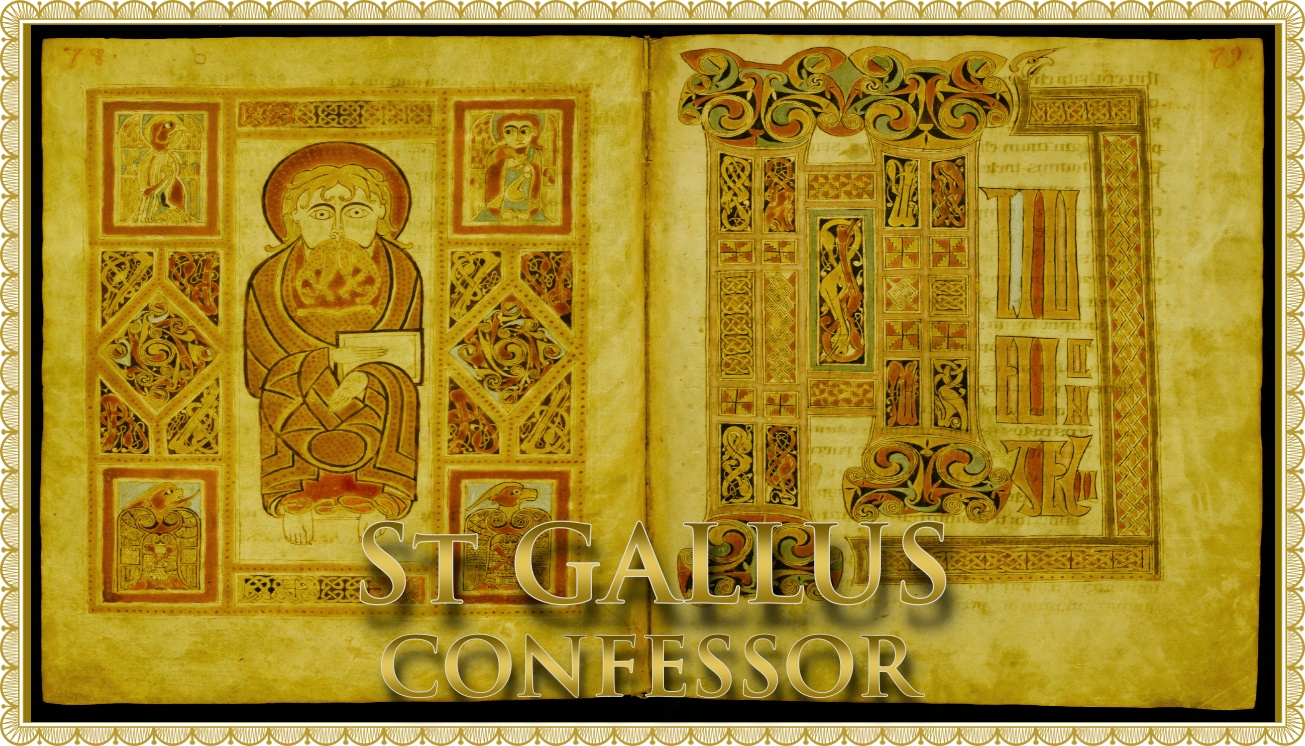
- Today’s Mass: October 17 St Gall, Confessor;Saint Gall, born in Ireland in the sixth century, became a notable confessor after accompanying Saint Columban to France and later Switzerland, where he preached and converted idolaters. Despite his significant contributions, he humbly declined the position of bishop of Constance. He died in 646, leaving a lasting legacy.
- 18.10.26 Nuntiatoria CXXVIII: NON POTEST VERITAS SUBDI POTESTATIThis editorial asserts that truth should not be subjugated to authority, emphasising that legitimate power derives from truth rather than mandates it. It critiques contemporary tendencies in both ecclesiastical and societal contexts where authority prioritises institutional credibility over accountability. Ultimately, it calls for a return to truth as the foundation of authority, urging faithful adherence to moral principles.
- ORDO w/c 18.10.26The liturgical calendar from 18 to 25 October 2026 includes the feast of St Luke the Evangelist, commemorating essential themes of forgiveness and evangelisation. Subsequent days honour St Peter of Alcantara, St John Cantius, St Ursula and St Raphael, culminating in the celebration of Christ the King, affirming His universal sovereignty over all creation.
- THE DEBTOR AT HIS BROTHER’S THROAT: The Twenty-First Sunday after PentecostThe Twenty-First Sunday after Pentecost highlights the danger of receiving divine mercy and failing to extend the same to others, exemplified by the parable of the unforgiving servant. The Church emphasises the need for genuine charity, justice without vengeance, and the importance of faith in guiding interpersonal conduct amidst spiritual struggle.
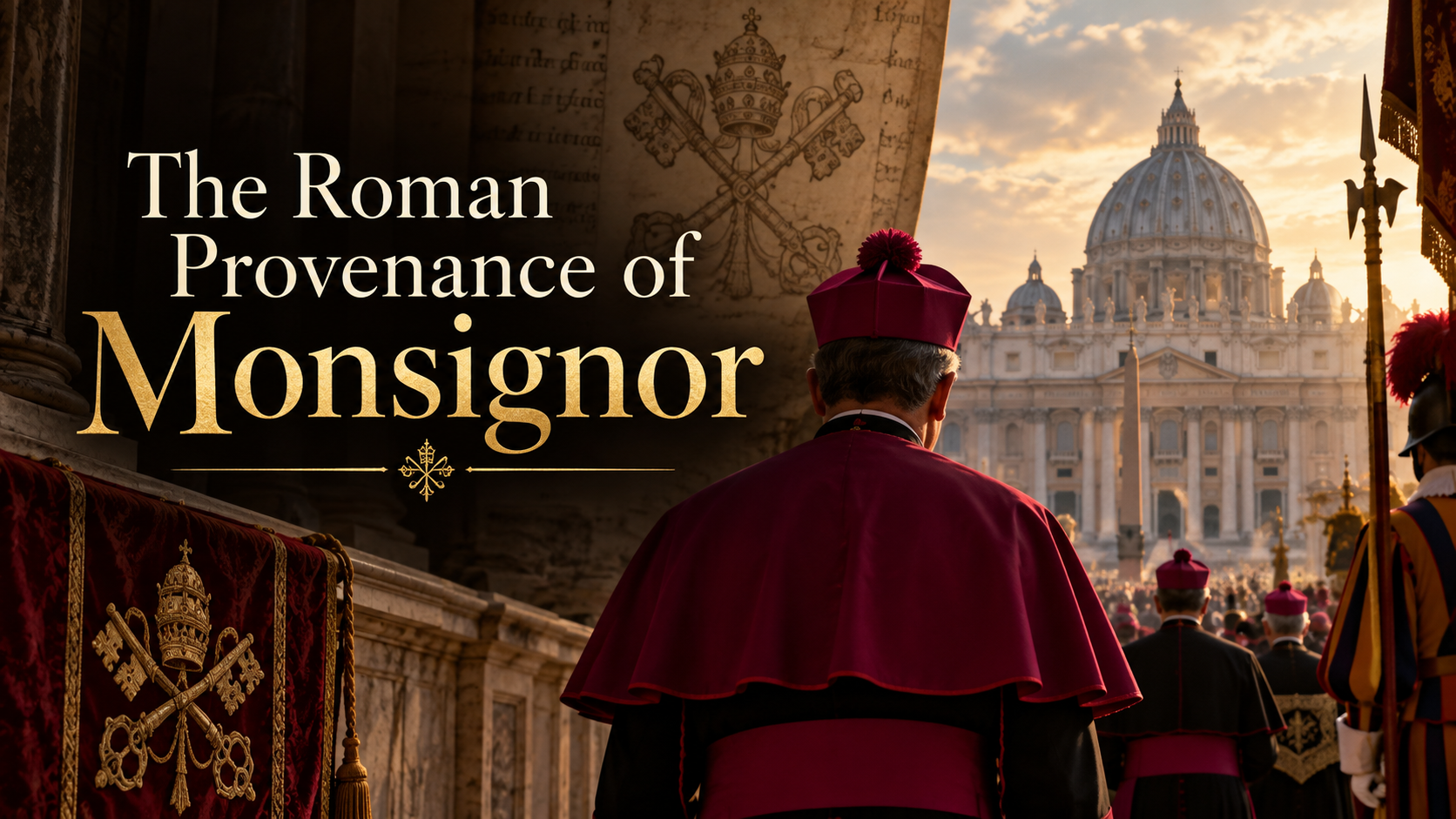
- The Roman Provenance of MonsignorThe title “Monsignor” is often misunderstood as an ecclesiastical rank or honour, whereas it is merely a style of address linked to specific ecclesiastical offices. The distinction between substantive dignity and its verbal expression is crucial. Various regulations historically defined these roles, ensuring accurate representation of ecclesiastical authority and honour.
CURRENT EDITION


Today’s Mass Propers
- Today’s Mass: October 17 St Gall, Confessor;
 Saint Gall, born in Ireland in the sixth century, became a notable confessor after accompanying Saint Columban to France and later Switzerland, where he preached and converted idolaters. Despite his significant contributions, he humbly declined the position of bishop of Constance. He died in 646, leaving a lasting legacy.

Leave a Reply