

STOP FUNDING THE DEMOLITION: The Traditional Catholic Faith Is Not an Accommodation: It Must Be Proclaimed, Lived and Handed On

There comes a point at which lamenting the destruction of Catholic Tradition while continuing voluntarily to finance the machinery responsible for much of that destruction becomes incoherent. Catholics who deplore the disappearance of the Traditional Latin Mass, the emptying of seminaries, the abandonment of traditional catechesis, the collapse of religious life, the transformation of sanctuaries, the confusion of moral teaching and the bureaucratisation of ecclesiastical life must eventually ask a very practical question: where is our money going? If we believe that the Catholic Faith received from previous generations must survive, then our financial choices ought first to sustain those actually preserving, proclaiming and living it.
That distinction is fundamental. Traditional Catholicism is not a hobby, an aesthetic preference, an ecclesiastical pressure group or a minority constituency requiring pastoral “accommodation”. It is not a taste for Latin which can safely be indulged provided its adherents accept that the real Church has moved somewhere else. What traditional Catholics are attempting to preserve is the received Catholic religion itself: its doctrine, sacramental theology, moral teaching, liturgical inheritance, conception of the priesthood, devotional life, ascetical tradition, spiritual authors, catechetical method and understanding of the Church as the divinely established guardian of a Revelation she received rather than manufactured.
The Faith is therefore not something to be “accommodated”; it is something to be proclaimed, believed, worshipped, lived and handed on. St Jude does not exhort Christians to negotiate an accommodation for one spiritual preference among many, but commands them “to contend earnestly for the faith once delivered to the saints.”¹ St Paul does not instruct the Thessalonians continually to reinvent Christianity in response to every new cultural moment, but tells them: “stand fast; and hold the traditions which you have learned, whether by word, or by our epistle.”² Our Lord does not commission the Apostles to conduct an indefinite consultation about what mankind might presently find acceptable, but commands: “Going therefore, teach ye all nations… teaching them to observe all things whatsoever I have commanded you.”³
This is the governing principle from which every other question in this editorial follows. If the Catholic Faith is a deposit received from Christ through the Apostles, ecclesiastical authority exists to guard, teach, sanctify and transmit that deposit. Bishops are not proprietors of Catholicism. Popes are not authors of Christianity. Synods do not constitute Revelation by deliberation. The Church receives before she teaches because what she teaches is ultimately not hers to invent. The very authority of the hierarchy rests upon fidelity to the Revelation it was instituted to preserve. Nuntiatoria has repeatedly examined this fundamental distinction between Tradition as inheritance and Tradition reduced to administrative concession: a concession is granted by authority and can be withdrawn by authority; an inheritance precedes the administrator and imposes upon him the duty of transmission.⁴
That is why the crisis confronting traditional Catholics is much larger than the future of one liturgical book. The Traditional Latin Mass has become the most visible battlefield because lex orandi and lex credendi cannot finally be separated, but beneath the liturgical controversy lies a deeper dispute about what the Church is. Is she essentially the custodian of something given, which every generation must receive and transmit, or is she an ecclesial process continually redefining how doctrine, worship, authority and morality are to be understood in response to contemporary experience? Nuntiatoria’s examination of Bishop ✠Athanasius Schneider’s criticisms of the synodal project identified precisely this danger: consultation and pastoral adaptation become something much more serious when they appear to make received Revelation itself subject to a continuing process of reinterpretation.⁵
The practical behaviour of the contemporary hierarchy has given traditional Catholics ample reason to refuse complacency. Pope Francis did not treat attachment to the traditional Roman liturgy as something to be secured permanently for succeeding generations. Traditionis Custodes declared the liturgical books promulgated by Paul VI and John Paul II to be the “unique expression of the lex orandi of the Roman Rite”, forbade the establishment of new traditional groups under its provisions and subjected continued celebration of the older Missal to episcopal and Roman permission. More revealing still was Francis’s accompanying letter. Bishops were instructed to work towards a “unitary form of celebration”; those attached to the older liturgy were described as needing “to return in due time” to the reformed rite; seminarians and newly ordained priests were to be formed in the post-conciliar liturgical books. This was not a charter for permanent coexistence. It envisaged transition away from the traditional Roman liturgy.
The consequences of that mentality became painfully concrete in the case examined by Nuntiatoria in “Permission Without a Future”. Catholics attached to the old Mass in Wisconsin were effectively told that they might continue attending it but should not encourage others to join them. The significance extended far beyond one pastor’s language. A community permitted to exist but discouraged from attracting newcomers, producing another generation, founding new communities or expecting permanent institutional security is not being preserved. It is being contained. As Nuntiatoria observed, such a policy amounts to permission without a future.⁶
That lesson ought never to be forgotten when traditional Catholics are invited to trust in “accommodation”. An accommodation can be withdrawn, a permission rescinded, a diocesan arrangement dissolved with the arrival of another bishop, a church taken away, a Mass cancelled and a priest transferred. A community which spends twenty years constructing its life around episcopal goodwill can discover in twenty minutes that the goodwill has changed. The very logic of Traditionis Custodes demonstrated the danger. A liturgical inheritance whose practical existence depends upon administrative permission remains vulnerable to the administrator.
Nor did the larger programme of ecclesiastical transformation end with Francis. His Synod on Synodality was not presented merely as a temporary consultation after which the Church would resume ordinary life. In November 2024 Francis formally declared its Final Document to participate in his ordinary Magisterium and placed the Church into a continuing implementation process. Pope Leo XIV has subsequently adopted the synodal language and programme rather than repudiating it. Nuntiatoria examined this development in “Experts in Synodality: Leo XIV and the Rise of the Church of Process”, noting that synodality under Leo is no longer plausibly dismissed as a slogan destined to disappear with the previous pontificate. It is increasingly presented as an enduring ecclesial method in which clergy, religious and institutions are to be formed.⁷
That continuity matters because the question facing traditional Catholics is not simply whether Pope Leo is personally more temperate than Pope Francis. The question is what ecclesial direction is being institutionalised. Nuntiatoria has documented Leo’s continued language of a “synodal Church”, the implementation of the Synod, his defence of post-conciliar liturgical reform and the continuing uncertainty surrounding Traditionis Custodes. Cardinal ✠Arthur Roche has publicly presented the restrictive settlement as continuing, while Cardinal ✠Robert Sarah has argued for another course. As Nuntiatoria observed in “Who Speaks for Leo?”, even a restrictive law allowed temporarily to wither would remain a law capable of being revived.⁸ A temporary benign administration is therefore no substitute for juridical and institutional security.
On the liturgy, too, the question extends beyond whether Leo might occasionally display greater ceremonial reverence. Nuntiatoria’s “The Council, the Reform, and the Missing ‘Thus’” addressed the deeper issue exposed by Dom Alcuin Reid: the authority to reform the liturgy does not by itself prove that the reform actually produced represents an organic continuation of what preceded it. Practices subsequently associated almost universally with Vatican II — most obviously the wholesale adoption of versus populum celebration — were never actually mandated by Sacrosanctum Concilium.⁹ The dispute is therefore not between people who favour reverence and people who do not. It concerns the relationship between received tradition, conciliar authority, post-conciliar construction and the subsequent rewriting of Catholic memory.
Here lies one of the strongest reasons for the present crisis of trust. For decades Catholics were repeatedly told that the transformations imposed after Vatican II were what “the Council wanted”, what “Vatican II required”, or what obedience to the Council now demanded. The phrase “the spirit of Vatican II” acquired enormous pastoral power because resistance to almost any post-conciliar innovation could thereby be represented as resistance to an Ecumenical Council. Yet the historical record repeatedly shows that many of the most consequential changes identified with “the Council” were not mandated by the Council Fathers at all.
The liturgy provides the most obvious example. Sacrosanctum Concilium authorised reform, but it also declared that “the use of the Latin language is to be preserved in the Latin rites”; required that the faithful should be capable of saying or singing their parts of the Ordinary in Latin; accorded Gregorian chant “pride of place”; ordered the Church’s treasury of sacred music to be preserved and fostered; and laid down the principle that “there must be no innovations unless the good of the Church genuinely and certainly requires them”, with new forms growing organically from those already existing.¹⁰ Yet within a remarkably short period Latin had almost disappeared from ordinary parish worship, Gregorian chant had become exceptional, sanctuaries were extensively reordered and versus populum celebration became so universal that generations of Catholics grew up believing Vatican II had commanded the priest to face the congregation. It had done nothing of the sort.
This is not a minor historiographical curiosity. It reveals a mechanism. First a reform was authorised in principle; then commissions and ecclesiastical authorities made particular choices in implementing it; those choices became widespread; and finally their historical contingency disappeared from collective memory until “Vatican II” became the explanation for practices which the Council Fathers had never actually voted to introduce. Nuntiatoria has already examined this phenomenon in “The Council, the Reform, and the Missing ‘Thus’”: to say that the Council authorised reform is not to prove that every feature of the reform subsequently produced was mandated by the Council.¹¹
The same phenomenon extended far beyond liturgy. Consider priestly formation. Optatam Totius required seminarians to acquire sufficient Latin to understand the sources of the sacred sciences and the documents of the Church. In theology it explicitly directed students to penetrate the mysteries of salvation more deeply “under the guidance of St Thomas”. Its philosophical programme called for seminarians to learn how to distinguish truth from error and to refute erroneous systems.¹² Yet post-conciliar seminary culture in many places progressively abandoned precisely the Latin, scholastic structure and Thomistic theological synthesis which the Council itself had retained.
The transformation was profound. Theology was increasingly taught through schools which privileged historical consciousness, subjective experience, sociological analysis and changing cultural conditions over the older metaphysical and scholastic synthesis. Moral theology became the battlefield upon which proportionalism, consequentialist reasoning and dissent from traditional sexual morality acquired extraordinary influence. Seminarians who once would have encountered St Thomas as the organising intellectual architecture of their studies could emerge knowing considerably more about contemporary psychology and sociology than about the scholastic theological tradition which had formed generations of Catholic priests before them. Not every post-conciliar theologian was a Modernist in the precise technical sense condemned by St Pius X, and historical accuracy requires that distinction; nevertheless, currents which earlier Catholic theology would readily have recognised as neo-modernist — historicism, doctrinal relativisation, experientialism and the subordination of immutable propositions to changing consciousness — acquired a prestige within Catholic academic life unimaginable only a generation earlier.
Again, none of this can honestly be dismissed as simply “what Vatican II commanded”. The Council Fathers voted for a decree which still required Latin and explicitly retained St Thomas. The subsequent marginalisation of both was an implementation choice and a cultural revolution within ecclesiastical formation, not the straightforward execution of the conciliar text. Nuntiatoria has already traced this process in its examination of post-conciliar priestly formation, observing how the transmission of doctrine in many seminaries gave way to its interrogation and how the older Thomistic metaphysical framework was displaced by historicist and experiential approaches.¹³
Religious life tells a similar story. Perfectae Caritatis certainly called for adaptation, but it simultaneously ordered institutes continually to return to the sources of Christian life and to their own founding inspiration. It required the “spirit and special aims” of founders and the “sound traditions” constituting each institute’s patrimony to be faithfully honoured. It affirmed contemplative withdrawal from the world, insisted that spiritual renewal take precedence even over external apostolic adaptation and retained the religious habit as an outward sign of consecration.¹⁴ What followed in many communities was not simply the moderate adaptation contemplated by those words but radical reconstruction: constitutions rewritten, communal observance reduced, habits abandoned, traditional devotions discarded, authority reconceived, monastic customs dismantled and distinctive charisms reinterpreted through the prevailing categories of the age.
The demographic consequences were catastrophic in many countries. Convents emptied, religious orders aged, novitiates closed and institutions built through generations of sacrifice were sold. Yet Catholics questioning the wisdom of the revolution were routinely answered with the talismanic phrase “Vatican II”. Once again, the Council’s actual requirement to preserve the authentic spirit and sound traditions of religious institutes disappeared behind an alleged “spirit” which somehow always seemed to require breaking with what religious life had previously looked like.
Pope Benedict XVI eventually acknowledged the problem with remarkable frankness. In his 2005 Address to the Roman Curia he contrasted a hermeneutic of continuity with a hermeneutic of discontinuity and rupture which claimed that the true spirit of the Council required going beyond its texts. Benedict observed that this approach left “a vast margin” in which room was made “for every whim”.¹⁵ His final reflections to the clergy of Rome in February 2013 were more striking still. Benedict distinguished the “Council of the Fathers” from a “Council of the media” which became the more immediately effective interpretation experienced by ordinary Catholics, and explicitly associated its consequences with “seminaries closed, convents closed, banal liturgy”.¹⁶
The admission is extraordinary because it confirms, from a Pope who had himself participated in Vatican II, that what millions of Catholics subsequently experienced as “the Council” could be substantially different from what the Council Fathers had actually enacted. The breach of trust therefore lies not merely in the fact that reforms occurred, but in the habit of identifying post-conciliar choices with conciliar necessity. Catholics were repeatedly told that the Council required changes which the Council had not required, and resistance to those changes was then represented as resistance to the Church.
Nuntiatoria has already described the bitter irony of this as one of the most clerical revolutions in modern Catholic history. The “spirit of Vatican II” was presented as liberation from an authoritarian, clerical and excessively rigid Church, yet the transformation itself was imposed to an extraordinary degree from above. Altars were removed because clergy ordered their removal. Liturgical practices disappeared because commissions and bishops changed them. Seminaries were reconstructed because clerical authorities reconstructed them. Religious institutes were pressured to revise customs and constitutions because ecclesiastical elites had embraced a new conception of renewal. Parishioners who objected were not generally invited into a synodal discernment about whether their altar should survive; they were told that the Church had changed.¹⁷
This historical record goes directly to the question of trust. The difficulty is not merely that individual churchmen made mistakes after Vatican II; human institutions inevitably make mistakes. The deeper problem is that ecclesiastical authority repeatedly permitted a false historical equivalence to become embedded: Vatican II authorised reform; therefore the reforms subsequently introduced were Vatican II; therefore questioning those reforms meant questioning the Council; therefore attachment to what existed before those reforms became resistance to the Church herself. That syllogism has governed Catholic life for decades, and every premise after the first requires scrutiny.
Nuntiatoria has repeatedly insisted upon separating these categories. Vatican II did not order versus populum celebration. It did not order the disappearance of Latin. It did not command Gregorian chant to be abandoned. It did not command seminaries to dispense with Latin or St Thomas. It did not instruct religious institutes to despise their founders’ traditions. Yet all these things, to varying degrees and in different places, became associated with becoming a “Vatican II Church”. Once that association became embedded in formation itself, the revolution no longer required continual enforcement: clergy eventually emerged from seminaries who had never known anything else. At that point the revolution had become the curriculum.
That history makes the contemporary language of “synodality”, “discernment”, “listening”, “development”, “pastoral conversion” and “process” impossible to receive with naive confidence. The vocabulary has changed, but the underlying question remains the same: does the received Faith judge the process, or does the process gradually reinterpret what has been received? The generation now preaching participation and listening belongs institutionally to a post-conciliar culture produced by one of the most sweeping top-down transformations in modern ecclesiastical history.
The pattern is familiar. Change is promoted as pastoral necessity; objections are represented as resistance to renewal; new practices become institutionalised; and after sufficient time has passed, the innovation is projected backwards until it appears to have been what the Church intended all along. Traditional Catholics therefore possess historical reasons, not merely emotional suspicions, for declining to entrust the future of the Faith wholly to the institutions formed by that process.
This is why the question cannot be reduced to whether every bishop is malicious, every diocesan priest modernist or every post-conciliar institution devoid of grace. Such caricatures would weaken the argument. The question is whether the institutional record justifies entrusting the survival of the Traditional Catholic Faith to structures whose prevailing formation, liturgy and ecclesiology have repeatedly moved away from it while insisting that the movement represented legitimate ecclesiastical progress.
History says that such confidence would be imprudent.
The same Catholics whose parents were told that Latin had disappeared because of Vatican II, whose religious sisters were told their habits belonged to another age, whose seminarians were taught that scholastic theology had been superseded, whose churches were reordered in the name of “the Council”, and whose children were catechised according to programmes almost unrecognisable to their grandparents are now being asked once again to entrust the future of Catholic Tradition to the institutional descendants of those reforms.
They have reason to decline — not because they reject the Church, but because they intend the Catholic Faith to survive.
The issue therefore goes much deeper than whether a particular bishop is personally pleasant towards traditional Catholics. Traditional Catholics have been encouraged for decades to regard survival by permission as security. It is not. The more fundamental question is why the Catholic Faith inherited from previous generations should require accommodation at all. The Faith should not occupy a tolerated side chapel within a Church continually being remodelled according to another ecclesiology. It should be proclaimed from the pulpit, form the seminary, govern the sanctuary, shape the family, determine the catechism, animate religious life, form Catholic schools and order Catholic moral judgement. It should be the ordinary atmosphere in which Catholic children learn what it means to be Catholic. The Traditional Catholic Faith does not require an accommodation strategy. It requires institutions capable of proclaiming and living it without apology.
That is what must now be financed.
This is therefore not fundamentally an argument about money. It is an argument about stewardship, responsibility and survival. Money merely exposes where those priorities actually lie. Catholics may insist that Tradition matters, that the ancient Mass matters, that orthodox catechesis matters, that priestly formation matters and that traditional religious life matters. But if their discretionary Catholic giving continues overwhelmingly to sustain diocesan bureaucracies, national ecclesiastical structures, Roman funds, fashionable pastoral programmes, celebrity lay apostolates and professional Catholic personalities while genuinely traditional priests, chapels, seminaries, convents and missions struggle to meet basic expenses, the financial evidence contradicts the professed conviction.
An altar cannot be maintained with indignation. A seminarian cannot be formed with social-media posts. A priest cannot fill his car with expressions of support before driving to bring the sacraments to the sick. A leaking chapel roof is unimpressed by complaints about Traditionis Custodes. Traditional Catholic life has material consequences. Candles must be purchased, buildings maintained, insurance paid, clergy housed, seminarians educated, vestments repaired, books printed, heating provided and journeys made to bring Mass and the sacraments to scattered faithful. Somebody must pay for these things. Catholics who want the traditional Faith to survive must increasingly recognise that they are those somebodies.
The contrast with the contemporary Catholic media economy is becoming increasingly difficult to ignore. There appears to be considerable money available for subscription podcasts, conferences, premium videos, online courses, personalities, branded merchandise and celebrity Catholic commentators. A convert may discover Catholicism, publicise his conversion, acquire an audience and within a remarkably short period discover that his personal journey into the Faith can itself become a commercial product. Each new conviction, discovery, controversy and stage of spiritual development can be narrated before an audience encouraged to subscribe, donate and return for the next instalment. Meanwhile the priest who has quietly offered Mass for thirty years, heard thousands of Confessions, instructed converts, buried the dead and carried Viaticum to the dying may struggle to pay the electricity bill.
The criticism is not that lay apostolates are intrinsically illegitimate. The Church has always benefited from lay apologists, writers, publishers, teachers and benefactors, nor is there anything intrinsically wrong with earning a livelihood through legitimate Catholic work. The problem begins when the hierarchy of value becomes inverted: personality before priesthood, commentary before sacramental life, entertainment before formation, celebrity before sanctity, and talking about Catholicism before sustaining the institutions without which Catholicism cannot actually be transmitted.
The Church survived for nearly two thousand years without YouTube, podcasts, livestream studios, subscriber communities and social-media influencers. She cannot survive without priests. She does not require celebrity converts in order to exist; she requires the Holy Sacrifice of the Mass. She can manage perfectly well without another three-hour discussion concerning the crisis in the Church; she cannot exist without Baptism, Confession, Holy Orders and the Blessed Sacrament. This elementary supernatural hierarchy should be reflected in the hierarchy of Catholic giving. St Paul puts the principle plainly: “They that serve the altar, partake with the altar. So also the Lord ordained that they who preach the gospel, should live by the gospel.”¹⁸
For most of Catholic history, Catholics understood this instinctively. Benefactors built churches, founded monasteries, endowed Masses, supported seminaries, established schools and provided for priests. Guilds maintained altars. Families paid for stained glass, statues and sacred vessels. Widows left bequests. Working people placed coins into collections from wages considerably smaller than those enjoyed by most Europeans today. The immense material patrimony of Catholic civilisation did not descend from heaven already constructed. It represents the accumulated sacrifice of generations who understood that what they had received spiritually also had to be maintained materially.
Our generation inherited the results. Churches, presbyteries, convents, monasteries, schools, hospitals, seminaries, land, investments, sacred vessels, libraries and endowments came to us because Catholics who are now dead sacrificed to provide them. The tragedy is that an enormous portion of that inheritance has subsequently been sold, squandered, abandoned, transformed or destroyed by precisely the institutional apparatus which inherited it. Sanctuaries funded by generations of parishioners were demolished in the name of liturgical reform. High altars were smashed or removed. Communion rails disappeared. Sacred furnishings were discarded. Convents and seminaries emptied. Churches built by poor Catholics were sold when the descendants of those Catholics ceased attending a form of ecclesial life increasingly unrecognisable from that which had inspired their ancestors to build them. There is something profoundly perverse about asking Catholics indefinitely to finance the managed liquidation of their own inheritance.
The clerical abuse catastrophe has added another appalling dimension to the financial destruction. Compensation paid to victims is not money “wasted”: victims of abuse are entitled to justice, and institutions responsible for grave failures cannot complain that justice has financial consequences. The scandal lies in the crimes themselves, in institutional failures which sometimes permitted abuse to continue, in inadequate supervision, concealment, misplaced institutional loyalty and governance so catastrophically defective that Catholics decades later have inherited enormous liabilities arising from acts they neither committed nor condoned.
The sums demonstrate what institutional failure eventually costs. In 2024 the Archdiocese of Los Angeles agreed to an $880 million settlement with 1,353 people alleging childhood sexual abuse. The settlement was to be funded through reserves, investments, borrowing and contributions from associated Catholic entities. In New York, the Diocese of Rockville Centre reached a $320 million settlement covering more than 600 survivors after four years in bankruptcy. Reuters reported that more than two dozen American dioceses had entered bankruptcy in connection with abuse claims.¹⁹ ²⁰
Consider what those figures represent. They represent not merely contemporary income but accumulated patrimony: investments, property, reserves and assets originating ultimately in the generosity of generations of Catholics. Again, justice for victims must be done. But Catholics are entitled to ask how institutions entrusted with the spiritual and temporal patrimony of the Church permitted failures of such enormity that resources accumulated over generations now have to be consumed repairing consequences which competent, courageous and morally serious governance should have prevented. Added to compensation is expenditure upon lawyers, insurers, restructuring advisers, bankruptcy specialists, communications professionals and administrators required to manage the institutional consequences of previous failures. Sin proves extraordinarily expensive when bureaucracy is left to contain its consequences.
Rome itself has supplied Catholics with ample reasons for financial caution. The Secretariat of State’s involvement with the property at 60 Sloane Avenue in London became one of the most damaging financial episodes in recent Vatican history. When the property was eventually sold in 2022 for £186 million, the Holy See acknowledged that a capital loss had been incurred and stated that it was borne by Secretariat of State reserves.²¹ Peter’s Pence illustrates another difficulty: the gulf which can exist between popular perception and institutional financial reality. Many ordinary Catholics naturally associate Peter’s Pence principally with the Pope helping the poor, but its function is considerably broader. In 2024 it received €58 million while expenditure totalled €75.4 million. Of that expenditure, €13.3 million funded 239 assistance projects in 66 countries, while €61.2 million supported activities of the Holy See through its dicasteries in service of the Pope’s wider apostolic mission.²² Catholics may perfectly legitimately support those purposes, but they should understand what they are financing. Piety is not credulity, generosity does not require financial naivety, and ecclesiastical status does not abolish the donor’s obligation to exercise prudence.
Against this background, the assumption that mainstream post-conciliar structures possess an automatic moral entitlement to the first portion of every Catholic’s discretionary giving deserves serious challenge. A diocese may possess substantial property, investments, administrative departments, professional fundraising operations and inherited assets while a genuinely traditional Catholic mission within the same territory survives by renting a room, adapting a domestic chapel or relying upon the standing orders of a few dozen families. Worse, the mainstream hierarchy may simultaneously restrict the traditional liturgy, discourage traditional formation and demand that those attempting to preserve the inherited Catholic life remain indefinitely dependent upon ecclesiastical permission. Why should the structure attempting to contain an inheritance possess a stronger claim upon Catholic generosity than those sacrificing to preserve it?
The contrast becomes still more stark when one looks at the physical reality of contemporary Catholicism. Mainstream diocesan Catholicism throughout much of the West is characterised by parish amalgamations, church closures, declining clergy numbers and the disposal of inherited property. Nuntiatoria’s recent examination of the proposed restructuring of Leeds, Middlesbrough and Hallam placed that process against declining Mass attendance, diminished clergy numbers and questions of institutional viability.²³ The euphemisms vary — pastoral reorganisation, restructuring, renewal, collaboration, larger pastoral areas — but the material fact remains: infrastructure constructed for a numerous practising Catholic population is increasingly being managed in contraction.
That contraction is inseparable from the deeper crisis of transmission which Nuntiatoria examined earlier this year in “The Crisis of Transmission: Rome Finally Confronts the Collapse of Catholic Continuity”. The problem is not merely that fewer people occupy diocesan pews. It is that generations have passed through nominally Catholic structures without acquiring the doctrinal, sacramental and devotional formation which earlier generations regarded as ordinary Catholic life. Declining practice, diminished vocations and doctrinal confusion are not independent phenomena. They are symptoms of a system which has increasingly struggled to reproduce committed Catholic belief from one generation to the next.²⁴
Meanwhile genuinely traditional Catholic communities frequently present a strikingly different picture. Nuntiatoria’s “Five-Point Question Facing Leo XIV” examined research comparing highly observant exclusive TLM attendees with exclusive Novus Ordo attendees and found stronger complete belief in the Real Presence among the former group. The significance of such evidence is not that one survey settles every question, but that Rome should surely be intensely interested in communities in which recognisably Catholic Eucharistic faith appears unusually strong.²⁵ Nuntiatoria’s analysis of ✠Rob Mutsaerts’s criticism of synodality similarly asked the obvious evangelical questions: where are the conversions, vocations, sacramental seriousness and missionary fruits? “By their fruits you shall know them” remains an inconveniently Catholic criterion.²⁶
Traditional missions often face a very different practical difficulty from mainstream parishes: not what to do with empty buildings, but how to provide sufficient room, priests, catechesis and sacramental provision for committed congregations, converts and young families. No serious argument requires pretending that every traditional mission is flourishing or every Novus Ordo parish is dying. The point is one of observable priorities. Where traditional Catholic life attracts people prepared to travel, marry, raise children in the Faith, attend Mass seriously, frequent Confession, learn doctrine and foster vocations, Catholics should recognise the significance of what is happening rather than treating it as an embarrassment to be contained.
The financial implication should be obvious. Catholics should not continue pouring discretionary resources into the closure of yesterday’s churches while tomorrow’s traditional missions have no permanent altar. They should not finance endless restructuring while traditional seminarians need formation, nor fund bureaucracies managing contraction while Catholic families attempting to live the traditional Faith must construct an entire sacramental culture almost from the ground up. Above all, they should not confuse temporary accommodation for Tradition under post-conciliar patronage with the permanent preservation of the Traditional Catholic Faith.
The latter distinction is indispensable. A traditional liturgy celebrated because a Novus Ordo hierarchy presently permits it remains subject to that hierarchy’s priorities. A tolerated enclave is not the same thing as an institution whose whole purpose is the preservation and transmission of the received Faith. Catholics who seriously intend the traditional Faith to survive another hundred years must think beyond gaining permission for next Sunday’s Mass. They need altars, churches, clergy, seminaries, religious communities, schools, publications, catechetical institutions, missions and property directed towards Tradition itself rather than dependent upon Tradition remaining temporarily acceptable to an ecclesiastical superior.
The record documented by Nuntiatoria supplies the lesson with sufficient clarity. “Tradition as Concession?” showed the theological danger of reducing inheritance to permission. “Permission Without a Future” demonstrated what that logic looks like pastorally. “Who Speaks for Leo?” demonstrated the insecurity created by leaving restrictive legislation intact. “Experts in Synodality” documented the continuation of the Franciscan synodal programme under Leo. “The Synod and the Revolt Against Revelation” asked whether process is being permitted to encroach upon what should simply be received. “The Most Clerical Revolution in Modern Catholic History” and “The Council, the Reform, and the Missing ‘Thus’” documented how post-conciliar changes came to be presented as though they had been mandated by the Council itself. “The Crisis of Transmission” documented the inability of mainstream structures to hand on Catholic identity effectively. “From Three Dioceses to One?” displayed the institutional consequences of that failure. “The Five-Point Question Facing Leo XIV” and “By Their Fruits” asked why communities manifesting doctrinal seriousness and Catholic vitality are so often precisely those treated as problematic.²⁷
Taken together, the conclusion is difficult to evade: accommodation is not preservation, tolerance is not transmission, permission is not permanence, and bureaucratic management is not evangelisation.
This is why financial independence matters. Money donated to a genuinely traditional Catholic mission can acquire property, establish a chapel, support clergy, train future priests, maintain an independent publishing apostolate, fund catechesis and provide the physical foundation upon which a community can endure. A Catholic who gives towards such purposes is not purchasing a religious consumer product. He is helping create the infrastructure through which the received Faith can pass into another generation.
The objective must therefore be larger than maintaining access to an old Mass. Traditional Catholics must rebuild an entire Catholic ecology: altar and sacrifice, priesthood and doctrine, catechesis and family life, education and religious life, the Divine Office and devotional culture, moral theology and apologetics, sacred music and intellectual formation. The traditional Faith was dismantled institutionally. It must therefore be rebuilt institutionally.
That is also why the cult of the Catholic celebrity is such a dangerous distraction. Conversion is a grace and should cause rejoicing, but it does not confer immediate theological authority. The traditional Church understood formation very differently from contemporary internet culture. The ancient catechumenate could be prolonged because becoming Catholic involved more than reaching an intellectual conclusion and announcing it publicly. It involved doctrinal formation, moral conversion, prayer, discipline, sacramental incorporation and the gradual acquisition of a Catholic mind.
St Paul warned concerning ecclesiastical office that its holder should be “not a neophyte: lest being puffed up with pride, he fall into the judgment of the devil.”²⁸ The immediate context is specific, but the spiritual wisdom is obvious: there is danger in elevating the newly converted too rapidly. Yet the internet economy can make yesterday’s inquirer today’s convert and tomorrow’s professional interpreter of Catholicism, with subscribers invited to finance the theological education in real time. The traditional instinct should be the reverse: first receive, then learn; first pray, then speak; first acquire roots, then presume to bear fruit for others. The Church does not principally need converts who become celebrities; she needs converts who become saints.
Nor should traditional Catholics merely transfer their credulity from official institutions to charismatic personalities. A Catholic influencer can become every bit as unaccountable as an ecclesiastical bureaucracy. Large audiences create temptations of their own. When controversy produces income, controversy can become a business model. When indignation generates engagement, every ecclesiastical event must become an emergency. When personal disclosure drives subscriptions, the spiritual life itself can become merchandise.
A real Catholic apostolate points beyond itself. The priest points towards Christ, the catechist towards revealed doctrine, the missionary towards Baptism, the monastery towards eternity and the liturgy towards Almighty God. The apostolate succeeds precisely when souls become more dependent upon Christ and His Church, not upon the personality presenting the programme. Catholics should therefore conduct a serious examination of their giving. How much is spent consuming Catholic commentary compared with supporting the priest providing the sacraments? How much disappears into mainstream institutional appeals compared with traditional priestly formation? How readily are expensive conference tickets purchased while a mission remains homeless? How many internet personalities receive subscriptions while traditional religious life receives nothing? How many Catholics complain about the disappearance of serious traditional Catholic publishing while expecting those preserving doctrine and history to work without support?
Priorities disclose conviction more accurately than rhetoric. Our bank statements may reveal our ecclesiology rather better than our social-media accounts.
Traditional Catholics must also resist a false conception of obedience which treats every ecclesiastical fundraising request as though declining it were disobedience to the Church. Catholics unquestionably have obligations towards the material support of the Church, but the Church cannot be reduced to the finance office of a territorial diocese, an episcopal conference or a Roman bureaucracy. The Church’s material needs exist for supernatural purposes: the worship of God, the salvation of souls, priestly ministry, formation, evangelisation, catechesis, religious life and genuine charity. When discretionary giving supports those ends, it serves the Church. When discretionary giving sustains structures which actively marginalise the traditional Faith, squander inherited patrimony or pursue an ecclesial programme contributing to the continuing dissolution of Catholic identity, redirecting that giving towards genuinely traditional Catholic work may constitute not selfishness but responsible stewardship.
Indeed, once the problem is understood, the moral question can reverse itself. Instead of asking, “Am I allowed not to give to this mainstream institution?”, the serious Catholic may need to ask why he continues to finance it when the traditional mission upon which the future of the Faith in his locality depends urgently needs support. Every pound has an opportunity cost. Money used to sustain an ecclesiastical bureaucracy cannot simultaneously acquire a chapel; money placed into an institutional appeal cannot simultaneously train a traditional priest; money used to preserve an administrative structure dedicated to managing contraction cannot simultaneously finance the construction of Catholic continuity.
There is a legitimate sense here in which Our Lord’s severe words acquire renewed force: “Let the dead bury their dead: but go thou, and preach the kingdom of God.”²⁹ These words must not be abused as a judgement upon the souls of ordinary Catholics worshipping in mainstream parishes, nor as a denial of charity or justice, but as an image of priorities they are arresting. There comes a point when continually pouring energy and resources into structures managing their own decline prevents living missionary work from receiving what it requires.
The Faith exists to be preached, not archived; Tradition exists to be transmitted, not accommodated; the Mass exists to be offered, not tolerated; and the priesthood exists to sacrifice, absolve, teach and sanctify, not principally to administer increasingly enormous pastoral units created by institutional contraction. Catholic parents do not need another consultation explaining why the ecclesiastical landscape must change. They need priests, sacraments, doctrine and communities in which their children can remain Catholic, and those communities require material foundations.
That question becomes still more acute when we remember where mainstream institutional wealth came from. The bishops and bureaucrats of today did not create the patrimony they administer. Previous generations did. The church now being sold was built by somebody else’s grandfather. The investment portfolio originated in somebody else’s bequest. The diocesan land was purchased with somebody else’s offerings. The chalice gathering dust in storage was paid for by Catholics who believed priests would offer the Sacrifice of the Mass with it. The magnificent high altar removed during a reordering was erected because another generation understood exactly what an altar was.
Present-day administrators are custodians, not proprietors, of Catholic patrimony. What previous generations sacrificed to place at the service of Almighty God was not handed to their successors as disposable capital with which to finance the ecclesiastical fashions, failures, legal liabilities and experiments of another age. Catholic patrimony belongs morally to a continuum between generations. The dead entrusted it to us for the unborn. We are not its terminal beneficiaries but trustees standing between those who sacrificed to build and those who have a right to receive after us. That is why the dissipation of Catholic patrimony is more than bad administration; it is a rupture of stewardship between generations.
Traditional Catholics therefore need to move decisively from protest to construction. It is not enough to denounce the ecclesiastical revolution; we must build what can outlive it. It is not enough to expose failing institutions; we must sustain faithful ones. It is not enough to mourn closed seminaries; we must train priests. It is not enough to photograph beautiful altars before they disappear; we must possess and maintain altars upon which the traditional Sacrifice will continue to be offered. It is not enough to complain that the hierarchy cannot be trusted permanently to accommodate Tradition; we must finally understand that Tradition should never have needed accommodation.
The Traditional Catholic Faith is not an embarrassment from the Church’s past requiring a protected reservation within somebody else’s conception of Catholicism. It is the inheritance. It is what saints believed, martyrs died confessing, missionaries crossed oceans preaching, religious renounced the world to live, theologians defended, parents taught their children and generations of ordinary Catholics sacrificed to transmit. If the contemporary hierarchy continues to pursue an ecclesial vision increasingly characterised by synodal process, post-conciliar liturgical assumptions and perpetual adaptation, traditional Catholics must at least ensure that the received Catholic inheritance remains materially capable of surviving those programmes.
They cannot entrust its survival exclusively to those who have repeatedly demonstrated that they regard its continued existence as negotiable. They cannot build for their grandchildren upon episcopal permissions revocable next year, nor preserve a civilisation with temporary concessions. They must build institutions, acquire property, endow missions, form priests, sustain religious, publish Catholic doctrine, educate children, worship God according to the received rites and consciously hand what they inherited to another generation. That is what their money is for.
If traditional Catholics want priests, they must finance traditional priestly formation. If they want churches, they must acquire and maintain them. If they want schools formed by the Catholic Faith, they must establish them. If they want traditional religious life, they must sustain it. If they want independent Catholic journalism and scholarship capable of resisting ecclesiastical fashion, they must support it. If they want missions, they must fund missionaries. If they want their grandchildren to possess the religion of their grandparents, they must construct institutions through which that religion can actually reach them.
Relatively modest giving can have disproportionate effects. Fifty people contributing £10 monthly provide £6,000 a year; two hundred provide £24,000; five hundred provide £60,000. Such sums may scarcely register in a large diocesan budget, but to a small traditional mission they may mean the difference between perpetual insecurity and a permanent home. Catholic civilisation was not created exclusively by millionaires. It was constructed through the cumulative sacrifice of ordinary faithful. Regular modest giving produces stability, stability produces institutions, and institutions make transmission possible.
Before every substantial Catholic donation, therefore, ask one question: what will this preserve? Will it preserve the Faith, maintain an altar, form a traditional priest, establish a mission, sustain religious life, teach a child an integral Catholic catechism, make Confession available, place Catholic books into another generation’s hands or create something that our grandchildren can inherit? Or will the money disappear into a structure whose priorities are contraction, process, bureaucracy and the managed accommodation of precisely the Catholic inheritance the donor wishes to preserve?
The faithful are not cash machines for ecclesiastical institutions. Their generosity is a stewardship before God. Previous generations handed us an astonishing inheritance because they believed their descendants would remain Catholic. They built for people they would never meet, endowed Masses to be offered after their deaths, paid for seminaries because they expected priests still to be necessary a century later, placed marble around altars because they believed those altars would remain places of Sacrifice, and built churches because they expected Catholic children yet unborn to kneel within them. We inherited their sacrifice, and we have no right casually to finance its disappearance.
The purpose now is not to rescue indefinitely the infrastructure of managed decline, but to construct the infrastructure of Catholic continuity. The evidence assembled across Nuntiatoria’s own reporting makes the choice increasingly stark: an ecclesiastical establishment which speaks continually of restructuring, synodal transformation and regulated accommodation of Tradition stands alongside traditional Catholic communities asking for something much simpler — the freedom and material means to believe, worship, teach, form families, produce vocations and hand on what Catholics before them received.
If the old Mass matters, support the altar upon which it is offered. If the traditional priesthood matters, support those being formed for it. If Catholic doctrine matters, support those who proclaim it without qualification. If traditional religious life matters, support those living it. If the Catholic Faith matters, stop treating its survival as somebody else’s financial responsibility. The Faith does not require accommodation; it requires fidelity, proclamation, sacrifice and institutions capable of handing it intact from one generation to another.
There comes a point when the words of Our Lord must be heard with all their severity: “Let the dead bury their dead: but go thou, and preach the kingdom of God.”²⁹ Let structures committed to managed decline manage the consequences of their choices. Traditional Catholics have another work before them: to preserve, proclaim, build and transmit.
Our ancestors paid to build the altars. Our generation must pay to keep them — and, where necessary, to build them again. And when future Catholics ask what we did while one of the greatest religious inheritances in history was being dismantled around us, “we continued financing its dismantling” will be a very poor answer.
¹ Jude 3, Douay-Rheims.
² 2 Thessalonians 2:14, Douay-Rheims.
³ Matthew 28:19–20, Douay-Rheims.
⁴ Nuntiatoria, “Tradition as Concession? Cardinal Roche, Traditionis Custodes, and the Crisis of Liturgical Continuity”, 1 April 2026.
⁵ Nuntiatoria, “The Synod and the Revolt Against Revelation: Bishop Schneider’s Warning and the Crisis of Catholic Identity”, 15 May 2026.
⁶ Nuntiatoria, “Permission Without a Future: Father Paul Fliss and the Containment of the Traditional Roman Mass”, 31 July 2026.
⁷ Nuntiatoria, “Experts in Synodality: Leo XIV and the Rise of the Church of Process”, 14 August 2026.
⁸ Nuntiatoria, “Who Speaks for Leo? Sarah, Roche and a Law That Could Wither”, 28 August 2026.
⁹ Nuntiatoria, “The Council, the Reform, and the Missing ‘Thus’”, 28 August 2026.
¹⁰ Second Vatican Council, Sacrosanctum Concilium, §§23, 36, 54, 114–116.
¹¹ Nuntiatoria, “The Council, the Reform, and the Missing ‘Thus’”, 28 August 2026.
¹² Second Vatican Council, Optatam Totius, §§13, 15–16.
¹³ Nuntiatoria, “From Rupture to Reconstitution: The Priesthood after the Break of Vatican II”, 24 April 2026.
¹⁴ Second Vatican Council, Perfectae Caritatis, especially §§2, 6, 7, 9 and 17.
¹⁵ Benedict XVI, Address to the Roman Curia, 22 December 2005.
¹⁶ Benedict XVI, Address to the Clergy of Rome, 14 February 2013.
¹⁷ Nuntiatoria, “The Most Clerical Revolution in Modern Catholic History”, 21 August 2026.
¹⁸ 1 Corinthians 9:13–14, Douay-Rheims.
¹⁹ Reuters, 16 October 2024, reporting the Archdiocese of Los Angeles agreement to an $880 million settlement involving 1,353 claimants and its proposed financing.
²⁰ Reuters, 4 December 2024, reporting judicial approval of the Diocese of Rockville Centre’s $320 million settlement involving more than 600 survivors and the wider resort of American dioceses to bankruptcy proceedings.
²¹ Vatican News, 1 July 2022, reporting completion of the sale of 60 Sloane Avenue for £186 million and stating that the resulting capital loss was borne by Secretariat of State reserves.
²² Peter’s Pence Annual Disclosure 2024, reported by Vatican News, 27 June 2025.
²³ Nuntiatoria, “From Three Dioceses to One? Leo XIV and the Yorkshire Test”, 28 August 2026.
²⁴ Nuntiatoria, “The Crisis of Transmission: Rome Finally Confronts the Collapse of Catholic Continuity”, 16 May 2026.
²⁵ Nuntiatoria, “The Five-Point Question Facing Leo XIV”, 28 August 2026.
²⁶ Nuntiatoria, “By Their Fruits: ✠Mutsaerts Puts Synodality to the Test”, 18 August 2026.
²⁷ See particularly the Nuntiatoria articles cited above concerning Tradition as concession, post-conciliar rupture, synodality, failed transmission, diocesan contraction and traditional Catholic vitality.
²⁸ 1 Timothy 3:6, Douay-Rheims.
²⁹ Luke 9:60, Douay-Rheims.
RELATED ARTICLES


LATEST ARTICLES
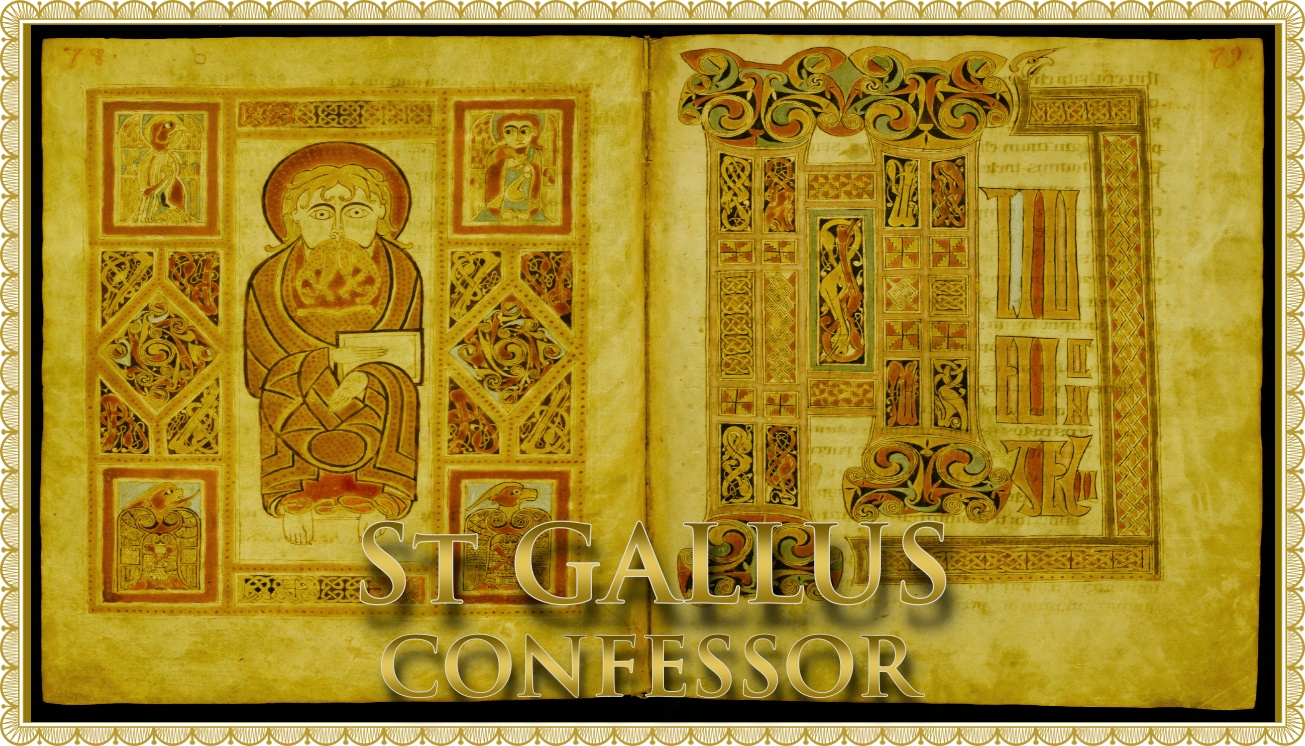
- Today’s Mass: October 17 St Gall, Confessor;Saint Gall, born in Ireland in the sixth century, became a notable confessor after accompanying Saint Columban to France and later Switzerland, where he preached and converted idolaters. Despite his significant contributions, he humbly declined the position of bishop of Constance. He died in 646, leaving a lasting legacy.
- 18.10.26 Nuntiatoria CXXVIII: NON POTEST VERITAS SUBDI POTESTATIThis editorial asserts that truth should not be subjugated to authority, emphasising that legitimate power derives from truth rather than mandates it. It critiques contemporary tendencies in both ecclesiastical and societal contexts where authority prioritises institutional credibility over accountability. Ultimately, it calls for a return to truth as the foundation of authority, urging faithful adherence to moral principles.
- THE DEBTOR AT HIS BROTHER’S THROAT: The Twenty-First Sunday after PentecostThe Twenty-First Sunday after Pentecost highlights the danger of receiving divine mercy and failing to extend the same to others, exemplified by the parable of the unforgiving servant. The Church emphasises the need for genuine charity, justice without vengeance, and the importance of faith in guiding interpersonal conduct amidst spiritual struggle.
- The Roman Provenance of MonsignorThe title “Monsignor” is often misunderstood as an ecclesiastical rank or honour, whereas it is merely a style of address linked to specific ecclesiastical offices. The distinction between substantive dignity and its verbal expression is crucial. Various regulations historically defined these roles, ensuring accurate representation of ecclesiastical authority and honour.
- THE CATHOLICOS IS NOT THE PRIME MINISTER’S TO DISMISSArmenia’s government aims to remove Catholicos Karekin II, head of the Armenian Apostolic Church, amidst allegations of misconduct, leading to possible imprisonment. This interference poses significant questions regarding ecclesiastical autonomy and religious freedom under Armenia’s constitution, while the EU’s support for Armenia faces scrutiny regarding its commitment to these principles.



Leave a Reply