
Equality Without Confusion: Women’s Ordination, Ecclesial Authority, and the Crisis of Discipline
Calls for women’s ordination are increasingly framed as matters of justice, equality, and synodal integrity. This editorial was prompted by a December 16, 2025 interview with Sr. Mary John Mananzan OSB published by Global Sisters Report, in which she presents women’s ordination as a “straightforward syllogism” demanded by equality and synodality.¹ Her argument, articulated with unusual clarity and confidence, raises a deeper and more troubling question: why do theologians who openly reject definitive Catholic teaching remain within the Church, teach publicly in her name, and face little or no discipline?
A theology formed by activism, not reception
Sr. Mary John Mananzan’s theological method is inseparable from her identity as a social activist. Formed by resistance to the Marcos dictatorship, labour struggles, and post-colonial critique, she consistently defines theology as prophetic activism rather than disciplined reception of revealed truth. In her own words, contemplation exists to generate prophecy, and prophecy is realised through political and social engagement.¹ Theology, on this account, is judged primarily by its capacity to transform structures rather than to transmit what has been received.
This methodological starting point is decisive. Sacramental theology, ecclesial authority, and doctrinal limits are not treated as givens to which the theologian submits, but as inherited structures to be interrogated and, if necessary, reconstructed.
The ‘straightforward syllogism’ and the category error
In her December 2025 interview, Sr. Mananzan presents women’s ordination as a “straightforward syllogism”: men and women are equal in God’s eyes; the Church ordains men but not women; therefore the Church contradicts equality and commits injustice.¹ She links this claim to clericalism, synodality, and ecumenical precedent.
The argument fails because it rests on a hidden premise: that equality of dignity requires sameness of sacramental role. Catholic theology has never accepted this premise. Equality in Christian doctrine is ontological, not functional. Men and women are equal in dignity and salvation, yet not interchangeable in vocation or sacramental signification. Distinction without inequality is not a concession to injustice but intrinsic to Christian metaphysics.
Ordination reduced to power
Like much feminist and liberationist theology, Sr. Mananzan’s account treats ordination primarily as a question of power. Clericalism, on this view, is not a moral deformation of the priesthood but its defining feature.¹ Yet Catholic doctrine teaches that Holy Orders is an ontological configuration to Christ the High Priest, enabling the ordained to act in persona Christi capitis.² The priest does not represent the community to itself; he represents Christ to the Church.
Abuse does not redefine essence. Clericalism is a sin to be corrected, not a proof that the sacrament itself must be reimagined.
Christology, sacramental sign, and authority
What is routinely obscured in contemporary debate is the Christological foundation of the priesthood. The priest sacramentally represents Christ not as a generic human leader, but as the incarnate Son who gives Himself to His Bride, the Church. This nuptial symbolism is not optional or poetic; it is woven into Scripture, liturgy, and patristic theology. The Church insists that the sacramental sign is not arbitrary. Just as bread and wine are not interchangeable, neither is the subject of ordination.
This is why the Church teaches that she lacks authority here. Authority in Catholic theology is ministerial, not constitutive.
The decisive doctrinal boundary
In Ordinatio Sacerdotalis (1994), Pope John Paul II declared that the Church has no authority whatsoever to confer priestly ordination on women and that this judgment is to be definitively held by all the faithful.³ The Congregation for the Doctrine of the Faith subsequently clarified that this teaching belongs to the deposit of faith and has been infallibly taught by the ordinary and universal Magisterium.⁴
CANONICAL EXPLAINER: Why Denying Ordinatio Sacerdotalis Is Doctrinal Dissent
Ordinatio Sacerdotalis does not express a prudential opinion or disciplinary policy. Pope John Paul II declared that the Church has “no authority whatsoever” to ordain women and that this judgment is to be “definitively held by all the faithful.”³
In 1995, the Congregation for the Doctrine of the Faith clarified that this teaching belongs to the deposit of faith, has been infallibly taught by the ordinary and universal Magisterium, and therefore requires definitive assent.⁴
Under canon law (canon 750 §2), denial of a truth definitively proposed by the Magisterium constitutes doctrinal dissent, even if the truth is not formally defined as revealed dogma. Public advocacy of women’s ordination after this clarification therefore meets the objective criteria for dissent.
Crucially, doctrinal obligation does not depend on enforcement. The absence of penalties reflects a failure of governance, not permission to dissent. Silence by superiors does not transform definitive teaching into open debate.
Why dissenters do not leave
This brings us to the deeper question: why figures such as Sr. Mananzan do not leave the Church to join communities already aligned with their theology.
The answer is simple and uncomfortable: remaining inside the Catholic Church gives dissent its leverage. Outside the Church, these ideas are unremarkable. Inside, they can be framed as prophetic courage, reform, or “speaking truth to power.” The Church’s authority—denied in theory—is quietly exploited in practice.
A Protestant logic without Protestant consequences
The operative assumptions behind such dissent are recognisably Protestant: doctrine is revisable in light of experience; authority emerges from communal discernment; tradition is corrigible. What is absent is the Protestant conclusion—departure. Instead, rejection of doctrine is recast as fidelity, and contradiction as reform.
Why discipline rarely follows
That such dissent goes undisciplined reflects not doctrinal uncertainty but institutional collapse. Since the late 1960s, many bishops and superiors have absorbed the view that clarity is divisive and discipline authoritarian. Doctrinal enforcement has been replaced by procedural tolerance.
Those who deny definitive teaching are indulged in the name of dialogue, while those who defend tradition too explicitly are disciplined for rigidity. The inversion is now systemic.
Justice ordered to truth
Justice detached from truth becomes moralised will-to-power. Catholic theology insists on the opposite ordering: truth first, justice within truth. The Church’s refusal to ordain women is not a failure of compassion, but a claim about limits—limits rooted in Christ’s own action and the sacramental economy He instituted.
The real scandal is not that the Church holds this teaching, but that she increasingly lacks the will to defend it.
¹ Sr. Mary John Mananzan OSB, interview with Manilen Grace Armea, Global Sisters Report, “Q&A with Sr. Mary John Mananzan, Filipina theologian, educator and activist,” December 16, 2025. pasted
² Catechism of the Catholic Church, §1548.
³ John Paul II, Ordinatio Sacerdotalis (1994), §4.
⁴ Congregation for the Doctrine of the Faith, Responsum ad dubium (1995).
⁵ Congregation for the Doctrine of the Faith, Inter Insigniores (1976).


LAtest
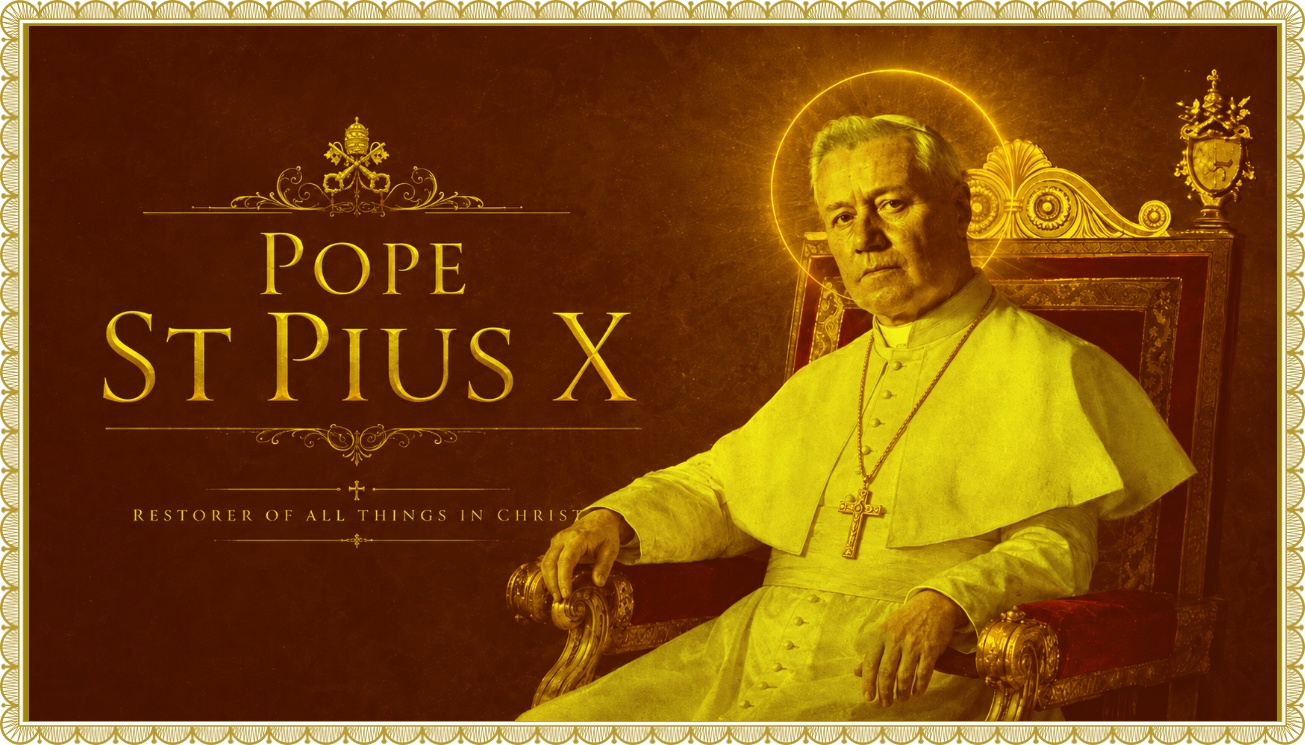
- Today’s homily: St Pius X, PopeThe text reflects on the life and legacy of Pope St Pius X, who was chosen from humble beginnings to reform the Church. His pontificate focused on defending the Catholic Faith, restoring liturgical sanctity, and fostering deeper connections between believers and Christ. Pius X exemplified a balance of truth and pastoral charity.
- Today’s Mass: September 03 Pope St Pius X,Pope St Pius X, born Giuseppe Melchiorre Sarto, was a significant reformer who emphasised preserving the Catholic Faith against Modernism. His pontificate (1903-1914) featured reforms in liturgy, frequent Holy Communion, and seminaries, rooted in a pastoral desire to restore everything in Christ. He died in 1914 and was canonised in 1954.
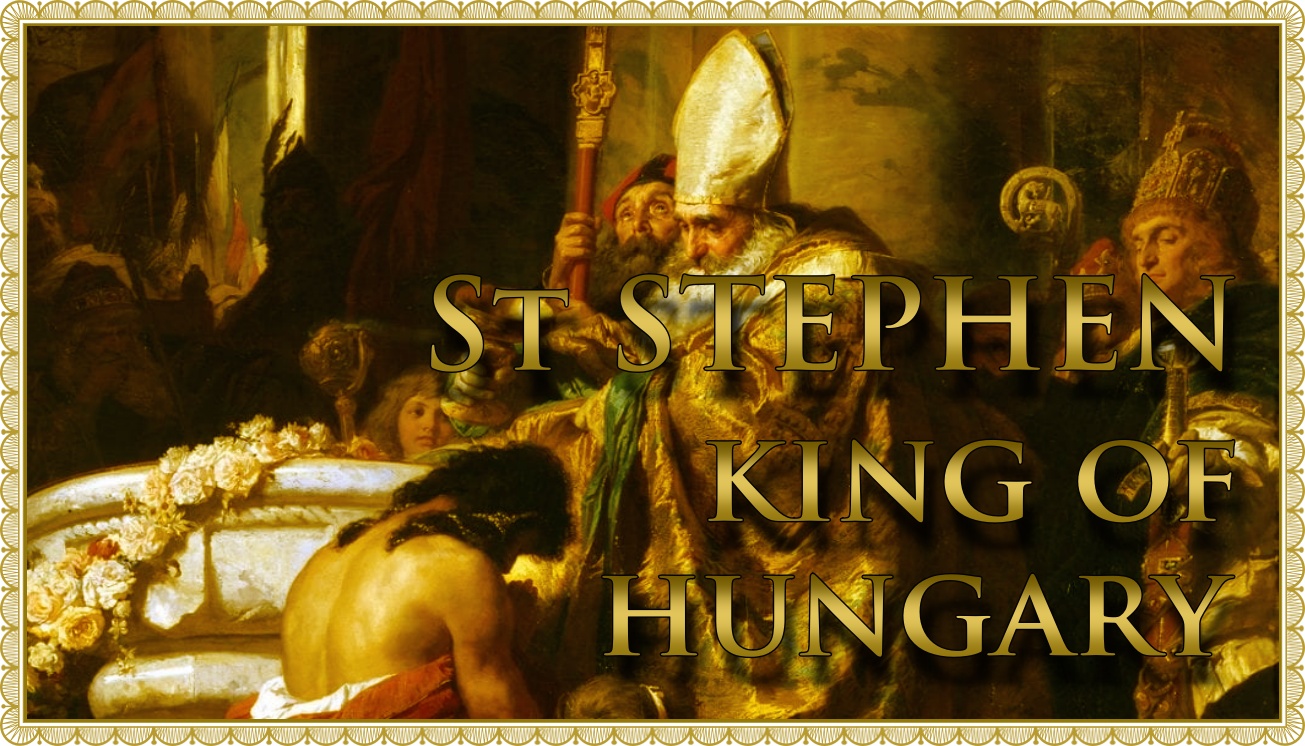
- Today’s homily: St Stephen of HungaryThe homily reflects on the life of Saint Stephen of Hungary, illustrating his transition from a powerful ruler to a saint. He embraced the responsibilities of kingship guided by faith, understanding his authority as stewardship. His legacy teaches that true governance comes with surrender to God, ultimately placing his kingdom under the protection of the Blessed Virgin Mary.
- Today’s Mass: September 02 St. Stephen the GreatSt. Stephen the Great, King of Hungary (977-1038), was a significant Christian ruler who reinforced the faith throughout Hungary. Anointed king in 1000 by Pope Sylvester II, he fought against paganism and promoted the Church. He was canonised in 1083 and is the patron saint of Hungary, symbolising national identity.
- QUAERITE PRIMUM REGNUM DEI – Seek First the Kingdom: Spiritual Conference for Nuntiatoria CXXIA spiritual conference, “Seek First the Kingdom,” emphasises prioritising God’s reign within individuals over earthly concerns. It explores the necessity of internalising Christ’s teachings, the importance of discernment, and the critical evaluation of the faith in relation to contemporary issues. A genuine Catholic life centres on Christ, fostering holiness and transformation.



Leave a Reply