
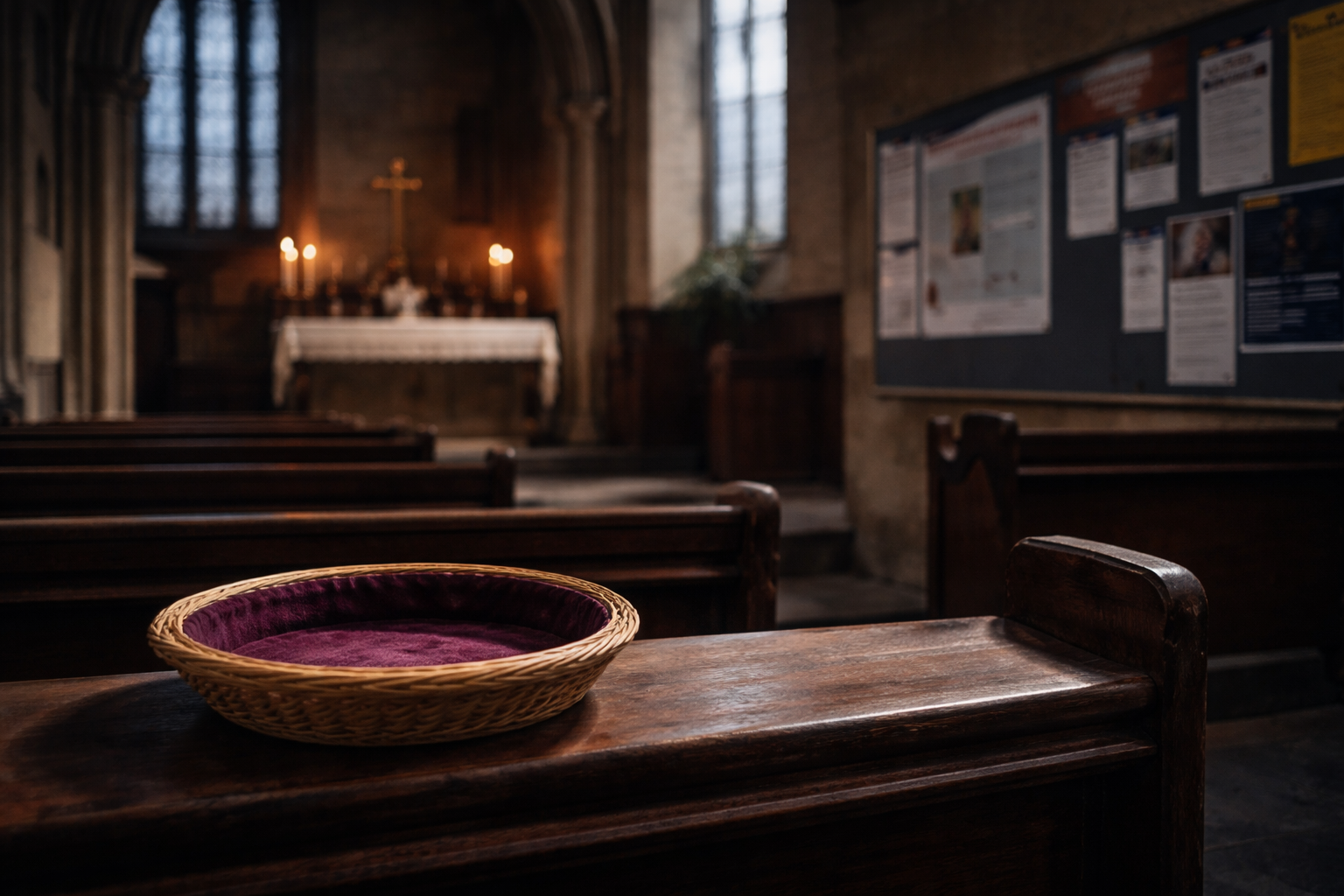
Donor Revolt and Moral Overreach: Activist Virtue and Institutional Failure in the Church of England

In recent months, the Church of England has confronted not merely criticism but a cumulative crisis of legitimacy. Polling now indicates that a majority of practising Anglicans are prepared to withhold or redirect their financial contributions should Church funds be used for slavery reparations rather than parish ministry. This donor revolt coincides with a series of institutional decisions that, taken together, reveal a widening gulf between activist moral posturing and failures of governance, transparency, and pastoral responsibility within an established church already in steep decline.
The immediate catalyst remains Project Spire, a £100 million reparations programme advanced by the Church Commissioners and intended to be disbursed over nine years. The initiative follows historical research into Church-linked endowments, particularly Queen Anne’s Bounty, established in 1704 to support poor clergy and later shown to have indirect connections to slavery-era economic structures. The programme was publicly endorsed by Justin Welby, who framed the findings as a source of institutional shame demanding redress.
This moral framing rests on assumptions increasingly rejected by the Church’s own worshippers. It presumes that financial continuity across centuries entails moral agency; that present ecclesial institutions inherit culpability rather than historical memory; and that contemporary Anglicans may rightly be compelled to fund restitution for actions in which neither they nor their ancestors participated. These claims, drawn more from secular activist ethics than from Christian moral theology, have generated resistance precisely because they are experienced as imposed rather than confessed.
The scale of that resistance is now demonstrable. A Merlin Strategy poll of 500 practising Anglicans reports that six in ten would divert or withhold donations if Church funds were used for reparations. Large majorities favour expenditure on parish buildings, regular worship, and the recruitment and training of clergy. Only a small minority regard historical reparations as a legitimate financial priority. This represents not symbolic dissent but a direct threat to the Church’s financial and sacramental life, which depends overwhelmingly on voluntary parish giving.¹
Legal and fiduciary objections compound the pastoral backlash. A February 2025 report by Policy Exchange warned that the reparations scheme is historically under-contextualised and potentially incompatible with the charitable purposes governing Church assets. These concerns were echoed by Conservative MPs and peers, who urged Sarah Mullally to abandon the plan, noting that Church Commissioner funds are legally designated for churches, clergy, and ministry, not for discretionary moral signalling.²
Project Spire is not an isolated instance but part of a broader pattern of activist moral positioning. In January 2026, the Diocese of Southwark announced its withdrawal from the social media platform X, citing safeguarding and ethical concerns related to harmful content and AI-generated abuse imagery. While framed as a moral stand, the decision exemplified the same governing instinct: public withdrawal and symbolic action guided by external ethical frameworks, undertaken with little reference to parish mission, evangelisation, or the Church’s obligation to remain present in contested public spaces.³
Yet this posture of heightened moral sensitivity stands in stark contrast to the Church’s handling of its most serious internal failures. In January 2026, Stephen Cottrell dismissed a safeguarding complaint brought under the Clergy Discipline Measure against Sarah Mullally in her capacity as Archbishop-elect of Canterbury, relating to her handling of an abuse allegation during her tenure as Bishop of London. The complaint was closed without further action, with the Archbishop of York acting as sole decision-maker. Survivors and advocates criticised the process as opaque and lacking independent oversight, reinforcing long-standing concerns about institutional self-protection and the absence of transparency in safeguarding governance.⁴
The contrast is instructive. The Church exhibits decisiveness and moral absolutism when addressing historical guilt, digital platforms, or symbolic acts of withdrawal, yet displays caution, procedural opacity, and internal insulation when confronted with contemporary safeguarding accountability. Activist morality is exercised outwardly and performatively, while inward reform remains hesitant and defensive.
This disjunction explains why a majority of Anglicans now reject the Church’s moral claims. Christian repentance is personal, sacramental, and oriented toward conversion and justice in the present. It is not reducible to institutional wealth transfers for historical abstractions, nor can it coexist credibly with unresolved failures to protect the vulnerable today. When moral leadership is selective, it forfeits authority.
The strategic consequences are severe and accelerating. Although the Church Commissioners emphasise that £1.6 billion will be distributed to support mission and ministry over three years, voluntary giving is governed by confidence, not accounting assurances. Even limited donor withdrawal will disproportionately damage rural parishes, historic churches, clergy sustainability, and the regular provision of the sacraments—particularly in already fragile communities.
What emerges is a portrait of institutional decline masked by moral activism. An established church facing collapsing attendance, doctrinal incoherence, and a safeguarding credibility deficit now seeks legitimacy through symbolic gestures aligned with contemporary ethical fashions. Yet moral authority cannot be sustained through posture alone. When authority detaches from stewardship, transparency, and pastoral fidelity, it no longer persuades—it alienates.
A Church unable to govern itself justly in the present should hesitate before claiming the authority to adjudicate the sins of the past.
¹ Merlin Strategy poll of 500 practising Anglican worshippers, January 2026.
² Policy Exchange, The Case Against Church Reparations, February 2025; statements by Conservative MPs and peers, December 2025.
³ Diocese of Southwark, official announcement on withdrawal from X (formerly Twitter), January 2026.
⁴ Reporting on the dismissal of a Clergy Discipline Measure complaint against the Archbishop-elect of Canterbury by the Archbishop of York, January 2026.
RELATED ARTICLES


LATEST ARTICLES
- Today’s homily: Feast of the Holy RelicsThe Feast of the Holy Relics affirms the dignity of the human body and Christ’s promise of resurrection. Drawing upon Scripture, the early martyrs and England’s Catholic inheritance, this homily considers the communion of saints, our duty towards the departed and the holiness demanded of our own earthly lives.
- Today’s Mass: November 5 Feast of the Holy RelicsSt. Charles Borromeo (1538–1584) reformed the Church through holiness amid the corruption of his age—guiding Trent, renewing Milan, and serving heroically during plague. With Ss. Vitalis and Agricola and in the Octave of All Saints, he calls today’s Church to fidelity, reverence, and courageous sanctity amid confusion and decline.
- Today’s Mass: November 4 St Charles BorromeoSt. Charles Borromeo (1538–1584) reformed the Church through holiness amid the corruption of his age—guiding Trent, renewing Milan, and serving heroically during plague. With Ss. Vitalis and Agricola and in the Octave of All Saints, he calls today’s Church to fidelity, reverence, and courageous sanctity amid confusion and decline.
- MEMENTO MORI: LEARNING TO LIVE IN THE LIGHT OF ETERNITYThis pastoral meditation reflects on the importance of remembering death to inspire a more faithful life, especially during the month of All Saints and All Souls. It urges individuals to embrace their mortality, make meaningful choices, and engage in prayer for the departed, thereby cultivating a closer relationship with God and living purposefully.
- WHEN THE BISHOP BECOMES THE MESSAGE: The Cult of Personality, Episcopal Pride and the Betrayal of Apostolic TrustArchbishop Josef Grünwidl of Vienna has openly advocated for women’s ordination, reflecting a troubling trend among bishops who express personal opinions at odds with established Catholic doctrine. This practice undermines their primary role of teaching the faith and raises concerns about episcopal pride and the proper handling of doctrinal authority by the Church.





Leave a Reply