

The Gospel Is Not a Safeguarding Risk
The Church of England’s restriction of a General Synod fringe event on “sexual identity transformation” exposes the real danger of conversion-practices legislation: Christian testimony, prayer, pastoral care and orthodox doctrine may be recast as harm before the law has even spoken.

The scandal is not simply that activists objected to a General Synod fringe event. That is now routine. The scandal is that the Church of England can find room for almost every species of public dissent from Christian doctrine, yet becomes visibly nervous when orthodox Christians testify that grace can change lives, desires, conduct and identity.
The event, People Change: Sexual Identity Transformation, was scheduled for General Synod in York. It was to feature Matthew Grech, Dr Mike Davidson and Andrea Williams of the Christian Legal Centre. Its purpose was to examine “neglected stories of the power of God to transform sexual identity” and to ask how the Government’s proposed conversion-practices ban may affect the Gospel, Christian testimony, pastoral care and freedom of speech.¹ That alone was apparently enough to provoke alarm.
According to reports, a letter signed by 82 campaigners pressed the Archbishops to ban the meeting and its exhibition stand. The controversy intensified after Synod member Rev’d Dr Charlie Bączyk-Bell reportedly described the event as “this trash” and “genuinely disgusting and astonishing”. Shortly afterwards, the organisers received a letter from the Archbishop of Canterbury, Sarah Mullally, and the Archbishop of York, Stephen Cottrell, threatening cancellation.²
The eventual retreat was partial, not complete. The meeting was allowed to proceed as a private discussion for Synod members and invited guests, but permission for the associated stand and public display was refused.³ That distinction matters. It reveals the new ecclesiastical settlement. The orthodox may speak quietly in a side-room, but must not become publicly visible. Testimony may be contained, but not displayed. The Church will tolerate a private conversation about transformation, while refusing the public sign that such transformation is a legitimate Christian claim.
Safeguarding is a grave Christian duty. The vulnerable must be protected from coercion, manipulation, violence, humiliation and abuse. No serious Christian defence of doctrine requires any defence of such things. But safeguarding becomes corrupt when it is inflated from the protection of the vulnerable into a veto over doctrine, testimony and moral reasoning. The question here is not whether abuse should be forbidden. It should. The question is whether the language of abuse is now being used to pathologise ordinary Christian claims about sin, repentance, sanctification and grace.
Rebecca Hunt, the General Synod member hosting the event, put the issue plainly. She reminded the Archbishops that the Living in Love and Faith process “did not result in any changes to the church’s doctrine,” and that the Church’s teaching remains that “sexual intimacy is reserved for one man, one woman marriage alone.” She also warned that the term “conversion therapy” is now being stretched so widely that it may include everything from electric shocks to “consensual, gentle prayer or ordinary talk counselling”, and even the preaching of the Church’s own doctrine on sex and marriage.⁴
This is the heart of the matter. Christianity is not a religion of self-affirmation. It is the proclamation that fallen man may be redeemed, forgiven, cleansed and changed by Jesus Christ. “And be not conformed to this world,” says St Paul, “but be reformed in the newness of your mind.” If any man is in Christ, he is “a new creature”; “the old things are passed away, behold all things are made new.” “And such some of you were,” he tells the Corinthians, “but you are washed, but you are sanctified, but you are justified.”⁵ The Gospel does not merely console. It converts.
The Church may rightly reject coercive practices, crude therapeutic promises, psychological pressure, spiritual bullying and any pretence that every disordered desire disappears on demand. Prudence is necessary. Pastoral care must be truthful and humane. But the Church cannot deny the possibility that grace changes lives. It cannot tell penitents that every desire is sovereign. It cannot preach repentance in general while treating repentance in matters of sexuality as a safeguarding risk.
Matthew Grech’s case shows why this distinction matters. In March 2026, the Court of Magistrates in Malta acquitted Grech and two presenters after a 2022 interview in which he spoke about his personal experience and Christian conversion. The court ruled that the interview in which he shared his personal experience did not constitute a criminal offence under Maltese law.⁶ Christian Concern reported Grech’s own words after the verdict: “speaking about one’s lived experience, including the transforming power of Christ, is not a crime.”⁷ That should be uncontroversial in any free society. It should be axiomatic in any Christian Church.
Yet this is precisely the line now under pressure: the distinction between coercive abuse and testimony. If a man says that Christ changed him, the proper Christian response is not immediate suspicion. It is discernment. The Church may test the claim. It may reject exaggeration. It may guard against false promises. But it must not begin from the premise that testimony itself is dangerous because it contradicts the anthropology of the age.
Dr Mike Davidson’s experience supplies the second warning. Core Issues Trust and the International Foundation for Therapeutic and Counselling Choice lost banking facilities with Barclays in 2020 after activist pressure; in 2023 Barclays agreed a £21,500 settlement plus legal costs, while denying liability.⁸ The lesson is not merely about banking. It is about the sequence of cultural punishment. First, orthodox Christian anthropology is branded harmful. Then debate is recast as abuse. Then institutions withdraw services, venues, permission, platforms, reputation and access.
The Government’s draft Conversion Practices Bill is presented as a measure against abuse. Official material says the proposed ban would criminalise conduct that seeks to change sexual orientation or transgender identity through abusive acts that seriously harm the victim, and the explanatory notes say the Bill is not intended to interfere with “religious belief and expression”.⁹ These assurances must be read carefully, but they cannot be read naively. The public meaning of such legislation will not be determined only by ministerial language. It will also be determined by police guidance, safeguarding policies, institutional risk-aversion, activist pressure and the willingness, or unwillingness, of churches to defend their own doctrine.
That is why the present controversy matters. The Church of England did not wait for a conviction, a prosecution, or even a completed Act of Parliament. Faced with a fringe event concerned with testimony, prayer, counselling and the possibility of change, its instinct was not to defend Christian liberty, but to contain Christian witness. The promised legal safeguards are already being contradicted by ecclesiastical behaviour. Before the state has finished drafting the law, the Church is rehearsing the censorship.
The contradiction is sharpened by the Church of England’s own formal position. Its Pastoral Guidance on Prayers of Love and Faith states that “Holy Matrimony is a lifelong covenant between one man and one woman” and that “within marriage” sexual intimacy “finds its proper place”.¹⁰ Yet those who publicly defend the practical implications of that doctrine are increasingly treated as reputational hazards. The doctrine remains on paper, but the public consequences of the doctrine are quietly managed out of sight.
That is why the refusal of the public display is so revealing. The Church’s own explanation reportedly said the fringe meeting could proceed as a private discussion, but that a public display would be “a public statement” contrary to Synod’s 2017 position on conversion practices.¹¹ There, in one sentence, the issue is exposed. A Christian event about testimony, pastoral care and the possibility of transformation was not merely regulated for order. Its public visibility was judged impermissible because it challenged the institutional line.
Andrea Williams was right to say, “The gospel is about transformation.” She was also right to warn that Christians sharing testimony and discussing proposed legislation should not be treated as a safeguarding threat.¹² A Church which cannot hear a man say, “Christ changed me,” without reaching for safeguarding language has not become compassionate. It has become embarrassed by its own Gospel.
The defenders of the threatened event are not asking the Church to endorse every counselling method, every therapeutic claim, or every personal narrative without scrutiny. They are asking for something far more basic: that the Church retain the freedom to preach its doctrine, pray with the penitent, counsel the conflicted, support the struggling, and hear testimony from those who say that Christ has changed them. That is not extremism. It is ordinary Christianity.
This controversy should be read as a warning to every Christian body in Britain. The decisive battle will not be fought only in Parliament. It will be fought in diocesan offices, school policies, venue contracts, bank compliance departments, charity governance, safeguarding guidance and synodical procedure. A badly drafted law can chill Christian speech. A cowardly Church can chill it before the law even arrives.
The Christian position is clear. Abuse must be opposed. Coercion must be rejected. The vulnerable must be protected. But prayer, preaching, pastoral counsel, voluntary support, moral exhortation and personal testimony must remain free. The state must not criminalise them. The Church must not pre-emptively censor them. Bishops, of all people, must not permit activists to redefine the Gospel of conversion as a reputational threat.
For the Christian claim is not that man is fixed forever in the prison of appetite, impulse or identity. The Christian claim is that grace is stronger than sin, that nature may be healed, that the old man may be put off, and that in Christ a new creature may be made.
A Church ashamed of transformation is ashamed of Christ. The Gospel is not a safeguarding risk. The Gospel is the power of God unto salvation.
¹ Supplied report, “Archbishops threatened to cancel fringe event on ‘conversion therapy’ ban,” 7 July 2026; Thinking Anglicans, “General Synod fringe event about Conversion Therapy,” 7 July 2026. ² Supplied report, “Archbishops threatened to cancel fringe event on ‘conversion therapy’ ban,” 7 July 2026; The Telegraph, “Archbishops threaten to cancel ‘disgusting’ conversion therapy event,” 7 July 2026. ³ Supplied report, “Archbishops threatened to cancel fringe event on ‘conversion therapy’ ban,” 7 July 2026; Thinking Anglicans, “General Synod fringe event about Conversion Therapy,” 7 July 2026. ⁴ Supplied report, “Archbishops threatened to cancel fringe event on ‘conversion therapy’ ban,” 7 July 2026.
⁵ Romans 12:2; 2 Corinthians 5:17; 1 Corinthians 6:11, Douay-Rheims.
⁶ The Malta Independent, “Court acquits Matthew Grech and two others over interview on gay conversion therapy,” 4 March 2026.
⁷ Christian Concern, “First ever international prosecution for ‘conversion practices’ finds Maltese Christian NOT GUILTY,” 4 March 2026.
⁸ Church Times, “Barclays agrees settlement with Core Issues Trust,” 30 June 2023; Christian Concern, “Victory for Christian charity as Barclays Bank pay out £20,000 in conversion therapy discrimination case,” 28 June 2023.
⁹ GOV.UK, “Government pushes forward with conversion practices ban to protect LGBT people from abuse,” 25 June 2026; GOV.UK, Draft Conversion Practices Bill: Explanatory Notes, 25 June 2026.
¹⁰ Church of England, Living in Love and Faith: Pastoral Guidance, 2024.
¹¹ Supplied report, “Archbishops threatened to cancel fringe event on ‘conversion therapy’ ban,” 7 July 2026; Thinking Anglicans, “General Synod fringe event about Conversion Therapy,” 7 July 2026; Church of England, “General Synod backs ban on conversion therapy,” 8 July 2017. ¹² Supplied report, “Archbishops threatened to cancel fringe event on ‘conversion therapy’ ban,” 7 July 2026.
RELATED ARTiCLES


LATEST ARTICLES
- Today’s Mass: October 16 St Hedwig of SilesiaHedwig of Silesia, a member of the Bavarian comital House of Andechs, was Duchess of Silesia from 1201 and of Greater Poland from 1231 as well as High Duchess consort of Poland from 1232 until 1238. She was canonized by the Catholic Church in 1267 by Pope Clement IV.
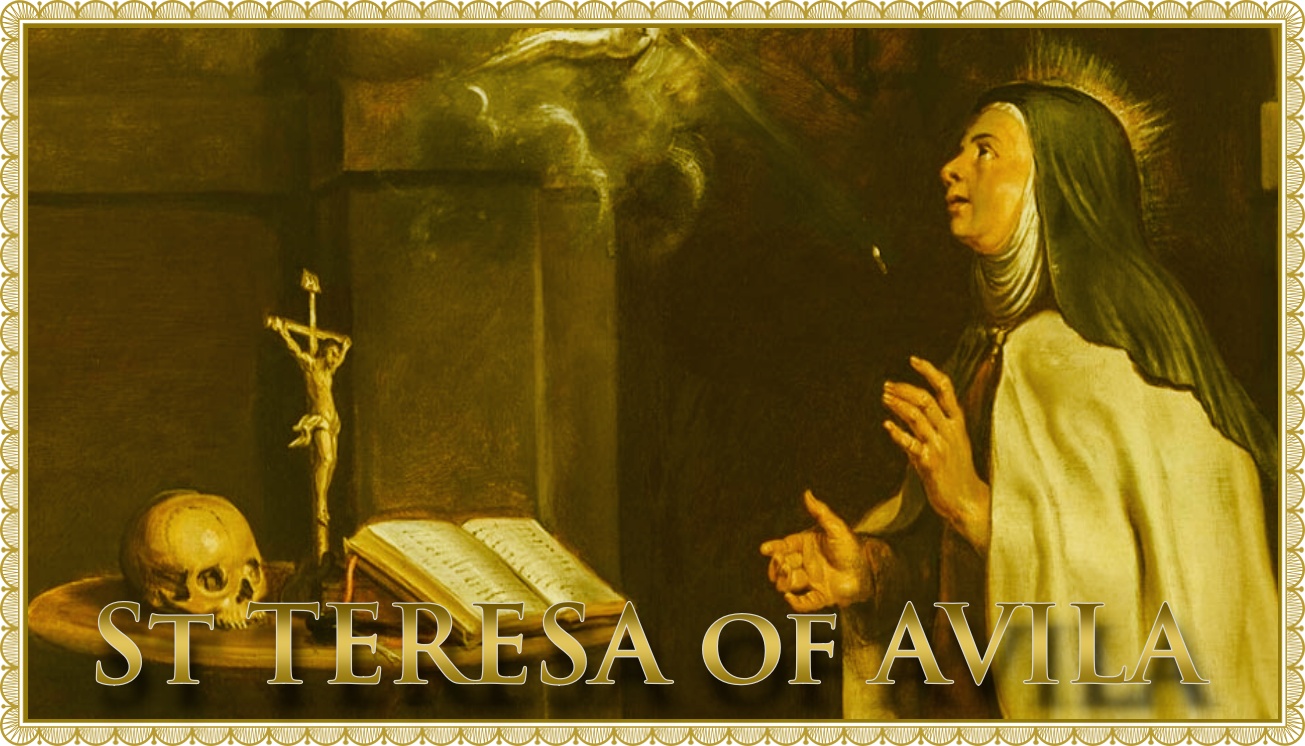
- Today’s Mass: October 15 St Teresa of AvilaSaint Teresa of Avila, born in 1515, was the reformer of the Carmelite Order and founded the Discalced Carmelites. Renowned for her mystical writings, she faced opposition while establishing numerous convents. Teresa’s deep spiritual insights and experiences led to her canonisation in 1622, and her feast is celebrated on 15 October.
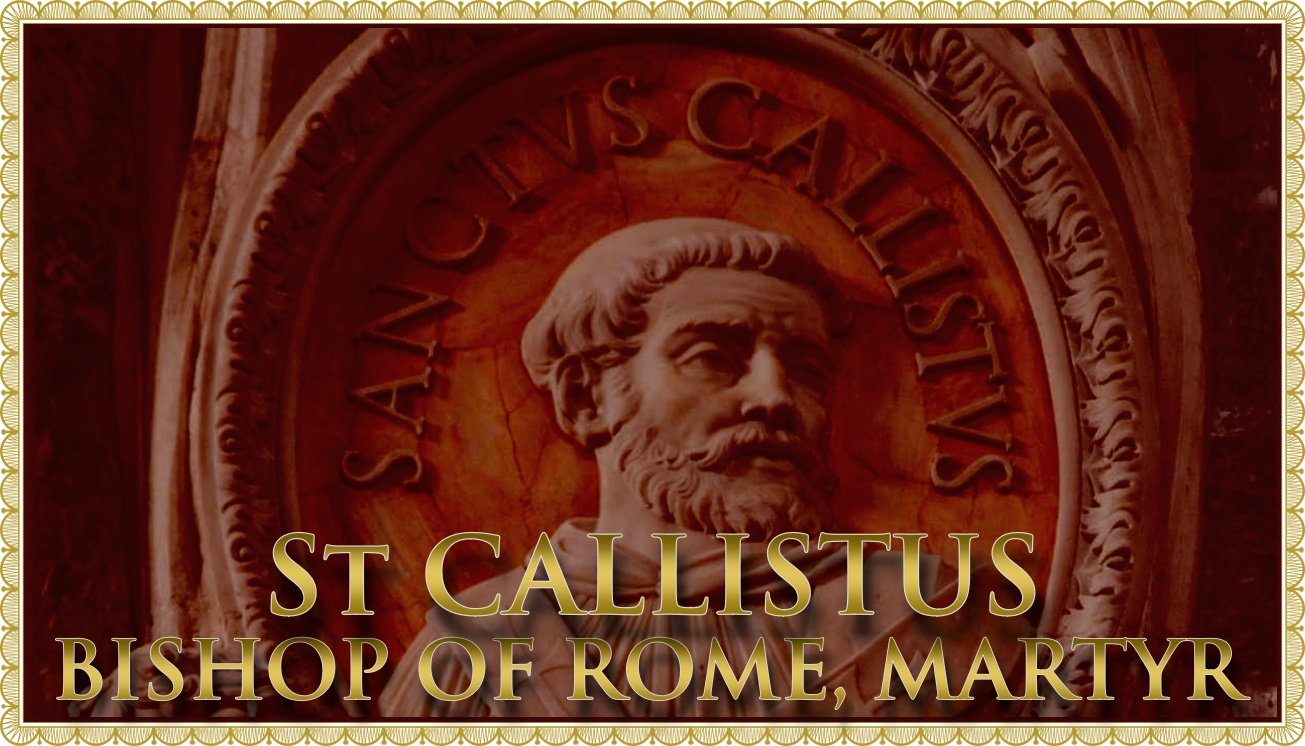
- Today’s Mass: October 14 St Callistus, Bishop of Rome & MartyrCallistus was born to a Christian slave who had a Christian master in second-century Rome. He was placed in charge of a Christian bank which went broke. He fled the city, but was caught and sentenced to the treadmill, then later to the tin mines. He was later ransomed and returned to Rome…
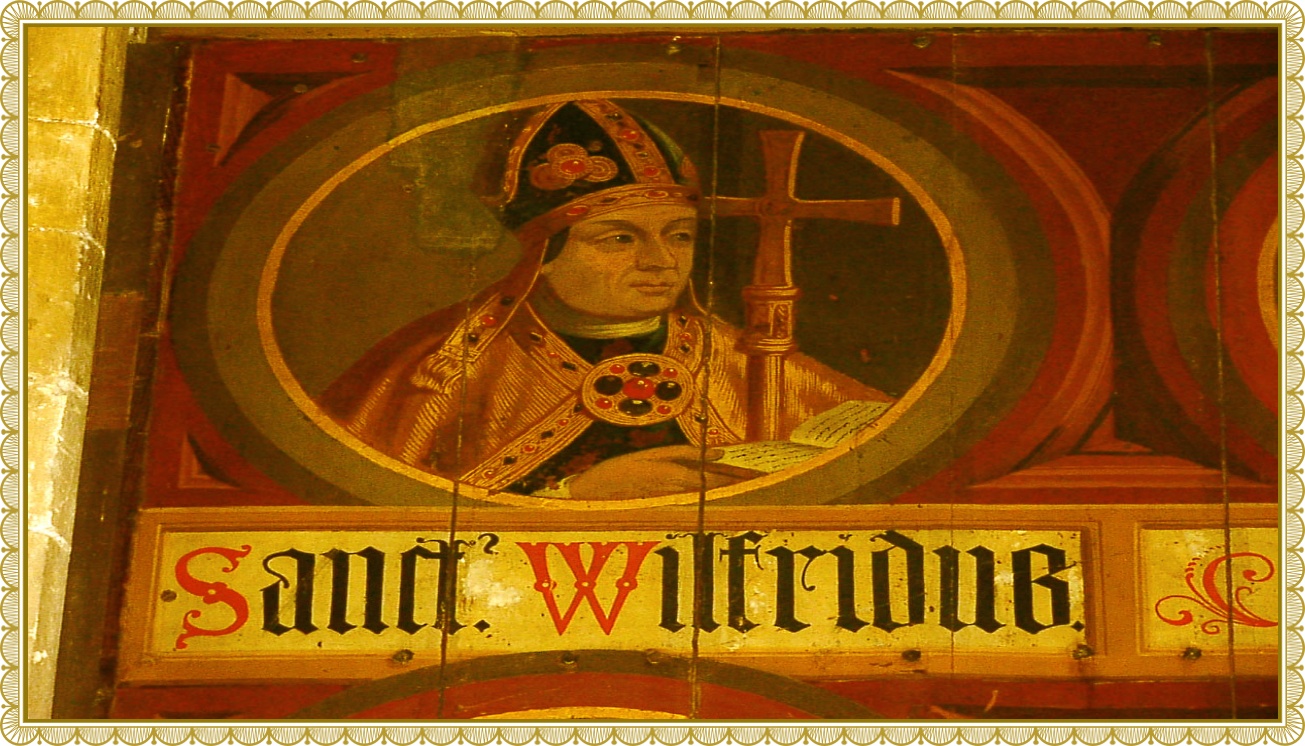
- Sermon for St. WilfridToday marks the feast of St. Wilfrid, who was pivotal in establishing the Roman Christian tradition in England over the Irish. Born in 634 in Northumbria, he travelled to France and Italy, eventually becoming bishop of York. Despite conflicts with kings and church leaders, he successfully evangelised Sussex and laid foundations for future missions, showcasing both determination and a contentious spirit. St. Wilfrid passed away in 709, leaving a complex legacy of leadership and zeal for evangelism.
- THE GENERATION THAT WAS TOLD TO MOVE ON Is Rediscovering What the Church Left BehindArchbishop Salvatore Cordileone’s interview highlights the challenge of reconciling Catholic Tradition with contemporary practices, warning that restrictions like Traditionis custodes may deepen existing divisions. He notes younger Catholics are rediscovering traditional worship, which contrasts with the Church’s modern adjustments and emphasizes the need for reflective continuity in liturgical development.
CURRENT EDITION


Today’s Mass Propers
- Today’s Mass: October 16 St Hedwig of Silesia
 Hedwig of Silesia, a member of the Bavarian comital House of Andechs, was Duchess of Silesia from 1201 and of Greater Poland from 1231 as well as High Duchess consort of Poland from 1232 until 1238. She was canonized by the Catholic Church in 1267 by Pope Clement IV.

Leave a Reply