
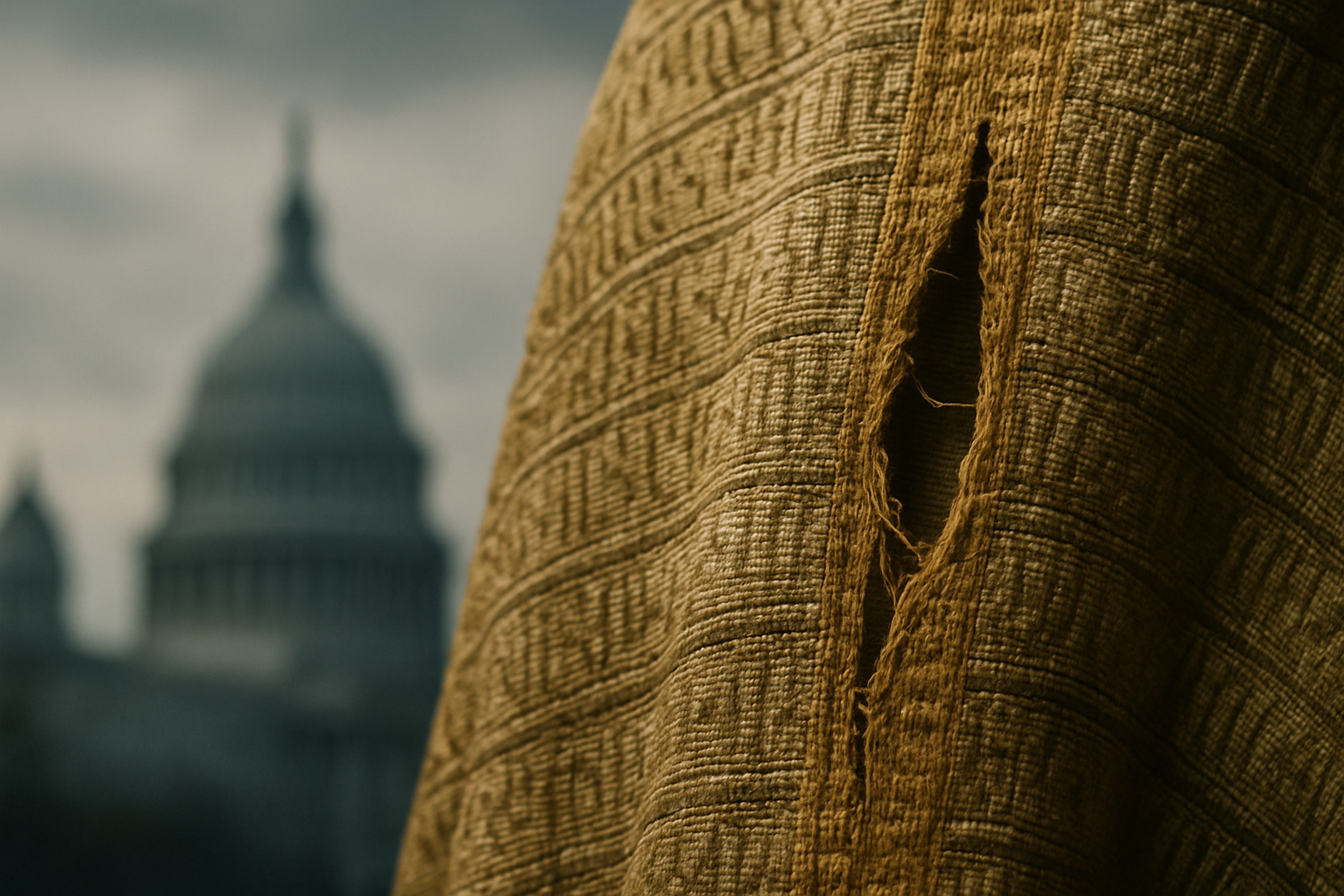
Re-reading Vatican II? Why Interpretation Cannot Defuse Doctrinal Time Bombs: A response to Pope Leo XIV
Introduction: Re-reading or Reckoning?
In recent remarks, Pope Leo XIV has urged the Church to re-read and reinterpret the documents of the Second Vatican Council. The implication is familiar: the crisis of the Church lies not in the Council itself, but in its reception—misreadings, ideological distortions, or abuses layered upon fundamentally sound texts. This appeal to interpretation has become the default post-conciliar reflex. Yet after sixty years of doctrinal confusion, ecclesial fragmentation, and cultural dechristianisation, it is no longer sufficient.
Interpretation cannot resolve contradiction. Hermeneutics cannot neutralise ambiguity when that ambiguity concerns foundational truths about Christ, the Church, and the order of society. If Vatican II is to be re-read, it must be re-read honestly—measured against the Church’s prior infallible teaching rather than insulated from it. The question before us is not whether Vatican II can be interpreted benignly, but whether certain of its formulations introduced principles incompatible with the perennial magisterium.
The present crisis did not arise accidentally. It flows from four conciliar pillars whose internal logic has reshaped Catholic doctrine and praxis: religious liberty, ecumenism, interreligious relations, and collegiality. Together they represent a coherent reorientation of Catholic self-understanding—one that replaces the Rights of God with the Rights of Man, the Social Kingship of Christ with state neutrality, and apostolic authority with managerial consensus.
A Pastoral Council with Doctrinal Consequences
It is frequently asserted that Vatican II was “pastoral, not dogmatic,” as though this distinction renders doctrinal scrutiny unnecessary. Yet pastoral language does not exist in a vacuum. When it touches doctrine, law, or moral principle, it necessarily shapes belief and practice. A council that refrains from formal definitions while simultaneously reformulating fundamental categories does not eliminate doctrinal risk—it defers it.
Vatican II introduced new theological vocabulary, new anthropological premises, and new ecclesiological models without issuing precise condemnations or clarifications. The result was not clarity but elasticity. These formulations functioned not as immediate detonations, but as delayed-action charges—doctrinal time bombs whose effects unfolded gradually through interpretation, implementation, and habituation.¹ It is precisely these effects that now confront Pope Leo XIV.
Religious Liberty and the Uncrowning of Christ
The most consequential conciliar document remains Dignitatis Humanae, which declares that “the human person has a right to religious freedom,” defined as immunity from coercion in both private and public religious practice, and that this right should be recognised in constitutional law.² This claim represents a decisive rupture with prior Catholic teaching on truth, conscience, and the moral order of the state.
The Church has always distinguished between toleration and rights. False religions could be tolerated by civil authority for the sake of peace or prudence. They could never be said to possess a right to public existence, because rights are grounded in truth and ordered to the common good. Error, precisely as error, has no rights. This principle was articulated with clarity by Pope Pius IX in Quanta Cura and authoritatively codified in the Syllabus of Errors, which condemned the proposition that every man has a natural right to profess any religion according to conscience.³
Dignitatis Humanae, however, relocates religious liberty from prudential toleration to inherent human entitlement. Conscience is no longer primarily understood as bound to objective truth, but as sovereign over belief. The state is no longer morally ordered toward Christ, but rendered neutral between truth and falsehood. This shift cannot be reconciled by appeal to historical circumstance, for a right grounded in human dignity applies universally by nature. If false religions possess a natural right to public expression, then the Social Kingship of Christ—affirmed with solemn clarity by Pope Pius XI in Quas Primas—is effectively denied in the civil order.⁴
No amount of interpretive refinement has resolved this contradiction. Neutrality is not a Catholic principle; it is a liberal one. The uncrowning of Christ in public life follows inevitably.
Ecumenism and the Eclipse of Conversion
The same doctrinal inversion appears in the Decree on Ecumenism, Unitatis Redintegratio, which affirms that “elements of sanctification and truth” exist outside the visible boundaries of the Catholic Church and that these elements can function as means by which the Spirit works toward salvation.⁵
The Church has always acknowledged that individuals outside her visible structure may be saved through invincible ignorance and extraordinary grace. She has never taught that schismatic or heretical communities as such mediate salvation. Salvation outside the Church, when it occurs, happens in spite of separation, not through it. This distinction is essential to the dogma Extra Ecclesiam Nulla Salus, consistently taught by the Fathers, ecumenical councils, and popes.⁶
Unitatis Redintegratio blurs this distinction. By shifting emphasis from return to recognition, the decree recasts unity as convergence rather than conversion. Dialogue displaces repentance; mutual affirmation replaces doctrinal assent. The missionary mandate is quietly redefined. If separated communities already function as salvific means, the imperative to convert souls to the one true Church collapses.
The post-conciliar ecumenical movement did not misunderstand this logic; it enacted it. The result has been the systematic erosion of missionary urgency and the normalisation of doctrinal minimalism.
Interreligious Esteem and the Flattening of Truth
This doctrinal flattening reaches its apex in Nostra Aetate, which speaks of non-Christian religions with a language of esteem and reverence unprecedented in magisterial teaching, stating that the Church “rejects nothing that is true and holy” in them.⁷
The Church has never denied that pagan religions may contain fragments of natural truth. She has always insisted, however, that such systems are gravely deficient, spiritually dangerous, and incapable of saving apart from conversion to Christ. Nostra Aetate foregrounds appreciation while relegating judgment to silence. This asymmetry has produced predictable scandals: interreligious prayer events, symbolic equivalence between Christ and idols, and the effective suspension of missionary proclamation.
When false religions are praised without qualification, the faithful conclude—logically—that conversion is unnecessary. This is not a failure of interpretation. It is the internal logic of the text working itself out in practice.
Collegiality and the Parliamentary Church
Internally, the same modern logic reshapes ecclesiology through the doctrine of collegiality articulated in Lumen Gentium, which asserts that the College of Bishops, together with the Pope, possesses “supreme and full power over the universal Church.”⁸
This formulation introduces an ambiguity unknown to Catholic tradition. The First Vatican Council defined papal authority as supreme, immediate, and indivisible. Episcopal authority participates in governance through the Pope, not alongside him as a parallel subject of supreme power.⁹ Collegiality, as developed after the Council, has not strengthened unity; it has diffused responsibility. Authority migrates to conferences, synods, and committees. The Pope becomes a moderator rather than a governor. Governance becomes procedural rather than doctrinal.
This is not a misreading. It is the natural outworking of the conciliar formulation.
What is often overlooked in contemporary appeals to papal authority—especially when deployed to enforce novel interpretations of Vatican II—is that the Pope is not the author of the faith, but its guardian. His authority is real, supreme, and binding, yet it is not absolute in the modern voluntaristic sense. The papacy does not possess the competence to invent doctrine, reverse settled teaching, or re-interpret Tradition against its own substance. As the First Vatican Council itself made clear, the Holy Spirit was not promised to Peter so that new doctrine might be revealed, but so that the deposit of faith might be religiously guarded and faithfully expounded.¹⁰ The Pope is therefore bound—morally, theologically, and juridically—by what he has received.
This distinction is critical. A pope may judge disputes, clarify ambiguities, and defend Tradition; he may not redefine the faith according to pastoral expediency, historical fashion, or ideological pressure. This principle was restated authoritatively by the Congregation for the Doctrine of the Faith, which warned that the Magisterium is not superior to the Word of God but serves it, teaching only what has been handed on.¹¹ Benedict XVI repeatedly cautioned against any notion of a “dictatorial” papacy, insisting that the Pope is bound to Tradition and may not act as an oracle of personal or ideological preference.¹²
The Liturgy: The Unacknowledged Root of the Crisis
Ultimately, however, all of these doctrinal fractures converge upon a single, decisive fault line: the liturgy. Whatever interpretive debates continue over Vatican II’s texts, the most powerful and formative instrument of the post-conciliar revolution has not been a document but a rite. The so-called Conciliar liturgy—the Novus Ordo Missae—has become the primary catechist of the modern Church, and it has catechised accordingly.¹³
The Church has always understood that doctrine does not survive abstraction. It is received, internalised, and lived through worship. Lex orandi, lex credendi, lex vivendi: as the Church prays, so she believes; as she believes, so she lives. When the liturgy is desacralised, anthropocentric, and rhetorically horizontal, belief follows suit. When the sacrificial, propitiatory, and transcendent dimensions of the Mass are muted or obscured, the faithful inevitably lose clarity about sin, grace, priesthood, sacrifice, judgment, and the Kingship of Christ.¹⁴
The Novus Ordo was not demanded by the Council Fathers in the form in which it was eventually imposed. The Council called for a limited reform of the Roman Rite, explicitly insisting that Latin be preserved, Gregorian chant retain pride of place, and continuity with the received liturgical tradition be maintained.¹⁵ What emerged instead was a manufactured rite, constructed by committee, stripped of sacrificial language, reordered around communal participation, and radically open to improvisation. The result has been not renewal but doctrinal amnesia.¹⁶
This liturgical rupture explains why attempts to “re-read” Vatican II fail at the level of lived Catholicism. A Church that prays ambiguously cannot believe clearly. A Church that worships as though the Mass were primarily a communal meal cannot consistently defend the Social Kingship of Christ, the necessity of the Church for salvation, or the hierarchical nature of divine authority. The erosion of doctrine follows inexorably from the erosion of worship.
Until this reality is confronted, all appeals to reinterpretation remain cosmetic. No hermeneutic can overcome a liturgy that catechises against Tradition six days a week. There can be no genuine doctrinal restoration, no recovery of missionary clarity, and no healing of ecclesial authority unless and until the Roman Church decisively returns to the Traditional Latin Rite—at least as explicitly desired by the Council Fathers themselves, and in truth as organically received from her own history.¹⁷
Without that return, there is no realistic hope of renewal. The crisis is not merely textual; it is ritual. And until the lex orandi is restored, the lex credendi will remain fractured, and the lex vivendi fatally compromised.
So long as the Church prays ambiguously, she will believe uncertainly and live incoherently: the crisis will not end until the lex orandi is restored.
Interpretation Is Not Enough
Pope Leo XIV is correct to insist that Vatican II must be taken seriously. But seriousness requires more than hermeneutics. It requires the courage to admit that certain conciliar formulations introduced principles incompatible with prior teaching—and that no amount of reinterpretation can reconcile religious liberty with the Social Kingship of Christ, indifferentism with missionary mandate, or parliamentary governance with apostolic monarchy.
The crisis of the Church will not be resolved by yet another appeal to a “hermeneutic of continuity” asserted rather than demonstrated. Continuity must be proven in substance, not presumed in tone. Post-conciliar clarifications such as Dominus Iesus implicitly acknowledge this need by reasserting doctrines obscured by earlier ambiguity.¹⁸
Conclusion: From Re-reading to Reckoning
If Vatican II is to be re-read, it must be re-read in the light of Tradition—not shielded from it. The task before Pope Leo XIV is therefore not merely interpretive but judicial: to distinguish what can be received from what must be corrected, clarified, or explicitly repudiated.
Christ cannot reign where His crown has been removed, even gently, even pastorally. Until the Rights of God are restored above the Rights of Man, until conversion replaces dialogue as the Church’s primary mission, and until authority is reclaimed as divinely instituted rather than democratically managed, the crisis will persist.
Re-reading Vatican II is not enough. The Church must finally confront it—truthfully, courageously, and in fidelity to the Social Kingship of Christ.
- Giuseppe Alberigo (ed.), History of Vatican II, Vols. I–V (Maryknoll: Orbis Books, 1995–2006).
- Dignitatis Humanae, §§2–3.
- Pius IX, Quanta Cura (1864); Syllabus Errorum, propositions 15–18.
- Pius XI, Quas Primas (1925), §§17–18.
- Unitatis Redintegratio, §3.
- Council of Florence, Cantate Domino (1442); Pius XII, Mystici Corporis (1943), §22.
- Nostra Aetate, §2.
- Vatican II, Lumen Gentium, §22.
- First Vatican Council, Pastor Aeternus (1870), ch. 3.
- First Vatican Council, Pastor Aeternus, ch. 4.
- Congregation for the Doctrine of the Faith, Donum Veritatis (1990), §10.
- Benedict XVI, Homily at the Mass for the Inauguration of the Petrine Ministry, 24 April 2005.
- Annibale Bugnini, The Reform of the Liturgy 1948–1975 (Collegeville: Liturgical Press, 1990).
- Council of Trent, Session XXII, Doctrine on the Sacrifice of the Mass.
- Sacrosanctum Concilium, §§36, 54, 116.
- Alfredo Ottaviani and Antonio Bacci, A Short Critical Study of the New Order of Mass (1969).
- Klaus Gamber, The Reform of the Roman Liturgy; Joseph Ratzinger, The Spirit of the Liturgy (Ignatius Press, 2000).
- Congregation for the Doctrine of the Faith, Dominus Iesus (2000), §§4–17.
RELATED ARTICLES


Latest
- Today’s homily: Feast of the Holy RelicsThe Feast of the Holy Relics affirms the dignity of the human body and Christ’s promise of resurrection. Drawing upon Scripture, the early martyrs and England’s Catholic inheritance, this homily considers the communion of saints, our duty towards the departed and the holiness demanded of our own earthly lives.
- Today’s Mass: November 5 Feast of the Holy RelicsSt. Charles Borromeo (1538–1584) reformed the Church through holiness amid the corruption of his age—guiding Trent, renewing Milan, and serving heroically during plague. With Ss. Vitalis and Agricola and in the Octave of All Saints, he calls today’s Church to fidelity, reverence, and courageous sanctity amid confusion and decline.
- Today’s Mass: November 4 St Charles BorromeoSt. Charles Borromeo (1538–1584) reformed the Church through holiness amid the corruption of his age—guiding Trent, renewing Milan, and serving heroically during plague. With Ss. Vitalis and Agricola and in the Octave of All Saints, he calls today’s Church to fidelity, reverence, and courageous sanctity amid confusion and decline.
- MEMENTO MORI: LEARNING TO LIVE IN THE LIGHT OF ETERNITYThis pastoral meditation reflects on the importance of remembering death to inspire a more faithful life, especially during the month of All Saints and All Souls. It urges individuals to embrace their mortality, make meaningful choices, and engage in prayer for the departed, thereby cultivating a closer relationship with God and living purposefully.
- WHEN THE BISHOP BECOMES THE MESSAGE: The Cult of Personality, Episcopal Pride and the Betrayal of Apostolic TrustArchbishop Josef Grünwidl of Vienna has openly advocated for women’s ordination, reflecting a troubling trend among bishops who express personal opinions at odds with established Catholic doctrine. This practice undermines their primary role of teaching the faith and raises concerns about episcopal pride and the proper handling of doctrinal authority by the Church.





Leave a Reply