

WHEN CHILDREN PAY FOR THEIR PARENTS: THE CONNOLLY CASE AND THE DANGEROUS RISE OF IDEOLOGICAL ADMISSIONS IN STATE SCHOOLS
The reported withdrawal of a school place for the daughter of Lucy Connolly marks a deeply troubling moment in British public life. Whatever one thinks of Connolly’s speech or criminal conviction, the principle at stake is older, firmer, and more fundamental than any culture-war skirmish: children are not responsible for the sins of their parents. This axiom is not only moral and theological; it is embedded in centuries of English common law and repeatedly affirmed in modern human-rights jurisprudence. To see that principle apparently cast aside — not for reasons of safeguarding, safety, or risk, but for the political unacceptability of a parent — represents a new and dangerous pattern in institutional behaviour.
It is routine, indeed uncontroversial, for children of parents convicted of serious offences to enter mainstream education. Schools accommodate the sons and daughters of those imprisoned for drug trafficking, violent crime, gang activity, and even terrorism. This is not a matter of indulgence but of law: the Education Act 1996 imposes a statutory duty on local authorities and schools to secure suitable education for every child, regardless of parental reputation or public notoriety.¹ The European Convention on Human Rights, through Article 2 of Protocol 1, affirms the right to education as belonging to the child, not to the parent or to the state.²
Yet in this instance the place offered to Connolly’s daughter was reportedly rescinded once the headteacher “realised who the mother was”.³ If true — and no public justification from the school has been offered — this is not safeguarding, but ideological vetting. It represents a precedent in which admission may be influenced not by the welfare of the child, nor by the safety of others, but by whether the parent falls within or outside an approved moral-political orthodoxy. The result is a form of collective punishment that English law has never permitted and Christian anthropology has always rejected.
There is a grim irony here. At the very moment when schools are urged to adopt expansive compassion, restorative practices, and trauma-informed policies, an innocent child appears to have been penalised for an offence she did not commit and could not have prevented. Meanwhile, the children of parents who pose far more direct safeguarding concerns — from organised crime to extremist violence — routinely enter classrooms without hindrance, because the system rightly recognises that the sins of the father cannot be imputed to the son.⁴ That this principle seems to have been suspended only in cases carrying a particular ideological charge reveals not the moral consistency of modern institutions, but their ideological capture.
Such decisions do not arise in a vacuum. Britain’s civic institutions increasingly operate under a “reputational risk” logic shaped by fear of public shaming, activist pressure, and interpretive expansion of “inclusion” policies. Where once neutrality and even-handedness were virtues, institutions now pre-emptively overcorrect to avoid appearing tolerant of the “wrong kind” of offender. A dangerous inversion follows: children of violent or dangerous criminals receive a rightful presumption of innocence and protection from stigma, while children of parents convicted for speech — even reprehensible speech — may find themselves excluded from the very systems designed to uphold the innocence of every child.
The moral, legal, and societal stakes are not small. If schools may refuse children because of who their parents are, and not because of any behaviour of their own, then the right to education becomes conditioned upon the ideological conformity of the home. That is not the mark of a liberal democracy, but of regimes in which guilt is inherited, political taint is transmissible, and social rights become instruments of moralised control. Even those who detest Connolly’s words should refuse to walk through that door, for once opened, it seldom closes.
The Christian tradition is unequivocal: guilt is personal; repentance is individual; and every child is to be treated as a bearer of dignity, not an extension of their parent’s failings. The civil tradition, from the common law to the post-war rights settlement, affirms the same. It is therefore not Connolly’s ideology that is most alarming in this case, but the state school’s apparent willingness to breach this ancient boundary. In doing so it risks legitimising a principle far darker than any it sought to prevent.
¹ Education Act 1996, s. 13A.
² European Convention on Human Rights, Protocol 1, Article 2.
³ Reported in GB News, “Lucy Connolly says daughter’s school place withdrawn after prison sentence,” November 2025.
⁴ Home Office, Safeguarding Children and Young People from Serious and Organised Crime, 2022; Department for Education, Working Together to Safeguard Children, 2023.
related articles


latest articles
- Today’s Mass: September 04 Feria of Sunday XIV Post PentecostThe Fourteenth Sunday After Pentecost emphasises the importance of serving one master—God—over the flesh. It urges Christians to focus on spiritual over temporal concerns, warning against anxiety. The readings highlight the contrast between the fruit of the spirit and the works of the flesh, encouraging a pursuit of divine life.
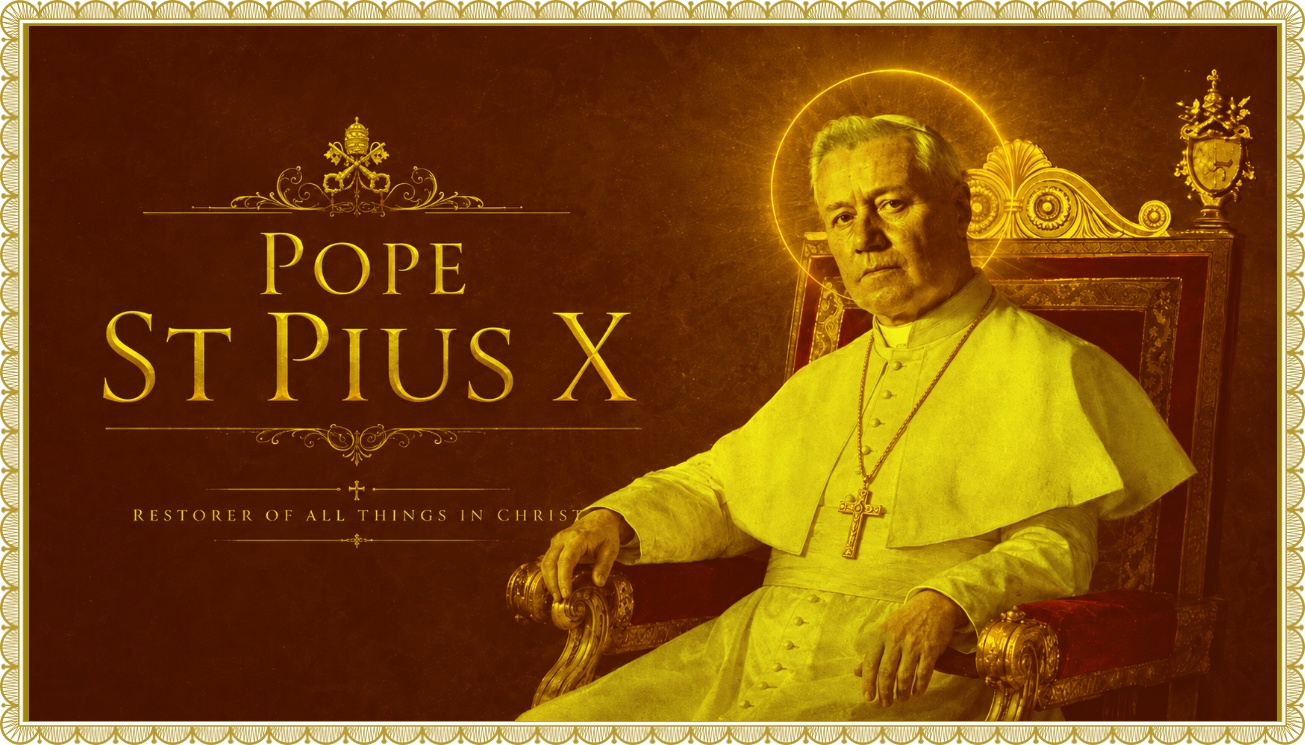
- Today’s homily: St Pius X, PopeThe text reflects on the life and legacy of Pope St Pius X, who was chosen from humble beginnings to reform the Church. His pontificate focused on defending the Catholic Faith, restoring liturgical sanctity, and fostering deeper connections between believers and Christ. Pius X exemplified a balance of truth and pastoral charity.
- Today’s Mass: September 03 Pope St Pius X,Pope St Pius X, born Giuseppe Melchiorre Sarto, was a significant reformer who emphasised preserving the Catholic Faith against Modernism. His pontificate (1903-1914) featured reforms in liturgy, frequent Holy Communion, and seminaries, rooted in a pastoral desire to restore everything in Christ. He died in 1914 and was canonised in 1954.
- Today’s homily: St Stephen of HungaryThe homily reflects on the life of Saint Stephen of Hungary, illustrating his transition from a powerful ruler to a saint. He embraced the responsibilities of kingship guided by faith, understanding his authority as stewardship. His legacy teaches that true governance comes with surrender to God, ultimately placing his kingdom under the protection of the Blessed Virgin Mary.
- Today’s Mass: September 02 St. Stephen the GreatSt. Stephen the Great, King of Hungary (977-1038), was a significant Christian ruler who reinforced the faith throughout Hungary. Anointed king in 1000 by Pope Sylvester II, he fought against paganism and promoted the Church. He was canonised in 1083 and is the patron saint of Hungary, symbolising national identity.



Leave a Reply