

A return without conversion: Rachel Maddow and Catholicism without doctrine
In mid-December, liberal commentator Rachel Maddow publicly claimed that she has “returned to the Catholic faith,” a declaration first circulated via a Substack post by self-described progressive Catholic Christopher Hale and later confirmed through audio released by MSNBC NOW.¹ The announcement attracted attention not merely because of Maddow’s public profile, but because it crystallises a deeper and increasingly familiar ecclesial problem: the emergence of a form of Catholic self-identification detached from conversion, repentance, and assent to settled moral doctrine.
The question raised by Maddow’s statement is therefore not primarily one of sincerity. It is ecclesiological. To what, precisely, has she returned?
Maddow, now in her early fifties, was raised in a Catholic household but has lived for decades in open contradiction to Catholic moral teaching. She has been in a same-sex relationship since the late 1990s,² has consistently defended unrestricted abortion access in her public commentary,³ has promoted gender ideology—including the social and medical “transitioning” of minors⁴—and has framed these positions as matters of moral progress. These are not peripheral disagreements or prudential disputes. They concern actions and ideologies the Catholic Church has repeatedly identified as gravely disordered.⁵

And yet Maddow now claims Catholic belonging, citing admiration for Pope Francis and Pope Leo XIV, particularly for their emphasis on immigration and solidarity with migrants. She also pointed approvingly to an outdoor Mass celebrated by progressive clergy at an ICE facility in Illinois, presenting this as emblematic of the Church to which she believes she has returned.¹
This contrast—between public moral dissent and renewed ecclesial identification—is not accidental. It is symptomatic.
Had Maddow “returned” to the Church of her youth, she would have encountered a markedly different ecclesial atmosphere. Under Pope John Paul II, the Church articulated a coherent moral vision grounded in natural law, sacramental anthropology, and the intrinsic link between truth and freedom. In Veritatis Splendor, John Paul II explicitly rejected the separation of conscience from objective moral norms, warning that such a move would dissolve Christian ethics into subjectivism.⁶ He founded the Pontifical Academy for Life to combat what he termed the “culture of death”—abortion, euthanasia, and the instrumentalisation of human life.⁷ He also reaffirmed the Church’s definitive teaching against women’s ordination in Ordinatio Sacerdotalis, identifying the matter as closed to further debate.⁸
Benedict XVI deepened this vision, insisting that charity divorced from truth collapses into sentimentality and that pastoral practice cannot contradict doctrine without hollowing itself out. In Caritas in Veritate, he warned that social concern severed from moral truth becomes ideological and ultimately inhuman.⁹
What has changed since is not merely emphasis, but atmosphere. Over the past decade, the institutional Church has increasingly signalled—sometimes explicitly, often tacitly—that dissent from core moral teachings need not impede full ecclesial participation or public Catholic identity. Under Pope Francis and now Pope Leo XIV, women have been elevated to senior governance roles within the Roman Curia;¹⁰ climate activism and alignment with United Nations sustainability frameworks have been foregrounded;¹¹ and immigration has been elevated to a near-defining marker of moral seriousness in papal rhetoric.¹² None of these concerns are illegitimate in themselves. The problem lies in what has been deprioritised or rendered negotiable in the process.
During the same period, gender-confused individuals and openly pro-LGBT clergy have been welcomed, affirmed, and in some cases promoted. Bishops whose pastoral records include overt signalling towards gender ideology—figures such as Cardinals Cupich, McElroy, Gregory, and Tobin—have risen to prominence.¹³ Progressive Catholic media outlets, heterodox theological faculties, and activist clergy have not merely been tolerated but frequently treated as representative voices of Catholic renewal.¹⁴
The cumulative result is a de facto parallel ecclesial culture: a recognisable substructure within the institutional Church in which Catholic identity is framed primarily through alignment with contemporary political causes, therapeutic language, and inclusion rhetoric, while questions of moral truth, repentance, and conversion are sidelined or reframed as “harmful.”
Within this ecosystem, one may affirm abortion as a right, reject Catholic sexual ethics, endorse gender ideology, and still be welcomed as a Catholic in good standing—so long as one speaks the approved moral dialect and directs one’s moral outrage outward rather than inward. Accompaniment replaces amendment of life; authenticity displaces obedience; belonging is decoupled from belief. This dynamic directly contradicts the Church’s perennial teaching that communion presupposes conversion and conformity of life to the Gospel.¹⁵
It is within this context that Maddow’s claimed return makes sense. She has not embraced the Catholic faith as it has been understood, taught, and practiced for two millennia. She has embraced a modernised and selectively curated Catholicism—one that demands no radical conversion, no self-denial, and no submission of the will to revealed truth. It is a Catholicism that blesses the self rather than crucifying it.¹⁶
The tragedy is not merely doctrinal confusion but pastoral deception. Catholicism has never taught that belonging precedes conversion. On the contrary, the Gospel demands repentance as the gateway to communion. Grace heals, but it also judges; mercy forgives, but it also commands, “Go, and sin no more.”¹⁷
A Church that no longer insists upon this distinction ceases to evangelise. It merely affirms.
None of this is to deny the possibility of Maddow’s genuine conversion in the future. Catholics should indeed pray for precisely that. But prayer must be accompanied by truth. To tell souls that they have “returned” to the faith while remaining untouched by its moral demands is not mercy; it is abandonment.
What Maddow has found is not the ancient Church renewed, but a Church reshaped to mirror the modern world. And a Church that mirrors the world will never be able to save it.¹⁸
- Charles Richards, “Pro-abortion lesbian Rachel Maddow claims she’s returned to the Catholic Church, cites Francis and Leo,” LifeSiteNews, 17 December 2025.
- Rachel Maddow, interview remarks and biographical profiles, widely reported since the early 2000s.
- See Maddow’s repeated on-air commentary defending Roe v. Wade and opposing abortion restrictions on MSNBC.
- Rachel Maddow Show, segments supporting “gender-affirming care” for minors, 2021–2024.
- Catechism of the Catholic Church, §§2357–2359; §§2270–2275.
- John Paul II, Veritatis Splendor (1993), §§32–34, 56.
- John Paul II, Evangelium Vitae (1995), §§11–28.
- John Paul II, Ordinatio Sacerdotalis (1994).
- Benedict XVI, Caritas in Veritate (2009), §§1–9.
- Holy See Press Office communiqués on curial appointments, 2020–2024.
- Pope Francis, Laudato Si’ (2015); Vatican participation in UN climate forums.
- Pope Francis, Fratelli Tutti (2020), §§37–41; papal addresses on migration.
- USCCB records and public statements by Cardinals Cupich, McElroy, Gregory, and Tobin.
- Examples include National Catholic Reporter, America Magazine, and university theology faculties publicly dissenting from magisterial teaching.
- Council of Trent, Session XIV (On Penance); Catechism of the Catholic Church, §§1427–1433.
- Luke 9:23; Romans 12:1–2.
- John 8:11.
- Romans 12:2; James 4:4.
RELATED ARTICLES


Latest ARTICLES
- 06.09.26 Nuntiatoria CXXII: NOMEN MANET, RES DEESTThis edition of Nuntiatoria explores the disconnect between the names of Catholic institutions and the realities they signify. Despite retaining their titles, many aspects of Catholicism—such as episcopal authority in China and religious practice in Poland—exhibit deteriorating substance. The piece cautions against superficial continuity, stressing the importance of genuine faith and practice over mere nomenclature.
- ORDO w/c 06.09.26The document outlines the liturgical schedule for the week of 6 to 13 September 2026, highlighting significant religious observances such as the Fifteenth Sunday after Pentecost and the Nativity of the Blessed Virgin Mary. It reflects on themes of compassion, holiness, fidelity, and humility, underscoring their importance in Christian life.
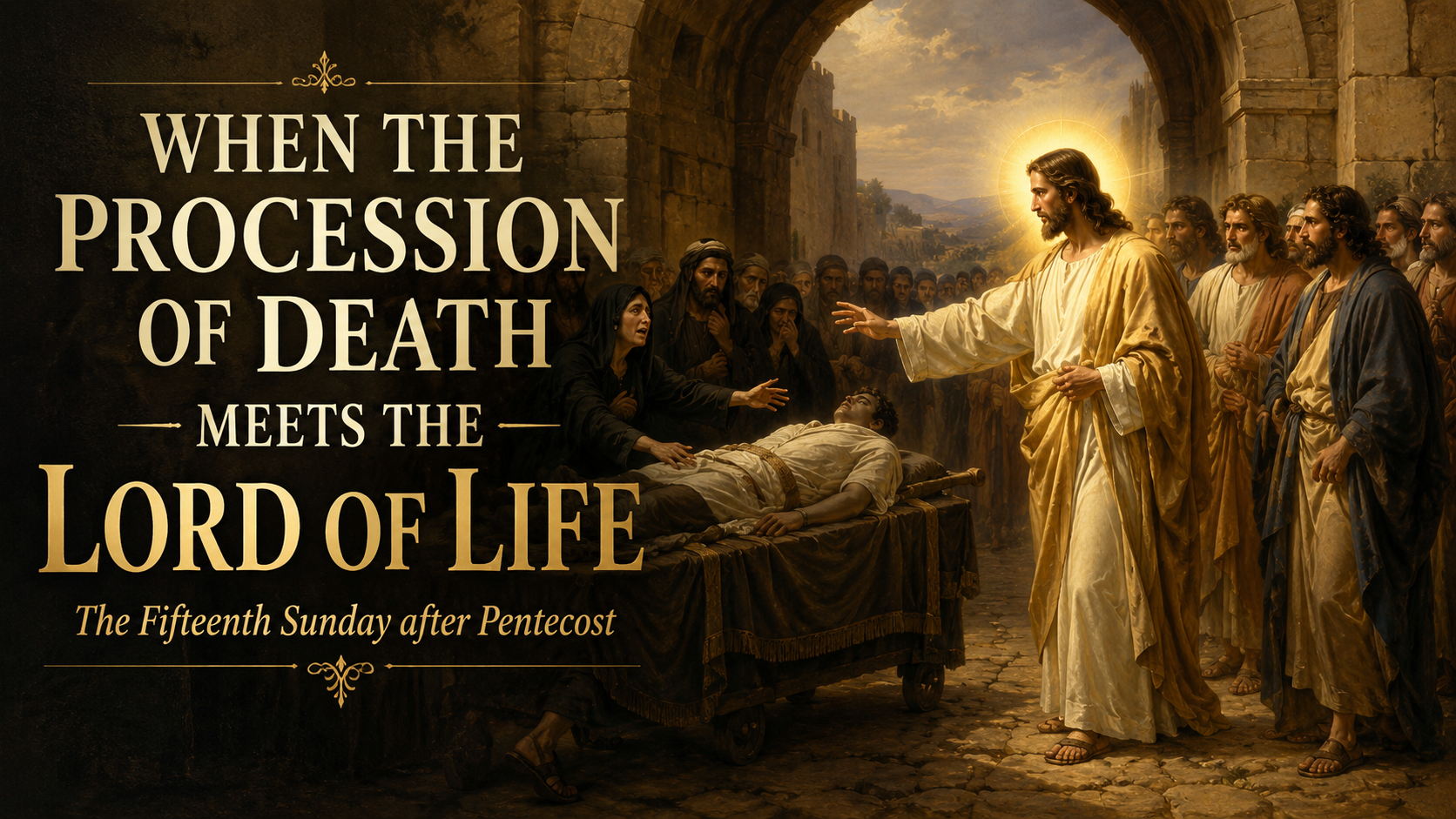
- The Fifteenth Sunday after Pentecost: When the Procession of Death Meets the Lord of LifeThe Fifteenth Sunday after Pentecost focuses on the transformative power of Christ, emphasising the supernatural life granted through grace. The liturgy highlights the Church’s role as a nurturing mother, mourning the spiritually dead while seeking their restoration. Christ’s compassion leads to resurrection, demonstrating that true life is found in dependence on Him.
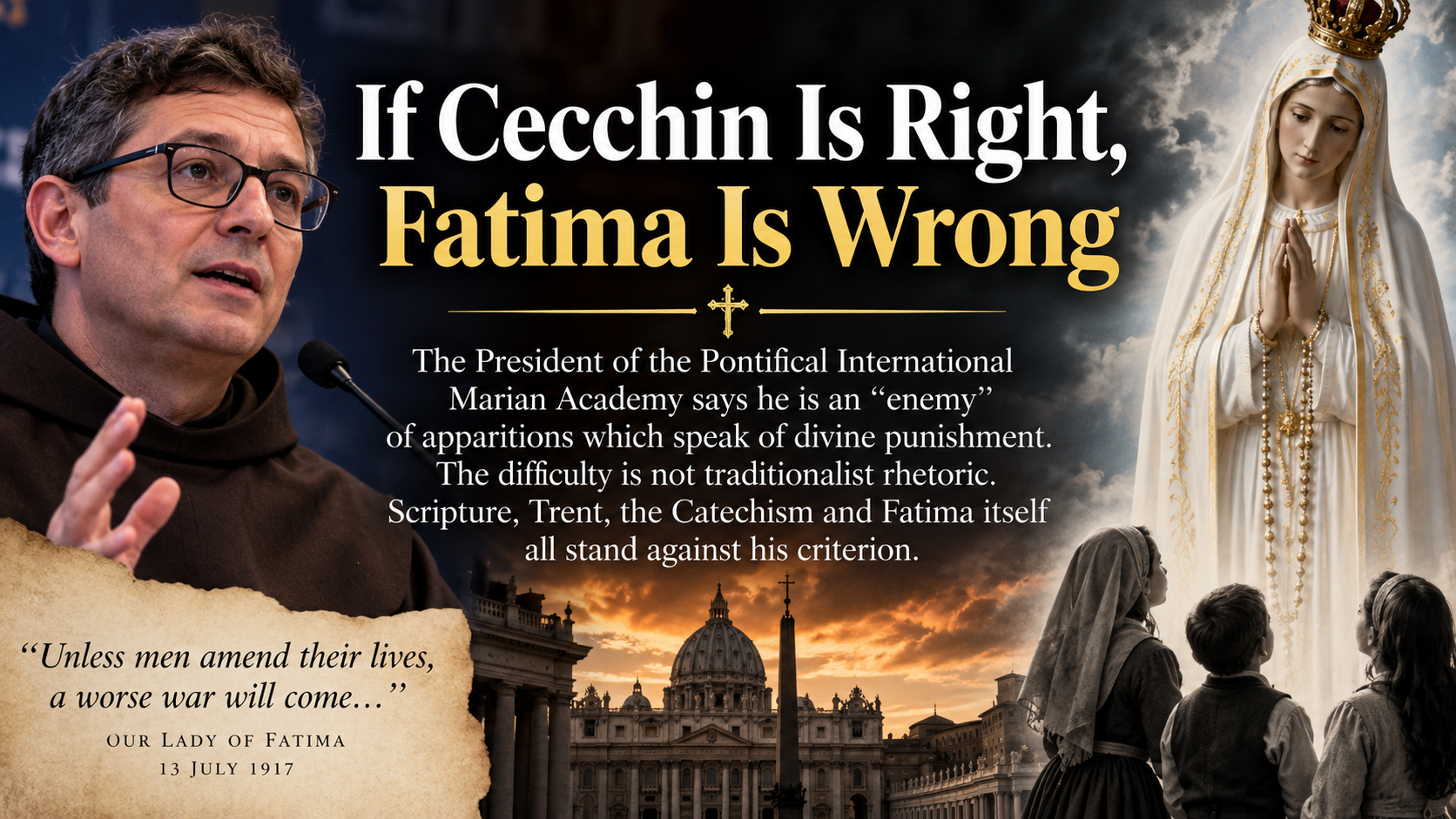
- If Cecchin Is Right, Fatima Is WrongFr Stefano Cecchin, President of the Pontifical International Marian Academy, has declared opposition to apparitions that speak of divine punishment, suggesting they are false. This stance contradicts fundamental Catholic doctrine, including teachings from Scripture, the Catechism, and specifically the Message of Fatima, which warns of divine consequences for sin.
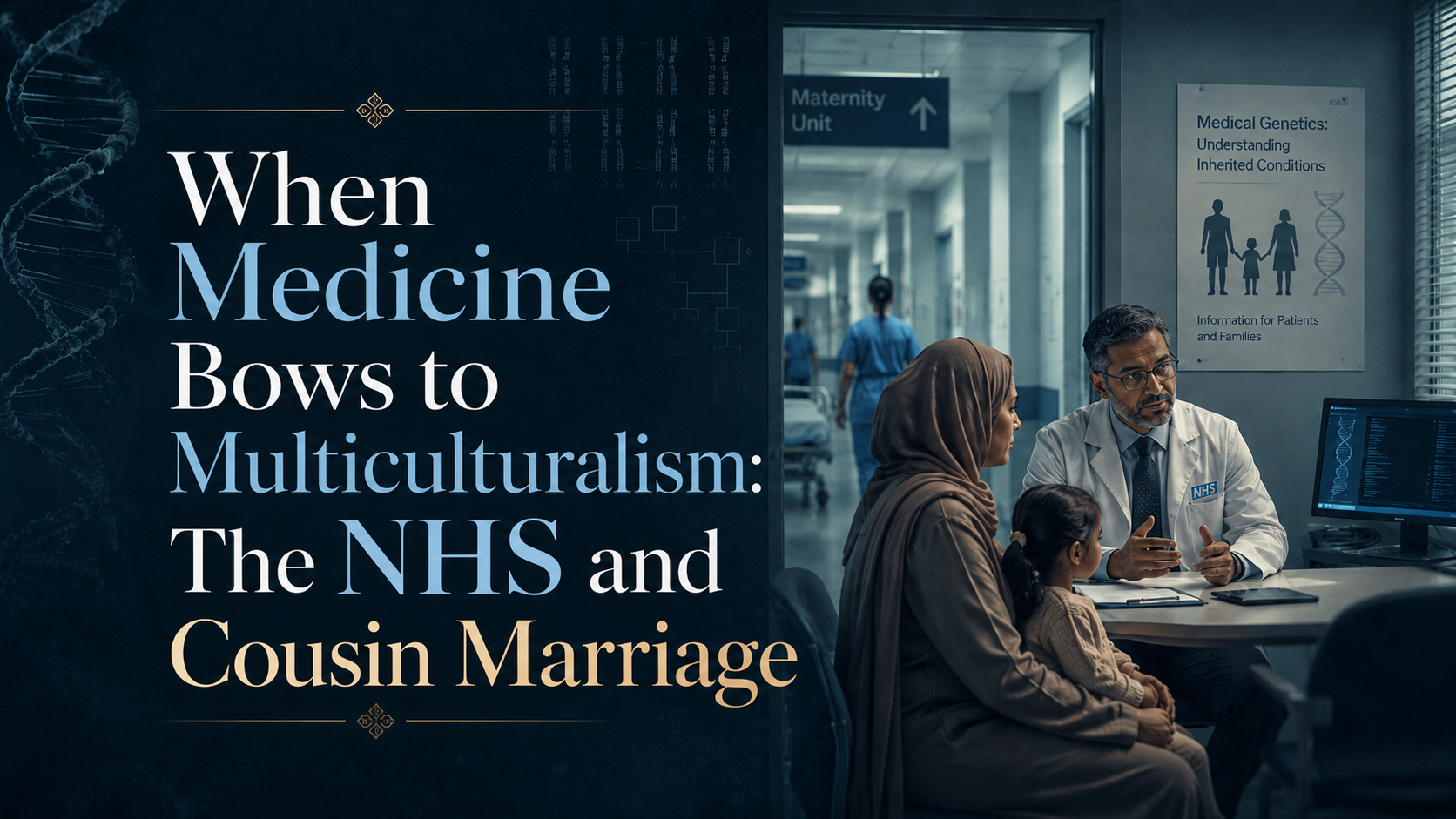
- When Medicine Bows to Multiculturalism: The NHS and Cousin MarriageThe NHS faced controversy over training that minimised the risks of cousin marriage, claiming associated health threats were exaggerated. Despite current materials recognising genetic risks, the government acknowledged previous educational content was inappropriate. This highlights concerns over prioritising cultural sensitivity over clear medical truths, potentially undermining public trust in healthcare.


Leave a Reply