

Christian Zionism and the Jewish Question: Fulfilment, Providence, and the Temptation of Geopolitical Theology
In every age, the Church must clarify what belongs to dogma and what belongs to political enthusiasm. Few issues today expose that distinction more starkly than the rise of Christian Zionism and its confident assertion that fidelity to Scripture requires theological endorsement of the modern State of Israel as prophetic fulfilment.
For Catholics formed by the Fathers, the scholastics, and the pre-conciliar magisterium, the matter is neither reducible to partisan politics nor dismissible as marginal speculation. It touches the structure of covenant theology itself. It concerns how we understand Israel, land, promise, fulfilment, and the unity of salvation history in Christ.
The Church’s answer is neither hostility nor sacralisation. It is fulfilment.
The Old Covenant was real, holy, and divinely instituted. It was not a mythic prelude but an authentic stage in God’s self-revelation. The promises to Abraham were not rhetorical flourishes. They were covenantal acts of God in history. Yet from the beginning they were ordered toward a culmination beyond themselves.
Our Lord’s declaration that He came not to abolish but to fulfil the Law and the Prophets (Mt 5:17) governs Catholic interpretation. The Epistle to the Hebrews interprets the Mosaic order as shadow and figure, awaiting the reality that would come in Christ (Heb 10:1). The Council of Florence, in Cantate Domino (1442), teaches that the legal observances of the Old Testament ceased with the promulgation of the Gospel and that the sacraments of the New Testament succeeded them.¹ This is not a statement of contempt but of completion.
The land promise, the temple cult, the priesthood, the sacrifices — these were signs. They were real, divinely commanded signs, but signs nonetheless.
St. Augustine of Hippo reads the earthly Jerusalem as prefiguration of the heavenly city, the civitas Dei toward which history moves.² The geography of Palestine points beyond itself. St. Thomas Aquinas explains that the ceremonial precepts of the Old Law were figures of Christ and ceased when their reality arrived.³ A figure does not persist once the substance stands before us.
Christian Zionism, particularly in the form shaped by nineteenth-century dispensationalism and associated with John Nelson Darby, reverses this trajectory. It re-literalises typology. It reads Genesis 15 as a perpetual geopolitical charter, Ezekiel 37 as twentieth-century diplomacy, and Amos 9 as United Nations cartography. The land becomes once more central, not as figure but as destiny. Ethnic continuity becomes covenantal determinism. The modern State of Israel becomes sacramentalised in evangelical rhetoric.
The decisive theological question, however, is not political but covenantal: how many covenant peoples does God have?
St Paul’s teaching in Romans 9–11 does not establish two parallel salvific tracks. He speaks of one olive tree into which Gentiles are grafted (Rom 11:17–24). “God hath not cast away his people” (Rom 11:2), and “the gifts and calling of God are without repentance” (Rom 11:29), yet the same Apostle proclaims that salvation is in Christ alone (Rom 1:16). The Fathers and scholastics interpret this mystery as anticipating a future corporate conversion of Israel before the consummation of history, not as perpetuating a parallel covenantal economy.⁴
The unity of the People of God is not negotiable. In Mystici Corporis Christi, Pius XII reiterates that the Church is the Mystical Body of Christ.⁵ There are not two bodies, nor two parallel redemptive destinies. Incorporation into Christ occurs through faith and baptism. The New Covenant does not run alongside the Old; it perfects it.
Yet here the Church must speak with equal clarity against the opposite distortion. Rejection of dispensationalism does not license racial hostility. On the contrary, Catholic theology rejects antisemitism unequivocally.
In 1938, in the shadow of racial ideology, Pius XI declared: “Spiritually, we are Semites.”⁶ Christianity is not a Gentile innovation but the flowering of Israel’s promises. The Apostles were Jews; the Virgin Mother was Jewish; Our Lord was born of David’s line according to the flesh. The guilt of the Passion cannot be assigned to a race; it is the sin of all humanity that crucified Christ.⁷
Augustine’s so-called “witness doctrine” understood the continued existence and dispersion of the Jewish people as providential — testimony to the antiquity of revelation and the fidelity of God’s promises.⁸ Medieval popes repeatedly forbade violence and forced conversions. Gregory the Great instructed bishops that Jews were not to be coerced into baptism nor unjustly harmed.⁹ The Church’s theological claim about fulfilment was never intended as ethnic annihilation.
What, then, of the modern State of Israel?
Catholic doctrine does not canonise contemporary states. The state established in 1948 is a political entity subject to moral evaluation like any other. Its right to exist, its security concerns, its policies — these are matters of prudential judgment guided by natural law. The Church has entered diplomatic relations with Israel; she has not proclaimed it a fulfilment of Ezekiel.
To sacralise modern geopolitics as dogma risks subordinating theology to current events. The Kingdom Christ inaugurates is not bounded by river and sea. “My kingdom is not of this world” (Jn 18:36) does not abolish history, but it relativises territory. The Promised Land expands in Christ into the Kingdom of Heaven.
Traditional Catholic eschatology expects a future turning of Israel to Christ before the end — a reconciliation within the one Shepherd, not a restoration of sacrificial types.⁴ Hebrews leaves no room for the return of Mosaic sacrifice once the definitive offering has been made (Heb 10:10–14). Fulfilment cannot regress into figure.
Thus the Catholic synthesis holds together truths that modern polemic often tears apart:
Israel was truly chosen.
The Old Covenant was divinely instituted.
Its ceremonial and juridical order has ceased.
The Jewish people remain beloved for the sake of the patriarchs.
Their preservation is providential.
Their future conversion is hoped for.
Antisemitism is sinful.
Political Zionism is not dogma.
Christian Zionism, insofar as it constructs enduring covenantal bifurcation or sacralises modern borders as theological necessity, cannot be reconciled with this tradition. Yet hostility toward Jews, or denial of their unique place in salvation history, is equally alien to the Gospel.
Between resentment and romanticisation stands the Church, not as mediator of compromise but as witness to fulfilment. In Christ, the promises to Abraham reach their definitive “Yes” (2 Cor 1:20). In Christ, the temple becomes His Body (Jn 2:21). In Christ, the land widens into the inheritance of the saints.
The centre is not territory. The centre is the Incarnate Word.
- Council of Florence, Cantate Domino (1442), DS 1348–1349.
- St Augustine, De Civitate Dei, XVII.
- St Thomas Aquinas, Summa Theologiae I-II, q.103, a.3.
- St Thomas Aquinas, Commentary on Romans, ch. 11.
- Pius XII, Mystici Corporis Christi (1943), §§29–30.
- Pius XI, Address to Belgian Pilgrims, 6 September 1938.
- Catechism of the Council of Trent, Part I, Art. IV.
- St Augustine, Contra Faustum, XII.
- Gregory the Great, Epistle I.34.
RELATED ARTICLES


LATEST ARTICLES
- THE KING’S OATH AND THE DEAD OF SAINT GEORGE’SA tragic attack during a Christian funeral in Karak, Jordan, resulted in nine fatalities and numerous injuries. King Abdullah II has pledged severe retaliation, leading to the arrest of three suspects. The Latin Patriarchate supports the monarchy’s role in ensuring religious freedom, while the Orthodox community vows to remain in their homeland amidst ongoing concerns for their safety.
- THE LAW OF A CHURCH THAT HAS NOT YET BEEN REUNITEDAt the Angelicum conference, Orthodox and Anglican scholars discussed the future of ecclesiastical law alongside Vatican cardinals. Cardinal Koch advocated for a new ecumenical juridical order, connecting these discussions to the upcoming Synodal Assembly of 2028. The conference aimed to address how different Christian governance models could influence Catholic law and authority.
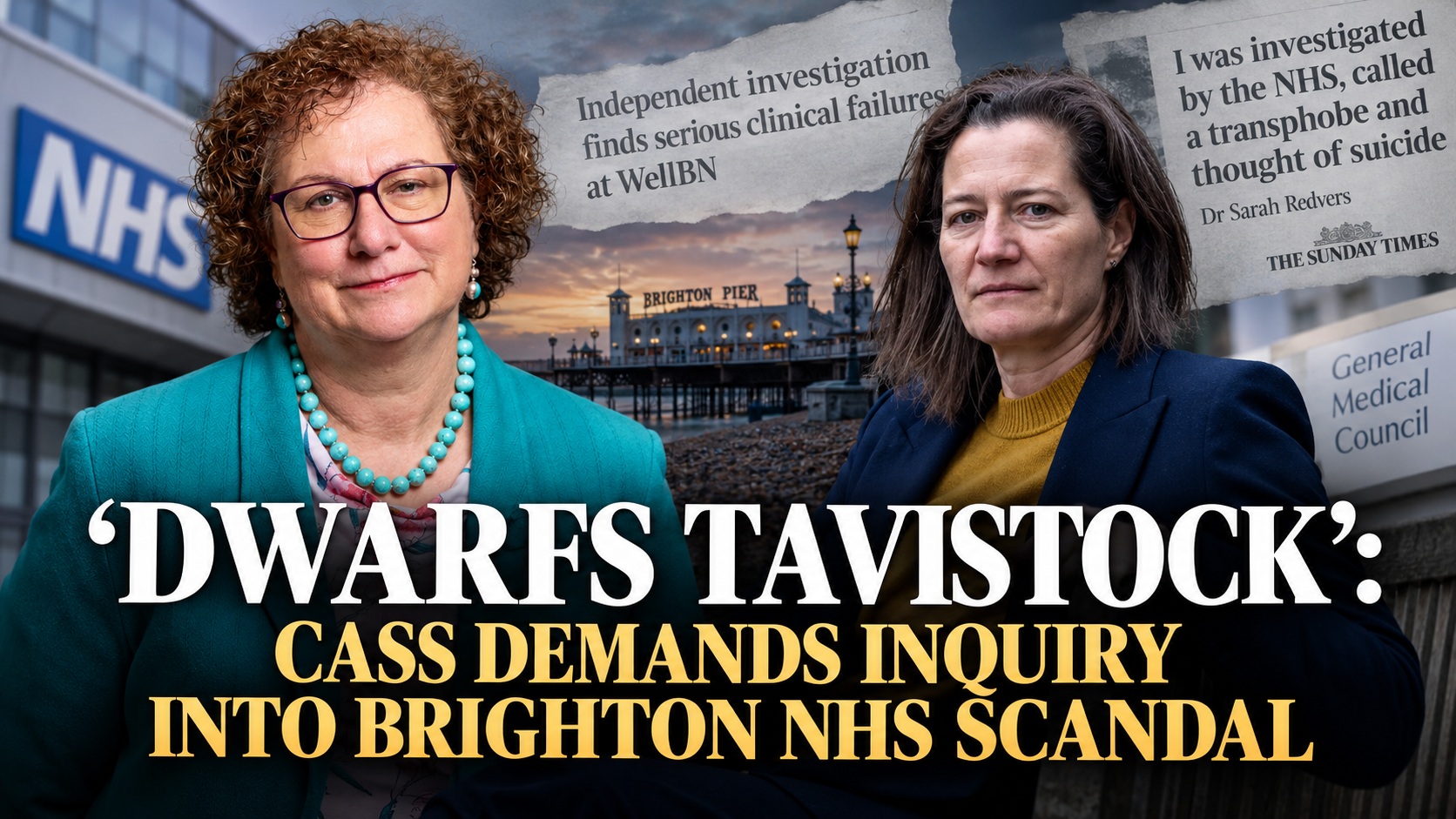
- ‘DWARFS TAVISTOCK’: Baroness Cass demands Inquiry into Brighton NHS ScandalBaroness Hilary Cass has called for an independent inquiry into Brighton’s WellBN practice, claiming it overshadowed the Tavistock scandal. An investigation revealed severe clinical failures affecting 78 children, alongside the distressing treatment of safeguarding GP Dr Sarah Redvers, who raised alarms about these practices and faced retaliation. Accountability within the NHS is urgently needed.
- “THAT’S JUST PARANOIA”: Dr Joseph Shaw and the Crisis beyond the Latin MassDr Joseph Shaw’s recent interview highlights his support for the Traditional Latin Mass but inadequately addresses the Society of Saint Pius X’s (SSPX) concerns regarding the Church’s doctrinal crisis. He dismisses SSPX’s fears as paranoia, yet the Society’s extensive theological arguments underscore that preserving the older liturgy is insufficient for restoring Catholic Tradition.
- THE REFUSAL IS NOW IN WRITINGThe Vatican has formally denied the Summorum Pontificum pilgrims permission to enter St Peter’s Basilica together for prayer, a decision communicated through published correspondence. The situation has sparked debate over administrative failures and the Church’s treatment of traditional Catholics. Key questions remain regarding the explanation for this refusal amidst wider pastoral concerns.



Leave a Reply