
When conscience meets policy: the John Kluge case and the limits of compelled speech
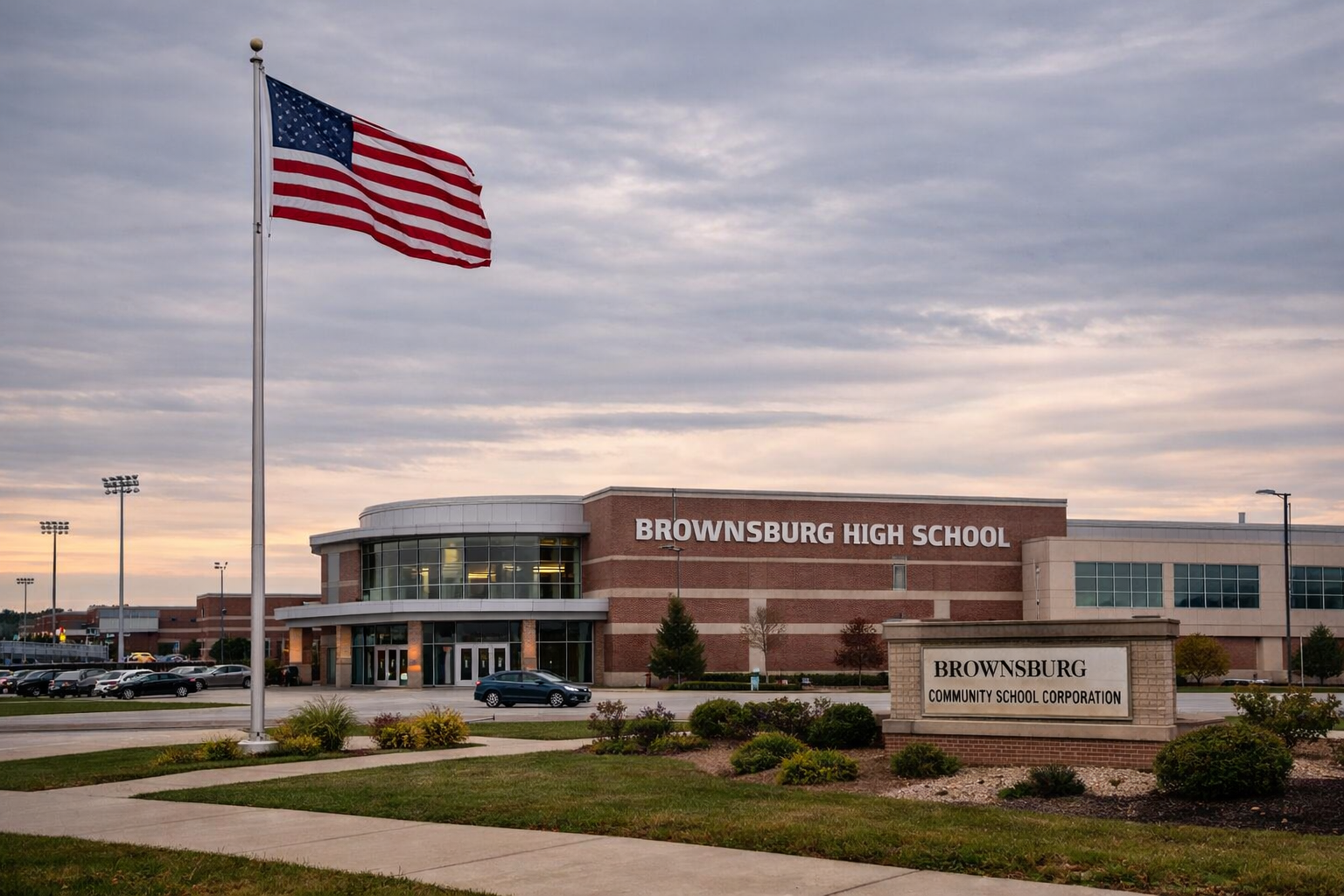
In March 2026 a legal dispute that had been running for almost eight years concluded with a substantial settlement in favour of an American public-school teacher who argued that his religious convictions had been violated by a school district policy on gender identity. The case of John Kluge, a former music teacher at Brownsburg High School, ended when the Brownsburg Community School Corporation agreed to pay $650,000 and provide training to senior staff on religious-liberty obligations.¹
The dispute, which began in 2017, illustrates a growing legal and cultural conflict in Western education systems: whether public institutions may require teachers to adopt specific forms of speech concerning gender identity, even when such speech conflicts with their religious beliefs. The outcome of the case reflects a broader shift in American employment law following recent Supreme Court rulings strengthening protections for religious employees.
The origins of the dispute
John Kluge taught orchestra at Brownsburg High School in Indiana for several years without incident. The conflict arose when the school district introduced a policy requiring staff to affirm students’ gender identity by using their preferred names and pronouns. Teachers were warned that using a student’s “incorrect” name or pronoun could lead to disciplinary action.
Kluge, a practising Christian, argued that the policy required him to communicate statements he believed to be false about biological sex. According to court filings, he sought a compromise that would allow him to avoid pronouns altogether. School administrators initially granted an accommodation permitting him to address all students by their surnames rather than first names or pronouns.²
This arrangement lasted only a few months. After complaints from students and staff who considered the practice stigmatising, the school district rescinded the accommodation. Kluge was informed that he would be expected to comply fully with the pronoun policy. Facing potential disciplinary consequences and believing that he could no longer fulfil the requirements of the job without violating his conscience, he resigned in 2018.³
The legal framework: religious accommodation in American law
Kluge’s lawsuit rested primarily on Title VII of the Civil Rights Act of 1964, the federal statute that prohibits employment discrimination based on religion. Title VII requires employers to provide “reasonable accommodation” for an employee’s religious beliefs or practices unless doing so would impose an “undue hardship” on the operation of the business.
For decades American courts interpreted “undue hardship” in a relatively permissive way, allowing employers to deny accommodations if they imposed even modest administrative burdens. That standard changed significantly with the Supreme Court’s decision in Groff v. DeJoy in 2023.
In that ruling the Court clarified that employers must demonstrate that a proposed accommodation would impose “substantial increased costs” on the operation of their business before it can be denied.⁴ This higher standard strengthened the legal position of employees who claim that workplace policies conflict with their religious obligations.
Kluge’s appeal was reconsidered in light of the Groff precedent. In 2025 the United States Court of Appeals for the Seventh Circuit ruled that a jury should be allowed to determine whether Brownsburg had failed to accommodate his religious beliefs adequately.⁵
Settlement rather than trial
Rather than face a jury trial under the revised legal standard, the Brownsburg school district opted to settle the case in early 2026. The settlement included payment of $650,000 to Kluge and a commitment that district administrators would receive training on religious-liberty requirements in employment law.⁶
The litigation was supported by Alliance Defending Freedom, a legal advocacy group specialising in religious liberty cases. Senior counsel David Cortman argued that the settlement demonstrated the continuing force of Title VII protections in public employment.
From the perspective of the school district, however, the dispute highlighted the difficulties administrators face when balancing competing claims of protection under American civil-rights law. Educational institutions increasingly find themselves navigating tensions between policies designed to protect gender-identity claims and statutory protections for religious conscience.
Parallel disputes and the widening debate
The Kluge case is not isolated. A similar controversy recently concluded in Austin, Texas, where Andrew Fox, a volunteer chaplain with the Austin Fire Department, was removed after posting a blog article stating that biological males should not compete in women’s sports. Following legal action, the city reached a settlement and acknowledged Fox’s eight years of service in the chaplaincy programme.⁷
Such disputes reflect a broader cultural question: whether public institutions can compel employees to adopt language or beliefs that conflict with their convictions, particularly in matters touching on anthropology, sexuality, and religion.
American constitutional law has long been wary of compelled speech. The Supreme Court’s landmark decision in West Virginia State Board of Education v. Barnette established that the government may not force individuals to express ideological statements against their conscience. Although Barnette concerned the compulsory recitation of the Pledge of Allegiance, its principle continues to influence debates over speech mandates in public institutions.⁸
Conscience, pluralism, and institutional authority
The Kluge settlement therefore highlights a fundamental tension in contemporary liberal democracies. On one side stands the principle that public institutions should provide an environment free from discrimination or hostility. On the other stands the equally longstanding principle that individuals should not be compelled by the state to articulate beliefs they do not hold.
Whether the balance between these two principles has been correctly drawn remains a matter of vigorous public debate. What the case demonstrates, however, is that courts are increasingly willing to scrutinise institutional policies that leave little room for religious conscience.
For school districts, universities, and other public bodies, the legal message is becoming clearer. Policies adopted in pursuit of social goals must still operate within the limits imposed by constitutional protections and civil-rights statutes. When those limits are ignored, the consequences may be both legal and financial.
- Alliance Defending Freedom, “Indiana school district pays former music teacher $650,000 to settle religious discrimination case,” 3 March 2026.
- Kluge v. Brownsburg Community School Corporation, court filings summarised in Seventh Circuit proceedings, 2023–2025.
- Ibid.
- Groff v. DeJoy, 600 U.S. ___ (2023).
- United States Court of Appeals for the Seventh Circuit, decision remanding the Kluge case for jury trial, 2025.
- Alliance Defending Freedom press release, 3 March 2026.
- City of Austin settlement letter concerning Andrew Fox, 2 March 2026.
- West Virginia State Board of Education v. Barnette, 319 U.S. 624 (1943).
RELATED ARTICLES


LATEST ARTICLES
- Today’s homily: Christ the KingThe homily reflects on Christ’s kingship as seen in the Gospel narrative. It contrasts earthly authority with divine truth, emphasising that true allegiance to God requires genuine obedience and transformation. Believers are called to examine their personal commitments and respond to Christ’s demands in everyday life, ultimately recognising their identity as bearers of God’s image.
- Sermon for Christ the KingToday marks the celebration of Christ the King and the Twenty Second Sunday after Pentecost, a feast asserting Christ’s sovereignty against totalitarianism. St. Paul emphasised Christ’s supremacy over power and principalities, challenging early Gnostic beliefs. The early Church’s victory over evil is affirmed in Christ’s resurrection, offering hope and unity amidst contemporary struggles.
- Today’s Mass: October 25 SOVEREIGNTY OF OUR LORD JESUS CHRIST, SUPREME KINGThe Feast of the Sovereignty of Our Lord Jesus Christ celebrates Christ’s dual kingship by birth and conquest. Established by Pius XI, it aims to deepen faith and counter anti-clericalism. The liturgical observance underscores His authority as King, advocating for societal recognition of His reign to bring peace and harmony.
- TRADITION BEHIND THE FENCEThe Vatican’s prohibition of the traditional Ad Petri Sedem pilgrimage to St Peter’s Basilica has sparked controversy, especially among traditional Catholics. While some cite scheduling conflicts, the broader issue lies in the restrictive policies of Traditionis custodes, which may confine traditional liturgical practices to specific enclaves, risking the transmission and recognition of Catholic Tradition within the wider Church.
- Today’s Mass: October 24 St Raphael the ArchangelThe Feast of Saint Raphael the Archangel highlights his healing powers as depicted in the Book of Tobit, where he aids Tobit and his son, Tobiah. Venerated as a protector of travellers and the blind, Raphael is celebrated for his miraculous interventions. His legacy includes support for nurses, matchmakers, and Catholic studies.





Leave a Reply