
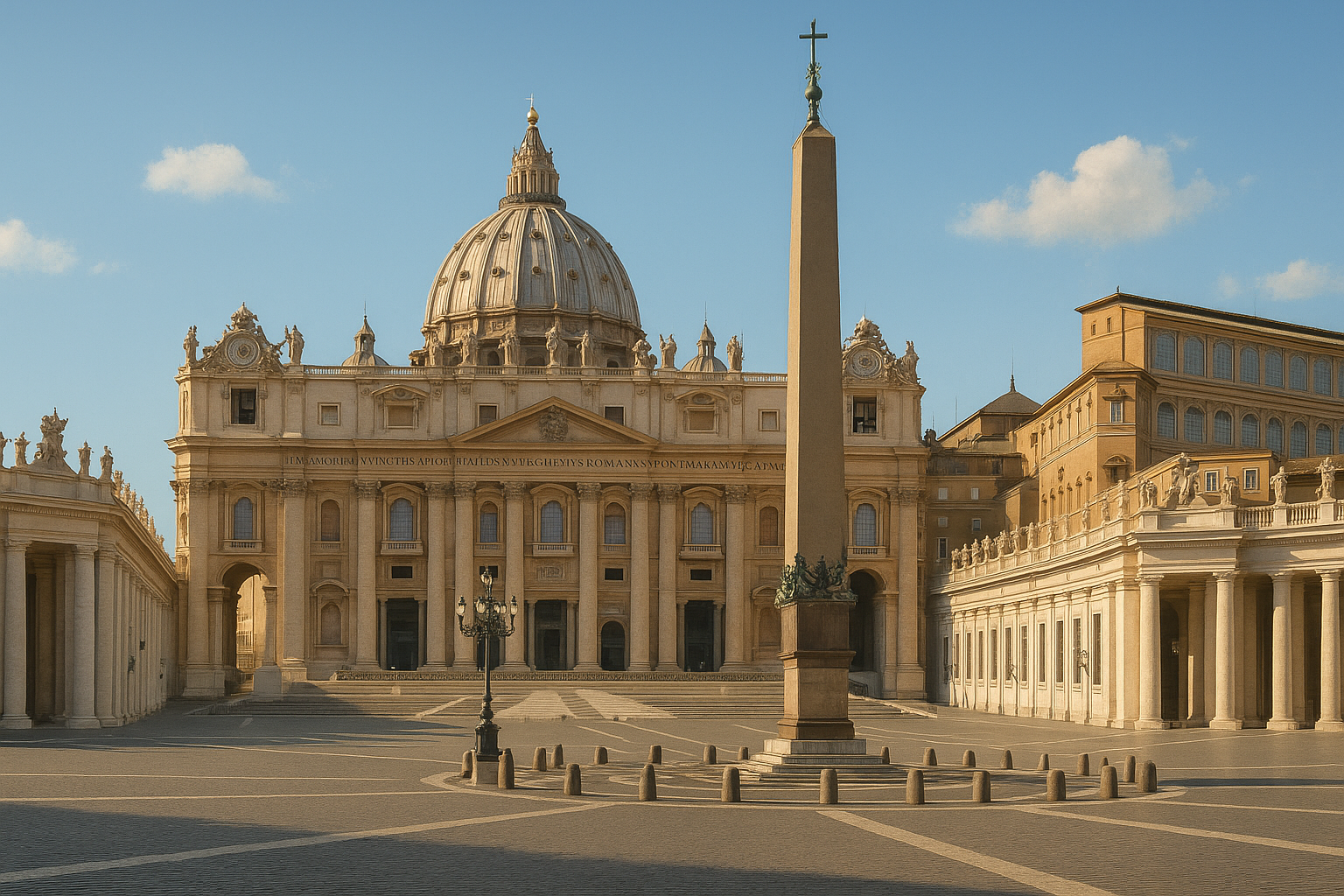
Pope Leo XIV Convenes First Curial Meeting as Major Vatican Reshuffle Looms
The first formal meeting of the dicastery heads of the Roman Curia under Pope Leo XIV took place on 10 November 2025 in the Apostolic Palace, marking the beginning of what Vatican observers regard as a new and potentially defining phase of his pontificate. Though the gathering was administrative in form, its symbolic weight was unmistakable: a pope who has so far governed with restraint now begins to shape the machinery of the Vatican according to his own pastoral and theological priorities.
A Deliberate Beginning
According to the Vatican communiqué, the meeting—attended by the full assembly of Curial prefects and pro-prefects—was the first of what will become monthly sessions for collective discussion and review. Such frequency recalls earlier models of papal oversight, when Curial meetings functioned not merely as consultations but as extensions of the papal magisterium. The tone of Pope Leo’s address reportedly emphasised continuity and service, echoing the principle that the Curia exists “not for itself, but for the Church’s mission in the world.”
Present were the principal figures of the Francis-era Curia: Cardinals Víctor Manuel Fernández (Doctrine of the Faith), Arthur Roche (Divine Worship), Kurt Koch (Christian Unity), and Konrad Krajewski (Charity), among others. Each represents a distinct current within the postconciliar Vatican—Fernández the theological interpreter of Amoris Laetitia and Fiducia Supplicans, Roche the enforcer of Traditionis Custodes, and Koch the architect of ecumenical dialogue in the wake of Nostra Aetate. Their collective presence before a new pope inevitably evokes the question: how long will the present configuration remain?¹
Signals of Renewal
The first concrete sign came with the appointment of Archbishop Filippo Iannone O.Carm. as Prefect of the Dicastery for Bishops, replacing Pope Leo himself, who had provisionally overseen the department. A canonist and Carmelite known for his precision and personal humility, Iannone’s selection points to the Pope’s preference for steady hands and quiet competence over ideological alignment.²
Analysts in Rome interpret the move as the opening chord of a larger composition. Many senior prefects—Roche, Koch, and even Fernández—are either past the conventional retirement age or approaching the end of their terms. The expectation of a major reshuffle has therefore been building since the Pope’s election. “He is choosing to move deliberately,” noted one Curial observer. “He wants to understand the instruments before re-tuning the orchestra.”³
Memory as Governance
If Pope Leo’s pontificate has so far been characterised by serenity, this phase suggests a deeper intention. “Popes come and go,” he remarked earlier this year, “but the Curia remains; memory is an essential element in a living organism.”⁴ In an era often marked by discontinuity and theological amnesia, such a statement carries significance. It implies that governance, for Leo XIV, begins not with rupture but with recollection—the re-animation of the Church’s institutional memory as the basis of reform.
This approach stands in quiet contrast to his predecessor’s emphasis on decentralisation and synodal experimentation. While not rejecting those principles, Leo XIV appears to be re-centring the papacy as a visible locus of unity and doctrinal stability. He is not dismantling the legacy of Francis; he is contextualising it—subjecting it to the longer rhythm of the Church’s life.
Liturgy at a Crossroads
Among traditional Catholics, all eyes are fixed on the Dicastery for Divine Worship, where Cardinal Roche’s tenure has been one of the most controversial of the past decade. His enforcement of Traditionis Custodes and the suppression of diocesan celebrations of the Traditional Latin Mass created widespread unrest among clergy and laity alike. Any change in this office will therefore be interpreted as a test of the Pope’s intentions toward the preconciliar liturgy.⁵
Though Pope Leo has not issued any statements suggesting immediate reform, his personal liturgical style—marked by reverence, silence, and fidelity to traditional forms—has been noted. Even his simple adherence to the established papal ceremonial on the loggia after his election signalled a respect for continuity. Should a new prefect share this sensibility, it could indicate a recalibration of Rome’s approach to the ancient liturgy: neither the restoration feared by progressives nor the suppression lamented by traditionalists, but a restoration of peace through prudence.
The Global Church and Episcopal Appointments
Archbishop Iannone’s new post carries vast implications for episcopal appointments worldwide. The Dicastery for Bishops not only recommends new bishops to the Pope but also shapes the character of local Churches. Iannone’s background as a Carmelite and former canonist of the Roman Rota suggests that selections under his watch may favour doctrinal clarity, pastoral sobriety, and a preference for candidates formed in traditional seminary environments. This could mark a subtle but real departure from the sociological and political calculations that have dominated recent decades.
Observers note that Pope Leo’s outreach to the developing world—particularly Africa and the Philippines—may also influence the composition of the hierarchy. A more globally representative episcopate, rooted in missionary experience rather than bureaucratic advancement, would align with his stated desire for “bishops who smell not of politics, but of prayer.”
An Emerging Vision
What emerges from this first Curial meeting is less a revolution than a method: deliberate reform through personal encounter, gradual transition rather than abrupt dismissal. Those close to the papal household describe him as a man of “long patience,” preferring discernment to decrees. Yet such patience should not be mistaken for indecision. The Pope’s decision to convene monthly Curial meetings, to re-establish direct communication among departments, and to emphasise collective responsibility indicates a renewed seriousness in papal governance.
In this, he resembles the great administrators of the early twentieth century—Popes Pius X and Pius XI—who combined doctrinal vigilance with careful institutional reform. For a Church weary of contradiction and fatigue, such steadiness may prove a quiet mercy.
A Pontificate to Be Watched
It is too early to predict whether Pope Leo XIV’s reshaping of the Curia will produce a renaissance of faith or a mere rearrangement of bureaucracy. But his first decisive gesture—the gathering of the Curia not as a court but as a council of service—reveals a pontiff intent on restoring discipline without spectacle, and continuity without stagnation.
As the Church approaches the Jubilee Year, the faithful may yet find in Leo XIV a successor who seeks not to innovate but to integrate—to reconcile the fervour of tradition with the prudence of governance. For now, the Curia waits, the world watches, and the Pope listens.
¹ The Catholic Herald, “Pope Leo XIV convenes first Curia meeting as major Vatican reshuffle looms,” 10 Nov 2025.
² Catholic News Agency, “Pope Leo XIV names first head of major Vatican department,” May 2025.
³ Crux Now, “Pope Leo XIV gives first indication of how he might change synodality,” June 2025.
⁴ America Magazine, “Pope Leo XIV on the permanence of the Curia,” 24 May 2025.
⁵ The Catholic Herald, ibid.



Leave a Reply