

speak truth in love
MASS Sedérunt
EPISTLE Acts 6: 8-10; 7: 54-58
GOSPEL St Matthew 23: 34-39
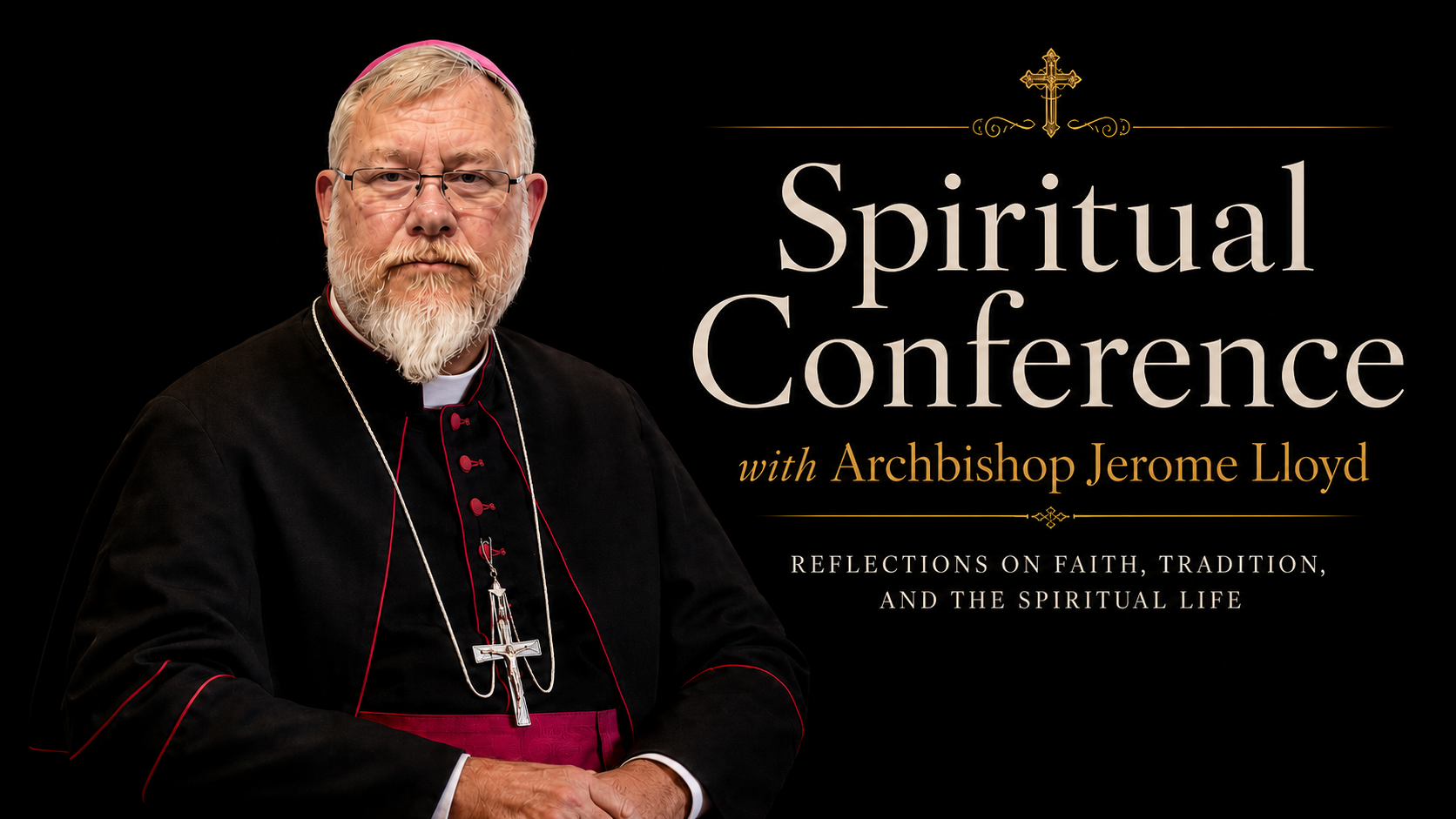
HOMILIST Mt Revd Jerome Lloyd OSJV

Beloved in Christ,
The Church prolongs the feast of Saint Stephen into an octave not to lessen the shock of his martyrdom, but to deepen our understanding of it. What was sudden and violent on the feast day is now contemplated in the clear light of Our Lord’s own words. Today the Gospel interprets the martyr; it explains why Stephen died, and why his death was not an accident of history but the fulfilment of prophecy.
Our Lord speaks with terrible lucidity:
“Behold, I send unto you prophets and wise men and scribes, and some of them you will put to death and crucify… that upon you may come all the just blood that hath been shed upon the earth, from the blood of Abel the just to the blood of Zacharias… Amen, I say to you, all these things shall come upon this generation.”
This is not a general warning spoken into the abstract. It is a concrete prophecy, fulfilled first in Christ Himself and immediately thereafter in His servants. Saint Stephen stands at the head of that long line of witnesses whose blood cries out—not for vengeance, but for truth.
When Stephen was stoned outside the city, the words of Christ were already being enacted. Prophets were again rejected. Wisdom was again silenced. The Just One was again opposed—now in His members. The Octave Day forces us to see that Stephen’s martyrdom was not an interruption to the Gospel story, but its continuation.
Jesus knew that the proclamation of the Kingdom would divide. For those with eyes to see, it was the fulfilment of the Law and the Prophets, the long-awaited consolation of Israel. But for those who refused it, judgment followed—not arbitrarily, but as the consequence of hardened hearts. “He came unto His own, and His own received Him not.” Light entered the world, yet men loved darkness rather than light, because their deeds were evil.
Our Lord foresaw not only His own rejection, but the collision that would follow: Jerusalem against Rome, sin meeting its historical reckoning, the Temple destroyed, the city laid waste. His lament—“O Jerusalem, Jerusalem”—is not spoken in triumph but in grief. Divine Wisdom stretches out her arms like a hen gathering her brood, yet the people would not. To reject Christ is not merely to reject a teacher, but to reject God Himself.
In this, Jesus stands squarely within the tradition of the Hebrew prophets. Israel had been formed by liberation from Egypt, bound together by the Law, called to be a society unlike the empires of the world—a people in which the stranger, the orphan, and the widow were protected, and where power was subordinated to righteousness. Yet once in the land, Israel recreated the very structures it had fled. Kings ruled as Pharaohs once had. Power displaced covenant.
The prophets arose to speak truth to that power. Nathan confronted David. Elijah condemned Ahab. Isaiah mocked military alliances and foretold a kingdom of peace. Jeremiah preached surrender when pride demanded resistance, and was hated for it. Ezekiel spoke judgment whether the people listened or not. Their message was always the same: fidelity to God matters more than appearances, institutions, or security.
Jesus declares that He has not come to abolish that prophetic tradition, but to fulfill it. As they were persecuted, so would He be. And therefore, so would His followers. Stephen’s death is not a tragedy that went wrong; it is exactly what fidelity looks like in a fallen world.
Here we touch an uncomfortable truth: truth begets hatred. The world values looking good; God values doing good. We are constantly tempted to dilute the faith—to make it agreeable, flattering, affirming of pride rather than corrective of sin. People prefer a religion that sanctifies their self-image, their party, their ideology. But the prophets, and Christ Himself, teach us that truth is more important than diplomacy. The spirit of the age is not the Holy Spirit.
Yet—and this is decisive—there is a difference between the prophets of the Old Covenant and Christ. The prophets spoke truth with severity, often at the cost of charity. Jeremiah himself confessed bitterness and despair. This was human and understandable, but incomplete. Jesus goes further. He commands the impossible: turn the other cheek, go the second mile, love your enemies, pray for those who persecute you. Evil is not conquered by evil, but only by good.
In Christ alone severity and tenderness meet without contradiction. He speaks truth without compromise, and loves without limit. And Stephen, full of the Holy Ghost, mirrors this union. He denounces error without fear, and dies forgiving his killers. “Lord, lay not this sin to their charge.” In that prayer, Saint John Chrysostom tells us, the Church gained Saint Paul.
The Octave Day confronts us with our own imbalance. In some ages the Church has erred by harshness without mercy; in our own, she is often tempted toward mercy without truth. One condemns too quickly; the other remains silent when truth must be spoken. Both fail Christ.
What we must seek is the grace to speak truth in love. To resist the spirit of the age without becoming embittered by it. To name sin without ceasing to love sinners. To stand firm without hatred. This balance is not achieved by technique, but by holiness.
Saint Stephen teaches us that such holiness is possible. Not because he was extraordinary by nature, but because he was filled with the Spirit of Christ. As he saw the heavens opened and Jesus standing at the right hand of the Father, so may we learn to fix our eyes not on the approval of men, but on the judgment of God.
May the divine charity incarnate in Christ be replicated in us, as it was in Stephen—so that, whether we are heard or rejected, whether we are praised or opposed, we may be found faithful.
Homilies Archive

Mass Propers


DAILY MASS ONLINE
One of the earliest online apostolates dedicated to the Traditional Latin Mass, Old Roman TV began broadcasting the Holy Sacrifice on the Feast of the Assumption, 15 August 2008. During the COVID-19 pandemic, additional programming — devotions, catechesis, and conferences — was added to support the faithful in prayer and formation.
Support the daily Holy Mass on Old Roman TV by offering a Mass intention — for loved ones, thanksgiving, or the repose of souls. Your intention helps sustain the sacred liturgy and brings grace to those you remember before God’s altar.
SUPPORT THE DAILY MASS ONLINE
Likely the world’s longest-running daily online broadcast of the
Traditional Latin Mass, streaming faithfully since the
Feast of the Assumption 2008.

This apostolate cannot continue without immediate help
Please support us with a contribution toward
chapel rent, sacristy supplies, operating costs, and web-hosting.
Our essential monthly costs reach £1,000.



Leave a Reply