
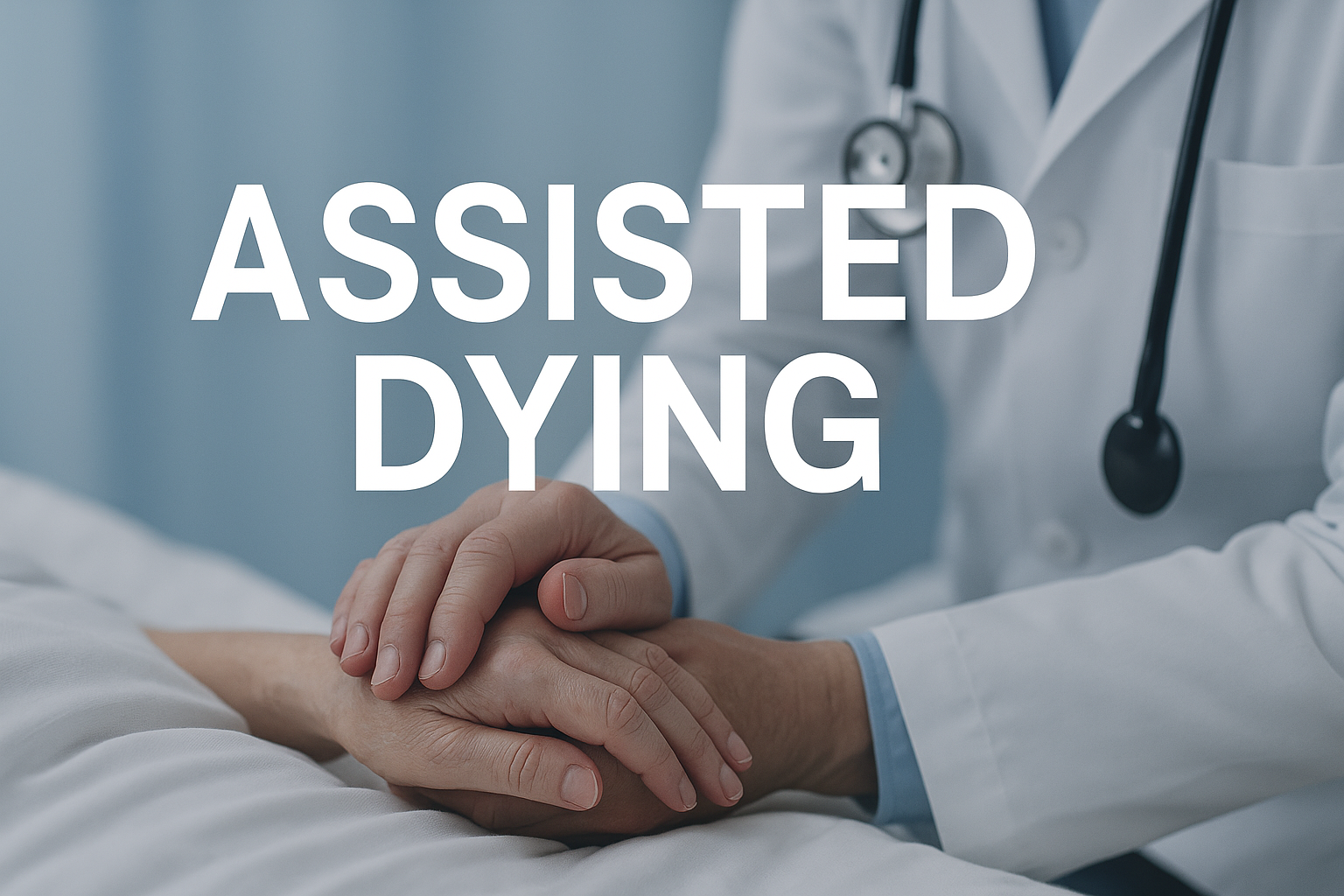
ASSISTED DYING BILL: OCTOBER HEARINGS DEEPEN THE DIVIDE
Peers pause further debate as evidence exposes cracks in the case for legalised killing.
As autumn advances, the United Kingdom’s most divisive moral proposal—the Terminally Ill Adults (End of Life) Bill—has entered a period of sober reflection. Following September’s fiery Second Reading debate, the House of Lords Select Committee appointed to examine the Bill has now begun hearing evidence from medical experts, faith leaders, and advocacy groups. The proceedings have revealed growing unease about the Bill’s safeguards, medical implications, and cultural consequences.
A Pause for Evidence
The Select Committee opened its hearings in early October 2025, taking testimony from senior clinicians and professional bodies. Representatives of the Royal College of Physicians and Royal College of Psychiatrists reaffirmed that they cannot support the Bill as drafted. They warned that coercion—subtle or explicit—cannot be ruled out, and that depression in terminal patients is often mistaken for rational consent.¹
Palliative care consultant Baroness Finlay of Llandaff, one of the Bill’s most respected opponents, told the Committee that the measure is “not a solution to suffering but an admission of societal failure to care.”² Her remarks echoed a broader theme: that legalising assisted death before providing universal access to palliative care in the NHS is both unethical and dangerous.
Faith leaders from multiple traditions—including representatives of the Catholic Bishops’ Conference of England and Wales—testified that the Bill undermines the moral duty to protect the vulnerable. “Compassion is not the taking of life,” one prelate observed, “but the refusal to abandon those who suffer.” The Committee is expected to conclude its oral evidence sessions by the end of October and to publish its findings in early November.
Calls for Delay
Several peers have urged a pause on the Bill’s Committee Stage until the Select Committee reports. Ministers are said to favour this approach, making further parliamentary progress unlikely before mid-November. This delay, though procedural, reflects a growing recognition that public and medical opinion remains divided and that the political appetite for haste has waned.
Medicine and Morality Collide
Outside Parliament, the medical profession itself is fracturing. The British Medical Association reiterated its “neutral” position at the start of October but demanded “robust independent oversight” and “ring-fenced funding for palliative care” should the Bill pass.³ Meanwhile, more than 1,000 doctors signed an open letter organised by Care Not Killing, declaring that assisted dying “has no place in British medicine.”⁴
Public Opinion and Press Divide
A new YouGov poll released on 7 October showed that 58 percent of Britons support assisted dying in principle—but that support falls sharply when applied to cases involving chronic illness, disability, or depression.⁵ The national press remains split: The Times editorialised that “choice at the end of life is the last human right,” while The Telegraph countered that “no safeguard can make killing safe.”
The Church Responds
On 10 October, the Catholic Bishops’ Conference of England and Wales issued a pastoral reminder that “compassion never means the deliberate ending of a life.” The Old Roman Apostolate likewise condemned the Bill as “the medicalisation of despair,” warning that “what began in the womb now threatens to claim the bedside.”⁶
A Moment of Truth Approaches
This October pause has not cooled the debate; it has only clarified its stakes. The Select Committee’s forthcoming report will shape the next parliamentary phase and may determine whether the Bill survives. The United Kingdom now confronts a defining question: will Parliament reassert the duty to protect life—or will it formalise the power to end it?
¹ House of Lords Select Committee on the Terminally Ill Adults (End of Life) Bill, Evidence Session, 8 October 2025.
² Hansard, House of Lords, Oral Testimony, Baroness Finlay, 9 October 2025.
³ BMA Policy Briefing, “Assisted Dying: Oversight and Safeguards,” 4 October 2025.
⁴ Care Not Killing Open Letter, 6 October 2025.
⁵ YouGov Poll: Public Attitudes to Assisted Dying, 7 October 2025.
⁶ Catholic Bishops’ Conference of England and Wales, Statement on Assisted Dying, 10 October 2025.



Leave a Reply