
THE FUTURE IS TRADITION: THE YOUNG ARE PASSING JUDGMENT ON THE MODERN CHURCH
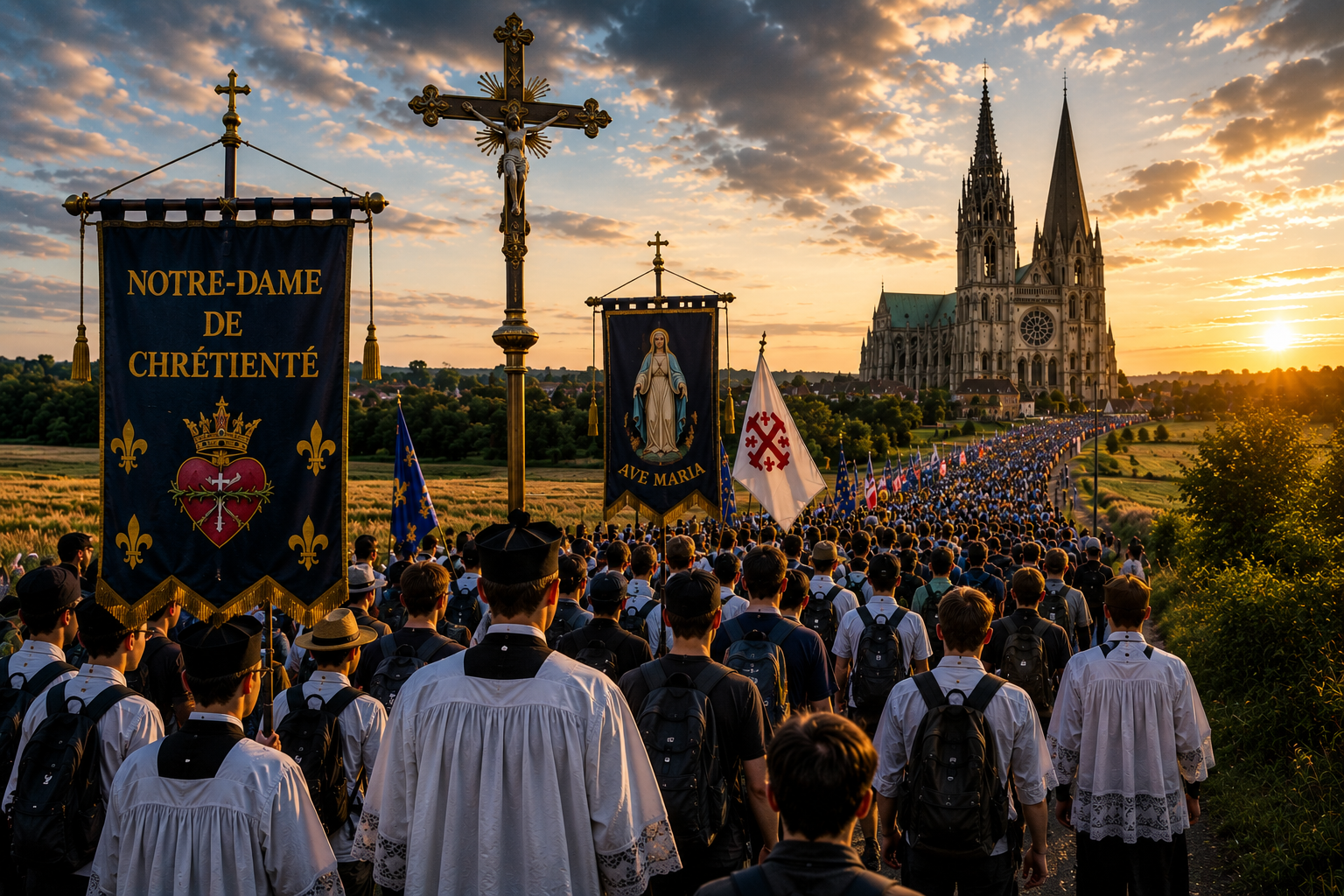
When Archbishop Héctor Agüer recently praised the revival of the Traditional Latin Mass among young Catholics, he did more than commend a devotional trend. Reflecting on the remarkable growth of the Paris–Chartres pilgrimage, he described it as a recovery of Catholic tradition—an observation that, coming from a prelate of long experience, carries more than incidental weight. What he identified was not simply a preference among a subset of the faithful, but a phenomenon that raises deeper questions about the direction of the Church in the postconciliar era.
For decades, Catholics were assured that the future of the Church depended upon adaptation. The ancient liturgy was judged too distant from modern sensibilities, too complex for contemporary participation, and too closely bound to a world that had passed away. Latin was described as an obstacle; ritual precision as clericalism; silence as disengagement. In its place emerged a liturgical and pastoral paradigm intended to be accessible, intelligible, and pastorally effective within a rapidly changing cultural landscape. This shift was not presented as tentative, but as necessary—indeed, as the only viable response to modernity.
Yet the results of this confidence are now visible across much of the Western Church. Mass attendance has declined sharply since the 1960s; vocations to the priesthood and religious life have fallen to historic lows in many regions; sacramental practice has diminished; and surveys consistently reveal widespread confusion among Catholics regarding the Eucharist and other foundational doctrines. Dioceses increasingly confront demographic contraction, parish closures, and institutional fragility. While these developments cannot be attributed solely to liturgical reform, they form part of a broader pastoral trajectory that has not produced the renewal that was anticipated.
It is precisely against this background that the revival of traditional Catholicism assumes its full significance. The Paris–Chartres pilgrimage has become emblematic of this development. In recent years, participation has reached approximately 18,000 pilgrims, with waiting lists exceeding capacity, and a demographic profile overwhelmingly composed of young adults, students, and families. Comparable patterns are evident within communities attached to the traditional liturgy across Europe and North America, including those served by institutes such as the Priestly Fraternity of St Peter and the Institute of Christ the King Sovereign Priest, both of which continue to report steady vocations and youthful congregations. The contrast with the broader ecclesial landscape, while not absolute, is sufficiently marked to warrant serious consideration.
The suggestion that this phenomenon is merely nostalgic cannot be sustained. The generation most visibly drawn to the traditional liturgy did not experience the pre-conciliar Church. They have no lived memory of the rites they now embrace. Their attraction must therefore be understood not as a longing for what was lost, but as a response to what is perceived to be lacking. In a cultural environment marked by fragmentation, instability, and the erosion of inherited meaning, a liturgy that presents itself as received rather than constructed, as ordered rather than improvised, and as oriented toward God rather than toward the community, possesses a distinct and compelling appeal.
This instinct is not only sociologically intelligible; it is theologically coherent. Tradition is not an incidental aspect of Catholic life, but an essential dimension of the Church’s identity. The faith is not generated by successive generations, but transmitted. “For I have delivered unto you first of all, which I also received,” writes the Apostle.^1 The Church lives in this act of reception and transmission. To depart from what has been received is not renewal but rupture; it is to replace inheritance with construction. The liturgy, as the Church’s highest act of worship, necessarily reflects this continuity, embodying the faith not only in what is taught, but in how it is prayed.
Joseph Ratzinger, later Pope Benedict XVI, warned explicitly against the notion of a liturgy “fabricated” by committees, arguing that such an approach risks obscuring the essential character of worship as something received rather than produced.^2 This insight informed his decision in Summorum Pontificum to affirm that what earlier generations held as sacred “remains sacred and great for us too.”^3 The statement was not merely pastoral; it was theological, rooted in an understanding of the Church as a living tradition rather than a mutable construct.
The subsequent restriction of the traditional liturgy through Traditionis Custodes has brought this tension into sharper focus. At a moment when traditional communities demonstrate signs of vitality, they have been subject to increasing regulation. This development raises a question that cannot be avoided: whether the Church understands such vitality as a resource to be engaged, or as a problem to be contained. The answer to that question bears directly upon the Church’s self-understanding in the modern world.
The appeal of tradition among the young extends beyond liturgical form. It is frequently accompanied by a broader recovery of Catholic practice: regular confession, Eucharistic adoration, Marian devotion, serious catechesis, and a willingness to order one’s life according to the demands of the faith. What is sought is not simply a different aesthetic, but coherence—a unity of belief, worship, and life. In a cultural context characterised by contradiction and instability, such coherence exerts a powerful attraction.
Historically, this pattern is consistent with previous periods of renewal. The reforms associated with Cluny and Gregory VII represented a return to discipline and identity. The Council of Trent responded to crisis not by adaptation to contemporary pressures, but by reaffirmation and clarification. Even the Liturgical Movement prior to the Council sought a deeper engagement with the Church’s inherited forms, not their replacement. Authentic reform, in the Catholic sense, has always entailed a return to sources rather than a departure from them.
The present revival suggests that the assumption of an inevitable movement away from tradition was misplaced. It also indicates that the fundamental needs of the human person remain unchanged. Man continues to seek truth, beauty, order, and transcendence. When these are obscured, he looks elsewhere; when they are presented clearly, he responds. The growth of traditional Catholicism among the young can thus be understood as a recognition that something essential has been diminished and must be recovered.
Such a recognition does not require a wholesale rejection of the postconciliar Church, nor does it deny the presence of grace within her ordinary life. It does, however, necessitate an honest evaluation of recent decades. If certain pastoral approaches have coincided with decline, while others demonstrate vitality, it is reasonable to ask whether a recalibration is required. These are not questions of disloyalty, but of fidelity to the Church’s mission.
The young pilgrims walking toward Chartres are not engaged in an exercise of historical reconstruction, nor are they seeking refuge from the present. They are, rather, searching for a foundation upon which a genuinely Catholic future can be built. Their instinct reflects a recognition that continuity is not an obstacle to renewal, but its precondition.
In this sense, Archbishop Agüer’s observation is not merely descriptive, but diagnostic. The revival of tradition among the young reveals both the limitations of certain prevailing assumptions and the enduring strength of the Church’s inherited life. After decades in which novelty was frequently equated with progress, an increasing number of young Catholics appear to be arriving at a different conclusion: that renewal is found not in rupture, but in continuity; not in reinvention, but in fidelity.
The future of the Church will not be secured by endless adaptation to the spirit of the age. It will depend upon her capacity to receive, to preserve, and to transmit what she has been given.
The future, quite simply, is tradition.
¹ Holy Bible, Douay-Rheims Version, 1 Corinthians 15:3.
² Joseph Ratzinger, The Spirit of the Liturgy (San Francisco: Ignatius Press, 2000).
³ Summorum Pontificum, Letter to Bishops, 7 July 2007.
⁴ Traditionis Custodes, 16 July 2021.
⁵ Archbishop Héctor Agüer, comments on the revival of the Traditional Latin Mass among youth, reported in Sign of the Cross Media, June 2026.
RELATED ARTiCLES


LATEST ARTICLES
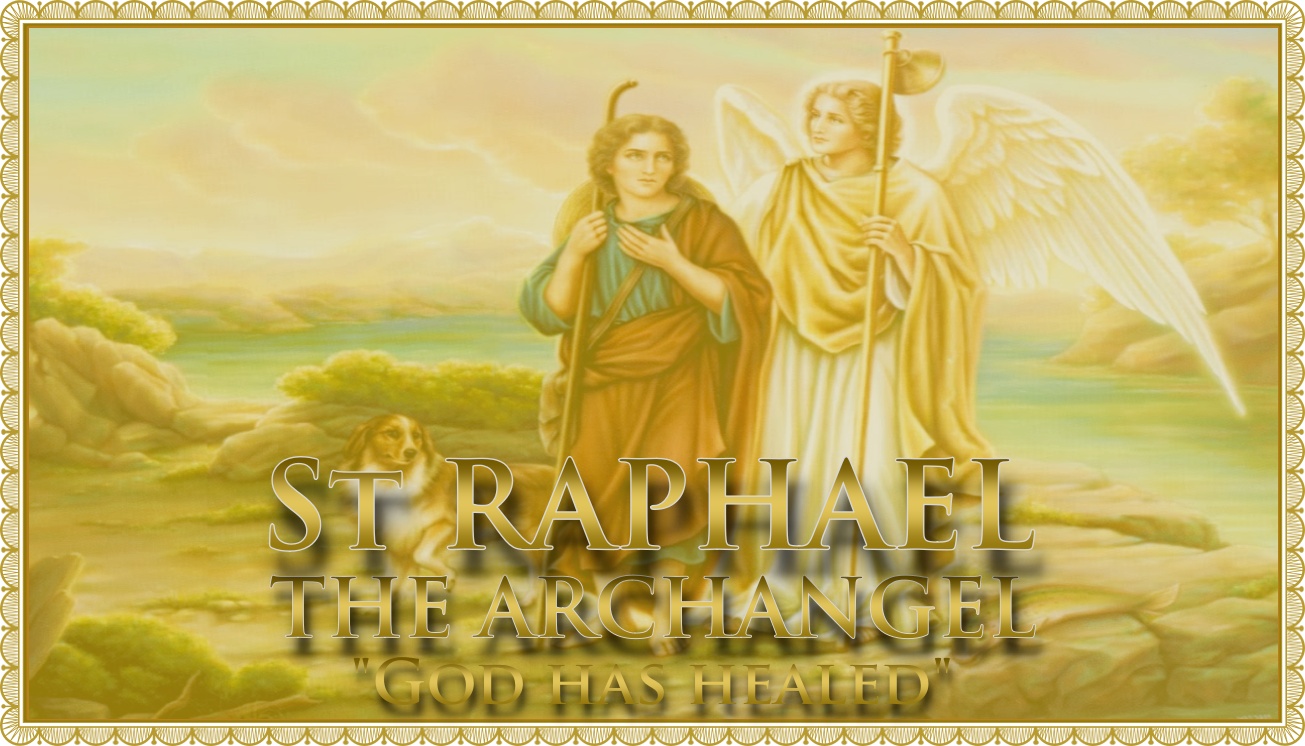
- Today’s Mass: October 24 St Raphael the ArchangelThe Feast of Saint Raphael the Archangel highlights his healing powers as depicted in the Book of Tobit, where he aids Tobit and his son, Tobiah. Venerated as a protector of travellers and the blind, Raphael is celebrated for his miraculous interventions. His legacy includes support for nurses, matchmakers, and Catholic studies.
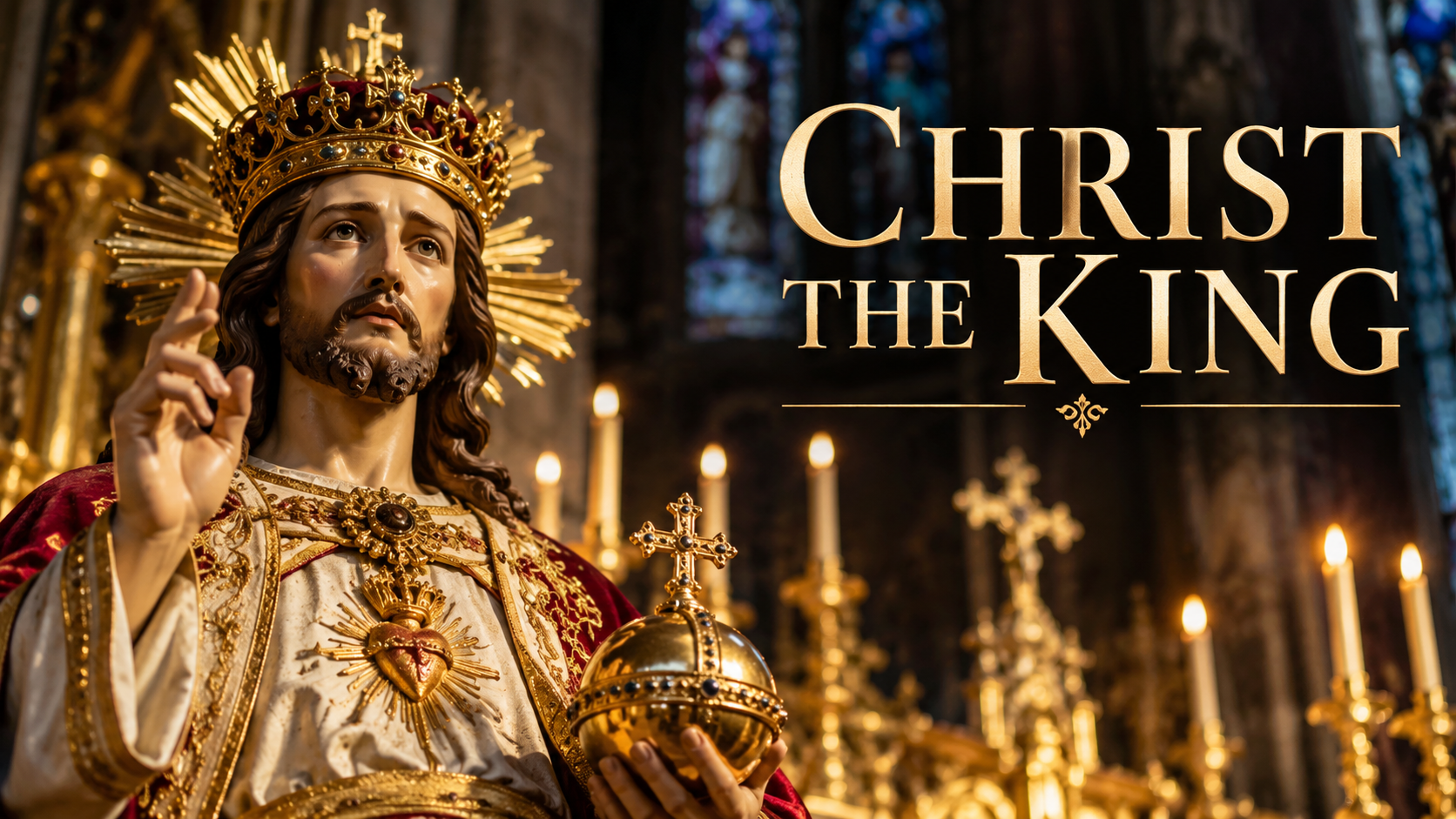
- 25.10.26 Nuntiatoria CXXIX: CHRISTUS REXThe text discusses the relationship between Christ’s kingship and authority within the Church amidst contemporary challenges. It contrasts ecclesiastical power with genuine faith, emphasising that authority must protect divine truth rather than alter it. The witness of imprisoned priests illustrates the enduring significance of fidelity to Christ over institutional conformity.
- THE DOMESTIC CHURCH: 25 October – 2 November 2026 A Home with Room for Heaven: Preparing for All Saints and All SoulsThe content outlines a week’s plan for traditional Catholic families to prepare for the feasts of All Saints and All Souls. Emphasising daily prayers, remembrance of the deceased, and engagement with children’s activities, it aims to integrate Catholic customs into family life, enriching spiritual practices and fostering a shared faith experience.
- ORDO w/c 25.10.26The text outlines the liturgical calendar for the last week of October and the beginning of November, highlighting key celebrations. Notable events include the Feast of Christ the King, St Evaristus, the Vigil of Saints Simon and Jude, and the Feast of All Saints, emphasising themes of holiness, unity in faith, and the Church’s teachings.
- Christ the King: The Sovereignty of the Crucified RedeemerThe Mass of Christ the King articulates core Catholic beliefs about Jesus’ divine authority, redemptive sacrifice, and the essence of His Kingdom. It emphasises Christ as Prophet, Priest, and King, whose sovereignty is inseparable from His mission of reconciliation, calling the faithful to acknowledge His authority and embrace moral duties rooted in divine truth.
CURRENT EDITION


DAILY MASS ONLINE
One of the earliest online apostolates dedicated to the Traditional Latin Mass, Old Roman TV began broadcasting the Holy Sacrifice on the Feast of the Assumption, 15 August 2008. During the COVID-19 pandemic, additional programming — devotions, catechesis, and conferences — was added to support the faithful in prayer and formation.
Support the daily Holy Mass on Old Roman TV by offering a Mass intention — for loved ones, thanksgiving, or the repose of souls. Your intention helps sustain the sacred liturgy and brings grace to those you remember before God’s altar.
SUPPORT THE DAILY MASS ONLINE
Likely the world’s longest-running daily online broadcast of the
Traditional Latin Mass, streaming faithfully since the
Feast of the Assumption 2008.

This apostolate cannot continue without immediate help
Please support us with a contribution toward
chapel rent, sacristy supplies, operating costs, and web-hosting.
Our essential monthly costs reach £1,000.
MASS INTENTIONS
If your offering is for a Mass Intention, kindly complete the form below in full so we may correctly match it to your donation. For anniversary intentions — birthdays, wedding anniversaries, anniversaries of death — please be sure to include the relevant date.


Today’s Mass Propers
- Today’s Mass: October 24 St Raphael the Archangel
 The Feast of Saint Raphael the Archangel highlights his healing powers as depicted in the Book of Tobit, where he aids Tobit and his son, Tobiah. Venerated as a protector of travellers and the blind, Raphael is celebrated for his miraculous interventions. His legacy includes support for nurses, matchmakers, and Catholic studies.


Leave a Reply