

The King After God’s Heart: David and the Dawn of the Royal Promise

When Samuel visits Bethlehem to anoint the one God has chosen, Jesse’s older sons appear strong, impressive, and kingly. Yet God dismisses them all with a lesson that echoes through salvation history: “Man seeth those things that appear, but the Lord beholdeth the heart.”¹ David, the youngest and least likely, is summoned from tending sheep. Before his astonished family, he is anointed, and “the Spirit of the Lord came upon David from that day forward.”²
David’s kingship is the pivotal hinge of the Old Testament. God makes a covenant with him, promising that his throne will endure forever and that from his line will come the Anointed One.³ The crown symbol on the Jesse Tree recalls this promise and points directly toward Christ, the Son of David, whose kingship is not political ambition but divine sovereignty hidden in humility.
The rise of David shows that God chooses the unlikely to accomplish His purposes. The shepherd becomes king; the youngest becomes the forefather of the Messiah. Advent reminds us that God’s ways overturn human expectations — the eternal King will be born not in a palace but in a stable, yet He will reign forever.
As we place the crown upon the Jesse Tree, we remember that the genealogy of Christ is rooted in promise, anointing, and covenant. David’s crown does not glorify earthly power, but the kingship of Him who will shepherd His people in justice and peace.
- 1 Samuel 16:7 (Douay-Rheims).
- 1 Samuel 16:13 (Douay-Rheims).
- Cf. 2 Samuel 7:12–16.
THE JESSE TREE REFLECTIONS


Related Articles


Latest Articles
- Today’s homily: Feast of the Holy RelicsThe Feast of the Holy Relics affirms the dignity of the human body and Christ’s promise of resurrection. Drawing upon Scripture, the early martyrs and England’s Catholic inheritance, this homily considers the communion of saints, our duty towards the departed and the holiness demanded of our own earthly lives.
- Today’s Mass: November 5 Feast of the Holy RelicsSt. Charles Borromeo (1538–1584) reformed the Church through holiness amid the corruption of his age—guiding Trent, renewing Milan, and serving heroically during plague. With Ss. Vitalis and Agricola and in the Octave of All Saints, he calls today’s Church to fidelity, reverence, and courageous sanctity amid confusion and decline.
- Sermon for Holy RelicsThe feast of the Holy Relics recalls the early Christian veneration of martyrs, exemplified by St Polycarp, whose remains were honoured without confusing reverence for saints with worship of Christ. Rooted in belief that matter can convey divine grace through the Incarnation, relic veneration affirms the sanctification of body and creation, while acknowledging that individual relics may be questionable.
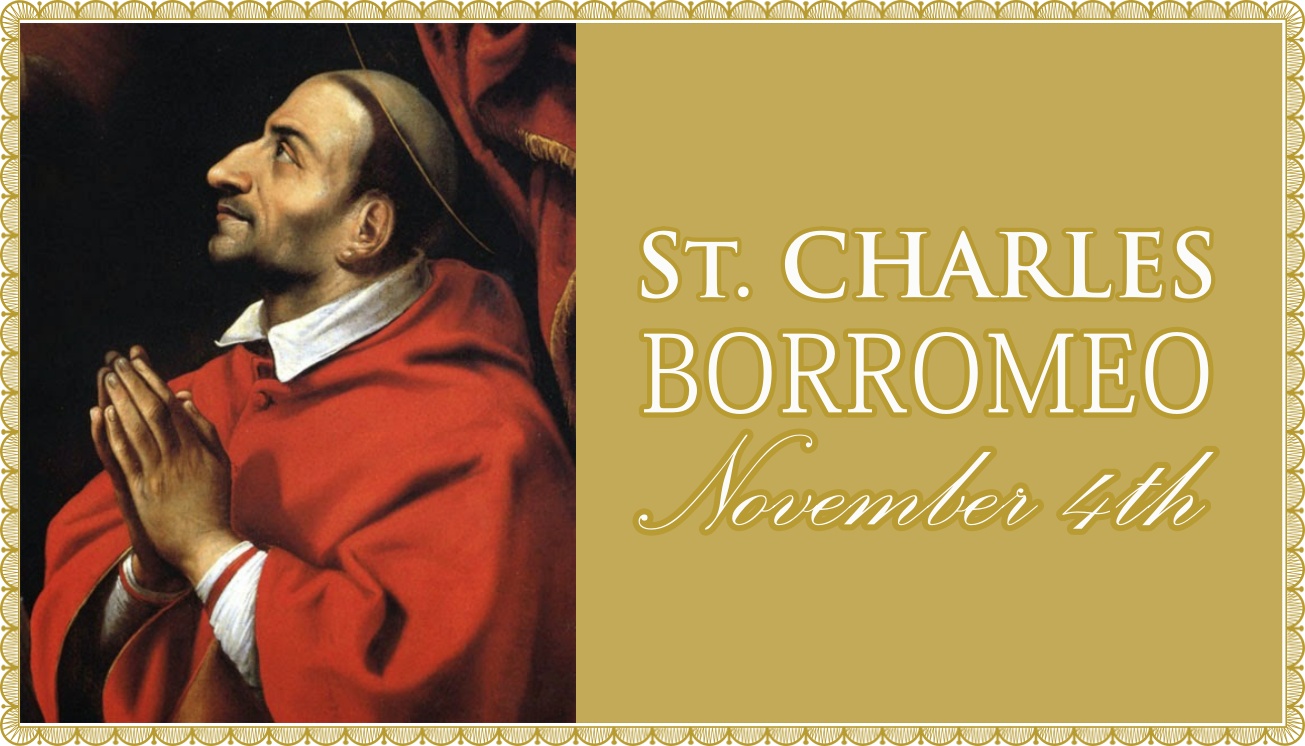
- Today’s Mass: November 4 St Charles BorromeoSt. Charles Borromeo (1538–1584) reformed the Church through holiness amid the corruption of his age—guiding Trent, renewing Milan, and serving heroically during plague. With Ss. Vitalis and Agricola and in the Octave of All Saints, he calls today’s Church to fidelity, reverence, and courageous sanctity amid confusion and decline.
- Sermon for St Charles BorromeoThe post commemorates St Charles Borromeo, a nobleman who became a determined reforming bishop after helping advance the Council of Trent. As Archbishop of Milan, he promoted catechesis, reverent worship, clerical renewal and practical care during famine and plague. His example presents radical reform as addressing root causes while preserving and deepening tradition.





Leave a Reply